
Hellooo Portanders!
Gail Chumbley presents her new work, “River of January,” Thursday, August 20th, 7:00 PM at the Oregon City Library.
606 John Adams Street
Be grand to see you there!
Hellooo Portanders!
Gail Chumbley presents her new work, “River of January,” Thursday, August 20th, 7:00 PM at the Oregon City Library.
606 John Adams Street
Be grand to see you there!

Thank you for taking part in “River of January’s” free Kindle Weekend! Enjoy the story with my compliments.
Stay in touch. As you finish the book, drop me a line, add a review on Amazon.com, and be sure to tell a friend.
For more, visit the photo gallery at www.river-of-january.com
Book Two, “The Figure Eight” is in progress.

The old pilot’s time with us grew to mean a great deal to me, personally, but made it that much harder to let him go at the end.
Chum’s last years brought him out west to Boise. It was much easier for my husband to care for him than the semi-regular flights to Miami, sorting out some kind of preventable crisis. Once his father settled in here, they were together every day at the assisted living facility. I believe their time together gave both of them a lot of comfort.
As for Me? I just loved to sit and talk to my father-in-law. If he had felt more spry I would have dragged him into my history class for my own version of “Show & Tell.” I mean, really! William Howard Taft was in the White House the year Chum was born! His life was a damn book. (see River of January)
On one particular Sunday we drove over for a visit, and brought him Mexican food . . . Chum’s favorite. I was anxious to talk to him because we had rented “The Aviator” the night before, the film about Howard Hughes, and Chum had worked for the millionaire at one time.
Me: So we watched a movie about your old buddy, last night–Howard Hughes.
Chum: Ha. He kept the Kleenex business in the black.
Me: (Oh, geez! How could he know that?) And your old girl friend, Kathryn Hepburn.
Chum: Yeah. Katy. She was a nice girl.
Me:(Katy? A nice girl?)
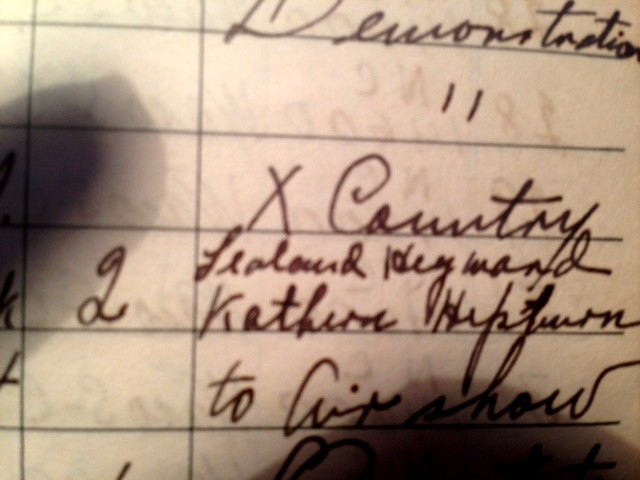
Chum: Her boyfriend, that theater producer, Leland Hayward–I taught him flying lessons, and she came along.
Me: Yeah. (Yeah)
And here it is folks, if you didn’t see at the top. The old history student has to whip out the proof. Have a nice weekend.
Gail Chumbley is the author of River of January. Available on Amazon.


“So you’ve been to see all the big boys, eh?” commented a sales representative from Long Island who was seated behind a battered old desk. Airplane distributor Howard Ailor of Waco Aircraft studied the young man’s face. “And by the looks of you they all turned you down.”
“That is about right, Mr. Ailor.” Chum responded, trying to look confident. “I was hoping you might know of something out here, maybe something at Roosevelt Field.”
“I don’t know you, son, but let me give you some advice. Don’t dawdle around hoping for that phone call. This is no economy to sit by and wait for miracles. You’ll starve first. Push your way into the air business with your own equipment, that‘s what I say, and I can help you with that. We have some beauties right here on site.”
Chum listened to the silver-tongued salesman, surprised that he agreed with all Ailor had to say.
Chum also realized that he had returned to an America deep in the throes of financial depression.
Economic life in the 1920s had played out as a frenzied, unregulated party. By all appearances the country had embraced infinite prosperity. Insider trading and other shady practices reigned on Wall Street, where market manipulators pooled cash and bought up stock, artificially driving up values. Regular folk, believing they were on to something big, bought these tainted stocks as crooked investors dumped them, reaping fabulous profits.
Indiscriminate buying, using easy credit, pumped the overblown Dow Jones to ballooning artificial heights. Even private banks joined the frenzy, wagering the savings of their account holders to increase their own bottom line.
This facade of spreading affluence ensured the “hands off” economic policies accepted in Washington. Then the market imploded. On October 29, 1929, “Black Tuesday,” the savings of a nation disappeared with the steepest financial crash in American history. Thousands upon thousands of people were ruined and the enterprise of a nation dried up.
Young Mont Chumbley had resigned from the Navy without another job, and now found there were none. The pilot’s only and best assets were his optimism, his pluck, and an old Chevy.
“Over here,” Ailor directed Chum, as they walked toward a hangar housing a red-with-black-trim Waco cabin biplane. “This baby’s a real beauty, right? We can take it up for a spin, if you like, but you can’t have this one—it’s spoken for. Still cough up a down payment and we’ll order you a new one. It’d be here in only six weeks.
“I came here looking for a job—and you want to sell me an airplane?” Chum blurted in disbelief.
Ailor continued to rattle on as though the pilot had not spoken. “Hell! I’m feeling generous. I’ll even let you rent office space right here on Roosevelt Field for a percentage of whatever you earn as you get your footing.”
Chum realized he had never encountered such a smooth operator. Ailor finally faced the boy. “Look, you can’t negotiate with reality, son. And the reality is that there are no jobs. The country’s flat busted.”
Chum knew his mouth hung open in reaction to the salesman’s bald audacity. But he also knew he agreed. Ailor was absolutely right.
Chum needed to find a way to buy that airplane. It appeared to be the only real option open to him. With little money left from his dwindling resources, he found a Western Union office and cabled his mother in Pulaski for help. He hadn’t written or visited much since joining the service and felt badly his note only asked her for money. However, Martha didn’t complain or hesitate.
“I’ll run down to our bank in town—still solvent, doors open,” she wired him right away. “A thousand, Mont? Is that enough? Where should I wire it?” Martha would still do anything to help her boy.
River of January by Gail Chumbley available at www.river-of-january.com and Amazon.com
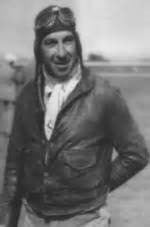
Only six years had passed from Lindbergh’s Atlantic flight, when Chum won the cross-country Darkness Derby in October of 1933. Public wonder and oodles of press coverage followed aviators across the country, and around the world. Pilots were viewed as rustic pioneers risking the unforgiving rules of gravity. Hustling for every penny, Mont Chumbley used his rare talent for more than business, offering lessons during the week, and moonlighting weekends entertaining an aviation-crazy public.
County fairs proved a reliable source of pocket money, and he beat the bushes to find well attended events. In good weather he could charge $5 dollars for three passes over local fairgrounds; enough for gas, dinner and a little left over for his time.
It was on today, May 16, back in 1933 that Chum flew his Waco biplane to a fair in Binghamton, New York. He traveled north from New York looking for a little fun, and maybe a few extra bucks. He hit gold that day when he met up with famed parachute jumper, Spud Manning. Now Spud was a young guy, too, and much like Chum, had to make his luck to survive in Depression-era America. So what this enterprising gent challenged, was jumping from airplanes.
With Chum soaring at 15,000 feet, Manning, harnessed in his chute, clutched a bag of flour to his chest. In his fall Manning released the contents to trace his descent. The 25 year old’s shtick was to risk death by falling until the last possible moment, somewhere around 1000 feet, to pull his ripcord. He succeeded to scare the hell out of patrons and they paid him to do it again.
Presumably Spud carried out his jump the same way on that May 16th in Binghamton New York. Leaping for profits, Spuds and Chum performed the stunt as long as it paid. Spuds leaped into the sky, likely accumulating a dusty, white face as the flour plumed up from his arms. Rolling on the ground, grappling with his chute, he jumped to his feet delighting the dazzled crowds.
That May 16th must have left hundreds of Binghamton fair goers in awe. Clear blue weather, excited customers, viewing their landscape from the Waco in three memorable passes; all capped off by the heart stopping jumps of Spud Manning.
Sadly, Chum’s afternoon associate had less than four months to live. Spud was killed that September when, as a passenger on experimental aircraft, he crashed into Lake Michigan. His body and two others washed up on shore ending a massive search over the water.
Chum clearly understood death accompanied each flight, but he loved flying more than dwelling on his fears. Presumably Spud Manning too, resigned himself to the possible price of repeated defiance to the forces of gravity.
Somehow the miracle of the sky rendered the hazards irrelevant.
Gail Chumbley is author of memoir River of January

From New York
 To Rio de Janeiro

Journey by air, rail, and sea!

This couple married 78 years ago today. On Friday the 13th. In New York City. Defying traditional convention. Archaic superstitions were of no interest to this modern couple, that kind of thinking belonged to the past.
Mont “Chum” Chumbley, and his bride, Helen Thompson Chumbley only looked forward, challenging and prevailing over old horse and buggy thinking. Theirs was a new era, a dynamic era, one of flight and of film. And this powerful force of optimism rendered one life time together too brief. So now their spirits carry on in my head, and in the pages of my book, River of January.
To say Helen and Chum were happy together would be shallow pandering–and an insult to the complexity of their distinctive temperaments. Still, their story has power, enduring power, pressing me on, returning time after time to their papers, searching for signposts of truth and direction.
A Flemish Bend, the title of this piece, ironically does have its roots in the distant past. The Bend is a sailors knot, also known as a square or figure eight knot. The same shape in mathematics is the symbol for infinity. The love Helen and Chum shared, as imperfect as it seemed at times, was powerful, and proved to be endless.
I too have been snared in those powerful cords, and for better or worse speak for their remarkable lives, lives too dynamic to have died with their passing.
And I’m grateful. It’s an honor. Happy anniversary Helen and Chum.
Order River of January, and enjoy the journey.
Amelia Earhart Plane Fragment Identified : DNews
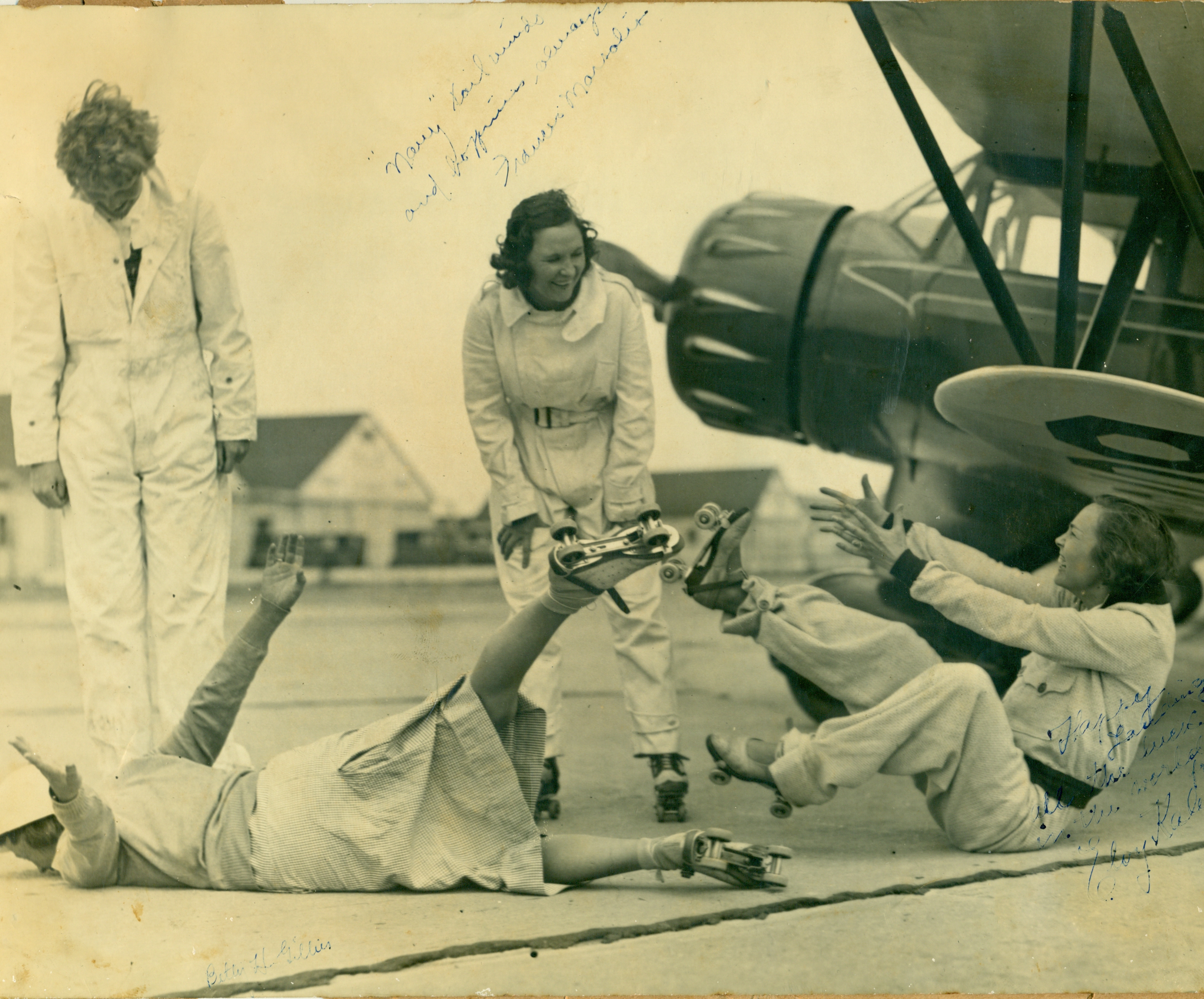
Bertha eyed the large box with a wary, but inquisitive gaze. “We got this for you. Merry Christmas Mother,” we both hope you’ll like it,” Helen beamed with pride. “Chum?”
Bertha narrowed her eyes, watching as her son-in-law sliced down a cardboard corner with his pocket knife. Revealed inside, a beautiful new Emerson radio, curved corners, blonde wood, featuring inset vertical columns. Mother’s eyes now grew wide as she took in the gift—this radio was the top of the line, as Bertha well knew.
“Oh my heavens,” she exclaimed. “You two must have spent a pretty penny on this!”
Helen grinned happily, her mother seemed honestly pleased, while Chum, hurried to plug the device in, rapidly turning the dial looking for a Christmas broadcast.
Kneeling at a small end table, he twisted the tuner knob—the frequency tone whined and whistled from fuzzy to piercing. Finally, a clear authoritative voice rose, articulating in a clipped urgent cadence. Nineteen hundred and thirty seven has been an eventful year in American news. It was last spring, in May that the Hindenburg, a German dirigible tragically exploded over New Jersey. Celebrated aviatrix Amelia Earhart was lost in July, along with navigator, Fred Noonan in the uncharted expanses of the South Pacific . . .
“No Christmas music, honey?” Helen asked over the broadcaster’s voice.
“That’s really not a surprise,” Chum mumbled, lost in thought.
Bertha quipped, “No Christmas music on Christmas is a surprise?”
“No. No. Sorry. Amelia Earhart was someone I once knew at the field.
Impressed for once, Helen’s mother pushed for more details. “You knew Amelia Earhart?”
“Oh. Well, yeah I did. She was a friend of a friend.” Suddenly self conscious with all three women staring at him, Chum struggled for words. “You see, Earhart had no training in navigation at all. She could fly just fine, but had to hire navigators to get anywhere. The, eh, other girls—girl-pilots talked about it. They uh, believed it was that husband of hers, George Putnam who inflated her abilities . . . spent money to build up her reputation. Amelia got in over her head on that flight, and the poor kid was killed as a result.
“How do you know this?” This time Eileen piped up, clearly fascinated by his tale.
“Like I said, that Roosevelt Field crew of gals could be a clucky bunch. The other women talked a lot about how shamelessly that husband promoted her career.”
“I’d never heard that before,” Bertha exclaimed, appraising her son-in-law in a new light.
“Me either,” Helen added, not sure she was pleased with his “the other girls at the field” story or not.
Buy River of January Today
So caught up in the process of writing River of January I didn’t see much beyond my keyboard and monitor. Focusing intensely on grammar, style, punctuation, research, and every other detail, I failed to see a beautiful New York story take shape before my eyes.
A New York story. The New York of Vaudeville, Tin Pan Alley, Jimmy Walker, and silent films. The New York of Roosevelt Field–Lindbergh lifting off eastward toward Paris, achieving legendary status, and where Amelia Earhart later trundled down that same runway only to meet her mysterious end in the South Pacific.
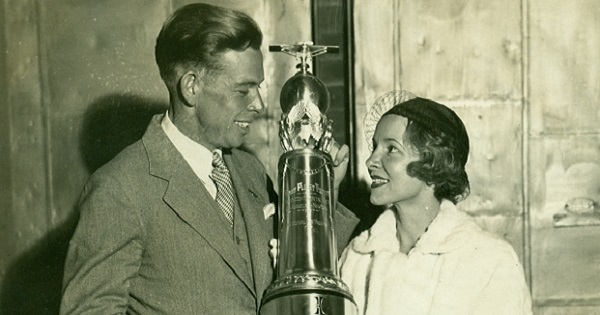
Mont Chumbley, one of two central figures in River worked at that same storied airfield, braking down runway #1, arriving first in the 1933 Darkness Derby. He had braved inky night skies in his quest, worsened by wind gusts and growing cloud cover. Pushing through from Los Angeles to New York, Chum prevailed, victorious, He received honors for his achievement at the Capitol Theater, 1645 Broadway, when Actress Helen Hayes presented him with his cash winnings, and an over sized silver trophy. Becoming something of a local celebrity himself, many from the city sought him out for passenger transport or flying lessons. On one instruction flight,Chum found actress Katharine Hepburn in the cabin of his plane, joining her boyfriend, Broadway producer, Leland Hayward.
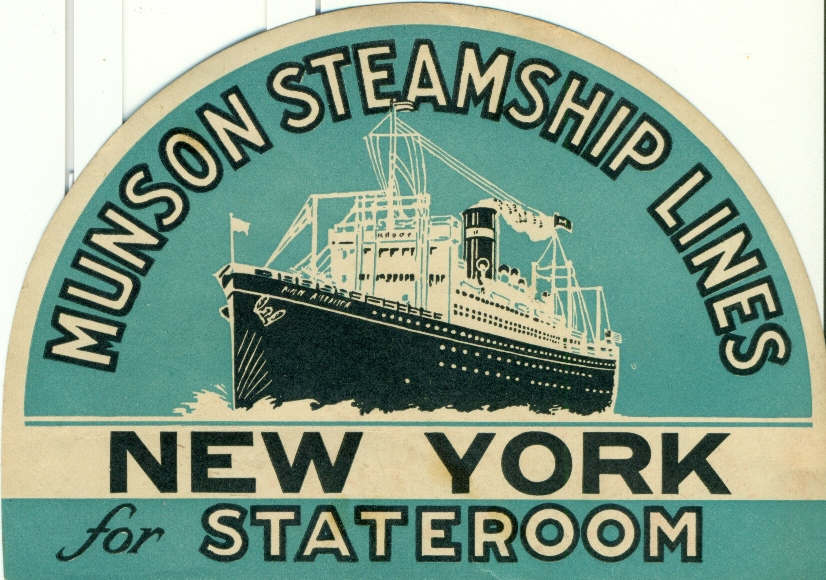
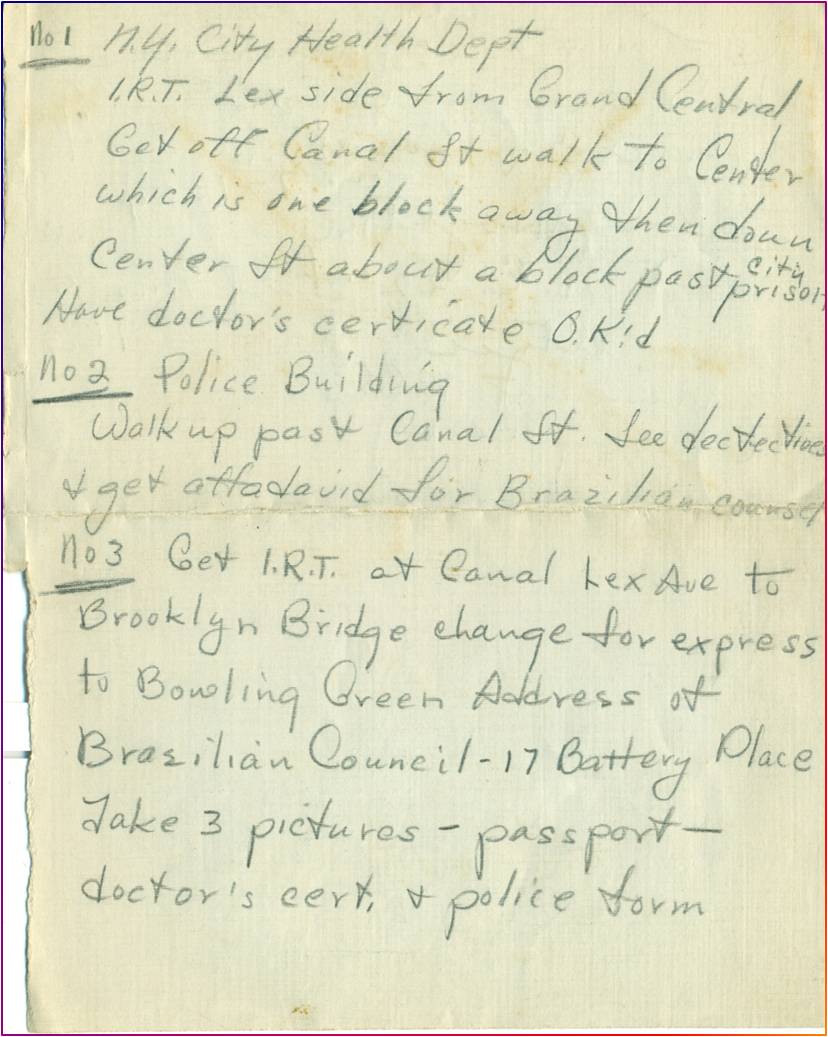
Helen’s New York consisted of auditions and productions from the Boulevard Theater, to the Roxy, performing for Billy Rose, finally dancing in “The Harry Carroll Revue.” As if a scene from an old movie, she set sail in April, 1932 on the SS Ille de France. This transatlantic voyage carried the girl from New York Harbor for an extended tour across Europe. Two years later, in 1936 she stepped up the passage way of The American Legion, a steamer on the Munson Line destined for Rio de Janeiro. Joining throngs on the top deck Helen gleefully waved goodbye to her family, smiling back from the Brooklyn docks. And speaking of family, Helen’s home address, 325 West 45th Street, was the third floor of the Whitby Hotel smack-dab in the middle of the Theater District. And though refreshed and remodeled today, that apartment building still stands–a direct link to an earlier era, an earlier New York.
Helen and Chum both lived in Manhattan at the same time. But he had his New York story to fulfill, and so did his future bride. That they crossed paths on the sidewalks, subways, theaters, restaurants, and trains before exchanging their first hello is certain. But as proper New Yorkers the two finally met elsewhere, at the Club Copacabana in Rio, a hemisphere away. There these two New Yorkers finally locked eyes, and fell in love.
Eventually, when circumstances allowed, Helen and Chum returned home to exchanged vows at the Church of the Transfiguration, on East 29th and 5th Avenue. This location is better known to New Yorkers as The Little Church Around the Corner.
I’ve finally come to recognize that River of January has become more than the narrative of two lives in the early days of aviation and show business. This story takes place in the magical metropolis of New York–where Helen and Chum found magic of their own.

Right now, in classrooms across America, and overseas, thousands 17-year-olds are preparing for the AP US History exam. They, and their instructors are obsessed with cause and effect, analyzing, and determining the impact of events on the course of America’s story. Moreover, they are crazed beyond their usual teen-angst, buried deep in prep books, on-line quizzes, and flashcards. As a recovering AP teacher, myself, I can admit that I was as nuts as my students, my thin lank hair shot upward from constant fussing.
My hair fell out too, embedding in combs and brushes, as I speculated on essay prompts, that one ringer multiple choice question, and wracking my brains for review strategies. The only significance the month of April held was driving intensity, drilling kids on historic dates; Lexington and Concord, the firing on Fort Sumter, the surrender at Appomattox Courthouse, President Wilson’s Declaration of War in 1917, the battle of Okinawa, MLK’s murder, and the Oklahoma City bombing, That was what April meant in April.
To quote John Lennon, “and now my life has changed, in oh so many ways.” Today April holds a whole new definition. My husband rises first in the morning, putters in the kitchen, fetches coffee, tends to the dog, and is back in bed, back to sleep. Big plans for my morning include writing this blog, making some calls related to book talks, a three mile walk through the Idaho mountains, then working on Figure Eight, the second installment of River of January. What a difference! Nowadays, getting manic and crazy is optional. My hair has grown back in, standing up only in the morning, and the only brush with AP US History occurs in my dreams; the responsibility passed on into other capable hands.
This month, at least here in the high country, has been especially beautiful. We have already enjoyed a few 70 plus degree days, and the green is returning to the flora. Our sweet deer neighbors are no longer a mangy grey, emerging from the trees wearing a warm honey coat. With a little snow still on the peaks, the sky an ultra blue, and the pines deep green and rugged, I think sometimes this must be Eden.
My years as a possessed, percolating history instructor provided a gift of passionate purpose that enriched me more than depleted. But, now . . . I wouldn’t trade this new phase of my life for all the historic dates in April.
Gail Chumbley is the author of River of January also available on Kindle.
 Gail Chumbley