A Surreal Landscape

In a scene from Hitchcock’s The Birds locals are gathered in a cafe eating and chatting. An attractive blonde is on the telephone explaining that children at the local school were dive-bombed by attacking crows. An elderly lady in a beret and smoking cigarettes lectures the other diners that crows don’t behave in such an aggressive manner and that there has to be another explanation. The woman identifies herself as an ornithologist and holds forth explaining crows and even seagulls do not do such things. Immediately after her expert testimony all hell breaks loose outside the cafe window, with masses of birds swooping down on passersby. The scene is chaotic and bloody leaving no doubt these attacking birds are in fact lethal. As the nightmare scene ebbs, the camera catches the bird expert, her head bowed in grief and bewilderment, stunned everything she knew and believed no longer applied to any bird in her understanding.

That woman resembles this lifetime American history educator. I’m a fairly decent generalist in subjects ranging from PreColumbian America through today, give or take minutia. But I too, am stunned by the surreal landscape of what I believed about democracy has been easily undone by a vulgar man-child and a compromised and opportunistic Republican Party.

It feels like all my understandings of my country no longer apply. The epic and fraught-filled struggle of forging the Constitution, the furnace of Civil War, the reforms of the Progressive Age, the promise of the New Deal, and Great Society are gone, rapidly destroyed by sinister design. A totalitarian despot has seduced a once noble political party rendering the valiant patriotism of those whom came before moot. Simply writing this lament is difficult, as all I once believed and explored is no longer valid.

An online troll explained it as “no one cares about that anymore.”

That means the principled determination of General Washington to serve our nation doesn’t matter. The misguided genocide of the Five Civilized Tribes upon the Trail of Tears doesn’t matter. With nearly 700,000 deaths, the crucible of Civil War no longer matters. Those brave GI’s on Omaha Beach, (including my own grandfather) and at the Battle of The Bulge no longer matters. Those brave students who occupied lunch counter stools in the face of racial violence did so for nothing. Those boys who perished in the Vietnam War are irrelevant. In point of fact no veteran matters anymore.

American history and all the sacrifice of our forefathers and mothers doesn’t count.

That 47 can fly in a foreign “gift” aircraft with a classified budget is a good thing to do with our tax money. That he remodels a room in the White House in a golden gilt is a good thing. Who really cares if former medicaid recipients suffer.

Suck it up buttercup, these are the new rules of Trump’s America.

That he has done away with investments in the Arts and Humanities is a positive. That he has placed incompetent sycophants from Fox News in high Federal positions is good. Forget he stole top secret intelligence documents. The country elected him anyway. That he has drastically shifted the tax burden onto the middle class and off of the super wealthy is how God wants it, just ask today’s Christians.

That old white men rape girls is a good thing. 

The GOP bows at his feet and gleefully ratifies every stab-wound of domestic legislation is now to be celebrated, so pop a cork. In fact destroying America for profit is now simply wholesome and righteous. 

America’s heroes, like Sergeant Alvin York in the Argonne Forest, or Colonel Joshua Lawrence Chamberlain at Gettysburg endured their generations difficulties so that Trump can plow up Mrs Kennedy’s rose garden for a putting green. Suffragette Alice Paul who went on a hunger strike and endured the torture of forced feeding did so that the current president can manipulate votes is just fine. The murders of JFK, Dr King, Harvey Milk, or the murder of Minnesota State Senator Melissa Hortman is merely a part of the 24/7 news cycle.

Indeed nothing of our past story matters because Mr 47 has disqualified all of it to make money, and more money because that’s all that matters today. Plus of course he is a convicted felon and is terrified of going to jail where he belongs.

So when you see this disoriented American History educator with her forehead in her hand, much like the bird expert in the movie, please understand the gravitational pull of her entire life’s work is today rendered null and void. 

Gail Chumbley is the author of the two-part memoir “River of January,” and “River of January: Figure Eight,” co-writer of the screenplay, “Dancing On Air” based on those books. She has penned three stage plays on history topics, “Clay” on the life of Senator Henry Clay, “Wolf By The Ears” examining the beginnings of American slavery, and “Peer Review” where 47 is confronted by specters of four past presidents.

Peer Review Excerpt 2

This post comes from a full stage play titled Peer Review. It was composed during DJT’s first term and serves to illuminate the contrast to earlier presidencies.

SCENE TWO

The stage lightens in a mix of gold and white. A bed and two arm chairs made in the same colors sit center stage, The New York City skyline is projected on the back curtain. The sound of papparazzi and cameras snapping is heard offstage. An elevator dings. After a moment the President enters stage right with two men in suits wearing earpieces. The men walk around the area and bed. The President turns and speaks.

THE PRESIDENT
Call maintenance, that damn elevator shouldn’t stall between floors. That was a good ten minutes, dammit. I’m gone a few weeks and the building goes to hell. There’s nothing in here. Get out.

The men exit. The President removes his jacket, and walks to the dresser. He peers down in a drawer, then finds what he is looking for. A file of yellow and red.

Except this little gem and it’s really something.

He lies on the bed reading and chuckles happily. His cell phone plays “Hail To The Chief.” The President answers.

Where are you? I just got here, great crowd outside. Yeah, I’ll get it done. Hey, I said I’d do it. What do you mean you don’t trust me? Give me a break, That whole Stormy Daniels garbage is . . . No. Don’t hang up. We’ll sit down with the lawyers and renegotiate the whole deal. But then you will join me in DC, and the boy, too. This staying in New York is no good, makes me look bad to the country. Yeah, yeah, I’ll get Reince on it today. Hey, I said I will.

He tosses the phone on the bed and resumes reading.
Huh. Erdogan didn’t tell me this. How does the CIA find this crap out? I need some Putin-Ukraine stuff. Who woul’da thought I’d read something?

He chuckles, and soon grows sleepy. The President drops the open file and closes his eyes. After a moment a spot rises on a figure entering the stage.

He is tall, wearing a 18th Century blue and buff military uniform, knee breeches, white stockings and carries a sheathed saber. His white hair is combed back, and tied with a black ribbon at the nape of his neck. Standing near the bed, he speaks slowly with elegance.

THE GENERAL
I am very fond of New York City. During the War for Independence I maintained camp nearby for much of the duration.

The President sits upright, and reaches for a pillow to shield himself. He squeaks.

THE PRESIDENT

Shit!

THE GENERAL
Congress had directed me to burn Manhattan ahead of invading British Regulars. You see, Congress wished to leave nothing of use for the Redcoats. Destroying the city left me conflicted, and alas, that order I could not obey. As fate would have it, a fire did erupt in the chaos, demolishing vast tracts of the city. A very regrettable situation.

The General poses regally, glancing at the president. He continues.

Sometime later I returned to serve as President here in New York.

He gestures with his saber to the skyline.

Concerning the demands made upon me as I served those first critical years, none resolved easily, nor without great cost. But our fledgling nation teetered on dissolution and we, as the first government under new Constitution, had to stand resolute.

The President lowers his pillow to speak in a forced, but faltering menacing tone.

THE PRESIDENT
I don’t know who you are, or how you got in here, but this is my room, and my 30,000 square foot apartment, in my extremely valuable building. So clear out!

The General appears not to hear, serenely seating himself in an arm chair. He levels his gaze at The President.

THE GENERAL
My colleague said you were tiresome, however, I am staying.

THE PRESIDENT
Who said that? What colleague . . .oh, jeez, him. Well I’m important NOW. So you and that other fossil can beat it back to central casting.

THE GENERAL (Untroubled)

I, too struggled with grandiosity. In my youth I pined for the advantages of wealth and status that surrounded me. Stately mansions dotted the inlets and vast river systems of Tidewater Virginia, the place of my birth. I longed for a life of importance, gentility, and of wealth. I would be an English gentleman residing in elegance upon his landed estate.

THE PRESIDENT
The English are wusses, and you’ve blah blah’d enough. I’m in New York to get away from all that history garbage. That old dump where I have to stay is filled with that crap. So goodbye Rambo.

The General waits, then rises and un-sheaths his blade. The President again grasps his pillow. The General resumes his story.

THE GENERAL
Born the first son of a second family, I fell heir to nothing but my father’s name. Augustine and Lawrence, my older brothers, received all the honors of a gentleman’s life. I loved them, idolized them, especially dear Lawrence, and begrudged him nothing of his inheritance. However, I cannot deny the depth of my anguish as a second class Virginian.

THE PRESIDENT (To himself)

When my Father died I stuck it to my brother. He couldn’t handle money, the guy was a drunk.

THE GENERAL
Another temptation concerned a young matron, the wife of my best friend. Sally was her name, and I loved her very much. Our correspondence, especially while I served in the war against the French was perhaps too forward, and flirtatious. I longed for Sally, but she was not, nor ever could be mine.

The General sighs, deep in thought.

THE PRESIDENT
I never let any marriage license stop me. Mine or any available broad. That’s all they’re good for, arm candy and a roll.

THE GENERAL
We are all too aware of your misogyny, and absence of propriety. Even Mr. Kennedy said he attempted more discretion in his dalliances. I’m reminded of a letter from the Marquis de Lafayette informing me of his wife’s passion for me. Amused, I replied youthful women are inclined to youthful men, not those of graying hair. And still it is so.

The president sits up with his pillow on his lap.

THE PRESIDENT
Younger women love me. They really do. I’ve dated some beauties, too. You should see some of the pageant contestants I’ve bagged-and Playboy bunnies, too.

From the wing a soldier in Continental uniform approaches the General handing him a dispatch. The General reads the parchment, and marks it with a quill pen. The soldier leaves.

THE GENERAL
Sir, I do not believe ‘love’ is quite the term for what you’re describing. unbridled debauchery perhaps is more precise?

THE PRESIDENT

What the hell? How did he . . .?

THE GENERAL
It is the disciplined man who owns his passions. Decorum is what separates us from animals, wouldn’t you agree?

The president sits mouth agape at the soldier. The General continues.

THE GENERAL
Elegant balls were quite popular venues for young people to meet. I don’t mind saying that I may have been one of the finer dancers in the Tidewater. Those evenings were grand; dinners, music, and refinement in abundance. Oh, how I yearned to rise in social rank.

THE PRESIDENT
I hear ya. Those Manhattan snobs, that artsy-fartsy Met crowd, boxed me out. Treat my kids that way, too. Jerks.

THE GENERAL
Envy did little to further my integrity as a gentleman. In the war against the French the royal governor entrusted me to offer land patents to volunteers willing to join the Virginia militia. Over the course of the conflict I made many of those acres my own. You see land was the mark of a gentleman, but I was an imposter. That villainy has troubled me for an eternity. I pray my service to my nation has polished away some of the tarnish.

THE PRESIDENT
Don’t sweat it, business is business. Regulations are a pain in the ass. If you have an opening take it. Never hesitate. I’d a done the same thing.

The soldier-courier again appears on stage carrying more documents and a feather pen. The general agains peruses the contents, and marks the paper. The president raises his hands in a questioning gesture. The courier disappears.

THE PRESIDENT
There is a squadron of Secret Service out in that living room! How does that guy just walk in here?

THE GENERAL
Colonel Hamilton? He is a very clever young man. A great mind, that one. (Pauses) I disagree with your assessment of regulations. Had it not been for the rigor used to organize the army, particularly at Valley Forge, America would not exist. Good order was the key to eventual victory.

THE PRESIDENT
But you were the boss, right? You made the rules. Everyone I brought in has stabbed me in the back, didn’t follow my rules. Bunch of lowlife. Tillerson, Bolton, Mulvaney.

THE GENERAL
Perhaps those staff members possessed standards and realized you were not a leader worth following.

The president stands up outraged, the general stares him back down.

THE GENERAL
Those of my staff earned positions through merit. Tallmadge, Knox, and Hamilton, here, were gentlemen I trusted with my life. The hangers-on, the men who conspired for my command eventually revealed their ineptitude, and villainy. Those characters fell by the wayside.

THE PRESIDENT
A lot of people don’t realize this, but I don’t know American history. How did you win that war?

THE GENERAL
I never confronted the Regulars unless I had an advantage, like at Trenton, though I detested avoiding any fight. (Pauses) I kept the Continental Army together, and out of British hands. I knew the King could not fight forever. And I knew history was watching our every move, and we owed the future to never give up.

THE PRESIDENT
What the hell does that even mean? History watching! I could care less what happened before me, or when I go out.

THE GENERAL
And I am sorry for that, as will be your grandchildren. The family name is disgraced for all time. The rest of us, those whom I am representing, all understand this. Each chief executive found inspiration in taking part in something greater than ourselves. This, (he gestures toward the window) the United States of America has never been attempted before, a people’s government. The world is housed with predictable despots stealing from, and brutalizing the powerless.

THE PRESIDENT
Oh, come on, give me a break, everybody cheats and steals. Especially here in America.

THE GENERAL
Indeed. But we try to be better. We all have tried. President Chester Arthur felt you ought to know that he, too, served the monied interest. But once president, Mr. Arthur left the grift behind. Like the rest of us he found humility understanding all citizens, for all time would weigh his executive stewardship. He treasured America more than money and power.

The president slumps into a chair. He jabs a finger at the general, changes his mind and lowers his hand.

THE PRESIDENT
I didn’t take a salary. My people liked that, makes me look like a good guy.

THE GENERAL
All the while, behind the scenes, you pilfer on a grand scale. (The General glares) The Continental Army did not suffer want and cold at Valley Forge and Morristown for you to overcharge the federal government for lodging Secret Service at your resorts. Nor did they starve so guests at your Washington hotel could be egregiously overcharged.

The general continues to glare for a long moment and slowly cools down.

THE GENERAL
After Yorktown, and the surrender of Lord Cornwallis, hostilities slowly began to quiet. Royal ships, loaded with Redcoats set sail for England and our land stood liberated. Many difficulties remained such as discharging soldiers, and securing their long overdue pay for services nobly rendered.

The general again looks out at the New York skyline.

THE GENERAL
Word arrived that officers, also unpaid, had set into motion a plot to overthrow the slow-moving Congress and make me king. The ring leaders, encamped north of here in Newburg, awaited my arrival to complete the conspiracy.

THE PRESIDENT

King, huh? I like the sound of that.

THE GENERAL
As I had hoped the plot came to nothing, and that is when I resigned my commission and returned home to Mount Vernon.

THE PRESIDENT
Resigned? Went home! What is wrong with you? You had the whole deal on a plate!

THE GENERAL
Why? Because I am an American. We have no need of kings here, and I longed for home, longed for my wife and family. I’d been away for seven years and I yearned for my farm.

THE PRESIDENT
You could’a had the whole country at your feet and you went home to your farm? Gave up power for cowpies and dirt?

THE GENERAL
“’Tis not in mortals to command success. But we’ll do more, Sempronius, we’ll deserve it. When vice prevails, and impious men bear sway, the post of honor is a private station.”

The general sits down on the edge of the bed. The president, in his bed again clutches his pillow closer.

THE GENERAL
It’s a quote from my favorite stage play, Addison’s “Cato.” As Julius Caesar amassed growing power in the Roman empire, Cato the Younger, a lover of Republican virtue, stood in opposition to Caesar’s tyrannical grasp. When Cato could not accept life under extravagance and corruption he took his own life rather than submit to depravity.

The president stifles a yawn, shakes his head to clear it then speaks.

THE PRESIDENT

I liked the musical, “Cats.”

THE GENERAL
This work had a deep impact upon me and upon my generation. Patrick Henry’s “Give me liberty” quote reflects lines from the play, as does poor Nathan Hale’s last words regretting to have “only one life to give for his country.” During our miserable winter camp at Valley Forge I saw to it the play was performed for the men. We too, were confronting an extravagant and tyrannical empire.

The general rises and returns to the window.

THE GENERAL
And that is why I returned home. My duty had been fulfilled, and my services were no longer required.

The courier returns, this time in civilian garb, the general removes his hat, pistol, and sword. He examines the paperwork, scribbles, and the courier departs. The president stands, holding his pillow, watching the courier, then shrugs. He moves back to his bed.

THE PRESIDENT
Now just hold on. You, I mean, you’re the guy who became president, right? The first one?

THE GENERAL

Yes.

THE PRESIDENT
You should’a just grabbed power in the first place. People wouldn’t have cared. I can say or do anything, and my people love me for it. They’re a sad bunch of losers, really.

THE GENERAL
America did not, and does not now, need a king. I only returned to the public arena because my country called. An uprising in Western Massachusetts pitted war veterans against the state legislature in Boston. Vessels exchanged gunfire on rivers over navigation rights-Americans were battling Americans, again.

The general approaches the president who places his pillow over his face.

THE GENERAL
In Philadelphia a convention was set by Mr. Madison, and Colonel Hamilton to strengthen the national government. Though I was weary, short of funds, and reluctant to leave Mount Vernon, I eventually consented to join the assemblage.

The president lowers his pillow and speaks.

THE PRESIDENT

That sounds boring. But farming sounds boring, too.

THE GENERAL
America’s future rested upon what you term as boring. (He pauses) Though stifling hot that Philadelphia summer, with tempers running high, all members resolved to see the convention through. Unrest across this new country lent a sense of urgency, and we could not fail.

The president appears to not listen, fusses with his hair, staring at the ceiling.

THE GENERAL
Listen when I am speaking. Incorrigible halfwit. Leadership requires listening.

THE PRESIDENT
I’m listening. I give myself an A+ on listening. By the way, do you put powder or something on your hair? I worry mine doesn’t look natural in some light.

THE GENERAL
Addle pated oaf! Colonel Roosevelt cautioned me of your conceit. But I will not depart until I have spoken my piece. The Constitutional Convention labored from May, 1787 until September, and in all those sessions only one day concerned the role of the president, Article Two to be precise. And the reason so little time was allocated to this subject? Because I was, whether I wished it or not, the model for the chief executive.

THE PRESIDENT

One day?

THE GENERAL

One day.

The general pauses, then steps over to the bed. He leans over the intimidated president.

Delegates determined the age requirement, the rule for candidates being native born, with four year terms.

THE PRESIDENT

One day, huh. How come so short?

THE GENERAL
Please listen the first time! Because the office was designed for me. I gave up rank, and returned to civilian life, I could be trusted with power. My successor, later wrote, “May none but Honest and Wise Men ever rule under This Roof.” Since that blessing, with one exception, men of political restraint have served as Commander In Chief. Until you. A greedy, self-deluded dunce. Your infamy will never be forgotten, becoming instead a catchphrase for colossal incompetence.

The general rises, adjusts his hat, retrieves his gun and sword, then turns to the president.

THE GENERAL

When my dearest Martha died after my own passing, she was interred beside me, not in a New Jersey sporting green for a tax deduction.

As the general steps offstage an elevator ding is heard again, then a knock on the president’s door. A voice calls out.

SECRECT SERVICEMAN

The elevator issue is fixed, sir. We can go now.

The president adjusts his hair, and straightens his tie. He rushes off stage. A moment later a spotlight catches him hurrying back, picking up the security file, and placing it under his jacket, and again scurries offstage.

The stage goes dark.

END OF SCENE

Gail Chumbley is the author of the two part memoir River of January, and River of January: Figure Eight. She has also authored three stage plays, Clay, Wolf By The Ears, and Peer Review. Chumbley is the co-writer of Dancing On Air a screenplay based on her River books.

If interested in developing any of these pieces reach out at chumbleg.blog

The Business of America

President Calvin Coolidge once famously proclaimed “The business of America is business,” which meant his administration would pursue a “hands off” approach toward the business sector over the interests of the American people. In office from 1923 to 1929 President Coolidge kept to his pro-business principles that, in turn charged the roar into the Roaring Twenties.

By the end of October 1929, six months into the new Hoover Administration, Coolidge’s lax policies came due dropping the Dow Jones Industrial into free fall. This financial catastrophe capped off a decade of easy money made through frenzied and unregulated trades, not only by wealthy holders, but by regular folks taking stock tips from friends or newspapers.

A large portion of these everyday newbies purchased shares “on-margin,” meaning 10% down with 90% on credit, usually borrowed from private banks. The only collateral required was the promise of certain and endless gains. And why not? The market had grown at an astounding rate from $27 billion in the mid-1920’s to $87 billion by 1929. 

Coolidge’s free-market detachment produced a carnival atmosphere with everyday people hot in the market game.

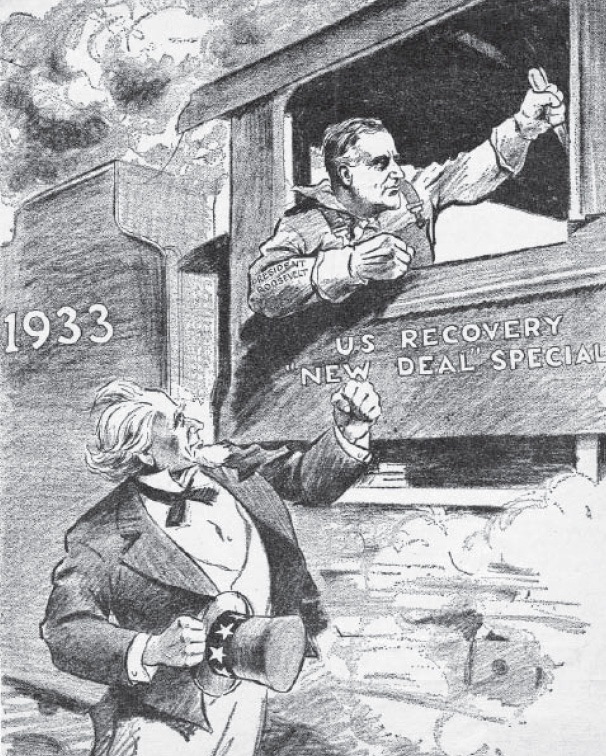
By 1932 the party was over. The now suffering nation had had enough of hands off and predatory money practices. Massive unemployment, thousands of bank failures, hunger, homelessness, and a Dust Bowl in the heartland brought America to its knees, and Democrat Franklin Delano Roosevelt to the White House.

Seeing nothing beneficial for the American people in catering only to the rich, FDR brought an end to GOP policies. His administration instead offered a New Deal for economic revival. Through a massive legislative agenda Roosevelt and Congress intended to not only meet the emergency, but restore economic growth, and eliminate the conduct that led to the Depression in the first place.

One of the most popular New Deal relief programs was the Civilian Conservation Corps. Unemployed young men were put to work throughout the nation building trails and campsites in forests like the Great Smokey Mountain National Park, and urban building projects like the River Walk in San Antonio, Texas. (Consider that idle young men in Germany at the same time donned Black and Brown Shirts and broke heads for Hitler.)

Addressing the chaotic banking system FDR proposed systematic changes. Some 6000 banks had failed between 1930 and 1933 before the new president took office. Panicked depositors waited in long lines to demand their money until banks simply ran out of cash and locked their doors. Confidence collapsed. 

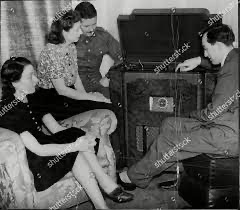
In his first days Mr Roosevelt announced a Bank Holiday where banks closed for four days to stop panic withdrawals. Auditors then inspected banking institutions across the country and surprisingly many banks were deemed solvent and reopened. Not finished with banking, FDR also took to the radio to explain the banking system, and with his cheerful confidence encouraged the public to take cash out of their mattresses, coffee cans, and backyard holes and return deposits to local banks. Thousands did just that. 

In order to prevent another such economic catastrophe the Glass-Steagall Act (1933), was passed by Congress to protect the public from high risk banking practices. One piece of the law was the Federal Deposit Insurance Corporation, FDIC, which is still in effect today. Depositors had the backing of the federal government to protect their funds from any loss. Moreover the Roosevelt Administration was determined to keep people in their homes, many of whom were facing foreclosure. The Home Owners Refinancing Act provided federal assistance to those who had paid their mortgages in good faith, but now faced eviction. 

In the first hundred days of Roosevelt’s New Deal 77 laws in total were passed by Congress, all aimed at restoring the health of the country. To the majority of Americans it felt like this president truly cared about their wellbeing. Roosevelt’s ascendency to the White House, next to Abraham Lincoln’s certainly stands as the most consequential in America’s continuing experiment in self government.

On a side note Franklin Roosevelt suffered from polio and could not walk, though he believed he’d walk again. FDR never gave up. And the truth of the matter is it took a man in a wheelchair to put the United States back on its feet. Franklin Roosevelt, unlike his predecessors knew that the business of America is “We The People.”

Gail Chumbley is a history educator, author, and playwright. Her work includes River of January, River of January: Figure Eight, both available on Kindle, plays Clay on the life of Senator Henry Clay, Wolf By The Ears a study of American slavery, and Peer Review where Donald Trump meets four past presidents.

If you like, please share this on social media.

Beyond The Symbols

Patriotic symbols, music, and the Pledge of Allegiance recited at a solemn ceremony can be deeply moving. A simple presentation of the flag at a formal function can be awe-inspiring. The lone, austere notes of Taps played at a military funeral elevates a moment into sacred reverence.

The sounds and symbols of American devotion are powerful.

Still, as commanding as recitations, patriotic colors, and America the Beautiful can feel, deeper symbols in our shared history can reveal so much more.

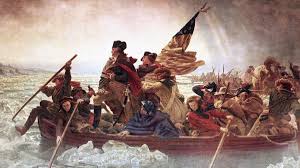
In his book, Washington’s Crossing, historian David Hackett Fischer introduces his volume with a discussion of Emmanuel Leutze’s famous painting of the same name. Fischer guides the reader through elements in the painting, noting passengers figure by figure as they frantically navigate the frozen Delaware River on that long ago Christmas night. 

Why is this particular work especially moving? Because at that juncture, December 25, 1776, the Revolutionary War looked to be flaming out after barely a start. Defeat had dogged Washington’s Continentals after being chased off of Long Island, and driven out of New York City the previous summer. As Washington planned his surprise Christmas attack, victorious Redcoats had settled into winter camp in New York City.

Humiliated, Washington knew he had to strike hard and he had to win.

Viewing his situation with the “clarity of desperation” the General ordered an assault on Hessian (German mercenary) held Trenton, New Jersey. The Continental army would have to use the element of surprise fighting against a better armed and better fed opponent. Risky to the extreme, Washington knew we, meaning America, for all time, was dependent upon his actions that night.

As for the painting, the artist depicts freezing soldiers huddled in a boat with more watercraft in the backdrop. From the starboard side, (to the right of General Washington) sits an oars-man, distinctly Black, putting his back into his strokes, ploughing through dangerous ice floes. Behind him, facing forward at the bow, is another swarthy figure, perhaps a Native American. He is desperately kicking ice with his left boot while handling a sharpened pole to break open a passage through the impossible crust. To the foreground an immigrant (a Scot by the look of his hat) studies the river’s surface closely as he pulls forward to port, while another behind him, in fisherman gear, studies the treacherous water. Others are made up of rustics, one at the tiller, along with a wounded passenger.

General Washington centers the painting as he is the central figure of the drama. Behind the General is Major James Monroe, and another rugged frontiersman by the looks of his garb. Both men are grasping a 13-star (Betsy Ross) flag, in a grip that elicits an attitude of determination and desperation, with perhaps a bit of warmth. Below both flag bearers sits a WOMAN, yes, a woman pulling her oar with an analytic eye upon the clotting water.

Black, Native, white, immigrant, the highborn, the humble, men and women, yesterday, today, and the future: all of our American lives balanced on the gamble played that night in 1776.

The point I believe Leutze is trying to convey is that we all don’t have to be the same. No one has to agree on the details of our beliefs to ride on that boat. The truth is Americans all have and had different realities and ambitions: differing views of liberty. Still, all onboard had to carefully respect each other’s space and not overturn that fragile vessel, Liberty, for we must stay afloat and row in the same direction. It is in all our interests to do so.

And that metaphor of America, that boat, tested our resolve on one of the nation’s most critical nights. Inspiration doesn’t come any better than from Leutze’s allegorical Washington’s Crossing.

Gail Chumbley is the author of the two-part memoir, River of January, and River of January: Figure Eight. Chumbley has also penned two stage plays, Clay, and Wolf By The Ears, concerning the life of Senator Henry Clay, and an in-depth examination of the beginnings of American slavery. Gail is currently working on another piece, Peer Review, best described as Dickens A Christmas Carol meets presidential history.

Behind the Smiles

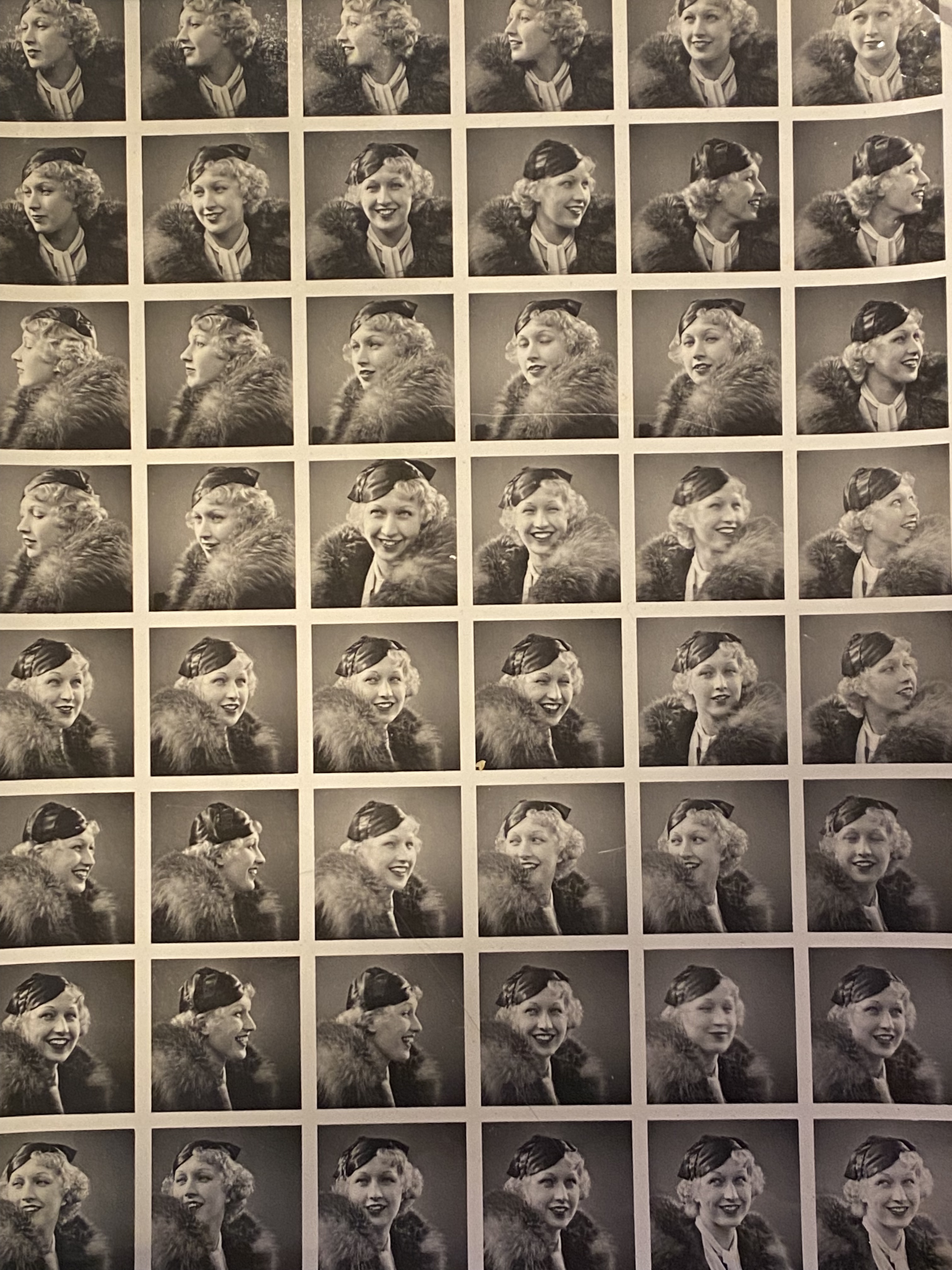
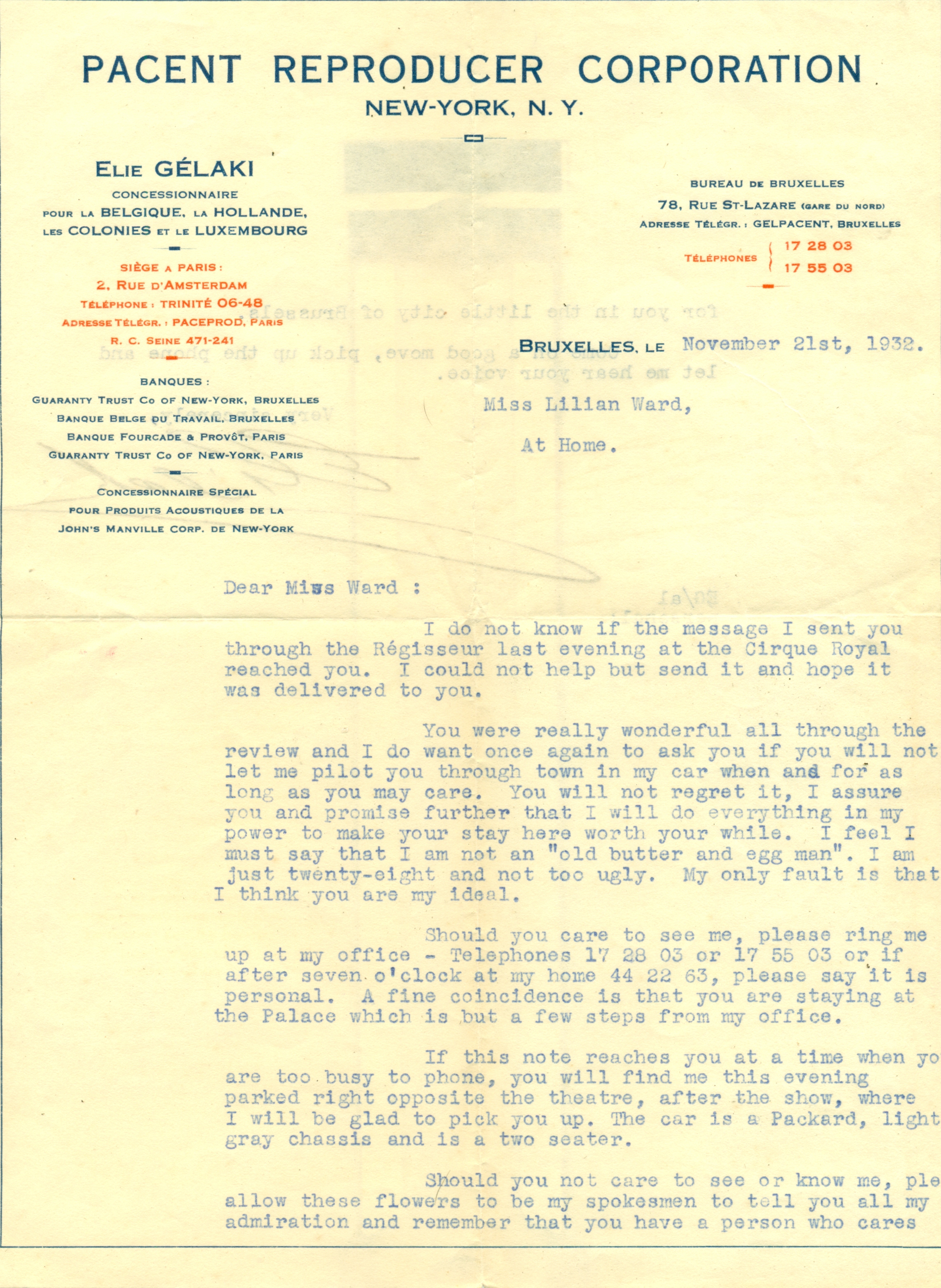
This, of course, is Ann Frank. She sat for this photo montage in Brussels, Belgium, probably just before the war. The studio’s name was Polyphoto International and it was owned by a gentleman named Elie Gelaki.

Six years earlier Elie had established another studio across the Atlantic, in New York City, and evidence indicates he aimed to do the same across Canada, and Japan. Whether those offices actually opened is hard to determine, especially in Japan as war with China had erupted. However, the New York studio did open for business and Elie got to work.

The subject of this session was the reason Elie had traveled to New York. Her name was Helen Thompson and she was a professional dancer. Though at first he had mistaken her name, Elie fell in love with the Helen, eventually following her to New York, seeking marriage. But the wedding never came about.

The 1930’s was a perilous time, especially for people like Ann Frank and Elie Gelaki, both Jewish, living their lives under the growing shadow of Nazism. And though Helen never married the Belgian she worried about his fate as the European war blitzed to life, and of course she knew nothing of Ann Frank until later. You see Helen was my mother-in-law, and though we never met, my husband told me she occasionally shared her anxiety regarding Elie’s fate.

It is evident that behind the smiles, and the momentary pleasure of picture taking, an epic story of three individuals played out in a dramatic chronicle of the 20th Century.

For more of this story read “River of January,” and River of January: Figure Eight” both available on Kindle.

Chumbley has also penned a feature film script based on the books titled, “Dancing On Air,” and in addition two plays on American history topics-“Clay,” and “Wolf By The Ears.”

gailchumbley@gmail.com

Peer Review #1

Marines manned numerous doorways along the wide hallway, as clusters of tourists wandered through colorful rooms. Upstairs the President listened to the public commotion with satisfaction, not for the house, not for the job, which, in truth, had become tiresome, but for the knowledge he could drop down and set all their bourgeois hearts aflutter. 

After a moment, he made his decision, slipping down an interior stair case, stepping into the Blue Room.

As his hands automatically fluffed his hair, the President sidled up beside a class of wiggly school children snapping cell phone pictures.

“And where are you from?,” the president teased with pleasure, anticipating an excited response. He half closed his eyes, and paused, waiting for the gratifying answer.

But he heard nothing.

Bemused, the President opened one eye, then the other. The chatty children paid him no mind, in fact were moving away, following their guide into the hallway.

“Wait,” he found himself calling. “It’s me, your President. I’m here.”

He repeated, “The President of the United States.”

But the children didn’t hear. He remained alone in the Blue Room, his hair acceptably coiffed.

No further tourists entered, though dozens drifted past the doorway. He didn’t understand and he thought very hard, seeking a rational explanation.

It was at that moment that he heard a voice, quite close, and quite annoyed. 

“Am I to understand you are a New Yorker?” 

The President wheeled around toward the sound. Before him, no more than an arm’s length away stood a mustachioed gentleman, wearing pinz nez spectacles, sporting a shiny top hat. The man’s eyes blazed behind the thick round lenses, and the astonished President detected a trickle of cold sweat trace down the back of his thick neck.

“I say, are you, or are you not, a New Yorker?” The stern man spoke in a nasally, patrician voice.

“Ahh. How did you get in here,” the President stammered. “Where is my secret service protection?”

“Supercilious pup,” the man in the top hat snapped. “They tell me that YOU are from New York, and are president! A common side show huckster, President.”

The President, though alarmed, replied reflexively, “I’m in real estate. I . . .made my fortune in New York real estate.” Only the muffled din of passing tourists kept the President from panic.

“Real Estate!” The man in spectacles scornfully shouted. “I’d say you are just another scoundrel from the wealthy criminal class. In New York, swindlers like you are a dime a dozen. I made a career of exposing rascals like you.” 

The man, attired in a three-piece suit, a watch fob draping his ample waist, bore a deep scowl. “And you found your way into this office of trust. Intolerable.”

Though bewildered, the President, unaccustomed to such personal insults, felt his pique rising. “I was elected President by the largest margin in American Hist . . .”

“Poppycock,” the specter interrupted. “It is my understanding the decision rested upon a mere tilt in the Electoral system, and that outsiders interfered to make certain of your victory.” 

The strange visitor moved closer. “I’d say that you are a compromised pawn of foreign meddlers, and give not one damn for the American people.”

At this point the President had heard enough, and attempted to move his legs. He wanted very much to escape the Blue Room, but his feet remained rooted. 

“I have important things to do, you need to go,” the President’s voice trembled, trying to sound more confident than he felt.

The apparition narrowed his intense eyes, and took another step toward the unnerved President. 

“I claim more authority to this revered House and Office than your mercenary greed could ever comprehend. You belong with Tweed, Plunkitt, Fisk, Conkling, and the rest of New York’s good-for-nothings. Dishonor has followed you to the Presidency, what, with your womanizing, graft, and unsavory business connections.” The fierce apparition fixed an intense, menacing gaze. “You do not belong here, nor your parade of lackeys and opportunists.

The buzz of foot traffic grew louder, and when the President again glanced toward his unwelcome visitor, he found him gone, the Blue Room empty.

Gail Chumbley is the author of the two-volume memoir, “River of January” and “River of January: Figure Eight,” both available on Kindle.

Hard copies are available at http://www.river-of-january.com


Distraction By Design

On October 30, 1938, radio listeners tuned into Mercury Theater on the Air, a CBS radio program.  The broadcast, scripted and narrated by actor Orson Welles, dramatically detailed a moment by moment invasion of Earth by Martians. To the folks who tuned in late to the program the events were construed as real, that indeed the planet had been attacked, followed with authentic panic erupting onto American streets.

Welles, and Mercury Theater producers intended the script to sound like breaking news, and real it had been received. Bedlam broke out, threaded through with stories of injury, and of suicides. The whole episode left Welles and his producers with a lot of explaining to do.

The following day, CBS Radio and young Welles, (23 at the time) made an on-air apology for the chaos. Eventually the story died down, relegated to an interesting moment of Depression-era America.

Much like October, 1938, mass hysteria has again let-loose upon the country. Only this time the  alarm, and distraction is by design, jolting anew on a 24-hour news cycle. Cannibals, sex trafficking politicians, lizard people among royal families of Europe, and poisonous contrails find gullible believers who hang on every fearful word. 

And the heaviest assault is lobbed directly at main stream media.

How? Don’t believe any of what you see and hear, unless endorsed by the Right-wing echo chamber. In a real world of Covid, climate change, and other pressing issues, the blaring noise of the propaganda machine has sabotaged progress creating more avoidable problems.

Unlike Orson Welles, the profitable rot pumped continually through cable, books and the internet is disseminated without a self conscience blush, let alone any apologies for damages done and lives lost. American consumption of news has degraded far below any sort of accuracy or structured analysis.

Sadly, a large segment of society cannot separate the wheat from the chaff. Consider those who died consuming ivermectin, hydroxychloroquine, and even bleach. Misinformation and fear is lethal.

As the unvaccinated “do their own research,” and die, the insanity refuels every second across media platforms. Makes one long again for a time when truth and responsibility mattered, and mass-hysteria with all its dangers was to be avoided. 

Gail Chumbley is the author of the two-part memoir, “River of January,” and “River of January: Figure Eight.” Both titles are available on Kindle. In addition Gail has also penned two stage plays, “Clay” on the life of Senator Henry Clay, and “Wolf By The Ears,” examining the normalization of racism in America.

gailchumbley@gmail.com

If you liked this, share.

A Dreamer

You may say I’m a dreamer, but I’m not the only one, I hope someday you’ll join us, and the world will live as one.

John Lennon

A professor of History and Government, President Woodrow Wilson fervently believed America could fulfill its promise as the world’s beacon of democracy, a “City Upon a Hill.” After WWI, this President aimed to reform old monarchial Europe, and lead the world to a new, enlightened destiny. But perhaps his ambitions were too lofty to be realized in a cynical world of power and greed.

Participants convened at the Bourbon Palace of Versailles on June 28th, 1919 to design a new future for . . . really the entire world. Wilson attended in person, which for an American President was a first. He posed, all smiles with the French president, Georges Clemenceau, the English Prime Minister, David Lloyd George, and Italy’s, Vittorio Orlando.

Considering the devastation from the recent war, these leaders had their work cut out for them.

After the Armistice had been signed the previous year, Wilson prepared for his journey by completing a new framework to rebuild a better world. Titled the Fourteen Point Plan, the President outlined a path to enduring peace. The intent was clear: Freedom for all. Free trade, self-government, transparency in treaties, a reduction in weaponry, and most importantly, an international peace-keeping body, The League of Nations. This proposed League had been crafted to resolve international conflicts through open diplomacy. For Wilson, mechanized warfare had proven pointless, so much so, that modern warfare had become a zero sum game.

Naturally many attendees were self-appointed representatives from oppressed ethnic groups around the globe. All had gathered to endorse the American President’s call for free governments, freely chosen.

The Chinese, for example, lobbied for colonial possessions formally held by Germany be returned. China was ignored. Young Ho Chi Minh, a student in Paris, attempted to see President Wilson to discuss the liberation of his home, French Indochina, (Vietnam). But Ho never got trough the gilt doors of Versailles.

The multitudes under British colonial rule, clamored for freedom, as well. Egyptian, East Indian, and Muslim peoples embraced Wilson’s vision of self determination. Zionists, Palestinians, even the Sinn Fein in Ireland looked for release from British subjugation.

Returning home to the White House, the President received a cable that his deputy remaining at Versailles, a Colonel Edward House, had agreed, in Wilson’s absence, to drop the League provision. Wilson flipped his wig and back he sailed, to resurrect his League as a non-negotiable part of the final agreement.

And though the League of Nations was indeed established, the US never joined. After all the horse-trading with his counterparts in Paris, Wilson could not convinced Republican Senators to ratify his treaty. Stunned, the President took his crusade to the American people, via a whistle stop tour. Exhausted by exertion and poor health, Wilson finally collapsed, followed quickly by a massive stroke.

Without the United States participation the League invariably failed. And a broken Woodrow Wilson died shortly after leaving office.

Perhaps President Wilson was foolish to think old world autocrats would give up any power and authority to colonial possessions. Clemenceau and others had viewed him as hopelessly naive. And maybe Wilson’s critics were correct. The man had a stubborn, self-righteous streak, that ultimately was his undoing.

Open government, free elections, and international commitment to fair play. Was Wilson merely a dreamer?

Gail Chumbley is the author of the two-part memoir, “River of January,” and “River of January: Figure Eight.” Both titles are available on Kindle.

gailchumbley@gmail.com


Unexpected Inspiration

Dear Helen and Chum

I’ve neglected you since publishing your story, and I regret my doubt-inspired silence.

The delight of researching the both of you, made clear that you lived more life than I’ll ever see in mine. Risk, peril, glamor, and ambition. You put yourselves out there, and is the best story, ever.

I wrote those books wracked through with feelings of inadequacy. Possessing little experience as a writer, I took on both volumes largely on my own and finished them, impatiently pushing the story out to the world, mistakes and all.

Still, I’m not sorry to have narrated your journeys, it’s the most kick ass true story I’ve ever encountered. 

Fear and confusion froze this greenhorn in her tracks. I am guilty of getting in the way of sharing your adventures, and reliving your forever love story. Forgive me. I presumed this 20th century saga belonged to me, but that is not so. Truly, there would have been no books at all, without your daring and triumphs to inspire me.

These books were not a mistake. 

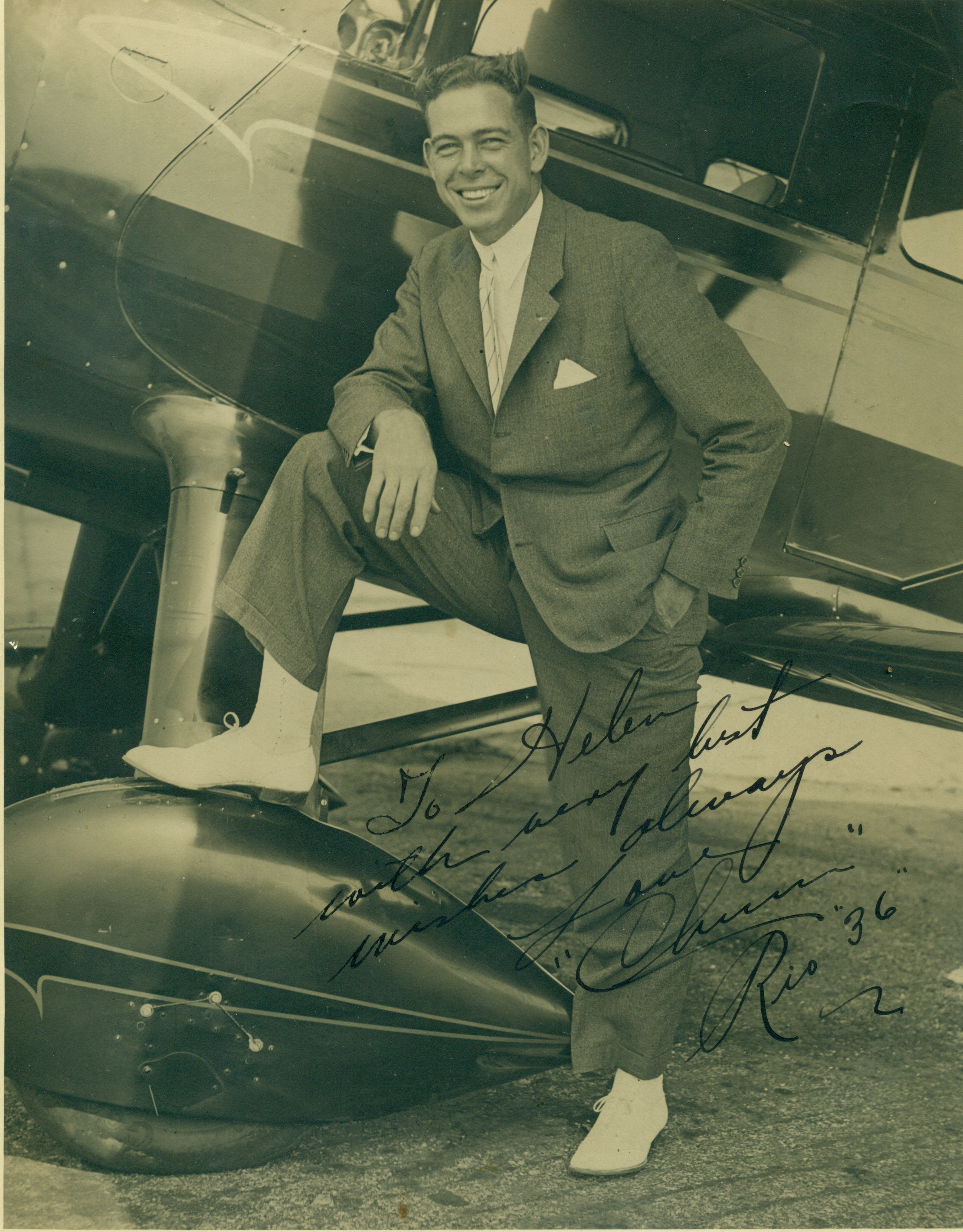
Chum, you squared your shoulders, took a deep breath and strapped into that cockpit, forging a career of monumental consequence. The victor of the 1933 Darkness Derby, you braved the night skies over a sleeping America. Flying your mighty Waco aircraft, you touched down at Roosevelt Field where Lindbergh and Earhart began their storied flights. Later, in defense of democracy, you piloted US invasion orders through a dangerous South Pacific typhoon, tossed and slammed by up and down drafts, to complete your mission.

And to you sweet Helen, though we never met in this life, you inspired the entire effort. It was that first visit to your Miami home when something stirred inside me. A unexpected inspiration. Remember that black and white glossy? The portrait of a sultry platinum blonde? You know the one. Chum had it up in his room until the end.

That photo triggered a spark, a slow burning fire I could not ignore. This story had to be shared. The European tours, dancing, dinner with Maurice Chevalier, cruises across the Atlantic on the SS I’le de France, vaudeville with comedians Jans & Whalen. Then off to Rio de Janeiro you sailed, opening at the Copa Cabana. And after your marriage to Chum, and the war broke out you took up ice skating, performing nightly for Sonja Henie’s productions at Rockefeller Center. My God! What a life.

“River of January” is done, as is the sequel, “River of January: Figure Eight.” Preserved in the pages is magic, whether in the sky, on the sea, under the footlights, and revolving across shimmering ice. This story crackles with your energy.

This won’t be neglected any longer. I’m getting out of your way.

With Love, and Eternal Admiration,

Gail

Gail Chumbley is the author of the two-part memoir “River of January,” and “River of January: Figure Eight.” Both titles are available on Kindle.

gailchumbley@gmail.com

Cocolalla

73115959-SLD-004-0017

We had two cabins on a small lake in Northern Idaho.

Located between Lake Coeur de Alene, and the Pend Oreille, our little acre overlooked tiny Cocolalla, with large windows where we could watch the waves lap up on the beach. The original structure we astutely named the Little Cabin, later followed by the larger Big Cabin. This bigger cottage had been built with all the amenities of home; running water–hot and cold, a tub and toilet, a full kitchen, and electric heat.

Those early weekends in the Little Cabin hold many good memories. All of us crammed into that tiny wood box, the unfinished walls festooned with a lifetime of greeting cards, a big enameled wood stove, and a porcelain basin for washing dishes. Grandpa got his hands on a tall steel milk can and commandeered it for enough drinking water to get us through the weekend. As for entertainment, Grandma had an old radio that blasted the most impressive static, interspersed with Roy Orbison or Andy Williams fading in and out.

Once the Big Cabin was completed and my grandparents moved in, the smaller cabin was demoted to storage. It also housed a set of bunk beds, a fold-down couch, and one double bed; useful for my brothers who were just getting bigger. Now, in addition to greeting cards, the cabin stored every variety of water equipment. Fishing poles, life jackets, oars, and an outboard motor clamped to a metal barrel, with stacks of beach towels the size of blankets.

As I recall, a constant grit of sand coated the linoleum floor.

The property was my grandparents retirement dream, but a dream they happily shared with the rest of us. I knew, even then, that I was always welcome, always.

My grandpa was an early riser, a product of a lifetime as a mailman. He didn’t want to tiptoe around a little kid sleeping on his sofa at five in the  morning. At bedtime my grandmother and I made our way to the Little Cabin in the dark by flashlight. Under the covers of  the double bed, I would chafe my feet deep under the sheets to warm my toes. As we grew settled and peaceful she would begin to reminisce, talking to me for hours in that darkness. I learned of her life in those moments, warm in that cozy bed, listening to her voice, breathing the scent of the evergreen forest.

She told me of my biological grandfather, her first husband, who had left her bereft and penniless after my mother had been born. Despite the Depression, he liked to gamble away their money. My Grandma had to leave him and she struggled to find work as few jobs existed. Forced to farm out her daughter, my mother, in various homes, her the guilt still haunted her. Clearly it still broke Grandma’s heart that she was forced to separate from her little girl for months at a time. I could hear a wound that could never heal.

As the night grew deep, crickets and bullfrogs began to chorus. Flanked next to her, and pressed against some greeting cards, I prayed I wouldn’t spoil the magic by having to go potty. She kept, beneath the bed, a Chase and Sanborn coffee can that I hated to use. It felt cold and left rings on my little bottom. Still, considering options, the can was more appealing than a journey to the outhouse. Using that creepy outhouse in the daytime was bad enough, but at night unthinkable.

Finally poking her lightly, I would tell her. And she never hesitated. Showing no impatience at all, Grandma seemed to make my problem her own, reaching for the flashlight and finding that rusty can. She held the light on me so I could aim properly, then back into the warm bed. No recriminations.

She loved me.

I loved her.

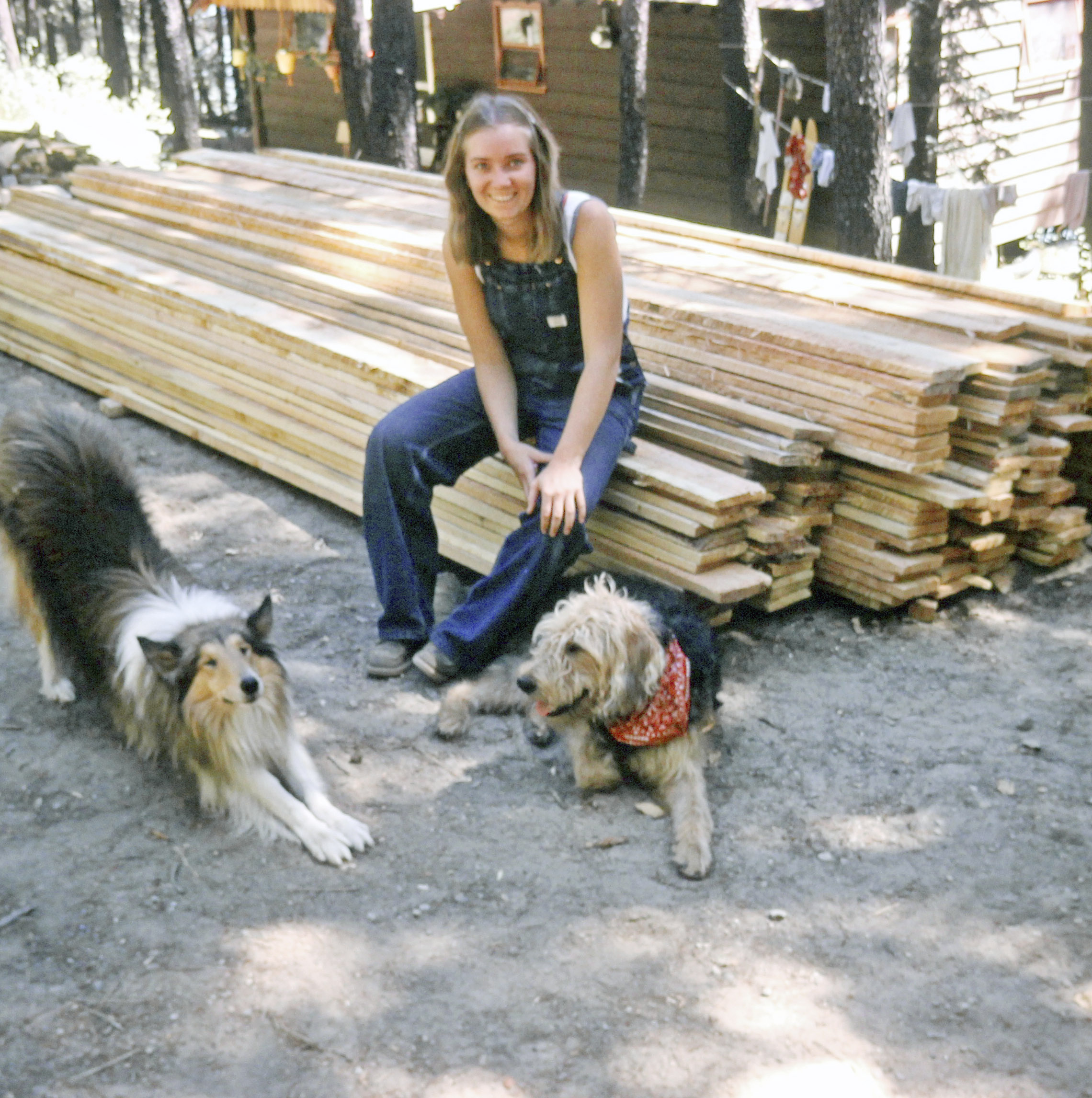
Today my husband and I live in the woods. We don’t have a lake, but a river runs near and we can hear it on very quiet nights. I relax in my cozy bed in the darkness and listen to the crickets and bullfrogs, while breathing in a scent of pine. A sense of complete security, of love, of acceptance returns, synonymous with the love of my grandmother. She was home for me, and though gone these many years, my mountain cabin still echoes with her voice.

Gail Chumbley is the author of the two-part memoir “River of January,” and “River of January: Figure Eight.” Both are available at http://www.river-of-january.com and on Kindle.

gailchumbley@gmail.com