Hat In The Ring (2)

IMG_0955

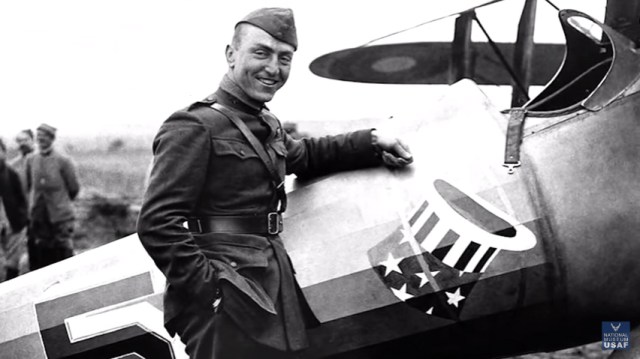
Captain Eddie Rickenbacker poses with an aircraft bearing the emblem of the 94th Aero Squadron. Image courtesy of the National Museum of the U.S. Air Force via Youtube.

This is World War One flying ace, Eddie Rickenbacker. Young Rickenbacker soared the deadly skies over France as a member of the 94th Aero Squadron. He engaged in dogfights piloting Nieuports and Spads, earning the distinction of most decorated American pilot of the war. The insignia of the 94th was the “Hat In The Ring,” seen above.

Rickenbaker0001

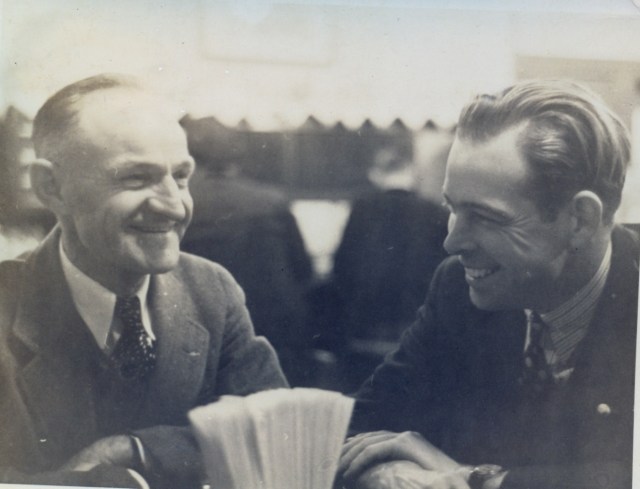
Here is Captain Rickenbacker in the 1950’s while he was president of Eastern Airlines. He is lunching with Mont Chumbley, a proud career pilot for Rickenbacker’s “Great Silver Fleet” from 1940 until retirement in 1969. Mont, known as “Chum” is the subject of my two-part memoir, “River of January,” and “River of January: Figure Eight.”

MightyMonty20001

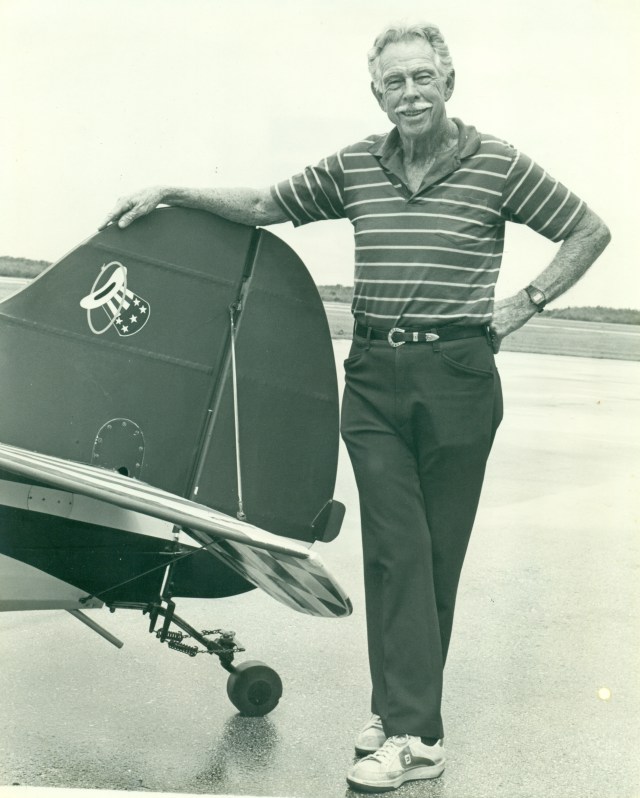
And here stands Mont Chumbley next to his Pitts Special Aerobatic plane in the 1980’s. In memory of his famous employer, “Chum” stenciled the “Hat In The Ring” to his sports plane.

Gail Chumbley is the author of both titles available at http://www.river-of-january.com. Also on Amazon.com.


And He Stood Up

th

This post is a reprint from a few years ago. They young men mentioned are now other places in their careers. Their names are used with permission.

Asked by my old high school, I had the privilege of speaking to young people on the eve of Veterans Day. My remarks appear below.

Thank You for inviting me today—It’s good to be back at Eagle High.

On October 23rd, a few weeks ago, U.S. Master Sergeant Joshua Wheeler of Oklahoma was fatally wounded in a rescue mission freeing Isis-held hostages in Iraq. He died after rushing into a firefight to support the allied Kurdish soldiers he had trained and advised. Secretary of Defense, Asthon Carter, later described the chaotic events that cost this soldier’s his life.

“As the compound was being stormed, the plan was not for U.S. … forces to enter the compound or be involved in the firefight. However, when a firefight ensued, this American did what I’m very proud that Americans do in that situation . . . he stood up and ran toward the sound of the guns. All the indications are that it was his actions, and that of one of his teammates that protected those who were breaching the compound [making] the mission a success.”

The death of Master Sergeant Wheeler spared the lives of 70 Isis-held prisoners scheduled for mass execution the following morning.

Wheeler ran to the sound of the guns. Now I can’t speak for our service men and women, and when I was asked to give this talk, I had to confer with those who have made that solemn commitment. My questions were misleadingly simple . . . why did you choose a military career? What persuaded you to risk yourself for potentially dangerous service?
I wanted to try and understand that burning force of purpose, of unquestioned focus to duty, detach from self preservation for the welfare of others. I wondered how personal fear could be swallowed when, as Secretary Carter explained, “Wheeler involved himself in the firefight.” Where does this nobility of character draw from? Where do these individuals come from—the few that can’t sit on the sideline when duty calls them from their homes?

The answer, strikingly enough, is right here, in this auditorium. Home. Here. No, not someone else from somewhere else. Here. And people, that is where America has always found It’s defenders, from every town and city.

A number of Eagle students have, from many graduating classes, chosen the disciplined military life. Once wiggly kids who, warming the same seats you now occupy, resisting, as you most surely are, the urge to check your cell phones, daydream about the newest version of Xbox, or wonder if Bogus Basin ski hill will open before Thanksgiving. They were kids just like you.
Now I don’t pretend to know the name of every Eagle Mustang who has volunteered for service, but I’d like to mention a few.

After earning a college degree as a civilian, 2004 EHS graduate Captain Greg Benjamin was commissioned an Infantry Officer, sending him north to Ft. Wainwright in Fairbanks, Alaska. From this first posting, Greg has served, so far, two Central Asian tours, first in southern, then in eastern Afghanistan. He wants you to know that he loves the training opportunities he’s experienced so far–Ranger School, Airborne, and Air Assault Schools, and leadership training. When I asked Greg, now married with small children why he chose to place himself in harm’s way, he replied, “I want to take the fight to our country’s enemies, leading America’s finest young men and women in combat and training. And change the lives of people in some of the worst places on the planet.”

Captain Joe Peterson, EHS class of 2005, made his decision after high school too. “I had a number of teammates from Eagle’s Lacrosse team, one year ahead of me, go to a service academy . . . and this kicked-off my thought process in a serious manner. I’d always held the belief of service, but this made the choice tangible for me . . . I received an invitation to visit the University of San Francisco and their ROTC department. I decided to accept.” Joey was posted in installations ranging from Fort Sill, Oklahoma, to Ft. Lewis, Washington, across the Pacific to South Korea, and Central Asia as a platoon leader in Kandahar, Afghanistan overseeing all aircraft and artillery surrounding that area. Reflecting for this talk Joe added, “It was trying at times, but . . . I am proud of my service and it added a value and perspective to my life . . . it has opened doors that are unbelievable.”

Second year West Point Cadet, Colt Sterk described his heartfelt desire to be part of something he termed, “Larger than myself.” Cadet Sterk, EHS class of 2013 explained, “When I was 14 I was given the honor of presenting a wreath at the Tomb of the Unknown Soldier, (in Arlington Cemetery). The nameless soldier in that tomb willingly lay down his life for me, a stranger. I felt a debt of gratitude. Since then I’ve always felt I was called to serve. A senior cadet told me when I was a freshman, ‘Colt in everything you do leave a footprint.’ By that he meant make an impact even if it’s only a little bit. Is it hard? Absolutely. But I know it’s where I’m meant to be.” Colton wants you to know that he visited Israel last summer for ten days studying the Israeli Palestinian conflict, and the implications in that region for the United States, and for the US Army. This semester Colt is attending the US Air Force Academy in Colorado Springs, Colorado on cadet exchange—jumping out of airplanes, and on gliding tactics. He just earned his jump wings after completing the requisite five jumps.

Colby Hyde, EHS Class, 2010 shared a different response. He said, “We are fortunate in this country that military service is not an obligation. We are unfortunate, however, in that we do not often appreciate the sacrifice of those who volunteer on our behalf. Eventually I realized that I didn’t want to be comfortable. Comfort leads to boredom and ignorance, I thought, and life is too short to accept either of those. When someone suggested applying to West Point, I could not resist. I applied, was accepted, and have never left. My life now is not comfortable by any means, and I know the hardships are yet to come. That said, I am more satisfied with my life than I ever was before. I have taken part in New York City memorials for fallen 9/11 responders, and traveled with active duty units to the deserts of Death Valley to help them prepare for combat in Afghanistan. I have traveled across Southern China, can speak, read, and write Mandarin Chinese.

I am thankful for everyone who has served me along the way, from my parents to my teachers, and I only hope I can return the favor in the years to come.” At the end of his letter, Colby added, “I have not done anything for our country yet, but I promise I will. Cadet Colby Hyde graduates from the Military Academy at West Point in 2016.

Tomorrow is Veterans Day. Now I am not here to tell anyone to enlist in military service. Truly, the life of a soldier, marine, or sailor isn’t suited for everybody. At this point in your life you should be dreaming about double diamond ski runs, video games, and Harry Potter marathons with your best friends. And also, to be frank with you, that depth of courage and commitment to duty blooms in the hearts of only an extraordinary few.

What I do want you to reflect upon when you exit this auditorium is that Captain Greg Benjamin, Captain Joey Peterson, Second year Cadet, Colton Sterk, and third year Cadet, Colby Hyde, and many, many other Eagle High School alum have solemnly sworn to protect you. And consider as well, that this oath assures these few will run toward the sound of danger–for us—just as Master Sergeant Josh Wheeler of Oklahoma.

We have remained the land of the free, because we are also the home of the brave.

Gail Chumbley

So Simple, So Basic

Napoleons-death-1024x714

Some social media platforms I’ve read lately insist public schools no longer teach this particular lesson, or that particular subject. And since I was a career history teacher, I want folks to understand that that isn’t necessarily the whole story. If your kids aren’t getting what you believe is important, the problem doesn’t lie in the public classroom. But before I delve into the obstacles, I’d like to describe a slice of my history course.

For sophomores we began the year with the Age of Discovery. As part of this unit students mapped various Native Cultures, placing the Nootka in the Pacific Northwest, and the Seminole in the Florida peninsula. Southwestern natives lived in the desert, while the Onondaga hunted the forests of the Eastern Woodlands. From that beginning we shifted study to Europe, with the end of the Middle Ages. In the new emerging era, Columbus sailed to the Bahamas, and changed the world forever. By the end of the first semester, in December, America had defeated the British in the Revolutionary War, and a new government waited to take shape until the second semester began in January.

We covered it all. And did the same for the rest of the material, closing the school year with the Confederate defeat at Appomattox Courthouse, and the trial of Reconstruction. And that was only the sophomore course.

The story of America grows longer everyday, and that’s a good thing. It means we’re still here to record the narrative.

The drawbacks? Curriculum writers, in the interest of limited time, have had to decide what information stays and what is cut. For example, pre-Columbian America, described above, was jettisoned in order to add events that followed the Civil War. In short, where we once studied Native American culture in depth, we now focus on the post-Civil War genocide of those same people. What an impact this decision has left upon our young people!

When I was hired in the 1980’s our school district had one high school. Today there are five traditional secondary schools, and also a scattering of smaller alternatives. The district didn’t just grow, it exploded. To cope with this massive influx of students, administrators reworked our teaching schedule into what is called a 4X4 block. Under this more economical system, teachers were assigned 25% more students and lost 25% of instruction time. We became even more restricted in what we could reasonably cover in the history curriculum. (I called it drive-by history.)

On the heels of this massive overcrowding, came the legal mandates established by No Child Left Behind. Students were now required to take benchmark tests measuring what they had learned up to that grade level. Adult proctors would pull random kids out of class, typically in the middle of a lesson, often leaving only one or two students remaining in their desks. These exams ate up two weeks during the first semester, and another two weeks in the Spring.

If that wasn’t enough, politicians, and district leaders began to publicly exert a great deal of favoritism toward the hard sciences, especially in computer technology. So considering the addition of new historic events, overcrowded classrooms, tighter schedules, and mandatory exams, the last thing history education needed was an inherent bias against the humanities.

Public education was born in Colonial New England to promote communal literacy. Later, Thomas Jefferson, insisted education was the vital foundation for the longevity of our Republic. Immigrant children attended public schools to learn how to be Americans, and first generation sons and daughters relished the opportunity to assimilate. In short, enlightened citizenship has been the aim of public education, especially in American history courses.

So basic, so simple.

If indeed, history classes provide the metaphoric glue that holds our nation together, we are all in big trouble. And the threats come from many sides. When our public schools are no longer a priority, open to all, we are essentially smothering our shared past.

Teachers cannot manufacture more time, nor meet individual needs in overcrowded classrooms. And both of these factors are essential for a subject that is struggling to teach Americans about America.

As Napoleon lay dying in 1821, he confessed his own power hungry mistakes, when he  whispered, “They expected me to be another (George) Washington.” Bonaparte understood the profound power of the American story.

And so should our kids.

Gail Chumbley is the author of the two volume memoir, River of January and River of January: Figure Eight. Both available at http://www.river-of-january.com and on Kindle.

Beloved #392


“So buddy, I was wondering if you have any plans tonight,” Fred Murphy said as the Mariner throttled to the Alameda dock. “It’s nice to head over to San Francisco when the opportunity presents.”

“What did you have in mind, Murph?” asked Chum.

“Is that a yes? Because there is this place pilots really like—but it’s a kind of a surprise, and you’re gonna have to trust me.”

“You, Fred? Trust you? Should I pack my service revolver?”

“Just trust me, Chum.” Murphy smiled.

That evening, a yellow taxi crawled up the steep incline of Telegraph Hill in the drizzling rain—Coit Tower front and center in the foreground. From his vantage point in the cab, Chum studied the illuminated monument—the raindrops and the wipers making it an abstract, streaky blur one moment, a defined structure the next. Their cabbie downshifted, doubling horsepower for the uphill climb to a line of apartment buildings stacked along Montgomery Street. The taxi stopped at a plain stucco building, the simple design a contrast from the adjoining buildings with ornate wrought iron balconies. Murphy paid the cab fare.

“This doesn’t look like much of a nightclub, Fred,” Chum remarked.

“Trust, remember? Besides, this is the best place in the Bay Area for fellas like us, pal. You just wait—she’s gonna love you.”

“You know I’m married, Fred.”

“Ha! Funny, Chum. So am I.”

The men ducked under the stoop and Fred gave a quick knock on the door. After a moment, a small Asian woman opened the door. She’s smaller than Bertha, Chum thought. The maid maybe?

“Lieutenant Murphy! Welcome back, welcome back,” The woman’s smile transformed in warm recognition. “You have escorted someone new to meet me, I see. Is he as skilled as you, my dear lieutenant?” Chum felt his jaw drop. Murphy laughed.

“Hello, Mother.” Murphy stooped and pecked the woman’s cheek.

Under her wire-framed spectacles, “Mother” shifted her appraising eyes back to Chum. “Welcome to my home, Lieutenant. And you are . . . ?”

Still unsure about why he was there, Chum stumbled over his answer. “Chumbley, ma’am. Lieu . . . Lieutenant Montgomery Chumbley. But please call me Chum.”

“Delighted to meet you, Lieutenant Chum. I can see that Fred did not prepare you for this visit.” Mother’s eyes returned to Murphy, conveying a light reprimand. To Chum she said, “I am Doctor Margaret Chung, but as you have already witnessed, all my sons refer to me as ‘Mother.’ Lieutenant Murphy has brought you here tonight to not simply meet a nice Chinese lady, but—I would guess—for your formal adoption into my family. Please come in, come in.” Dr. Chung gestured down a long, cluttered hall, and the two pilots complied.

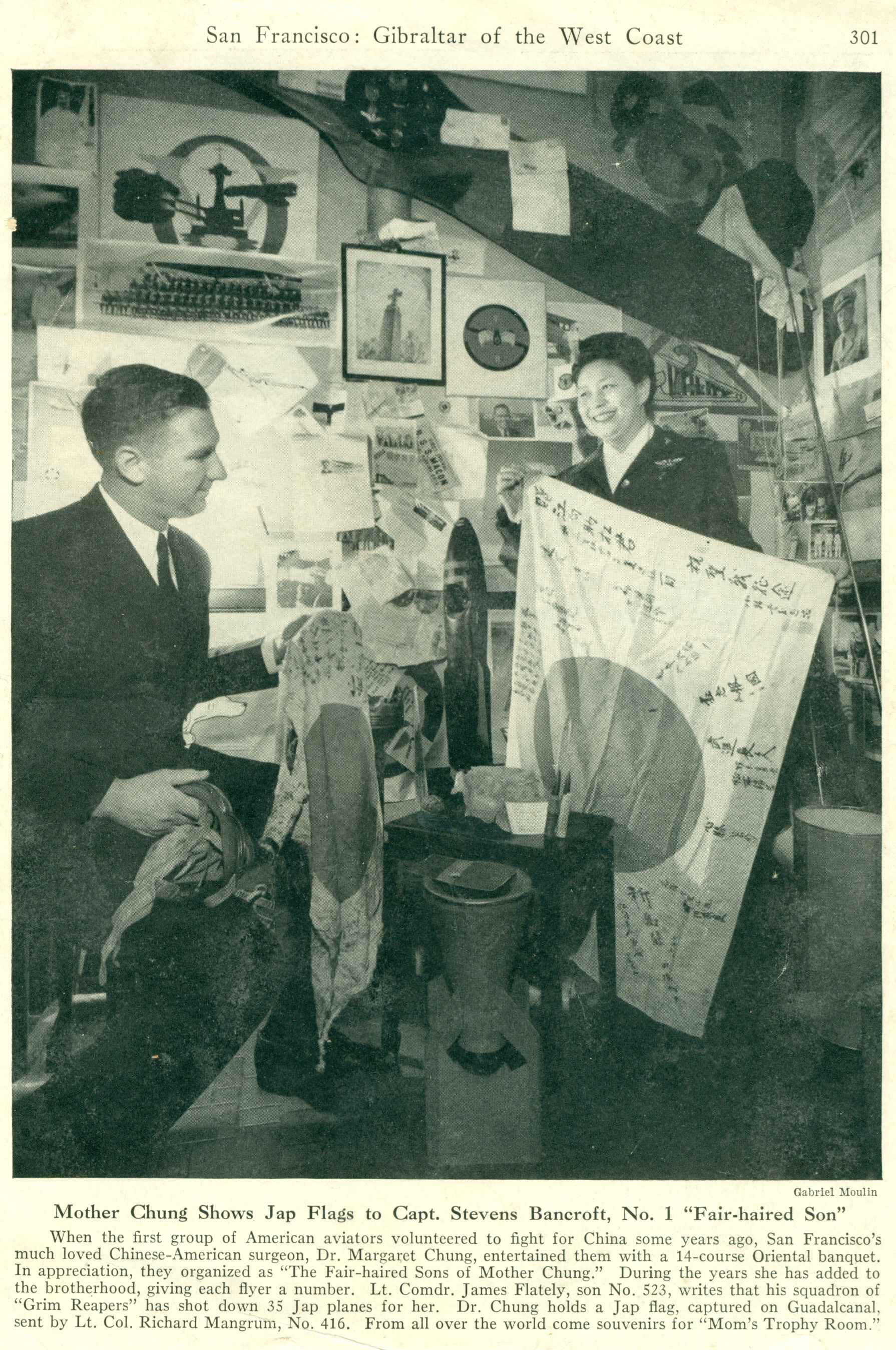
Presented with such a confusion of artifacts, it was hard to know where to look first. Framed glossies of smiling aircrews, salvaged pieces from Nakajimas and Zeros—propellers, pieces of fuselages, wings—graffiti-strewn flags bearing the distinctive rising sun, spent torpedo casings, Hellcat and Corsair unit insignias, and hundreds of news clippings and snapshots of smiling pilots . . . her walls a chaotic collage of air war memorabilia. Dr. Chung studied Chum’s incredulous face as he absorbed the massive collection, visibly pleased with his reaction.

“Please find a seat, gentlemen, and allow me to explain my haphazard museum to our guest,” Dr. Chung said. Chum slumped into a stuffed wingback chair, his eyes still sweeping the memorabilia. “As you already know, Lieutenant Chum, China is presently suffering under the cruel occupation of the Japanese Empire. You need look no further than the barbarism that took place in the city of Nanking to understand my natural revulsion.”

Chum nodded. He had seen newsreels of the butchery in that city.

Dr. Chung’s eyes reflected both tragedy and determination. “I have made it my mission to raise not only awareness but also funds for the suffering people of China. It is men like you, our skilled pilots, who are striking most directly against the foe, and that kind of bravery has made you one of my dearest sons.”

Dr. Chung dropped her gaze and reached over to an end table, picking up a leather-bound ledger. She shuffled through the pages, passing inscribed signatures, finally chancing on a blank space. Holding her fountain pen, Mother began scribbling into the register. “There—done.” She glanced at Chum. “You, Lieutenant Chum, are now officially a member of the Fair Haired Bastards. Ah, let me see”—Dr. Chung silently calculated—“you are son number three hundred and ninety-two.”

She extracted a small card from a drawer in the end table and carefully filled in the blank lines. Finished, the surgeon rose and, with a handshake, presented the card to her new visitor. Chum read:

This is to certify that

Montgomery Chumbley

Is a member of Dr. Margaret Chung’s Fair Haired Bastard’s Club, San Francisco

                                                                                         Margaret J. Chung MD

Her intense eyes softened, her smile gentled. “Remain safe in those dangerous skies, Lieutenant Chum. I don’t want to lose any more of my sons.”

Chum glimpsed over to his co-pilot, then back to his exceptional hostess, grappling for something to say. “Thank you, ma’am. This is an unexpected honor, and I will do my best to defeat our enemy.”

At that, Dr. Chung beamed, offering the boys a beer. More relaxed, the doctor inquired about their aircraft, their primary duties, and what they had seen of the fighting.

“Doctor Chung, ma’am,” Chum said, still inspecting the cluttered walls. “I just have to ask. Who is Fair Haired Number One?

“Ah.” She nodded, producing a wry smile. “An excellent pilot, and he’s from this area—from San Francisco. You may know him, Lieutenant Chum. His name is Lieutenant Bancroft, Stevens Bancroft.”

Of course he is. Chum threw his head back and laughed. “Oh yes, I know him, ma’am.

Gail Chumbley is the author of the two-part memoir “River of January” and River of January: Figure Eight.” Books are available at www.river-of-january.com and on Kindle. 

gailchumbley@gmail.com
September 1, 1939

A civilian pilot learns of war.

17881034_303

Los Angeles

1939

On a sunny morning at the first of September, Chum arrived in the town of Winslow, Arizona, bumping down the landing strip at the airfield. Taxiing off to the side of the field, he observed a crowd collecting close to the control tower. Curious, he rolled to a stop, switched off the Waco, and hopped down. “What’s cooking?” he asked no one in particular.

A boy in greasy dungarees and black high-tops chirped up excitedly. “The Germans invaded Poland, mister. And England and France have declared war!” The boy beamed proudly, satisfied with reporting such important news.

Astonished, Chum stared blankly at the kid—countless considerations flooding his thoughts. Poor Helen. She’s been worried about what would happen. She loved France. I’ll probably be hearing from the reserves. We’re not in yet, but it’s only a matter of time.

While various scenarios dominated his thoughts, Chum refueled his plane. He then carried on with his flight plan, eventually touching down in Albuquerque—his destination. With his Waco S Series plane tethered to the ground, the pilot beelined to the small airport office, anxious for any news. The day had grown hot, but Chum barely noticed. He needed water, but the news came first. Approaching a low, dark building, he heard a voice booming from a radio:

At dawn, with no provocation or declaration of hostilities, the German army has invaded Polish territory, ruthlessly violating the country’s national integrity. Intensive bombing attacks are at this moment raining death and destruction over the cities of Poznan, Wroclaw, and Danzig resulting in considerable casualties among innocent civilians . . .

“Hey, Coop,” Chum called, hailing the manager. “What’s all this about marching Germans?”

“Been waiting on you, Chum,” the man called Coop replied, turning down the news broadcast. “Got a cable here for you from Troy. And that breaking news is all too true, pal.” Coop gestured toward the radio with his thumb.

Mumbling thanks, Chum unsealed the telegram, tuning out the now-muted announcer. He read:

Finish Albuquerque demo. Then to Troy. Big meeting. Perry

“They want you back at the nest, I’d wager,” the manager said with a knowing expression.

“Yes. Yes they do. All hands on deck, as the saying goes.” Chum tried to smile.

“Jerry’s hit Poland hard,” Coop continued. “First their heavy bombers, then the tanks, then the army marching in. Poor Poles. They don’t stand a chance. Radio announcer called the attack blitzkrieg.”

The word didn’t click. “What’s a blitzkrieg?”

Coop replied in a dark voice, “Lightning war.”

Gail Chumbley is the author of the two-part memoir, “River of January,” and “River of January: Figure Eight.” Both books are available at http://www.river-of-january.com, and on Kindle.

gailchumbley@gmail.com
Thanks for Noticing

“River of January,” and “River of January:Figure Eight” have garnered some recognition. Find out why today. Click this link www.river-of-january.com, and order your own copies, personally signed by the author.

Award winning history instructor, Gail Chumbley is the author of the two-part memoir River of January and Figure Eight.

Saddle Shoes, Florida, & Rosalie Sorrels

Screen Shot 2017-06-17 at 4.24.53 PM

I never imagined a living legend would grace my home.

The weather had finally turned at the cabin; brief, chilly showers shifting into warm sunny intervals–golden debris blowing across the deck. I had given up clearing away leaves and pine needles, settling instead for mopping rainwater off of plastic chairs. In our cabin for less than a year, my husband and I had volunteered our small place to host a fund raiser for two local candidates running for county offices.

Guests began arriving in late afternoon, carting in plates of finger food and bags of chips. Visitors commandeered my little kitchen, quickly producing cheese & meat trays, while toasting garlic bread in the oven. Shuffling knives and serving spoons, I glanced up to an opening door to greet one of the arriving candidates. Her husband followed her bearing a big smile and carrying an old fashioned squeeze box—a melodeon. I sensed a forthcoming singalong.

I vaguely recognized the third visitor passing through the threshold. After introductions were made, the mystery cleared; the lady was legendary folk singer, Rosalie Sorrels. She had driven over with the candidate and her husband, as they were friends from the other side of the county. I had seen Sorrels before in concert, and honestly grew tongue-tied meeting her in person.

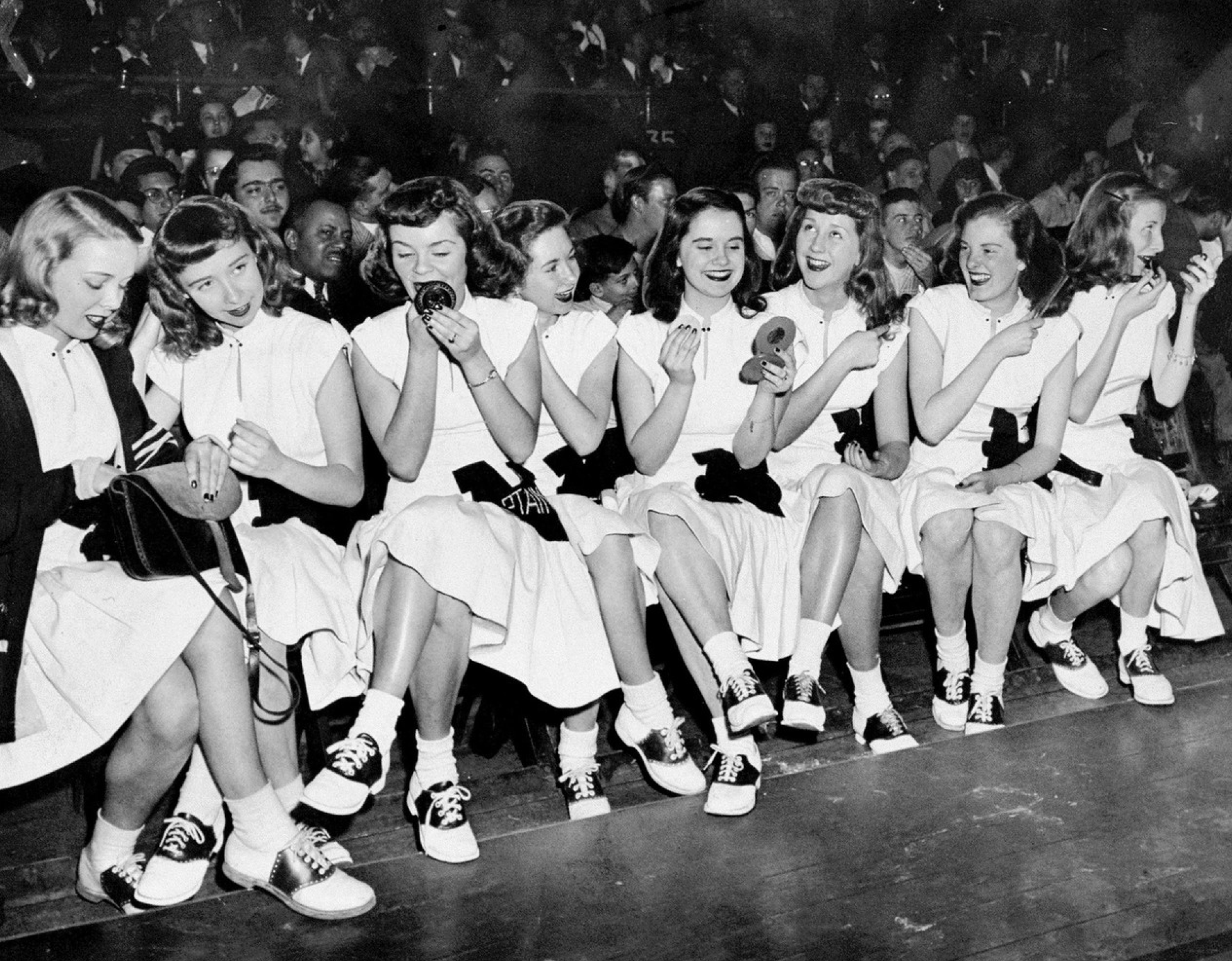
The room filled and the evening warmed–mellowed by good wine and friendly camaraderie. Ms Sorrels drifted around the room, chatting here and there, while perusing our limited artwork. She admired, in particular, a panel of over-sized Florida scenes, soon sharing tales of chauffeuring her children through the Sunshine State many years earlier. At one point, she and I shared a moment out on that leaf-strewn deck, agreeing that cutting down a tree, even as a safety measure, was still a shame. But the big conversation that memorable night centered on my footwear, a pair of vintage saddle shoes.

One woman told us that at her California high school everyone called these shoes Oxfords, and were acceptable only in white. Ms. Sorrels happily joined in with a story of her trusty black and white pair. Mine were coffee and cream, the same as I wore when I attended grade school. Odd, but in that moment we all seemed to channel our long ago girlhoods; guarded adult caution melting away in the banter. Animated with a gentle, expressive smile, Rosalie, too, swapped memories, chuckling along with the rest of us.

As dusk fell, and lamp light filled the house, our company began to depart. There were long drives ahead, and people needed to get going. My husband and I waved goodbye, pleased we had opened up our home for the event. And in the following days we shared with anyone who would listen that Rosalie Sorrels visited our cabin. If they didn’t recognize the name, they did after we were through singing her praises.

That was nearly ten years ago.

When it came across the news last week that Sorrels had passed away in Reno, my mind traveled back to that singular Fall evening. I recognized then, and I still believe, that the cosmos handed us a mighty gift in that visit, of a luminary who had once driven to Florida with her kids and, like the rest of us wore saddle shoes.

Gail Chumbley is a nationally recognized history instructor, and the author of the two-part memoir, River of January and River of January: Figure Eight. Also on Amazon.

Always On My Mind

fullsizeoutput_55c

Had a six-plus hour drive today; Salt Lake City to my mountain cabin in Idaho. Lengthy car-time, for this Indie writer, always results in exploring fresh ideas for book marketing. I don’t say much to my family, but promoting the two-part memoir, “River of January,” and “River of January: Figure Eight,” is never far from my thoughts, and I’m pretty sure this is true of fellow writers.

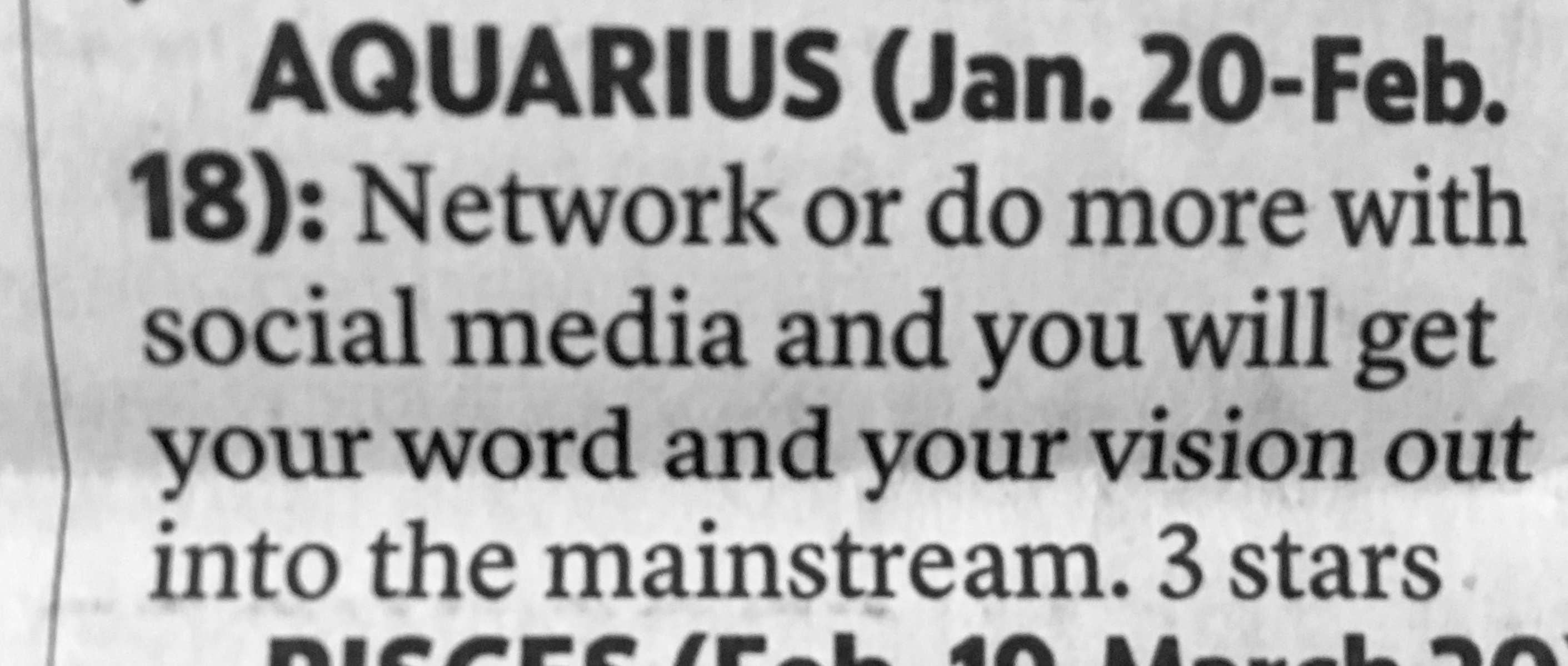
Finally made it home, chatted with the husband, did a little of this and that, then idly picked up today’s newspaper. Now, I’m not an avid follower of the mystic, but being an Aquarian, (there’s a song about us, you know) I sometimes do indulge. And, as you can see the cosmos told me to do this, so by damn, I am.

Dear reader, if you enjoy a true American story, set in the American Century, get River of January and River of January: Figure Eight. In the pages, you will experience adventure, travel, glamour, and romance. Aviation enthusiasts relive the thrills and peril of early flight, theater fanciers follow an aspiring dancer as she performs across international stages, and takes her chances in Hollywood.

Take it from the author–in peacetime and in war–this two-part memoir is richly entertaining.

http://www.river-of-january.com. Also available on Amazon.com

Gail Chumbley is an award winning instructor of American history and the author of the two-part memoir, “River of January.”


Tagwords

World War One, The Great Depression, Vaudeville, Golden Age of Aviation, Amelia Earhart, Golden Age of Hollywood, Rise of Fascism, Waco Aircraft, Professional Ice Skating, Sonja Henie, World War Two, Battle of the Atlantic, Pearl Harbor, War in the Pacific, Cold War, Sun Belt, America as a World Power.

Get the two-part Memoir, River of January and River of January: Figure Eight and connect these fascinating dots. Also available on Amazon.com

If you’ve enjoyed this adventure, leave a review on Amazon.com. Thanks, Gail.