A Rendezvous

One central  philosophy guided my years of American history instruction. The story had to feel personal to each student, after all it is their country. For the unit on World War Two, I aimed to act as a bridge between my grandparents generation to the kids seated before me. While growing up, my grandparents played a large part in shaping my world view, as the old folks often shared their life experiences. Each had a unique tale on how they committed to fight totalitarianism abroad in the 1940’s, and defend democracy at home. 

All the following accounts involved inconvenience, sacrifice, and interruptions to family life. At that singular moment all they knew was to serve their country, and defeat foreign tyranny. 

A new dark age lay in America’s defeat.
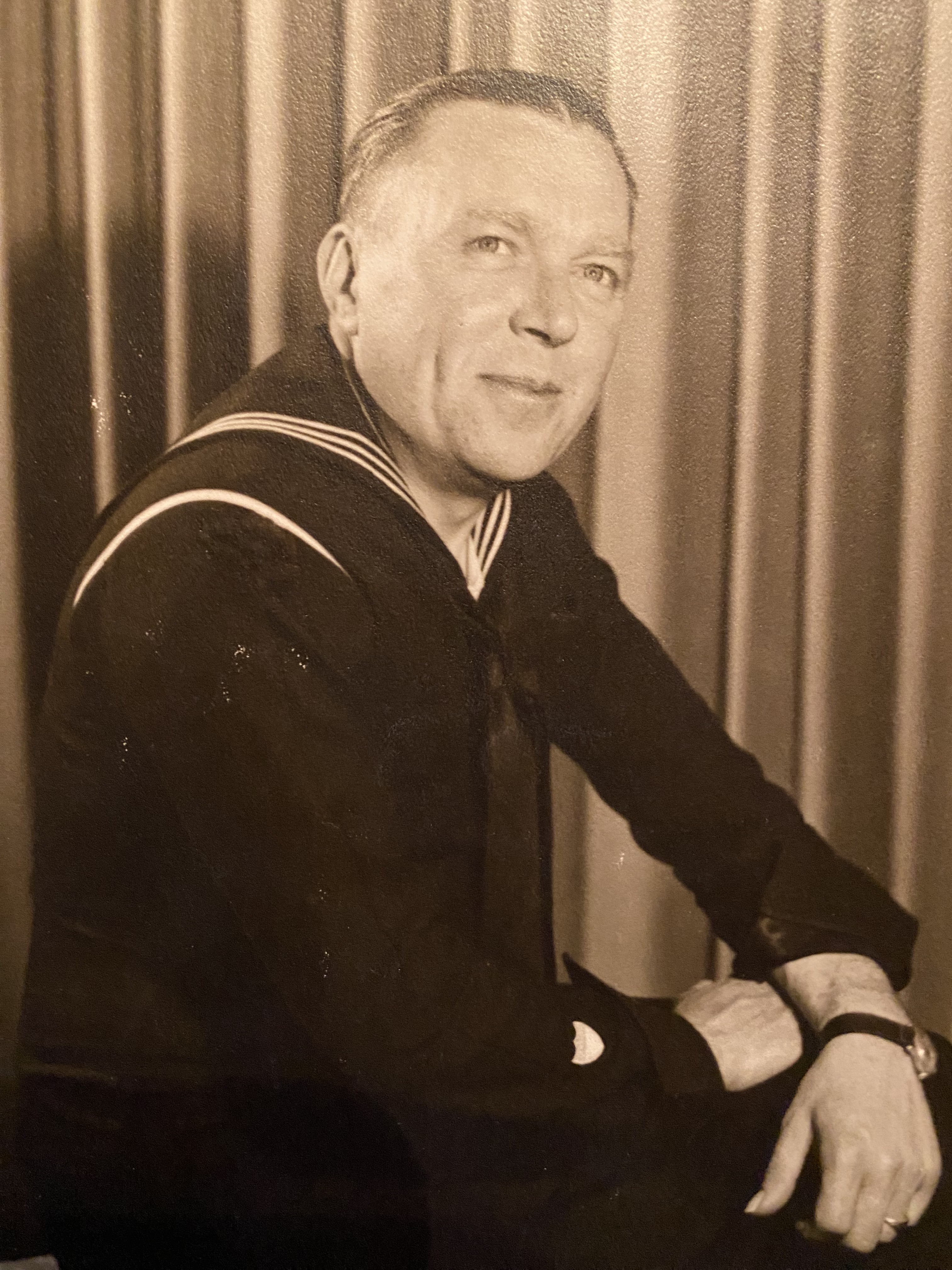
This is Ray Turner, born in 1905 in Hammond, Illinois. This young man migrated west, joining family members in Northern Idaho. Ray soon found his way to Spokane, Washington, where he found work as a postal carrier. Stopping for lunch along his mail route he met a waitress in a downtown cafe, Ailene Peterson, a single mother of one, and after a while they fell in love. Marrying in the fall of 1941, the newly weds, while on a Sunday drive caught a breaking news bulletin on the car radio that the Japanese had attack on Pearl Harbor in Hawaii. Ray turned his automobile around, motored back to Spokane, and joined the Coast Guard the next morning. Stationed out of Willapa Bay in Tokeland, Washington, Ray and the crew of the USS Manzanita patrolled the extensive, rugged Pacific coastline of Washington and Oregon monitoring for Japanese vessels. And it was aboard the Manzanita that Ray remained until August,1945 when he mustered out of the service and returned to Spokane. After a life of grandkids, holidays, and fun on his lake property, he retired from the US Postal Service, passing away in 1974.
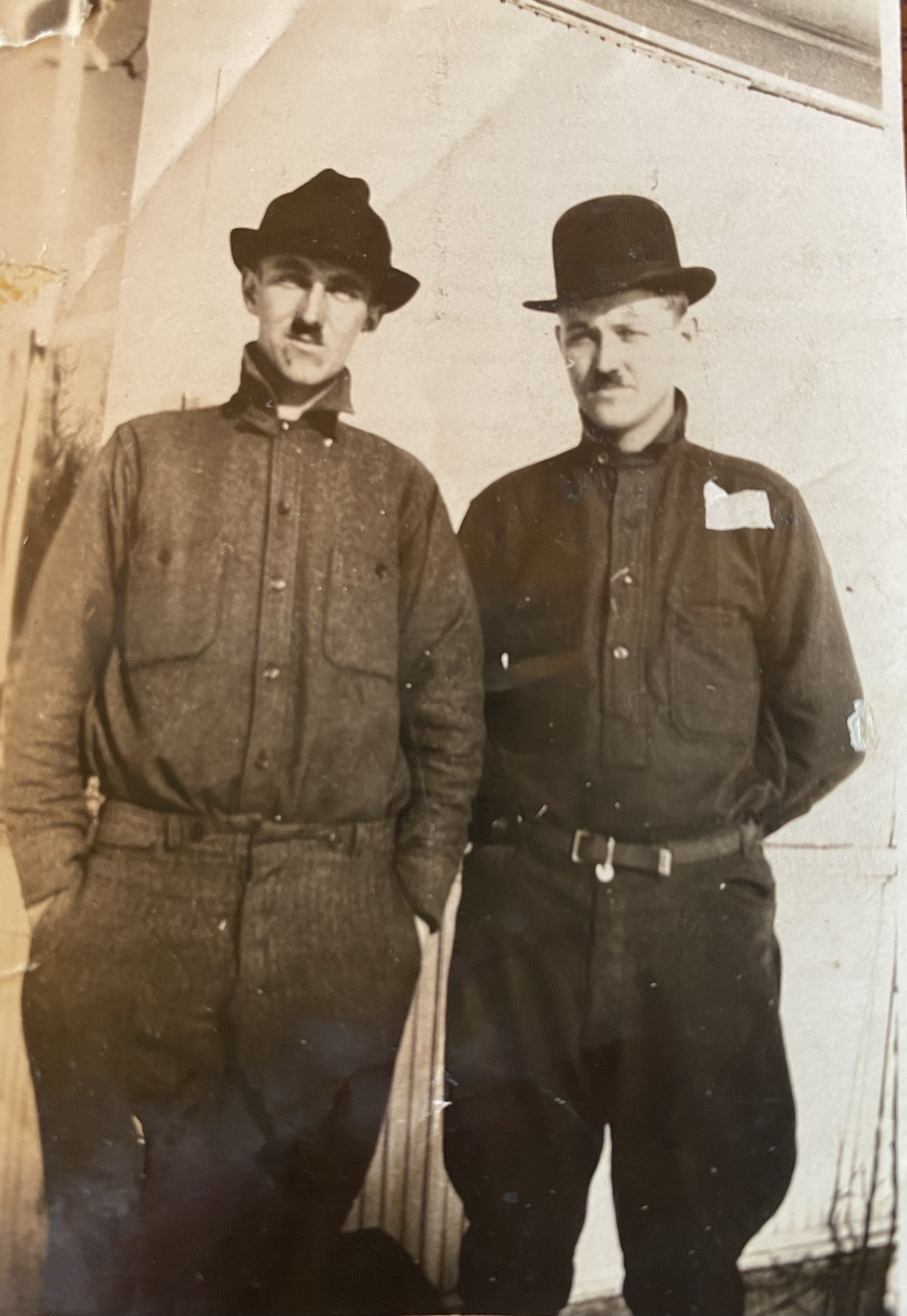
Kurtz Olson hailed from Wing River, Minnesota, born on a frigid day in January, 1905. Kurtz, as the youngest of seven children took up welding as a young man, and made a fair living during the difficult Depression years. This photo, take in the 1930’s, (Kurtz on the left) indicates that Hitler was considered harmless and laughable. That certainly changed in 1939, and after the Pearl Harbor attack brought America into the war, Kurtz packed up his wife and family and traveled west to Tacoma, Washington in search of war work. Kurtz spent his days dismantling scrap metal in a welding yard preparing the steel for conversion to ships, planes, tanks, and other war materiel. After the war Kurtz moved his family to Spokane, where he welded, owned a series of mutts, cut firewood with his son, and grandson’s. Kurtz passed on in 1989. 

IMG_0791

This GI is Joe Tucker, this snapshot taken somewhere in France around 1944. Born in Craig County, Oklahoma in 1907, Joe found himself back in uniform at the ripe old age of 37, much older than the 18 and 19 year-olds in his outfit. Joe had actually been in the army until 1939, receiving his first discharge before the war. Making his way to the Pacific Northwest he too, settled in Spokane where he met and married a widow with three children. His daughter from his first marriage lived in the city, as well, and he wanted to remain near her. Working for the Northern Pacific Railroad, with his new, larger family, Joe joined the Washington National Guard for the extra pay guard duty brought in. After Pearl Harbor the US Government nationalized the Washington Guard, and off he went to war. After training stateside, then stationed in the south of England, Joe found himself on Normandy Beach on June 7, 1944, D+1. Surviving those first days he and his fellow Guardsmen suffered through the Battle of the Bulge, finally winding their way to Germany. On one particular night, Joe stood guard duty somewhere in Germany. He heard his sergeant grouse was the soldier on duty asleep? The reply was no, it’s Tucker, and he’s awake alright. (Joe liked telling that story). Eventually Joe shipped home to reunite with his family in 1945.
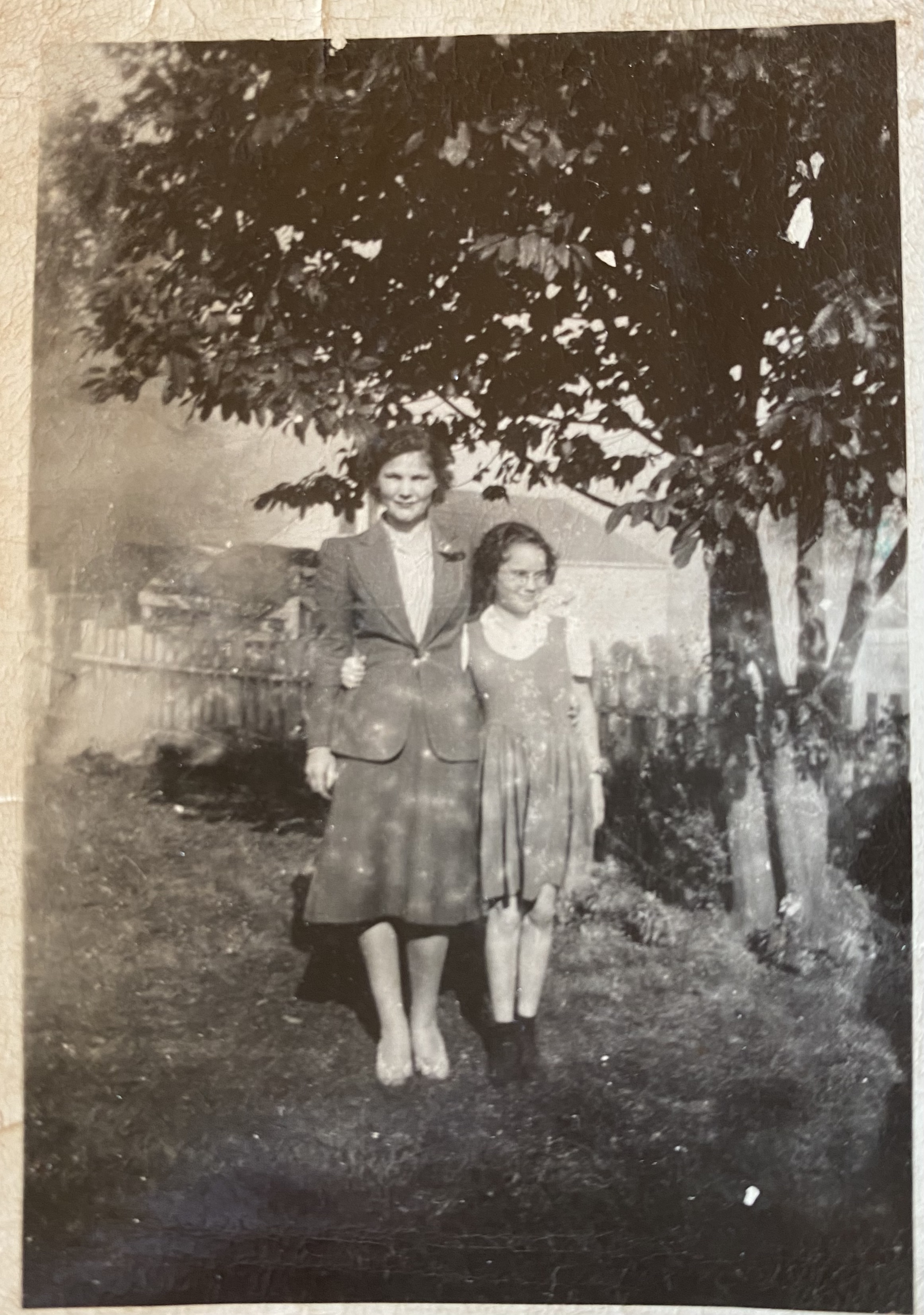
From her waitressing job, Ailene Peterson, turned Ailene Turner followed her new husband Ray to the Washington coast. Traveling with her young daughter Ailene looked for war work as well. Born in 1914, in Clinton, Minnesota, Ailene had married quite young, desperate to leave her father’s stump farm in North Dakota. Husband #1, Joe Tucker had failed her, and with her young daughter in tow, sought refuge with family members in Spokane. It was in Bremerton, Washington that she found employment wiring mine sweepers for America’s Russian allies, (she said they were very rude). In later life, Ailene proudly mentioned that her work never had to be redone. She always wired it right the first time. In an operators cab of a crane, Ailene noticed the girls below waving their arms and jumping about. Shutting down the motor she heard them yell that the Japanese had surrendered, and the war was over. Ailene scrambled down from her seat, and joined the victory celebration. She, too, along with Ray returned to Spokane until her death in 1990.

Besides being my grandparent’s, and generously sharing their remarkable stories with me, what else did these people share in common? They put aside their personal lives to step up in defiance of fascism and authoritarianism. They knew that service to America, to our democracy, was their first duty.

Retelling my grandparent’s war-time sacrifices to my history students added a vividness to the coursework that encouraged the kids to do the same with their elders. That, once again is how I bridged the war years to now, making it personal for students. 

President Roosevelt had characterized that moment as America’s “Rendezvous with Destiny,” and those people rose masterfully to the challenge. And despite all the hostility to democracy today, we cannot surrender to those forces, and betray our forebears who stood up to defend our way of life.

Perhaps now is our “Rendezvous with Destiny,” and this time all we have to do is vote for the Democrat over the wannabe dictator.

Once again, a new dark age lay in America’s defeat. 

Gail Chumbley is the author of the two-part memoir, “River of January,” and “River of January: Figure Eight.” Both are available on Kindle. Chumbley has also penned two history stage plays, “Clay,” and “Wolf By The Ears.” She is the co-author of “Dancing On Air,” and feature length screenplay, and is working on “Peer Review,” for the stage, a series of short plays where DJT meets real presidents from the past.

gailchumbley@gmail.com
The Gadget

FDR had an agreement with Winston Churchill. Though the Japanese had hit Pearl Harbor in the Pacific, the two leaders prioritized the European theater. Meeting on the HMS Prince of Wales, the two men met face to face (for the first time) agreed defeating Hitler’s Germany was job number one.

The US economy transformed quickly. America took the position as the arsenal of democracy for our allies. Jeeps, halftracks, Higgins boats, aircraft, and munitions were produced, largely, all largely produced by thousands of women on assembling lines. The United States was in full warfare mode. Some of these wartime innovations are still around today; ranging from radar to M&M’s to penicillin.

One such innovation came from the work of refugee physicists, Enrico Fermi and Leo Szilard. Both refugees had escaped Hitler’s antisemitic reach. Fermi was a pioneer in nuclear fission, Hungarian-born Szilard, embraced Fermi’s calculations. But Szilard knew he needed assistance to get this theory into the hands of President Roosevelt. Enlisting the help of a former colleague, Szilard contacted Albert Einstein. Though a pacifist, Hitler’s treatment of Jews, moved Einstein to use his celebrity to reach out to the White House. 

Events moved quickly after FDR read Einstein’s communication, and that was the genesis of the Manhattan Project. J. Robert Oppenheimer, a physics professor at UC Berkeley was tapped to head the program. He had argued that a remote central laboratory was essential for security and secrecy. New Mexico’s Los Alamos had been a childhood haven for his family and the US Army agreed to the proposed site. Subsequently, universities across the country began to noticed colleagues disappearing from science departments. Gone in secrecy these people were sent by rail to New Mexico.

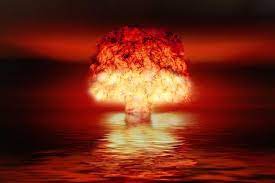
The horror of Hitler and the Nazi regime fueled the furnace of urgency in the New Mexican desert. The pace itself became a force of its own. The work never ceased. A genocidal German dictator controlled Europe and this weapon became essential to end the war. Eventually in July, 1945 the “Gadget” as the device was nicknamed, stood ready for a test.

Of course the detonation was successful in a culminating in a horrific, frightening cataclysm. 

But by July 1945 the war in Europe was over, and Hitler dead.

FDR too had passed, and Churchill would soon no longer serve as Prime Minister of Great Britain. Suddenly the vice president, Harry Truman found himself President. Inundated with intelligence and war measures, Truman, later remarked he felt as if the moon and stars had fallen upon him. That briefing included the status of the Manhattan Project still frantically underway in Los Alamos.

The rest of the story is known. A new film has been released on the project and on Oppenheimer. To speak plainly the atom bomb was intended for Germany, but dropped upon Japan-twice. And this weapon certainly proved effective in ending the war in the Pacific. 

But bombs did not go away. Along with synthetic rubber, flu vaccines, and even computers, the atomic bomb still looms large. Science melded with military matters into what Eisenhower would call “the military industrial complex.” This Cold War triggered an arms race as the bombs grew in scope and in size, leaving all of America in a state of frightened readiness.

As for Oppenheimer, he lingered the rest of his life a tormented man. The why of the effort was never considered during the frenzied development of the weapon. However, once witnessed, in all of its glorious horror, the physicist lived in perpetual agony 

In his own words the physicist anguished “I have become death.”

Gail Chumbley is the author of the two part memoir, “River of January,” and “River of January: Figure Eight.” In addition Chumbley has penned two plays, “Clay” a study of Statesman Henry Clay, and “Wolf By The Ears,” exploring the underpinnings of racism.

Life Experience

I present history talks here and there, most recently focused on American presidents. The thesis for these programs looks at how each brought their life experiences to the presidency. For George Washington, a man who did his duty, for Andrew Jackson, his iron will, Abraham Lincoln’s push for opportunity, and Theodore Roosevelt’s sense of purpose.

This analysis rests on the old Hamilton/Jefferson dichotomy, particularly views on the proper size of government. Washington supported the supremacy of federal power, crushing the 1794 Whiskey Rebels by force, in Western Pennsylvania. Jackson had an inconsistent record on federal power. He was tough on South Carolina’s refusal to collect a new tariff, threatening to send in the military, as well. Oddly, at the same time, Jackson, without a blush, sided with the state of Georgia in removing the Cherokee and other indigenous people west. Lincoln embraced the Union, waging war, over allowing to let the government fail. Last, Theodore Roosevelt grew the size of government, and placed the federal government as the defender of righting wrongs. Set aside were National Parks, tracts of wilderness and game preserves. TR, protected America’s natural beauty for American’s for all time. Not to forget consumer protections in food and medicine.

For now, I haven’t gone beyond those four individuals, but with that premise as a guide, how do 20th, and 21st Century presidencies stand up to analysis?

Like Washington, Dwight D Eisenhower too, operated from a deep sense of duty. One of seven sons, Ike sought and received an appointment to West Point. A man of conviction, Dwight Eisenhower, as President, sent 101st Airborne to Little Rock, Arkansas to desegregate Central High School. Though not a progressive when it came to civil rights, he still enforced the law. And as a side note, Ike promoted the Federal Aid Highway Act of 1956, creating America’s first interstate freeways system. This piece of legislation came about from Ike’s early days in the army. In 1919, Lieutenant Colonel Eisenhower commanded a cross-country convoy of Army vehicles, Atlantic to Pacific, spending more time pushing rigs out of the mud than making forward progress. A lesson he never forgot.

A child of affluence, John F. Kennedy had to overcome considerable health problems and the expectations of his prominent father. Like Theodore Roosevelt, or Franklin Roosevelt, for that matter, Kennedy spent a lot of his youth ill, and hospitalized. Besides, “Jack” wasn’t meant to be the presidential nominee from the Kennedy clan, it had been his older brother, Joe Jr., his father’s first choice. Sadly Joe Jr. perished in a secret mission when his aircraft exploded over England in 1944. JFK, too, had nearly lost his life in the South Pacific, but survived, inheriting his father’s ambition.

After a brief stint in the Senate, Kennedy faced off against Richard M. Nixon for the White House. Prevailing in the 1960 contest, with his father’s sponsorship, JFK entered office and soon faced down Soviet aggression. This young president weathered a thirteen-day crisis when the Russians were detected building IRBM missile sites in Cuba. The Kennedy Administration successfully negotiated a stand down to Soviet aggression. This President, despite his medical ailments, and injured spine (from the war) most certainly fulfilled his father’s purpose.

As had Lincoln before, Bill Clinton and Barack Obama promoted opportunity. Both men rose from modest beginnings, and possessed keen minds. Clinton had been a Rhodes Scholar, and Obama a constitutional lawyer. Both men pushed for public health insurance, and the Dreamers Act protected children of Mexican nationals providing opportunity for education. Clinton was the first president to address the plight of LGBTQA in the military, (the first chief executive to utter those words). 

And not to be forgotten, opportunity was heavily woven into LBJ’s Great Society objectives.

As for Jimmy Carter, duty seemed to shape his administration. After Nixon’s scandals, and Gerald Ford’s presidential pardon, prospects dimmed in 1976 for the GOP. As president, Carter labored long to warn Americans about dependence on fossil fuels, appearing on television to discuss America’s malaise. However, the country had no interest in belt tightening, and Carter found himself replaced by Ronald Reagan. 

Reagan, HW Bush, and George W Bush are interesting commanders-in-chief. All three were nice, decent men, as well as patriots. A Navy man, Bush senior flew in the Pacific in WWII. Young Bush showed leadership in the aftermath of 911. However, in comparison to the four presidents in my programs these gentlemen aren’t as easy to label. The three were financed by large-monied interests, oil producers, and powerful lobbyist to lift regulations on business. In an interesting side note, Reagan’s own favorite president had been the 30th, Calvin Coolidge. Silent Cal once stated, “The business of America is business,” and Reagan felt the same. 

Each individual brought a unique imprint on the presidency. Extending federal power, or paring down central control. Life experiences shaped the character of each administration. Current President, Joe Biden looks out for middle and working class Americans, as he was raised in that community. Biden, looking out for the rest of us pushed the infrastructure bill and succeeded in lowering health care and drug costs for all Americans.

The last guy made it his duty, purpose, will, and opportunity, as cover for lining his own pockets and launch a coup against America.

Just saying.

Gail Chumbley is the author of the two-part memoir, River of January, and River of January: Figure Eight. Chumbley has also penned two plays “Clay,” concerning the life of Statesman, Henry Clay, and “Wolf By The Ears” an examination of racism and slavery in America.

Inheritance

Harry Truman understood the gravity of his duty right off. When FDR died in April, 1945, the newly installed Vice President got the word he was now president. And what a Herculean task he had before him. A world war to end, conferences abroad, shaping a new post-war world, and grappling with the human rights horrors in both Europe and in the Pacific. Add to all of that, he alone could order use of the newly completed Atomic Bomb.

On his White House desk, President Truman placed a sign, “The Buck Stops Here.” With that mission statement Harry Truman stepped up to his responsibilities despite the formidable challenges he faced.

Did Truman inherit the worst set of circumstances of any new president? Maybe? But it is open to debate.

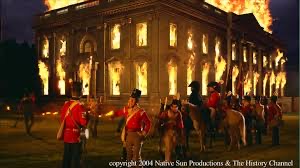
America’s fourth President, James Madison, found himself  in one god-awful mess. His predecessor, Thomas Jefferson had tanked the US economy by closing American ports to all English and French trade. Those two powerful rivals had been at war a long time, and made a practice of interfering with America’s neutrality and transatlantic shipping. Despite Jefferson’s actions the issue of seizing US ships and kidnapping sailors never stopped. By 1812 President Madison asked for a declaration of war against England that, in the end accomplished nothing but a burned out White House and defaced Capitol.

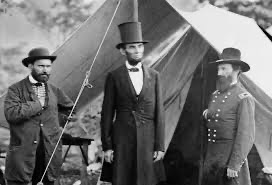
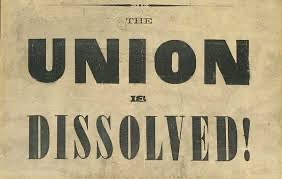
Following the lackluster administrations of Franklin Pierce, then James Buchanan, Abraham Lincoln stepped into a firestorm of crisis. Divisions over the institution of slavery had reached critical mass, and Lincoln’s election was enough for Southern States to cut ties with the North. So hated was Lincoln, that his name did not appear on the ballot below the Mason-Dixon. And the fiery trial of war commenced.

The Election of 1932 became a referendum on Herbert Hoover, and the Republican presidents who had served since 1920. Poor Hoover happened to be in the White House when the economic music stopped, and the economy bottomed out. And that was that for Hoover. His name remained a pejorative until his death. 

Franklin Roosevelt prevailed that 1932 election, in fact won in a landslide victory. Somehow Roosevelt maintained his confident smile though he, too, faced one hell of a national disaster. 

In his inaugural address the new President reassured the public saying fear was all we had to fear. FDR then ordered a banking “holiday,” coating the dismal reality of bank failures in less menacing terms-a holiday. From his first hundred days the new President directed a bewildered Congress to approve his “New Deal.” 

The coming of the Second World War shifted domestic policies to foreign threats as the world fell into autocratic disarray. FDR shifted his attention to the coming war. When President Roosevelt died suddenly, poor Harry Truman was in the hot seat. But that is where I want to end the history lesson.

If any new President has had a disaster to confront, it is Joe Biden. Without fanfare or showboating Biden, too, has stepped up to the difficulties testing our nation. 

Much like Truman and Lincoln before, 46 is grappling with a world in chaos, and a divided people at home. In another ironic twist, like Madison, Biden witnessed, a second violent desecration of the US Capitol.

To his credit, though his predecessor left a long trail of rubble, Biden understands the traditional role of Chief Executive, while clearly many Americans have forgotten, or worse, rejected. Biden is addressing the issues testing our country, not only for those who elected him, but those who did not. An American President can do no less.

Gail Chumbley is the author of the two-part memoir “River of January,” and “River of January: Figure Eight.” Both titles are available on Kindle. She has completed her second play, “Wolf By The Ears.”

gailchumbley@gmail.com

Custodians of Now

Gratitude underpins America’s oldest quasi-secular holiday,Thanksgiving. In the 21st Century it is rather easy to scoff at a quaint observance that predates the founding of the country, and today’s America is a bit too cynical, busy, and self involved for meaningful reflection.

Separatists in 1621 Plymouth had risked all to worship freely in the New World. Suffering starvation and disease, the Mayflower survivors managed a successful harvest with the essential aid of local Natives. In an outpouring of gratitude the newcomers organized a potluck of sorts, and invited their benefactors to pause, count their blessings, savoring both the moment and the food.

General Washington announced a day of Thanksgiving after the fortuitous American victory over the British at Saratoga, and again after the Constitutional Convention in 1787. Moments of mutual gratitude implied a common bond, and an acknowledgment of common sacrifice. 

Later, in 1863, America, once again, faced a crisis of unity.

A grisly Civil War had raged for two years, when emboldened Confederate forces crossed north into Pennsylvania. Soldiers of the Blue and the Gray clashed at the crossroads town of Gettysburg. After a three-day struggle, the tide shifted in favor of the Union, and soon after Confederate troops retreated back into Virginia.

In the aftermath, President Lincoln delivered his Gettysburg Address, and shortly after called for a national day of Thanksgiving. Lincoln set aside Thursday, November 26th for the observance, calling for contemplation and gratitude. Later, in the aftermath of the Pearl Harbor attack, President Franklin Roosevelt signed into law a permanent observance of Thanksgiving to the fourth Thursday of November. 

Aside from roasted turkey, televised parades, football, relatives, and tryptophan-induced naps, this day is meant for reflection; a national respite from other distractions. As Americans we remember those who struggled through their American moment, and refresh our personal obligation to our communities, and to our nation. 

Whatever spirit guides our personal devotion, on this day we place ourselves second to something much greater-the United States of America. We recommit to our highest aspirations as a fortunate and free people; a people who respect what came before, and resolve to protect our democracy for the future.

This Thursday remember we are the custodians of now, and unity is not easy with such diverse and noisy citizens. Still the responsibility remains, carried forward from earlier generations. We Americans have an obligation to nurture solidarity over discord, amity over selfishness. 

All Americans can resolve to preserve this hard-won gift of democracy to those not yet born.   

Gail Chumbley is the author of the two-part memoir, “River of January,” and “River of January: Figure Eight.” Both titles are available on Kindle. She has also completed the play, “Wolf By The Ears,” a historic look on the advent of American Slavery.

gailchumbley@gmail.com

Anyway Anyhow Anywhere

The deal is, coming out victorious World War Two, the certainty of America’s omnipotence shaped foreign policy. The US armed forces proved they could expertly parachute behind enemy lines, storm contested beaches, and plant the flag of American freedom at the close of every engagement. US pride meant we only mobilized decent men, and armed them with top notch war materiel, and enough Hershey Bars to treat the world. 

Those lessons of the 1940’s mislead later military planners. The assumption that Americans could do no wrong, and intervening into other nations, an imperative. However, what worked in one moment wasn’t necessarily viable later. America’s entrance had saved the world, but that particular episode ended in September, 1945, and the US moved forward looking backward.

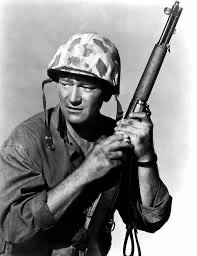
Five years later the Korean conflict exploded, and after three years of fighting, ended where it began, the 38th parallel. That stalemate ought to have signaled a reassessment of America’s role abroad, but the Sergeant Stryker school of war had engrained itself too deeply into foreign poIicy.

I am a child of the Vietnam era. In my head the kaleidoscope of Lucy’s eyes plays, and televised images of soldiers knee deep in rice paddies, flicker in black and white. Protesting students with raised fists, black armbands affixed, occupying college offices, all to the soundtrack of kick ass rock and roll. In fact, the most enduring feature of the Sixties, for this boomer, is that pulsating electric guitar played by the hands of masters.

From 1959 to 1975 Washington dispatched advisers, munitions, and finally by ’65 ground forces to Vietnam. The French had failed to hold their Indochinese possession against the Communists, as they had failed against the Germans in 1940. America would bail them out once again.

But our intervention was premised on dated strategies. Vietnam was not a stand and fight war.

What Vietnam taught policy makers, (for a millisecond) is that patience is a most powerful foe. The NVA and Vietcong played the waiting game with grit and timeless certainty. 

the Our nation was not the first on the scene in Saigon, but certainly the last western power. As for Afghanistan, the dynamic remains. Leaving 10 years ago, or 10 days ago, the outcome would have been the same. The post-911 Middle Eastern conflicts were truly good for the people of those nations, but not for the United States.

Just check with the Brits and Russians. They left too.

Gail Chumbley is the author of the two-part memoir, “River of January,” and “River of January: Figure Eight.” Both titles are available on Kindle.

gailchumbley@gmail.com

The Arrogance of Now

Each year I prepared for two major wars, the finale if you will, of second semester US History. With a combined sense of dread and anticipation, I led the kids through the causes, and progression of the Civil War (with 10th graders), and WWII (with my Juniors). 

A lifetime of study in these eras, especially Antebellum America, tells an anxious story, as two passionate belief systems came to blows. Sophomores learned that our nation, a democracy born in such promise, plunged into the abyss over America’s original sin, slavery.

Meanwhile, for Juniors, the failures of the uneasy peace that followed WWI shaped a broader corrosion. The world after 1919 disintegrated into deadly factions, underscored by exaggerated entitlement, racial hate, and lust for revenge.

Much like America’s 19th Century plunge into the breach, the 20th Century also debased human life, sliding into scapegoating, unthinkable cruelty, and massacre. This record is hard to face, let alone study. 

Real monsters masqueraded as heads of state; Stalin, Hitler, Mussolini, and the War Lords of Japan. All, to varying degrees, convinced regular people that the “worth” of others was suspect, and targeting civilians an acceptable strategy. Yet, as awful as both conflicts were, it’s hard not to stare, and to hopefully recognize the signs when hate again emerges as a justification for horror.

The heresy of exceptionalism, normalizing violence on the vulnerable, and extremism, unleashed evil on the world. Andersonville Prison, Fort Pillow Massacre, the Rape of Nanking, Bataan, the Warsaw Ghetto, and death camps. More than one a student wondered aloud, how could that happen?

In increments.

These signs are clear again. Those same pre-conditions have resurfaced, right now, here in our communities, states, and nation. 

A white nationalist parade in Charlotte that kills one, where there were “good people on both sides.” Normalized daily murders of people of color, and incendiary rhetoric that ends with an attack on the US Capitol, killing five. All offenses excused and minimized by a once great political party, that has forsaken its moral underpinnings. 

The only difference between the Proud Boys and the Brown Shirts is the Brown Shirts didn’t wear Carhartt and flannel.

This endless playlist has looped over repeatedly, cursed by the “blind arrogance of now.” But dear reader, now is then, and deluded people do not change with time. The descent into barbarity is more predictable than exceptional. 

When reasonable folks are manipulated by the chorus of the Big Lie, the era doesn’t matter. Society inevitably falls into depravity.   

Gail Chumbley is a career history educator, and author of the two-part memoir “River of January,” and “River of January: Figure Eight.” Both titles on Kindle.

gailchumbley@gmail.com

The Unforgivable Curse

Many of us have read JK Rowling’s Harry Potter books and/or watched the films. The author created a wondrous world of spells, incantations, and even included law and order via three unforgivable curses. 

There are guardrails in this tale, and a bit of a messiah storyline. Harry willingly sacrifices himself, as had his parents and many others before. However, the “Boy Who Lived,” does, and returns to fight and vanquish wickedness. 

Love, too, permeates the storyline, and the righteous power of good over evil. 

But that’s not my take.

As a career History educator I came to a different conclusion; Harry Potter told me that failing to understand our shared past can be lethal. And that was the metaphor I preached to my History students.

Harry rises to the threat and defends all that is good and valuable in his world. If he didn’t, Harry could have been killed and his world destroyed.

It’s so apropos at this moment in our history to grasp our collective story as Americans.

Honest differences within the confines of our beliefs is one thing. Obliterating the tenants of democracy is quite another. 

Americans cannot surrender our country to this would-be dictator, the things that have cost our people so dearly. Freezing soldiers at Valley Forge did not languish to enable DJT to trademark his brand to hotels, steaks or a failed university. The fallen at Gettysburg, and the suffering in Battle of the Bulge was not to pave the way for DJT to get us all killed from a ravaging plague. The girls who perished in the Triangle Shirtwaist Fire, the miners murdered in the Ludlow Massacre, or humiliated Civil Rights workers beaten at the Woolworth’s lunch counter was not for Donald Trump to validate racism and sexism and undo labor laws. 

He doesn’t know our nation’s history, and as George Santayana warned us, we are condemned to sacrifice all over again. 

Vote. 

Gail Chumbley is the author of the two-part memoir, “River of January,” and “River of January: Figure Eight.

gailchumbley@gmail.com

Riding The Back Of The Tiger

At the start of the Kennedy administration, back in 1961, the story goes that JFK invited in a group of historians to the White House. The new president wanted to chat. What Kennedy asked these scholars was what elements insured a great presidency, and the answer from these learned gents was simple: a war.

Kennedy’s own war experiences in the South Pacific, and the ensuing menace of nuclear armageddon left JFK unconvinced. America’s situation on the world stage was just not as simple as war and peace. The lessons of  Nazi appeasement, especially by his own father, Joe Kennedy, compelled the new president to draw a hardline against Communism, and check its growth around the world. 

Caught in the eye of that dilemma; to appear tough, while preserving the lives of young Americans, Kennedy attempted a middle ground. Reluctant to fully commit US forces in Southeast Asia,  he also engaged in discreet negotiations with the Russians to settled the Cuban Missile Crisis. As a wounded veteran himself, JFK pursued a cautious and flexible foreign policy.

Not all presidencies have demonstrated such restraint.

President Madison succumbed to war cries after mediation with Great Britain looked to have collapsed, sparking the War of 1812. In reality the English had agreed to cease much of the abuse that brought about the war, before Madison’s declaration. Sadly news of accommodations from London did not arrive in time, and two futile years of warfare ensued. At the end of hostilities the United States made no measurable gains from the fight. The only red meat served came compliments of Andrew Jackson in his victory over the British in New Orleans. The war had been over two-weeks by the start of that battle. 

Most agree Madison is better remembered as the “Father of the Constitution,” than for his lackluster presidency.

“All of Mexico” resounded across young America in 1844. A toxic, but powerful combination of racism and hubris plunged America into another conflict-the Mexican American War. An unapologetic new president, James K. Polk, publicly stated in his campaign he would lead America into war, though he meant against Britain in his “54, 40, or Fight” slogan. Waged from 1846 to 1848  Polk ordered the invasion of Mexico, and defeat of the Mexican Army. 

A third war with the British never materialized, as the US opted to negotiate claims to Oregon. Though not gaining all of Mexico, America still claimed Texas to the Rio Grande, the southwest region known as the Mexican Cession, and all of California. In the aftermath of war, slave holders spilled westward in search of fertile new lands. In turn, national tensions escalated, both politically, and morally, erupting into Civil War by 1861. 

No other President extended American power, more than William McKinley, and no president was less eager to do so. As a young sergeant in the Civil War, McKinley had witnessed the truly  horrific bloodbath at Antietam Creek, surviving the bloodiest single day of the Civil War.  By the time of McKinley’s election in 1896, he faced a growing threat of a new war with Spain, this time over the Spanish possession of Cuba. Events careened out of control when a Navy gunboat, the USS Maine, sent by McKinley to protect American sugar interests, exploded in Havana Harbor in February, 1898. The disaster of The Maine forced the President’s hand, and he asked for a declaration of war from an enraged Congress. 

Though fought only from April to August, this conflict gave America island possessions from the Philippines to Puerto Rico. The United States had now officially entered the race to become an imperial power. This war extended fueling ports for the growing US Navy from across the Pacific, to the Caribbean. New markets and resources for American business opened up a fortune in profits. Filipinos, in particular, were left unhappy, switching from Spanish overlords to American authority. A bloody 3-year insurrection, fought in dank jungles, exploded, taking the lives of some 4,000 American combatants.

Sadly, in less than twenty years, the world-wide lust for colonies and riches brought America into the trenches of World War One. Decades-long rivalries for land and resources, particularly by Germany and Austro-Hungary, triggered a ruthless international competition that proved to history how industrialization could bleed young men. Not surprisingly this “war to end all wars” did not benefit Commander in Chief, Woodrow Wilson. In the end, the struggle killed him too.

As World War One ushered World War Two into being, World War Two led to the escalating tensions of the Cold War. First Truman in Korea, then Lyndon Johnson into Vietnam. Perhaps as stepchildren to Imperialism and the Cold War, GW Bush’s blunder into Iraq has assured his low position in history. 

The inescapable truth, Mr Trump, is that war does not make a presidency. With the exceptions of Abraham Lincoln, Franklin Roosevelt, and to some degree, Harry Truman, war has sullied more administrations than enhanced. Blind militarism may titillate your base, but you’re a damn fool to believe you can cheat history. Wars take on a life of their own, and as President Kennedy cautioned, “Those who foolishly sought power by riding the back of the tiger ended up inside.”

Gail Chumbley is the author the historic play, “Clay,” and the two-part memoir, River of January, and River of January: Figure Eight. Both books are available at http://www.river-of-january.com or on Kindle.

gailchumbley@gmail.com

The Almost Cable Guy

Some of you may know that we signed a film option a while back with Falls Park Entertainment in South Carolina. Brett Kanea, the executive producer, read our script, “Dancing On Air,” then my two books that inspired “Dancing.” Brett found it original and exciting and anticipated producing a successful film. Unexpectedly dear Brett died before any filming began. As you can see he from this pic, he was too young to leave us, and our hearts go out to his family and loved ones. 
The morning he first called to discuss the property I thought he was the cable guy expected later that morning. We laughed about that snafu for months after. 
Though our future in film is unclear, Brett’s warmth, humor, and confidence lingers on. 
Godspeed Brett, the almost cable guy.

Gail Chumbley is the author of the two-part memoir, “River of January,” and “River of January: Figure Eight.” Both are available on Kindle.

gailchumbley@gmail.com