Justice as a Force

th

President Andrew Jackson has stopped spinning in his grave. Finally. He hated paper money with all the fiber in his being, and now thankfully for him, no longer tacitly endorses its use. Jackson was a sound money man and believed gold the only genuine medium of exchange . . . weigh-able, bite-able gold; good ole “cash on the barrel-head.” In fact, the President believed so passionately in the principle of gold bullion that he banned any use of paper money for any transaction whatsoever. This same policy, in the end, torpedoed the US economy and triggered the Panic of 1837.

That financial disaster held on for over five chilly years.

But the day has arrived, America has finally heard Jackson’s cries of anguish from the great beyond, and removed his likeness from that raggedy heresy of ersatz value. Still, one has to wonder. What would General Jackson make of runaway slave, Harriet Tubman taking his place on legal tender?

Ms. Tubman, as a woman, and as a slave, lived invisibly in Jackson’s world. The only notice a planter like Jackson would have made was Tubman’s incorrigible practice of stealing another master’s property. For a man of deep passions, of violent loves and hates, her offense would have pissed this president off, and sent him into a dangerous rage. In his world of master and slave, her offenses allowed no mercy, no reprieve.

As for Tubman? She understood a truth that Jackson could never, ever have comprehended—that justice was a force that bore no designation to color, gender, or appraised value. A mighty truth reigned far above the limited aspirations of General Andrew Jackson, killer of banks, Natives, and the hopes of the hundreds he held in bondage.

Tubman’s idea of honorable behavior had nothing to do with white men firing pistols on dueling grounds, and that white social conventions which condemned her to servitude were wholesome and noble. The human condition, as Tubman understood the meaning, held a deeper significance, an importance that required a profounder appreciation. The world of plantations, race hatred, whip wielding overseers, and economic injustice held no real sway, and certainly possessed no honor.

Jackson’s opinions truly hued in only black and white, and that outlook wasn’t limited to skin color. Abstract ideas like ‘humanity’ didn’t resonate in his mind, too ethereal for a man who loved gold coins. Banks were bad, women were ornaments, Indians were fair game, and blacks were slaves. That simple. Of course at the same time, this limited world view gave a figure with Tubman’s vision the edge. If a man of Jackson’s time and station caught a glimpse inside the real thoughts of his “family” members living over in the slave quarters, his mind would have been blown.

So it is with some satisfaction that Harriet Tubman replaces Andrew Jackson on the twenty-dollar bill. But not only because she’s a woman, nor only because she’s black. The star she followed may have literally sparkled in the northern sky, but every footstep she trod signified progress on the road to realizing the immeasurable value in us all.

Gail Chumbley is the author of the memoir River of January

Duty Faithfully Performed

th

April 9th, today marks the 151st anniversary of General Lee’s surrender to General Grant at Appomattox Courthouse, Virginia, ending the Civil War.

Lee didn’t want to to do it. He remarked to his aides that he’d rather ride his horse, Traveler, into a meadow and be shot by the Yankees, than surrender. But the General didn’t relinquish his burden that way, instead he did his duty.

Even General Grant sat in awe of his most worthy foe. Poor Grant seemed to have felt his social inferiority even in the midst of his greatest military victory. Grant informed Lee he had seen him once in the Mexican War, almost stalling, avoiding the business at hand. The Ohio-born Grant came from humble beginnings becoming one of the most unlikely warrior-heroes in history. Graciousness and duty impelled the Union Commander to receive General Lee with quiet, somber respect.

I would bet that though all participants ardently desired peace, no one exactly wanted to be in that room on that April 9th. The war had cost too much, more than any nation should have to bear. So many losses, so much blood; the cream of the Confederate command only memories to the bowed Lee. Grant, musing the thousands he ordered into the murderous fire of Rebel cannon and shot. The deadly dance, just ended, between two worthy foes, from the Wilderness, to Cold Harbor, to Yellow Tavern, to Petersburg, and finally to the quiet crossroads of Appomattox, and peace.

These two generals, and the loyal armies they commanded had set aside all personal concerns, steeled themselves and did their duty, in Lee’s words, faithfully.

Gail Chumbley is the author of the memoir, River of January  Also available on Kindle.

Hey, I’ve Got a Better Idea

hilarious-really-lazy-people-fail13

You’re on vacation! Kick back and read River of January on Kindle!

Sorrow Mixed With Holiday Cheer

73115964-SLD-001-0016

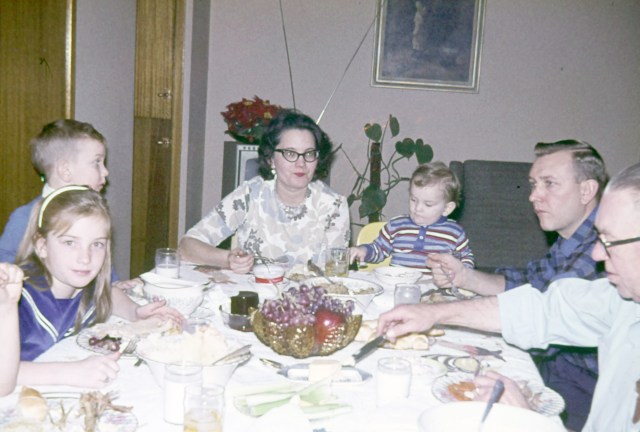
Christmas, 1965, I’m the sailor girl, he’s in blue plaid


We sat at the dining room table, my father having cleared a corner where we could both work. Agreeing to combine our efforts, we decided to write out both his and my Christmas cards in one fell swoop. These days, my visits to the folks come around more frequently—either flying or driving the three hundred miles to spend a few days back in my childhood home. And I didn’t mind addressing that stack of cards, especially with my dad sitting faithfully next to me making the job that much more special.

It’s my brothers who do the heavy lifting around the old homestead. My middle brother, in particular, visits nearly every day, pruning the shrubs, cutting the lawn, shoveling winter snow, and answering those midnight calls for transportation to the hospital which are also growing more frequent.

My youngest brother passes his weekend visits with on-sight, live-in chores. Heavy furniture moved, manure bags hauled, and removing and returning Mom’s giant window box cover, an aluminum contraption, some eight feet long. When those chores are finished, number three son whisks my father off to look at cars, both vintage, and new because they both like cars . . . a lot.

They take it easy on me when it comes to manual labor. My main job is to hang out with the folks and just go with the flow. On one earlier stay my Mom decided we should head out to the local mall. Happy to make the foray into retail-land, I wrestled her wheeled walker into the car, jockeyed for entrance onto the freeway, and we spend the afternoon simply looking around the stores, making time for a little overpriced coffee at the mall coffee spot. On this trip her sudden impulse for fun surprised me. All three of us sped the opposite direction on Interstate 90, to the Coeur de Alene Indian Casino, for some noisy, smoky, slot machine therapy.

If Caesar Milan is the Dog Whisperer, then my mother is the Slot Machine Whisperer. Stooped and round-shouldered, that little dynamo of a woman, cane in hand, cruises through islands of blinking, ringing machines, moving as smoothly as R2D2, but with more tenacity. She says ripe machines beckon to her, and damn if it isn’t true. As I sit beside her, losing my mortgage payment (at an identical machine) Mom turns ten bucks into a sweet fifty in a heartbeat. And she can get an awfully cocky for an old lady.

Bending over my work, back at the table, my Dad and I subtly figure out a production line. I copy last year’s addresses from a stack of cards, one by one, jotting them onto fresh envelopes. Stuffing this year’s card inside, I scribble into a spiral notebook each recipient for his records. My father then presses both the return address sticker and postage stamp on to the envelope corners and seals them up. This system is efficient and should have processed smoothly, except that my parents are now eighty-three, and their friends and close relatives are getting up there, too.

“This one is wrong. He’s in assisted living now. Oh, and he died just before Thanksgiving, poor guy. Say, can you put a line through that first address, and write in the new one?”

“Sure. It will still get where it’s going,” I assure him.

“She died a few months ago.” He sighs. “I’d better look at those envelopes,” he reaches for last year’s batch, “and I’ll get my address book.” Dad didn’t want to waste any more stationary. So by the time we were done with his cards, the final number had thinned down considerably, and he looked a little sad.

Despite that bitter-sweet atmosphere of sorrow mixed with holiday cheer, I found our time huddled at the end of that table somehow uplifting. Clearly our effort underscored that our lives can be measured as a series of losses. The loss of youth, of extraordinary moments too quickly expired, of dear friends, beloved pets, and the dearest of family members who leave us far too soon.

Still there was really no place I’d rather have been at that moment. I’m sixty years old and still I got to sit with my sweet, lovable, ever-constant dad, at a table we’ve shared since I was a little girl.

A precious gift indeed, in this season of joy.

Gail Chumbley is the author of the memoir, River of January also available on Kindle

Sale on Kindle for 99 cents!

th

River of January Cyber Sale

Monday 8:00 AM to Tuesday 10:00 PM

Only .99 cents on Kindle!

“A Modell of Christian Charity”

th

“We must entertain each other in brotherly affection. We must be willing to abridge ourselves of our superfluities, for the supply of others necessities. We must uphold a familiar  commerce together in all meekness, gentleness, patience, and liberality. We must delight in each other; make others conditions our own; rejoice together, mourn together, labor and suffer together, always having before our eyes our commission and community in the work of the same body.  So shall we keep the unity of the spirit in the bond of peace.”

Governor John Winthrop, Massachusetts Bay Colony 1630

Happy Thanksgiving.

Gail Chumbley is the author of River of January available on Kindle and at River of January

Talk Back Wednesday

rojcover10

You’ve read the book, now share your reflections or questions.

Finish this sentence, ‘Chum’s greatest personal asset had to be . . . ‘

or

‘Helen traveled across the US and around the Atlantic world because?’

Post your responses and we’ll talk.

I would love to hear from you,

Gail

The Outside World

My mom took a job in the early sixties with the US Postal Service. At first it was part-time, mostly needed at Christmas, but by 1966 she hired on full time. 

There were four kids, a house, and a yard, and Mom probably was pretty overwhelmed—something today I fully understand. For help my parents decided to host a student each term who attended a secretarial school in Spokane, called Kinman Business University. Lord knows what kind of credential awaited these young ladies after completion, but students did acquire skills such as shorthand, typing, filing, and other tasks.

The first girl who who came to stay with us was named Corrine. I can’t remember exactly the year, most likely around 1965 or 1966. I was in fourth grade. 

Corrine came to us from Alaska, and I remember she told me she was part Filipino or Native American, or both. I thought that pretty cool, Corrine to me symbolized the wonder of the outside world. 

Our house was constantly in a state of chaos, with quarrels, messes, a blaring TV, with people coming and going—chaos. But to walk into Corrine’s small quarters felt like a completely different world. All of her things were neatly stowed away, her bed carefully made, and the space even smelled differently than the rest of the house. I loved visiting her room, as it felt like an oasis of tranquility in a sea of crazy disarray. And it was in her little sanctuary that serene Corrine shared her life with me just a little.

A picture sat on her dresser of a boy. When I asked who he was, she told me his name was Ty, and that they planned on getting married in a few years. Married! I never knew a girl who had plans to get married! The only people I knew who were married were parents, and they were boring. 

He was called Ty, short for Tyrone, and he was visiting Spokane soon. Ty had received his draft notice and following basic training in the Army, he would ship out to a country called Vietnam. Corrine clearly missed him very much, and was anxious to see Ty before he flew to Southeast Asia.

My memories of his first visit are a little vague. I do recall that they sat on the couch in our living room and held hands in front of my parents. That moment struck me as fascinatingly real. 

Looking back I am sure that there were much deeper emotions at play, but whatever vibes filled the room zoomed over my 10-year-old radar.

And then Ty was gone.

The school term ended, and Corrine packed up most of her things and returned to Cordova for the summer. I’m not sure of the details or decisions, but she did return to us the next fall. Once again her room became that wonderful respite from the anarchy of the rest of the house. Ty’s picture again graced her dresser. 

Letters began to arrive to our house written on onion-skin parchment, marked AIR MAIL, bearing Corrine’s name. I’d never seen stationary like that, and she explained that was the cheapest way she and Ty could exchange letters. The paper was light blue, and felt like stiff tissue, but held its shape without creasing. Corrine had stacks of it, both fresh and received—the only sign of clutter in her neat little world.

Finally Ty came back to our house, and this visit was very different from the first meeting. The couple did not sit on the couch and hold hands. Not this time. My pre-teen sensibilities were shocked to see a grown man lying across her lap on the couch sobbing like his heart had broken. 

Poor Corrine! She, too, was dissolved in tears; red, puffy eyes behind her glasses. Ty couldn’t seem to help himself,  or compose himself, and he wouldn’t let go of her. The whole situation felt very surreal. I didn’t understand. How could this orderly girl, and her once orderly fiancé come apart like this, and in front of all of us?

That chapter occurred a very long time ago. My mother still worked, and there were other girls we housed. Still sweet Corrine and Ty live on in my memory as if only yesterday.

I grew up, went away to college, earned a degree in American History, becoming a teacher. 

For years and years I taught a unit on the Vietnam War to high school juniors. I recited the facts surrounding America’s entrance into that long, long, conflict. But in all my experience with those lesson plans, the veterans who visited my class describing their personal war, the analysis by historians we studied, nothing affected me more than the tragic transformation of that broken young man from Alaska.

Gail Chumbley is the author of the two-part memoir “River of January,” and “River of January: Figure Eight.”

Chumbley has also authored two stage plays, “Clay” on the life of Statesman Henry Clay, and “Wolf By The Ears” an exploration of American racism and slavery.

gailchumbley@gmail.com

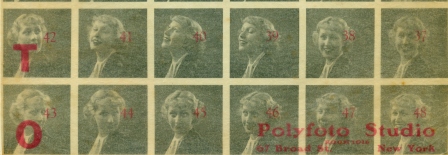
Polyphoto International

Polyphoto2

While composing “River of January,” I spent much of my time searching and analyzing family papers. These letters, pictures, and news clippings, along with other souvenirs, make up an enormous archive which spans over seventy years of the twentieth century. Along with Chum and Helen, many secondary individuals are mentioned in the papers, and when I stumbled upon those names, curiosity sent me on the hunt for more information. One of the characters who rose from the stacks was a proper young Belgian named Elie Gelaki.

Elie made quite an entrance into Helen’s life, and subsequently into the pages of “River of January.” His romantic introduction into the story is reminiscent of a 1930’s Hollywood musical. While taking in the premier of “Voila Paris,” at the Palace Theater in Brussels, Elie spotted the girl of his dreams gracing the stage in a solo act. Apparently the smitten young gent quickly scanned the playbill and decided that the girl must be the dancer named Lillian. In an impulse of ardent infatuation Elie sends a note back stage to Lillian inviting her to meet him after the show. Alas, Lillian doesn’t respond and fails to appear at Elie’s appointed location.

The following night the resilient young man again attends the production. Again he watches, thoroughly enchanted, by the vision that is, he thinks, Lillian, Insistent in his attentions, Elie, this night sends flowers and a typed letter composed earlier that day. Again he implores the dancer to rendezvous at a preselected spot. And happily for Elie, this time she materializes out of the dark snowy night.

The girl seems, Elie notices, amused somehow by his attentions. Then he finds out why. The dancer he believed was Lillian in fact was Helen, and that Lillian had a boyfriend back home, in New York. He is embarrassed by the mix up, but more than that, Elie is charmed by the American girl. After drinks at a late night cafe, he asks to see Helen the following day. And so began the courtship of Elie Gelaki with the breathtaking blonde from New York.

Bringing light to this man, lost to anonymity was an true pleasure. Searching through the volumes of primary sources and the internet, I discovered Elie was born in 1906 in Palestine. Further research, this time reading his avalanche of correspondence (to Helen) revealed that he supported two sisters and a mother in Brussels. Elie proudly shared with Helen his deepest ambition as a businessman, founding a company he intended to expand around the world. He had named the firm, “Polyphoto International,” and confidently assured her that the unique processes he developed would change professional photography forever.

I have thought a lot about this enamored young man, (he was only 28 when they met) and I have ransacked the archive many, many times looking for any picture that might be this steadfast suitor. I’ve never found one. His letters were so loving, so personal, that I had to ask myself why Helen, who kept every other slip of paper had no picture of Elie.

He actually complained about this scarcity as well.

In 1936, four years after they met in Europe, Elie writes Helen in New York begging her for an updated photo. He laments, “If it weren’t for the one (picture) you gave me Brussels, I would have forgotten what you looked like.” Apparently the shortage went both ways.

I had to ask myself why? Why would Helen go out of her way to omit “Elie pictures” from her vast collection of mementos? Then I chanced upon a letter Helen sent to her mother in the middle of her 1932-33, European tour. She goes out of her way to assure her mother that she would never marry a Jew. Now this might sound harsh to modern ears, but I think that Helen felt torn by her denial and his Jewish heritage. From current family members who knew Helen, she once admitted she had a “thing” for Elie, using the word “heartthrob.”

At the time she met the young man, antisemitism was on the up tick, and not only in Europe–but in America as well. What I believe pressured Helen to write such things, was placating her mother. Any single girl worth her salt knows what to say to mother when it comes to “boys.” For Helen, at that time and that place, a rejection was much easier than the truth. And her words belie her actions. She must have given the young man reason enough to continue his amorous pursuit for four long years. He pursued Helen across the world . . .  and by the end of the book, across two oceans.

This continental gentleman, this Elie Gelaki, carefully, and thoughtfully laid out his future. He aimed to achieve financial success in the business world, and he aimed to make the American girl his wife. He wrote her constantly and sailed over the Atlantic to see her when he could. In “River of January” the last readers hear from Elie is in a letter from Kobe, Japan, dated 1936. He explains to Helen that “I hope to conduct Polyphoto business in this city, (Kobe).” And that is it, he is gone. Elie just vanishes.

I know, and readers understand, that all of his plans and dreams and hopes and ambitions mattered not a bit. A war is coming. A war of explosive magnitude, fueled by hate and violence and war crimes. A war against the Jews. Elie’s individualism, his personal ambitions, his entire world was devastated in the massive cataclysm of World War Two.

Uncovering this young man left me troubled. I felt as if Helen had been compromised, as were so many others, to sacrifice her natural regard for the young man in order to conform to conventional thought. Though only an episode in the bigger picture of “River,” this ardent suitor, this diligent businessman, deserves the dignity of recognition and remembrance.

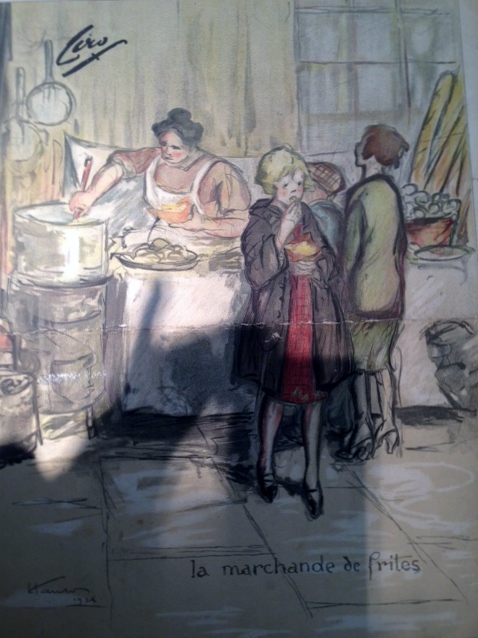
La marchande de frites

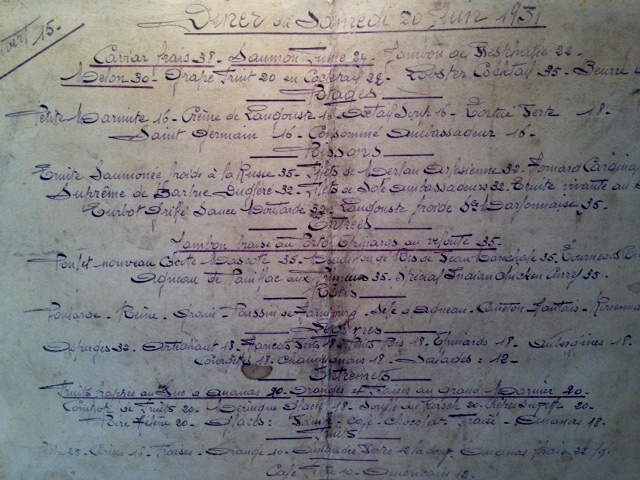
la marchande de fritesThe time was August, 1932. The place was Monte Carlo. This little gem is a menu from an eatery patronized by Helen and her fellow ballerinas, the “American Beauties.” Though the cover is a print, the interior meal selections were meticulously   penned in an ultraviolet flourish.

Helen collected a dozen or so such menus on her year-long excursion; pocketed from bistro’s, pubs, and cafe’s across Europe.  It is hard to say if management frowned upon this custom, or offered menus willingly for advertising purposes. Regardless, the simple beauty of the artwork and flowing cursive recalls a commitment to elegance and style long since abandoned.


la marchand menu

Gail Chumbley is the author of River of January, a non-fiction memoir.