An American Prayer

Whatever your beliefs it’s time to lift your voice and be heard

O beautiful for spacious skies,

For amber waves of grain,

For purple mountain majesties

Above the fruited plain!

America! America!

God shed His grace on thee

And crown thy good with brotherhood

From sea to shining sea!

O beautiful for heroes proved

In liberating strife,

Who more than self their country loved

And mercy more than life!

America! America!

God shed His grace on thee

And crown thy good with brotherhood

From sea to shining sea

Katherine Lee Bates, Samuel Ward

Gail Chumbley is the author of the two-part memoir “River of January,” and “River of January:Figure Eight.” She has also authored three stage plays, “Clay,” “Wolf By The Ears,” and “Peer Review,” all examining moments in American History. In addition, Gail is the co-writer of a screenplay, “Dancing On Air,” based upon the River books.

Bull Moose

The only thing new in the world is the history you don't know.  Harry Truman

The story began with a promise. Following his electoral victory in 1904, Theodore Roosevelt vowed to the public he would not run again in 1908. Assuming office in 1901, following the death of William McKinley, then Vice-President Theodore Roosevelt could have run in ‘08. But he had made that promise. 

Selecting an heir, TR tapped the occupation governor of the Philippines, William Howard Taft. TR believed he could happily step aside and pursue private interests with Mr. Taft in the White House. Taft did not want to be president, but his wife did. Though preferring a seat on the Supreme Court, Taft soon caved to his wife and accepted TR’s offer. 

Reform and good government played a large part in Roosevelt’s administration. He challenged unfettered capitalism, pushing for regulations of railroads, and breaking John D. Rockefeller’s stranglehold on the oil industry. One of Theodore’s paramount issues was preserving America’s treasure trove of national parks, and wilderness areas. 

TR loved the West and wished to regulate development where it wasn’t needed. After completing his term, and Taft safely elected, TR went on safari in Africa with one of his sons. By the time Roosevelt returned he learned things were not to his liking in Washington. Taft had made decisions, and endorsed policies Roosevelt had opposed during his administration. 

In short, Taft had the audacity to run his own administration. 

A big issue of contention was conservation of lands and natural resources. Unlike TR, Taft opened up Alaska’s Chugach National Forest to coal mining. Worse, Taft fired TR’s man in the Forest Service, Gifford Pinchot, a spokesman for public land as recreational for the people. Suffice it to say this, and other disputes turned ugly.

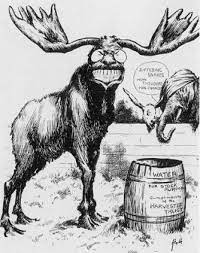
The 1912 campaign season began with TR’s new third party, the Progressive or Bull Moose Party. William Howard Taft also announced his run for a second term for the GOP. New Jersey Governor, Woodrow Wilson, received the Democratic nomination in Baltimore. 

Of course the Republican Party split between Republican conservatives, and the Progressives backing Roosevelt. And Wilson became the 28th President of the United States.

What does that moment of time portend for today? Certainly a major Republican split between traditional and reactionary members is in the offing. Much like TR’s progressive agenda, and Taft’s middle-of-the road-conservatism, GOP voters are going to have to decide. 

Clearly this same party is sliding into another major split in 2024. Is neofascism the preference of today’s organization? That one announced candidate has another term coming, and has made plenty of promises too. Will middle of the road conservatives tone him down and redeem the party in their own image? Maybe. But for today the smart money is on that 80-year-old moderate incumbent.

Gail Chumbley is the author of the two-part memoir, “River of January,” and “River of January: Figure Eight.” Chumbley has penned two historic plays, “Clay” about the life of statesman Henry Clay, and “Wolf By The Ears,” exploring the the beginnings of slavery and racism.

gailchumbley@gmail.com

A Bright Side

Donald Trump, without a doubt has answered the centuries old question of the worst president in American history. His standing as the biggest moron lends Harding, Buchanan, Pierce, and other lackluster presidents a step up from the cellar. 

Is there a bright side to the bedlam unleashed by 45’s insanity? I believe so. Americans have witnessed how not to preside over our democracy in real time. Now that’s a powerful civics lesson. 

Once misunderstood, most American’s were reminded how the Electoral College functions—a big deal demonstrating how a candidate can win the Electoral College, but not the popular vote. From irregularities identified in the 2016 race, shocked citizens across the country wonder if this election procedure has a purpose in the 21st Century. 

The legal tradition of checks and balances took a rough bruising with Congressmen and Senators scurrying to the Oval Office to kiss the ring of their messiah. Two clearly illegal actions by the President; pressing Volodymyr Zelensky of Ukraine to open an inquiry on Hunter Biden, and Trump would offer an invitation to Washington.The second came after the January 6th insurrection using violence to disrupt the ceremonial certification of Electoral College. The House impeached both times, and the Senate refused to convict. The moral of that story? The Executive Branch went rogue and the upper chamber of the Legislative Branch failed in their duty. However, both branches somehow remained intact and horrified voters learned what they didn’t want. 

That elections and voting truly matter may be the most profound lesson of the Trump years. The right to vote is power, and denying citizens of that power became the GOP’s endgame. Even now, the far right longs to deprive many of us, especially minorities from exercising that power. The lawsuits are still flying to undermine our most sacred right under the law.

Another teachable moment touched on the Supreme Court. The 2020 death of Ruth Bader Ginsburg, and the retirement of Anthony Kennedy in 2018 shed light on manipulating the Judiciary. Senate Majority Leader, Mitch McConnell lobbed the first volley through the customary practice of filling Supreme Court vacancies. Before 2016 the sitting president had the privilege to put forth judicial nominees. That had been a long tradition. But the sitting President happened to be Barack Obama. So of course McConnell blew that up. Obama’s choice for the court was Merrick Garland, and McConnell would not hear of it.

Following the 2016 election that tradition resumed. Trump put forth Amy Coney Barrett, and later Brett Kavanaugh. Both lied in hearings to the Senate Judiciary Committee, Barrett testified she would allow Roe to remain, and Kavanaugh was a reputed date raper. The clause allowing lifetime terms for judges added gravity to Trump and McConnell’s shenanigans. 

Perhaps the Trump fiasco holds a silver lining. Americans have become more aware of the workings of our democracy, what functions under the hood, so to speak. Perhaps democracy is indeed fragile, but our near collapse into tyranny has forced us all to wake up and pay attention.

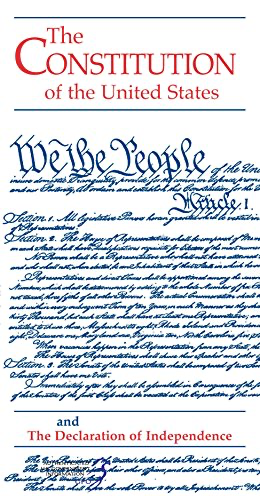
PS contact your Representative in Congress. Request a hand pamphlet of the Constitution like the one above. They have them in their DC office or their home office. We’ll show ’em.

Gail Chumbley is the author of the two-part memoir River of January, and River of January: Figure Eight. Chumbley has written two plays, Clay about 19th Century Statesman Henry Clay, and Wolf By The Ears exploring the genesis of racism and slavery in America.


The only thing new in the world is the history you don’t know

Harry Truman

They Were Wrong

“Slave owners and white racists were afraid that the world they had always known was slipping away from them. Fear was a great motivator—fear of change, fear of losing power, fear being that they were wrong. The roots of white anxiety over threats to enslavement and to legalize white supremacy ran deep.”

John Meacham, And There was Light. Random House, 2022, page 55.

Reading this passage last night stunned me. A myriad of thoughts rushed at once, promptly crystallizing into one central truth; racial dynamics in America have not changed. Not. One. Bit.

Meacham’s book, a biography of Lincoln, focuses on the shaping events that made Lincoln arguably America’s greatest President. However, those same circumstances left the Southern slave power angry, and lethally dangerous. This metastasizing rancor ultimately exploded into Civil War, and to Lincoln’s 1865 murder.

The Missouri Compromise triggered the first alarm below the Mason-Dixon Line. That slavery could be limited through any federal legislative act left slavers touchy and suspicious. Sensitive to any criticism Southern owners  (as Mr. Meacham pointed out), viewed any outside opposition to their standing as a dishonorable insult.

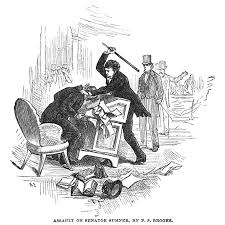
Congressmen and Senators frequently squared off years before soldiers manned battle lines. A Massachusetts Senator suffered a severe beating on the Senate floor for an anti-slavery address. So volatile became the rhetoric that the House chamber finally adopted a “gag rule” prohibiting any mention of slavery in any deliberations.

As Northern abolitionists grew more strident, Southerners grew more militant. A flash of arms became only a matter of time.

Any abolitionists tracts, or books, such as Uncle Tom’s Cabin quickly landed in the trash bin, tossed out by local Southern officials.

The politics of race entered houses of worship with church leaders twisting the Bible inside out to oppose or justify slavery. Today the Southern Methodist and Southern Baptists churches are evidence of the war before the war.

After the guns silenced, into the Reconstruction era the newly emancipated found protection only through Yankee bayonets. Outraged and unrepentant Southern whites waged guerrilla warfare with violence and terror. The Ku Klux Klan, the Knights of the White Camelia, and the White League galloped through the night spreading fear and intimidation to any black-man who dared claim the blessings of liberty. 

Contrasting the 21st Century to the 19th provides strikingly similar dynamics.

In 2008 Barack Obama became 44th President of the United States, and white power interests again lost their minds.

Though at first it appeared that America had turned a positive corner in race relations, Senator Mitch McConnell quickly reacted decreeing the GOP would not work with the new president. Soon after the Congressional Republicans sunsetted a clause in the 1965 Voting Rights Act. Signed into law by Lyndon Johnson, the act protected black voters from discrimination at the polls. McConnell’s handy work placed the onus on the voter to prove they were illegally denied. (Much like the old poll tax and literacy tests days.)

Once again white supremacist perceive their alpha-position slipping away, and they, too, are suspicious and lethally dangerous. The hate group names have changed, but not the mission. Proud Boys, Oath Keepers, neo-Nazi’s, MAGA, and Christian Nationalists gallop now through the internet on the dark web, surfacing to attack as was done on January 6th, 2021.

The signs are all there, fear of a changing America, fear of being wrong, and fearful of losing control.

Those who witnessed the dissolution of the Union believed their blood-soaked sacrifice had settled for all time the issue of race in America. But that is clearly false.

But then is now. Now is then. Eras are intricately and forever intertwined. This nation has remembered nothing and again defaulted to the same old norms of hate and boastful ignorance.

And though those same feelings run deep, and they are still wrong.

The only thing new in the world is the history you don’t know. Harry Truman

Chumbley is the author of the two-part memoir, River of January, and River of January: Figure Eight. She has penned two stage plays, “Clay,” exploring the life of Henry Clay, “Wolf By the Ears,” a study of racism in America, and “Peer Review,” where 47 is confronted by four past presidents.
A Mandate

Theodore Roosevelt endured a childhood haunted by ill health. Orphaned by age 15, Andrew Jackson struggled for survival in the Carolina back country. Born the first son of a second marriage, George Washington aspired to rise above his inferior social rank. Abraham Lincoln, a child of the frontier, transformed himself through sheer hard work, and perseverance.

Before they were men these four presidents encountered enormous obstacles in order to reach America’s highest office.

This is the topic of four programs I’m presenting this spring. The idea of exploring future presidents childhoods seemed an interesting approach to understanding the past. What I didn’t expect was the anxiety churned up researching Andrew Jackson. 

Rereading Chernow’s Washington A Life proved an enjoyable review. Washington was not perfect, and certainly a man of his time. But that he overcame his avarice and ambition makes Washington an affirming subject.

On Lincoln, Douglas Wilson’s Honor’s Voice did no less. The man’s goodness, compassion, and intelligence came directly from overcoming his rustic beginnings. The Rise of Theodore Roosevelt, by Edmund Wilson, plumbs the depths of Roosevelt’s chronic childhood illnesses, and the directive from his father to overcome his frail body through exercise and sports. 

Then there is Andrew Jackson. 

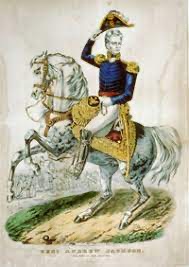
HW Brands work, Andrew Jackson His Life and Times, is an oldie but goody; a book I enjoyed a lot. But that was before Donald Trump. Picking up Andrew Jackson, American Lion has been an ordeal. Jon Meacham describes a man who honestly believed he alone could save America by consolidating all power in the White House. Only Jackson spoke for the people, not Congress and certainly not the Courts. And the most distressing element? The Seventh President got away with his autocratic coup because voters let him. 

How does his childhood figure into his administration? Jackson never had limits. The early demise of his family, left the boy unsupervised in the backcountry, shuttled from one relative to the next. Somehow his rootless beginnings left in Jackson a volatile temperament of him against the world. 

The General murdered scores of Native Americans, and brought home a Creek boy he’d made an orphan. Brutality and tenderness, compassion and racism, love or hate. 

For Jackson all issues of state were personal, and loyalty the foundation of all his relationships. In that vein Trump resembles Jackson, plus the vile racism. 

What separates Andrew Jackson from Trump is a numbers game. President Jackson, for better or worse did win 55.5% of the popular vote in 1828, 54.2% in 1832. (Each election included four or more candidates) Our seventh President did earn an actual mandate from the people. 

Trump did not, and loses more ground every day

Gail Chumbley is the author of the two-part memoir, “River of January,” and “River of January: Figure Eight.” Chumbley has written two plays, “Clay” about the life of Henry Clay, and Wolf By The Ears, an examination of slavery and racism.

Don’t Sit Down

In the political world there are two definitions for the term filibuster. The most common understanding concerns talking bills to death in the Senate, and the other is an unsanctioned invasion of a country to take it over. What both meanings share is a determination to wear out the opposition until the matter is settled. A siege of sorts—never giving up.

Famous uses of the filibuster include Andrew Jackson’s 1818 foray into Spanish Florida. Playing a little loose with his orders, Jackson entered the poorly defended territory, claiming to hunt down runaway slaves, and thump the Seminoles who provided sanctuary.

This extra legal foray caused an international incident. An American general, invading a weaker  target, under questionable authority. In the end, this filibuster paid off. Washington informed Madrid they supported Jackson’s invasion and the US took control of the peninsula from Spain. Done and done. 

The moral to this filibuster story is—never blink, never give up, never excuse.

In 1957, and in 1964, Southern Democrats, made use of the filibuster to talk Civil Rights legislation to death. In the ’57 debate South Carolina Senator, Strom Thurmond nattered on for 24 hours, and 18 minutes, still a standing record. And again in 1964, with Senator Robert C. Byrd of West Virginia, who droned on for 14 hours and 13 minutes. Despite obstructionist resolve, both bills did squeak through with assistance of compromising northern Republicans.

What America is facing at his very moment is a Trump-style filibuster, containing both meanings. His insufferable, boorish delaying tactics, unblinking lies, and frivolous lawsuits have characterized this nincompoop’s newest version. He is certain he can hold out against America.

And I am tired— we all are tired, sometimes to the point of despair. But, friends this struggle against malignant arrogance, greed, and hate is a filibuster we cannot lose. Not only for a place called America, but for the enlightened spirit of our country. Our legal traditions must be protected from this fallible, flawed, would-be autocrat.

Trump has filibustered his whole life for something he’s never found nor earned—blind adoration. And that doesn’t meet our traditions or expectations for elected leaders. They work for us. In a real sense our country has suffered an unauthorized invasion of our government, a hostile take over, and the man’s filibuster continues, unabated.

Poet, Langston Hughes speaks to our moment in a portion of his 1922 poem, Mother To Son.

“So boy, don’t you turn back;
Don’t you sit down on the steps, 
’Cause you finds it’s kinder hard;
Don’t you fall now— 

And Hughes is right. We can not fall. We must stay vigilant and wait this immediate threat out.

Gail Chumbley is the author of the two-part memoir, “River of January,” and “River of January: Figure Eight.”

gailchumbley@chumbleg

The Die was Cast

The threat of disunion appeared long before either the Civil War, or the insurrection on January 6, 2021. The architects laying the chaotic cornerstone? President John Adams, and his Vice President, Thomas Jefferson.

David McCullough in his celebrated biography, John Adams, portrayed this Founding Father as a brilliant man, and that is true. However, his self righteous streak succeeded in undercutting his talent and better judgement. As the second president of the United States, John Adams, proved to be a prickly, and thin-skinned chief executive. A dour Yankee, Adams could not tolerate public criticism, and as many later presidents, came to view the press as an adversary—enemies of the government.

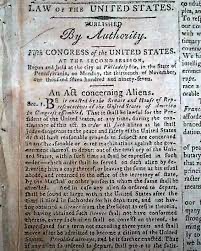
In a rage over newspapers excoriating his administration, Adams shepherded the Sedition Act through Congress in 1798. Opposition editors soon found themselves in the President’s cross hairs, and some were actually jailed. The Alien Act, also passed in 1798, aimed to delay new voters, by lengthening time for naturalization, as immigrants were certain to vote against Adams and his Federalist Party. (Hmm. The press, immigrants, and voting rights. Imagine that).

Jefferson, (still Adams’ Vice President), promptly took action to counter Adams’ wrong-headed legislation.

Launching a full out, but anonymous denunciation of the Adams Administration, Vice President Jefferson published tracts vilifying Adams, and emphasized the sovereignty of the states guaranteed under 10th Amendment.

Returning from France, where he had served as American ambassador, Jefferson had been appalled by the powerful Federal Constitution created in his absence. As a ‘natural aristocrat,’ and slave master, Jefferson was unwilling to cede power to any higher authority than himself, and his fellow patricians. Instead the “Sage of Monticello,” asserted the right of states not to obey laws they didn’t like.

Two state legislatures agreed to debate Jefferson’s counter measures, Virginia and Kentucky. Penned secretly by Jefferson, and Madison, these resolutions insisted the states were the final arbiters of what was legally binding. A new term emerged from this controversy—Nullification.

The die was cast, the seeds of disunion sown. In the years following, nullification intensified, fertilized particularly in 1832 by John C. Calhoun, a South Carolina Senator. That that state became the first to secede in 1861, sparking the US Civil War, is no coincidence.

The traitors who invaded the halls of Congress last January took their cue from Jefferson, as if they, too, battled the evils of John Adams. Scapegoating the media, immigrants and the Federal government has left a long, bloody stain on American history. As I write, the States of Georgia, and Texas among others, are attempting to limit voting rights once again. Texas has also taken a nullifying stance, limiting a woman’s right to her own body, despite Federal protections.                        

No government has a self-destruct button, none. John Adam’s pique, and Thomas Jefferson’s reaction stamped an incompatibility that still, today, inflames American politics. 

Gail Chumbley is the author of the two-part memoir, “River of January,” and “River of January: Figure Eight.”

gailchumbley@gmail.com

Unexpected Inspiration

Dear Helen and Chum

I’ve neglected you since publishing your story, and I regret my doubt-inspired silence.

The delight of researching the both of you, made clear that you lived more life than I’ll ever see in mine. Risk, peril, glamor, and ambition. You put yourselves out there, and is the best story, ever.

I wrote those books wracked through with feelings of inadequacy. Possessing little experience as a writer, I took on both volumes largely on my own and finished them, impatiently pushing the story out to the world, mistakes and all.

Still, I’m not sorry to have narrated your journeys, it’s the most kick ass true story I’ve ever encountered. 

Fear and confusion froze this greenhorn in her tracks. I am guilty of getting in the way of sharing your adventures, and reliving your forever love story. Forgive me. I presumed this 20th century saga belonged to me, but that is not so. Truly, there would have been no books at all, without your daring and triumphs to inspire me.

These books were not a mistake. 

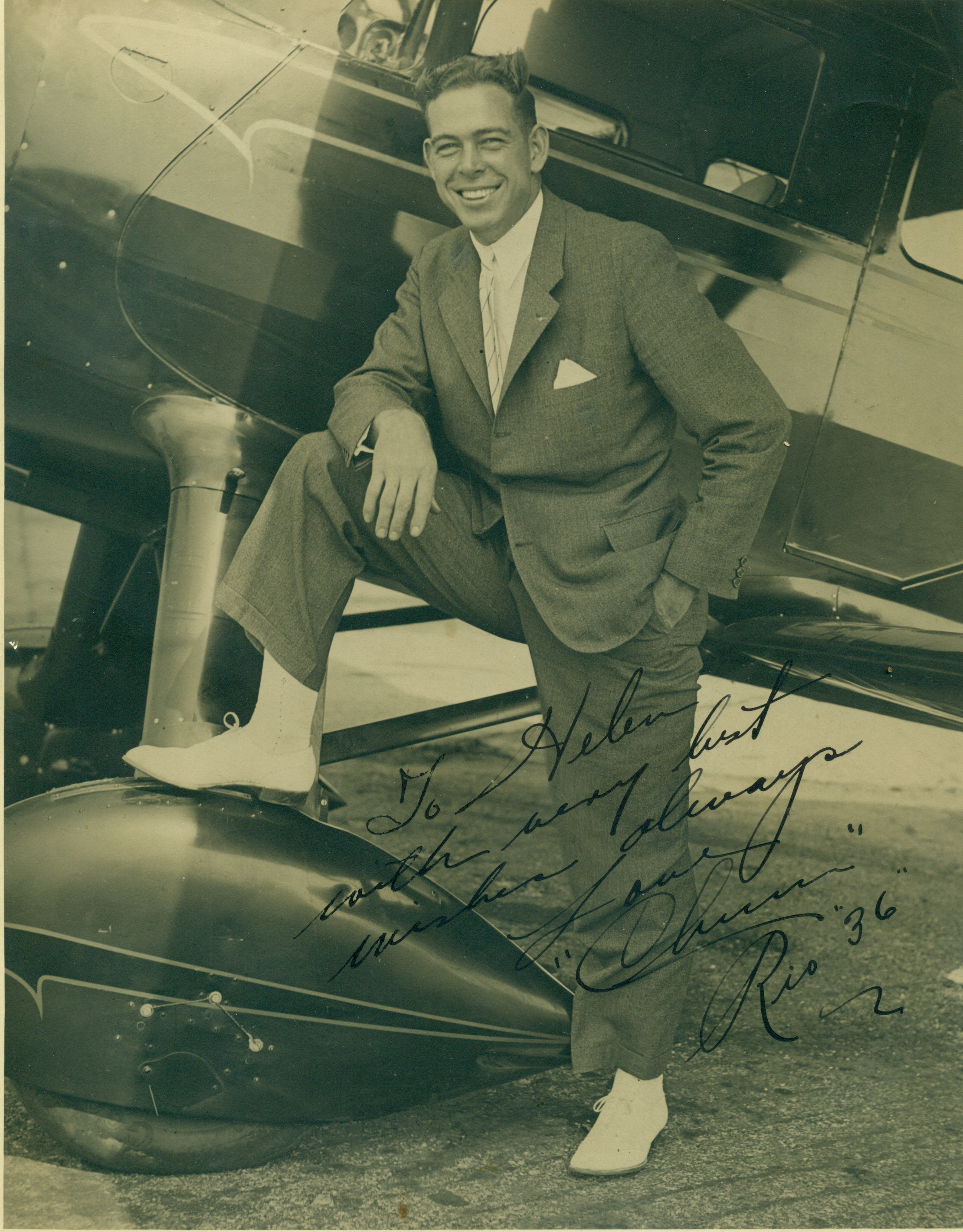
Chum, you squared your shoulders, took a deep breath and strapped into that cockpit, forging a career of monumental consequence. The victor of the 1933 Darkness Derby, you braved the night skies over a sleeping America. Flying your mighty Waco aircraft, you touched down at Roosevelt Field where Lindbergh and Earhart began their storied flights. Later, in defense of democracy, you piloted US invasion orders through a dangerous South Pacific typhoon, tossed and slammed by up and down drafts, to complete your mission.

And to you sweet Helen, though we never met in this life, you inspired the entire effort. It was that first visit to your Miami home when something stirred inside me. A unexpected inspiration. Remember that black and white glossy? The portrait of a sultry platinum blonde? You know the one. Chum had it up in his room until the end.

That photo triggered a spark, a slow burning fire I could not ignore. This story had to be shared. The European tours, dancing, dinner with Maurice Chevalier, cruises across the Atlantic on the SS I’le de France, vaudeville with comedians Jans & Whalen. Then off to Rio de Janeiro you sailed, opening at the Copa Cabana. And after your marriage to Chum, and the war broke out you took up ice skating, performing nightly for Sonja Henie’s productions at Rockefeller Center. My God! What a life.

“River of January” is done, as is the sequel, “River of January: Figure Eight.” Preserved in the pages is magic, whether in the sky, on the sea, under the footlights, and revolving across shimmering ice. This story crackles with your energy.

This won’t be neglected any longer. I’m getting out of your way.

With Love, and Eternal Admiration,

Gail

Gail Chumbley is the author of the two-part memoir “River of January,” and “River of January: Figure Eight.” Both titles are available on Kindle.

gailchumbley@gmail.com