Waves


Preaching in 1630, Massachusetts Bay Governor John Winthrop, declared the new Puritan settlement a godly utopia, “A City on a Hill.” Since that time Winthrop’s assurance of purpose and perfection has shaped the narrative that is American history. For over two centuries the United States pushed forward striving to make real those founding aspirations. Many Americans, either in groups or as individuals have fought the good fight to extend liberty for all: the most notable example being the abolition of slavery. Yet the path toward realizing the dream of heaven on earth has been many times interrupted with progress’s nemesis—armed warfare.

As Revolutionary War zeal subsided in the late 1700’s, a series of remote camp meetings sparked a movement called the Second Great Awakening. (Yes there was a First) The popularity of these rousing evangelical revivals lit an impassioned fire that called Americans, mostly Northerners to eradicate sin in the shiny new republic. Determined reformers such as Charles Grandison Finney, Frederick Douglass, and Elizabeth Cady Stanton labored tirelessly to rid America of her shortcomings; drunkenness, degrading of women, punitive treatment of the mentally ill, racial inequality . . . in order for the country live up to its charge as a “called nation.”

Despite the diversity of causes and legions of faithful supporters, slavery alone came to dwarf all other movements and to ultimately divide the country. Early instances of violence in the effort to end slavery offered a taste of the violence to come in the Civil War; Abolitionist-editor, Elijah Lovejoy was shot dead in the doorway of his newspaper office, while another anti-slavery editor, William Lloyd Garrison found himself tarred and feathered repeatedly by those who hated his militancy. Zealot John Brown hacked to death five pro-slavers in an episode known as “Bleeding Kansas.” In these instances, “the writing on the wall” had truly been composed in blood.

When hostilities began in April, 1861 the energy of a nation fixated on the course of each battle, fear and resolve ebbing and flowing with each outcome. The shape of America’s future waited in the balance. Finally, after four ghastly years of bloody fighting, Southern hopes of an agrarian, slave-ocracy died, and as President Lincoln so eloquently phrased it, America found “a new birth of freedom.”

Left unaddressed were those other reforms, forgotten in the war. The mentally ill remained behind bars, incarcerated alongside dangerous criminals. Women were legally considered wards of their husbands, with no more standing than dependent children. Countless young children toiled endlessly in textile mills and coal mines, exploited by owners, deprived of any chance for an education. And the legions of former slaves faced a new form of slavery, Jim Crow and sharecropping.

Reform again gathered momentum in the late 19th Century. Aiming once more for that ‘city’ aspiration, the Progressive movement took shape, carried on by a new generation of the faithful, imbued with a sense of social justice to confront the many wrongs left unaddressed from an earlier time, and new issues related to urban growth. Notables from this post bellum movement include; Jane Addams, one of the founders of American Social Work, writer Upton Sinclair and his shocking expose’ The Jungle a condemnation of the meat industry, and John Dewey who normalized public education with coherent curriculum’s and compulsory school attendance. Dewey believed, as had the founders of America, that the nation relied upon and deserved an educated electorate to safeguard the promise of America into the future.

This movement found a great deal of success in improving the country and the lives of its citizens. Building safety reform came on the heels of the Triangle Shirtwaist Fire in 1911. The Jungle brought about the establishment of the Food and Drug Administration, while political reforms included the secret ballot, limiting “Bossism,” and other forms of political corruption.

Then, in 1914 Europe went to war. By 1916 Progressive President, Woodrow Wilson committed America to join in, asking for a declaration against Germany, sending American soldiers into the trenches. And once again, when the guns silenced progressive reforms disappeared as if they had not existed. On the imaginary road to “Normalcy,” the wealthy and powerful misused the country as a personal piggy bank, plundering and cheating with no legal check.

After a decade long litany of economic abuses tanked the Stock Market in 1929, the nation once again turned toward progress, this time on an unparalleled scale. The advent of Franklin Roosevelt and his wife, Eleanor, to the White House marked a revitalization of reshaping America to benefit all Americans. The New Deal remembered for its alphabet agencies, aimed to recover the devastated economy and ward off future abuses that had nearly destroyed the well being of the Republic.

America’s entrance into World War Two bucked the pattern of a reactionary pushback. FDR remained at the helm, until Harry Truman took the reins of government, continuing the tradition of affirming change. GOP President Dwight David Eisenhower kept a moderate hand on the tiller, particularly in the realm of Civil Rights, enforcing the Brown V. Board of Education decision to desegregate public schools.

But with JFK’s murder, the wheels once again came off social progress. As much as LBJ tried to give America all he could; The Civil Rights Act of 1964, The Voting Rights Act of 1965, the Highways Beautification Act, Head Start, Medicaid, and many more pieces of his Great Society legislation, Vietnam eroded all the good.

That endless nightmare of a stalemate in Southeast Asia worked at cross purposes for bettering society. The daily body count, student protests, war atrocities, such as the My Lai massacre, or the shock of the TET Offensive in 1968 sapped America’s desire to do anything but find a way out of the jungle.

Promoting the general welfare came nearly to a complete halt by 1980. The advent of the Reagan Revolution, and subsequent downsizing of the federal government left the vulnerable largely on their own. School lunch programs were cut, the mentally ill let out on the streets of America, while the armament industry threw the nation into deep deficits.

On this Memorial weekend it might be good to consider the potential of America when at peace. Trapped today in an endless cycle of war, this nation struggles to find her soul, to embrace together the light of our national promise. Two military presidents, our first, General George Washington and our thirty fourth, General Dwight D. Eisenhower pleaded with America in their farewell remarks to avoid war as the worst use of our best abilities. Both men, forged in the adversity of difficult wars, recognized the wasteful distraction and deadly allure of war. Washington cautioned against “entangling alliances, and Eisenhower “the military-industrial complex.”

Ultimately, those who know war grasps what is truly lost. Every weapon produced in a munitions factory most certainly casts a wrench into the wheels of human progress. Winthrop meant his reference from the book of Matthew to inspire an example to the world. Forcing Americanism by the barrel of a gun is born to failure, achieving nothing lasting but resentment abroad, and stagnating injustice at home.

Gail Chumbley is the author of the memoir, River of January, also available on Kindle.
A First Class Pilot

Navydetatchment19330001

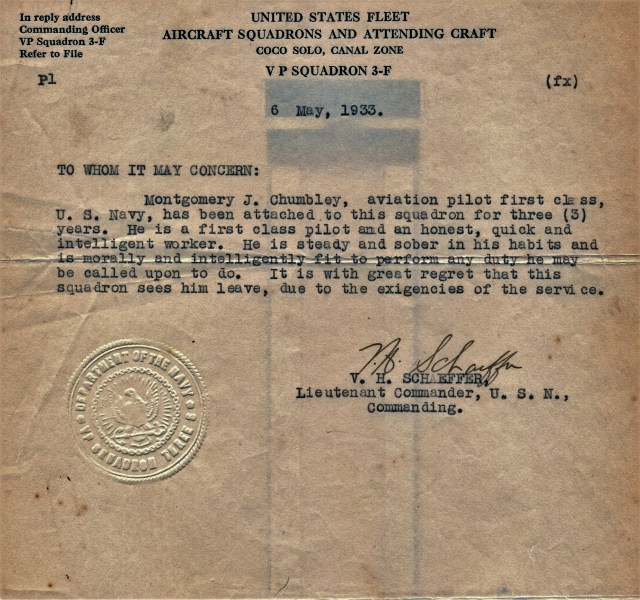
This letter, one of hundreds of documents used in River of January, marks Chum’s first discharge from the Navy in 1933. This letter speaks highly of the young man who five months later would prevail in the “Darkness Derby,” continental air race.

Gail Chumbley is the author of the memoir, River of January. Available on Amazon and Kindle.

River of January, Boise Library Edition

e0f80dea5a55ee5b

Thursday, May 12th River of January meets the Boise Public Library.

Join Gail for a lively, multimedia look at the archive that became the memoir,

River of January

The program begins at 7pm in the third floor’s Marion Bingham Room.

“This history could be lost” had she not known the story. Janet Juroch~The Idaho World

That’s All

Worth a second look.

gail chumbley's avatarGail Chumbley

th

Colonel Clark used to bring his son down to the dojo where my brothers took judo lessons. My grandfather had registered my older brother first, and then my two younger brothers enrolled when they were old enough. I sometimes came along to watch these lessons because, first of all, it was something to do on a boring school night, and I liked to look at the cute boys dressed in their gi (white uniforms.) Grandpa Ray always sat with Colonel Clark, if the old gent happened to be seated in the chairs around the mats. That meant I sat with Colonel Clark, too–not fun for a twelve-year-old, boy crazy girl. The two old men would talk and talk, seated next to one another, though they kept their eyes on their boys competing out on the mats. They never seemed to look each other in the eye, but still seemed caught…

View original post 553 more words

Excalibur

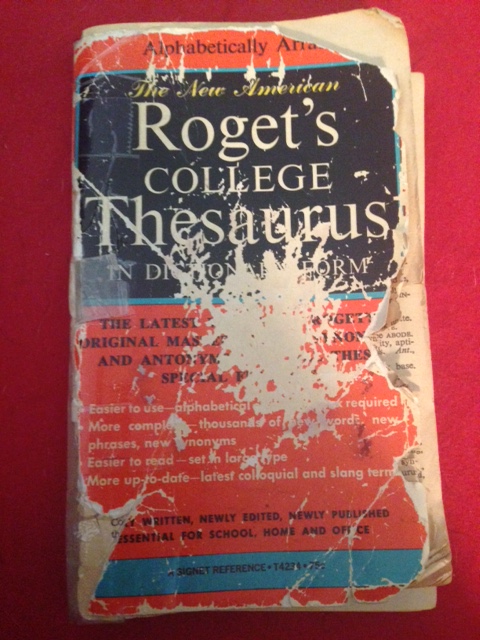
Roget

My secret weapon.

Gail Chumbley is the author of River of January, a memoir. Also available on Kindle

Justice as a Force

th

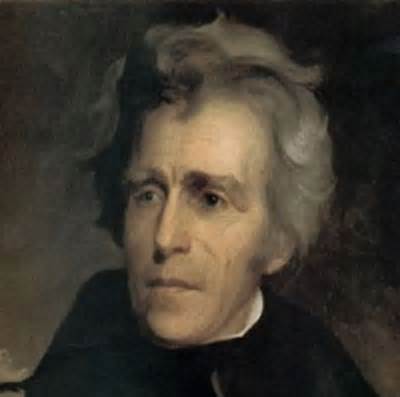
President Andrew Jackson has stopped spinning in his grave. Finally. He hated paper money with all the fiber in his being, and now thankfully for him, no longer tacitly endorses its use. Jackson was a sound money man and believed gold the only genuine medium of exchange . . . weigh-able, bite-able gold; good ole “cash on the barrel-head.” In fact, the President believed so passionately in the principle of gold bullion that he banned any use of paper money for any transaction whatsoever. This same policy, in the end, torpedoed the US economy and triggered the Panic of 1837.

That financial disaster held on for over five chilly years.

But the day has arrived, America has finally heard Jackson’s cries of anguish from the great beyond, and removed his likeness from that raggedy heresy of ersatz value. Still, one has to wonder. What would General Jackson make of runaway slave, Harriet Tubman taking his place on legal tender?

Ms. Tubman, as a woman, and as a slave, lived invisibly in Jackson’s world. The only notice a planter like Jackson would have made was Tubman’s incorrigible practice of stealing another master’s property. For a man of deep passions, of violent loves and hates, her offense would have pissed this president off, and sent him into a dangerous rage. In his world of master and slave, her offenses allowed no mercy, no reprieve.

As for Tubman? She understood a truth that Jackson could never, ever have comprehended—that justice was a force that bore no designation to color, gender, or appraised value. A mighty truth reigned far above the limited aspirations of General Andrew Jackson, killer of banks, Natives, and the hopes of the hundreds he held in bondage.

Tubman’s idea of honorable behavior had nothing to do with white men firing pistols on dueling grounds, and that white social conventions which condemned her to servitude were wholesome and noble. The human condition, as Tubman understood the meaning, held a deeper significance, an importance that required a profounder appreciation. The world of plantations, race hatred, whip wielding overseers, and economic injustice held no real sway, and certainly possessed no honor.

Jackson’s opinions truly hued in only black and white, and that outlook wasn’t limited to skin color. Abstract ideas like ‘humanity’ didn’t resonate in his mind, too ethereal for a man who loved gold coins. Banks were bad, women were ornaments, Indians were fair game, and blacks were slaves. That simple. Of course at the same time, this limited world view gave a figure with Tubman’s vision the edge. If a man of Jackson’s time and station caught a glimpse inside the real thoughts of his “family” members living over in the slave quarters, his mind would have been blown.

So it is with some satisfaction that Harriet Tubman replaces Andrew Jackson on the twenty-dollar bill. But not only because she’s a woman, nor only because she’s black. The star she followed may have literally sparkled in the northern sky, but every footstep she trod signified progress on the road to realizing the immeasurable value in us all.

Gail Chumbley is the author of the memoir River of January

Lay Down His Burdens

th

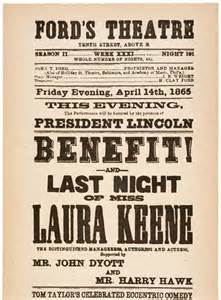
April 14, 1865 fell on Good Friday. It had been five days since General Lee’s surrender to General Grant at Appomattox Courthouse, and a good, Good Friday for President Lincoln. In high spirits, the President escorted his wife, Mary Todd Lincoln to Ford’s Theater for the final curtain of the comedy, “Our American Cousin,” starring Laura Keene. From his seat in the presidential viewing box, Lincoln was murdered at point blank range by an assassin sneaking from behind.

This famous scenario provides quite the ironic twist considering the high opinion Lincoln held for actors and plays. In a cruel irony, President Lincoln sought refuge from his storm of troubles in Washington theaters, a setting where he could lay down his burdens.

From his earliest days in the White House, Lincoln avidly sought out the Capitol’s many stages. An enthusiast, he fell into the dangerous habit of sneaking out of the mansion, without his wife, without any protection detail, determined to take in any new production advertised in Washington papers. Members in various audiences, who spied the President playing hooky, reported that Lincoln watched these plays transfixed, as absorbed as if he was alone rather than seated in a crowd. Apparently his determination in attending Washington City theaters seemed to eclipse even concern for his own safety and in a city ripe with rebel sympathizers looking to inflict harm on the President.

What could impel a Chief Executive to take such risks in wartime, when many wished him ill? Why would Lincoln place himself in such peril?

Neither a drinking man, nor much interested in other vices, the President instead relished stories, either written or dramatized, where he found the distraction and solace he so desperately needed. A prolific story-teller himself, Lincoln appreciated a well turned tale, either in the books he voraciously consumed, or the yarns regaled on a late night near a warm wood stove. This president hungered for diversions to ease his troubled mind weighted by his intractable problems.

And Lincoln’s burdens, both personal and those of the presidency reached far beyond terrible. A protracted and bloody Civil War, the pain-in-the-neck generals who consistently failed in their duty, his difficult wife, Mary, the tragic loss of two young sons, and an unending flow of reverses from irascible members of Congress. That a well-crafted drama or comedy seemed to salve Mr. Lincoln’s soul must have made the temptation of escaping the White House irresistible, and a nightmare for those Pennsylvania troopers assigned to protect him.

Wilkes Booth knew Lincoln would attend the closing night at Ford’s Theater. The owner of Ford’s Theater had advertised that fact earlier in the day. Booth had, in fact, visited the site to prepare for his ‘greatest’ performance. The narrative in the actor’s deranged thoughts, screamed vengeance and duty to the lost cause of the Confederacy.

But I would like to offer another perspective on those same last moments in President Lincoln’s life.

The narrative Lincoln likely played touched more upon hope and delight. Slavery that April night, existed no more in America, and the battlefields had grown quiet. Much work lay ahead for the nation, but Lincoln knew he would attend to those matters as they emerged. For that one night the President did what he loved most—attended a theatrical production, and even better for his rising spirits, a comedy.

At the moment Booth pulled that derringer’s trigger, Lincoln was laughing. The whole audience, in fact, had erupted in guffaws, at an expertly delivered punch line. Perhaps that is how we ought to frame the horrific murder of our greatest commander in chief. While the murderer fumed in hate and revenge, Lincoln over flowed with concentrated joy, reveling in all that was good.

Gail Chumbley is the author of River of January, also available on Kindle

Duty Faithfully Performed

th

April 9th, today marks the 151st anniversary of General Lee’s surrender to General Grant at Appomattox Courthouse, Virginia, ending the Civil War.

Lee didn’t want to to do it. He remarked to his aides that he’d rather ride his horse, Traveler, into a meadow and be shot by the Yankees, than surrender. But the General didn’t relinquish his burden that way, instead he did his duty.

Even General Grant sat in awe of his most worthy foe. Poor Grant seemed to have felt his social inferiority even in the midst of his greatest military victory. Grant informed Lee he had seen him once in the Mexican War, almost stalling, avoiding the business at hand. The Ohio-born Grant came from humble beginnings becoming one of the most unlikely warrior-heroes in history. Graciousness and duty impelled the Union Commander to receive General Lee with quiet, somber respect.

I would bet that though all participants ardently desired peace, no one exactly wanted to be in that room on that April 9th. The war had cost too much, more than any nation should have to bear. So many losses, so much blood; the cream of the Confederate command only memories to the bowed Lee. Grant, musing the thousands he ordered into the murderous fire of Rebel cannon and shot. The deadly dance, just ended, between two worthy foes, from the Wilderness, to Cold Harbor, to Yellow Tavern, to Petersburg, and finally to the quiet crossroads of Appomattox, and peace.

These two generals, and the loyal armies they commanded had set aside all personal concerns, steeled themselves and did their duty, in Lee’s words, faithfully.

Gail Chumbley is the author of the memoir, River of January  Also available on Kindle.

Hey, I’ve Got a Better Idea

hilarious-really-lazy-people-fail13

You’re on vacation! Kick back and read River of January on Kindle!