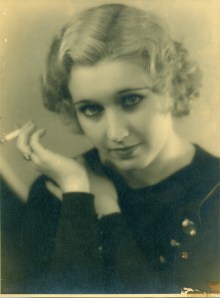
From the new memoir, River of January . . .
Booked at the Palace Hotel in Brussels, the show’s new variety lineup fused seamlessly. First the star, Mistinguett, with the ballet troupe opened the evening program. Helen, unable to dance both with her friends and in her solo, chose the latter. Happily, it became a crowd favorite. Though she would have liked to dance with the company, Helen knew the ovations she garnered were well worth watching the opening from the wings. Next on the bill was synchronized dancing from American Earl Leslie and his line of hoofers, followed by the other company entertainers and their specialties.
The program closed with the full cast in a colorful, peacock-inspired, extravaganza. It featured Mistinguett center-stage, supporting a headdress of colossal feathered plumes of blue, turquoise, and purple, shimmering above her blonde hair. Her “Beauties” were costumed in silvery tutus, sequined halters, and tight, sparkling caps, each sprouting over sized silver feathers, flanking their star from both sides.
The male dancers, in black tuxedos, peeked out between each feathered girl. Under the dazzling lights, the symmetrical tableau moved patrons to their feet, applauding and shouting for more.
For a second night more flowers appeared, and this time a note accompanied the gift on Lillian’s dressing room table. As she again picked up the vase and turned toward the trash bin, Carmen stopped her, “At least read the note first, Lillian.”
“Yeah Lil, c’mon!” the other dancers chanted.
“Who wrote it?” asked Grace.
“Is it signed?” wondered Carmen.
Rolling her eyes, the dancer huffed dramatically, then slit open the note with a nail file and read in a flat, monotone:
You were really wonderful in your solo specialty and all through the review and I do want once again to ask you if you will let me pilot you through town in my car when and for as long as you may care. Should you not care to see or know me, please allow these flowers to tell you of my admiration, and remember that you have a person who cares for you in the little city of Brussels.
“But I didn’t have a solo,” Lillian exclaimed. “The only one who had a solo was…”
The girls stood silently, and then all eyes shifted to Helen. Lillian laughed once—a bit annoyed, and handed the vase to her friend, saying, “I believe these belong to you.”
Banter erupted again, now aimed at Helen.
“Jeepers girl, he admires you!” and “Wonder who it is that cares for you in this little city, kid?”
Helen took their teasing in stride, curtsying and blowing kisses. But when the dancers began chatting about the imminent cast party, Helen lowered herself onto a rickety stool and read on. “I feel I must say that I am not an ‘old butter and egg man’ … I am just twenty-eight and not too ugly … My only fault is that I think you are my ideal.”
Her eyes lingered on the words “my ideal.” Unexpectedly charmed, Helen appraised this communiqué with new eyes, and decided to follow the mysterious sender’s written instructions on how and where to meet him.
She dressed quickly and quietly to avoid any friendly needling. Helen hurried out the dressing room, heaving open the steel stage door into the quiet alley behind the theater.
Stepping to the corner of the building, she peeked around to the snow-lined, busy street. Helen carefully studied the faces of the bundled up after-theatre crowd crunching by, and scrutinized moving and parked automobiles. From her vantage point, She soon spied a grey Packard, emitting white-blue exhaust from a quietly idling engine. Scanning the note again, Helen felt certain that the young man would be waiting in that car. Her stomach faintly roiling, she stepped forward, trying to distinguish the driver through his frosty door window.
Helen realized, “Oh, he looks nice,” and shyly continued to approach his vehicle. The driver stepped out of his door, all smiles.
“You must be Lillian,” he beamed, “I am Elie. Elie Gelaki,” he added, bowing to kiss Helen’s gloved hand. She noticed that the young man’s voice formally articulated his clear English.
She bashfully smiled and felt her face grow warm. “Actually, I’m Helen,” she clarified. “I do hope that I am the one the message was meant for…”
Elie Gelaki unexpectedly gazed at her forcefully. “I meant you.”
The two stood self-consciously beside the running automobile.
“Why don’t I take you inside this café? It is quite cold tonight.”
“That would be lovely, Mr. Gelaki,” Helen smiled, more relaxed.
The young man gently took hold of her arm, explaining, “I’m Elie, and this street is quite icy.” He courteously escorted the dancer into a nearby coffee house.
“So you are the Helen Thompson on the bill, not Lillian Ward,” he said after they were seated. “I am sorry about the confusion. I hope it was of no embarrassment to you.”
“No more than usual,” the dancer laughed. “My friends spend more time teasing each other than dancing.” She paused, changing the subject. “Tell me about yourself, Elie.”
“I am a native of Palestine. But now I live here, in Brussels, with my mother and two sisters. My dear father has been for dead for some time.” He noticed Helen suddenly frown. “Did I say something offensive?”
“No. I’m sorry. My father died some years ago, too.” Helen’s own grief abruptly gripped her heart. After Floyd Thompson died, after his funeral, she knew something truly good had vanished forever from her world.
Her frown turned into a sympathetic smile. His face glowed in reply
Elie changed the subject. “I have recently founded a new photo company. I call it Polyfoto International,” he stated proudly. “At this time I am expanding my interests in Europe, across North America, and on into Asia.
“What type of photography do you specialize in?” Helen politely asked.
“ I will accompany you into my studio and photograph your lovely face. Then you will know,” Elie responded.
While he chatted about his life and work, Helen studied the Belgian. He wasn’t terribly tall, and had a clear complexion, subtly suggesting a childhood of freckles. His thick hair ranged from light brown to dark blonde and he combed it back off of his forehead. Elie gazed at her from olive green eyes speckled with glints of brown and gold. Though he seemed a serious man, he smiled broadly as he spoke in his appealing English, and his laughter was deep and friendly.
“Would you consider joining me for lunch tomorrow?” he asked. “I would be happy to guide you on a personal sightseeing tour of the city afterward.”
“Love to,” she answered promptly, drawn toward this young man. Elie thanked her with a happy grin.
The troublesome doubt dawned on her later, as she tiptoed into her dark hotel room.
“He’s Jewish,” she whispered to herself. “My mother would just die if she knew I was seeing a Jew.”
Yet, despite all the prejudice against Jewish people, she liked Elie and decided to give the young man a chance. He seemed nice, and she wanted to see the sights around Brussels.
River of January is available on Amazon and at www.river-of-january.com
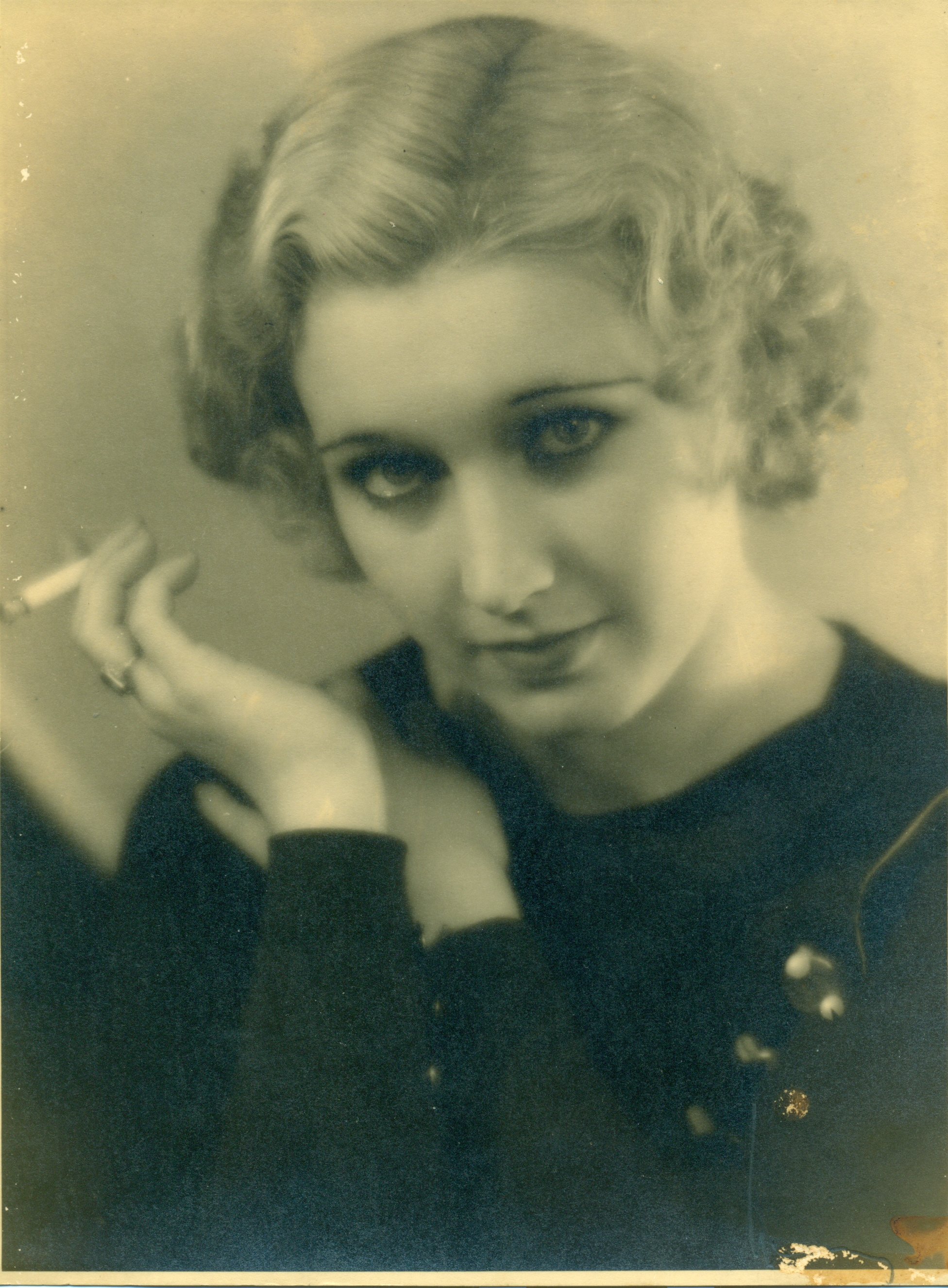
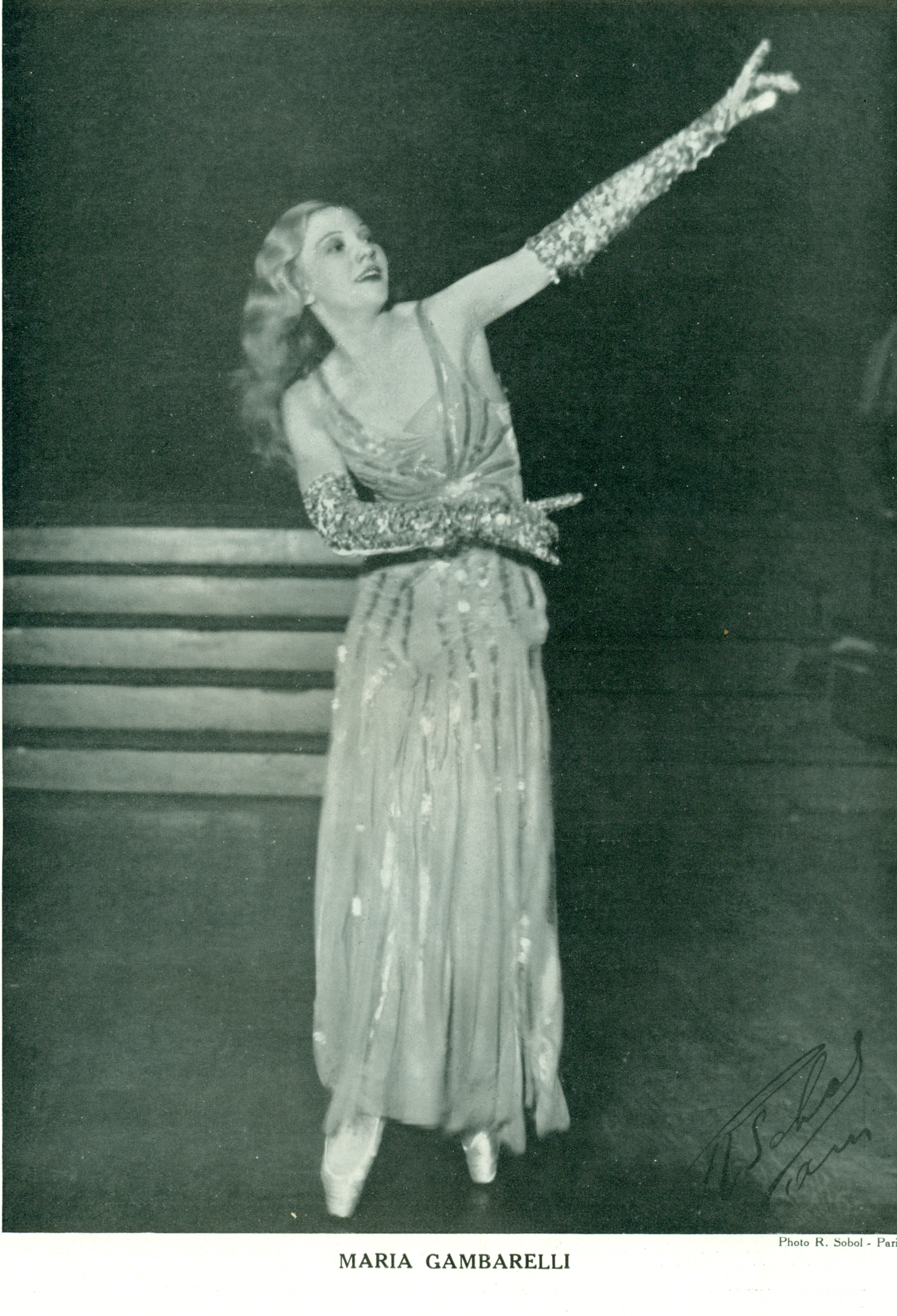
 This lovely lady is Maria Gambarelli, prima ballerina. Miss Gambarelli was well known to New York audiences in the 1930’s for her dazzling performances at the Roxy Theater. In addition, she regularly appeared on Roxy Rothafel’s popular radio program, “Roxy’s Friends.” In 1932 the dancer organized a troupe of New York ballerinas for a grand tour of European cities, to promote America’s cultural image. Helen auditioned for Miss Gambarelli and won a part in the production.




 Gail Chumbley