Roxy’s Friend

Maria GambarelliThis lovely lady is Maria Gambarelli, prima ballerina. Miss Gambarelli was well known to New York audiences in the 1930’s for her dazzling performances at the Roxy Theater. In addition, she regularly appeared on Roxy Rothafel’s popular radio program, “Roxy’s Friends.” In 1932 the dancer organized a troupe of New York ballerinas for a grand tour of European cities, to promote America’s cultural image. Helen auditioned for Miss Gambarelli and won a part in the production.

Arriving in Paris the company, christened the “American Beauties,” opened at the exclusive “Le Ambassadeurs” dinner theater to favorable reviews. However, in a contract dispute with the William Morris Agency in New York, in association with the Lartique Agency in Paris, Miss Gambarelli abruptly quit. The eleven American ballerinas were left abandoned, facing an uncertain future on the continent.

For more of the story read River of January, available at www.river-of-january.com

Partly The Mob

sept291931

The room was hot, and humid, but the old man would not turn on the air. He said that it cost too much money.  The fact that this was Miami and July made no difference,that ancient swamp cooler remained silent in the living room window. To emphasize his granite determination to deny Florida Power and Light an extra penny, Chum dressed each morning in long pants, a belt, and a long sleeve shirt, cuffs buttoned. Mont Chumbley did not project the South Beach image favored by the city’s Chamber of Commerce.

However his strict rules of economy were cast aside the summer I flew down to record his story. And I do mean record, as in tape recorded interviews which lasted, in all, five days. And when I needed quiet the most (for quality purposes,) he decided to switch on that neglected, thundering swamp cooler, providing a Phil Specter-esque ‘wall of sound’ which muffled his fascinating story.

We were both nervous. I hadn’t been married to his son long, and my husband hadn’t come along on this trip. It was just the two of us: new father-in-law talking with new daughter-in-law. But I couldn’t let the awkwardness get in the way, I had traveled three time zones to get the story, and we had to soldier on despite our mutual jitters.

I hit record on the tape player, and immediately he began anxiously whacking a nearby phone book with a pencil. We now had a beat to the swamp cooler’s roar. And he did that for my comfort. How courteous.

I tried to play back the sessions right away to transcribe the contents. It’s safe to say that deciphering his voice from the background clatter grew to be a problem. Imagine the musical “Stomp,” with people trying to converse over crashing trashcan lids.

After a couple of days of this fidgeting he settled down, and to be completely honest, I did too. Chum even forgot to turn on the air once or twice. And his story in aviation began to unfold, carrying us away from noisy appliances; to days before there were such things as air conditioners–to the skies of another era.

Wow.

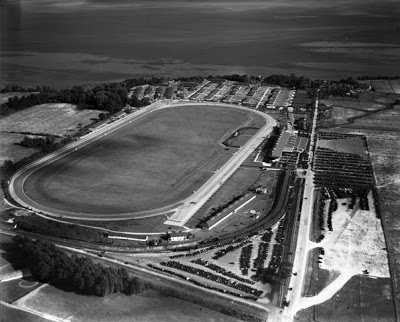
One story that made it into the book tells of his hair raising landing on the infield of a Maryland horse track. Later I had to hit the replay button a half dozen times to get the name right, listening hard to his phonetic pronunciation, buried beneath screeching layers of white noise. Shaped by his Virginia drawl, I deciphered, Har-Day-Graw.

I typed HardayGraw into a search engine. “Do you mean Havre de Grace?” quickly popped up . Hmm. Well, I guess I do. Maybe.

Lo and behold, Havre de Grace was a horse racing track between Washington DC and Philadelphia, tucked into the Maryland countryside. The web site indicated that this track evolved as a joint venture, owned partly by the town of the same name, and partly by the mob.

Partly by the Mob? Are you serious? And everybody knew? I had to look a little deeper.

Apparently in an agreement with the Governor of Maryland, and a former congressman, in a partnership with mobster, Arnold Rothstein, Havre de Grace came to life. And this was no small time nag fest, either. Among the thoroughbreds who graced, Havre de Grace were legends, Man ‘o War, his son, War Admiral, and the indomitable, Seabiscuit, You can’t make this stuff up.

That week in hot, sticky Miami has grown into one of the most pivotal of my life. I felt like Wendy clasping Peter’s hand for her flight to Neverland. But in my case Chum piloted the yoke to “Yesteryearland.”

This Havre de Grace anecdote, with Arnold Rothstein, and a hair raising unauthorized landing from the sky, merged with many, many other episodic rivulets that flowed into this fascinating river of narrative. This “River of January.”

Gail Chumbley is the author of the memoir, River of January

#riverofjanuary

The Outside World

My mom took a job in the early sixties with the US Postal Service. At first it was part-time, mostly needed at Christmas, but by 1966 she hired on full time. 

There were four kids, a house, and a yard, and Mom probably was pretty overwhelmed—something today I fully understand. For help my parents decided to host a student each term who attended a secretarial school in Spokane, called Kinman Business University. Lord knows what kind of credential awaited these young ladies after completion, but students did acquire skills such as shorthand, typing, filing, and other tasks.

The first girl who who came to stay with us was named Corrine. I can’t remember exactly the year, most likely around 1965 or 1966. I was in fourth grade. 

Corrine came to us from Alaska, and I remember she told me she was part Filipino or Native American, or both. I thought that pretty cool, Corrine to me symbolized the wonder of the outside world. 

Our house was constantly in a state of chaos, with quarrels, messes, a blaring TV, with people coming and going—chaos. But to walk into Corrine’s small quarters felt like a completely different world. All of her things were neatly stowed away, her bed carefully made, and the space even smelled differently than the rest of the house. I loved visiting her room, as it felt like an oasis of tranquility in a sea of crazy disarray. And it was in her little sanctuary that serene Corrine shared her life with me just a little.

A picture sat on her dresser of a boy. When I asked who he was, she told me his name was Ty, and that they planned on getting married in a few years. Married! I never knew a girl who had plans to get married! The only people I knew who were married were parents, and they were boring. 

He was called Ty, short for Tyrone, and he was visiting Spokane soon. Ty had received his draft notice and following basic training in the Army, he would ship out to a country called Vietnam. Corrine clearly missed him very much, and was anxious to see Ty before he flew to Southeast Asia.

My memories of his first visit are a little vague. I do recall that they sat on the couch in our living room and held hands in front of my parents. That moment struck me as fascinatingly real. 

Looking back I am sure that there were much deeper emotions at play, but whatever vibes filled the room zoomed over my 10-year-old radar.

And then Ty was gone.

The school term ended, and Corrine packed up most of her things and returned to Cordova for the summer. I’m not sure of the details or decisions, but she did return to us the next fall. Once again her room became that wonderful respite from the anarchy of the rest of the house. Ty’s picture again graced her dresser. 

Letters began to arrive to our house written on onion-skin parchment, marked AIR MAIL, bearing Corrine’s name. I’d never seen stationary like that, and she explained that was the cheapest way she and Ty could exchange letters. The paper was light blue, and felt like stiff tissue, but held its shape without creasing. Corrine had stacks of it, both fresh and received—the only sign of clutter in her neat little world.

Finally Ty came back to our house, and this visit was very different from the first meeting. The couple did not sit on the couch and hold hands. Not this time. My pre-teen sensibilities were shocked to see a grown man lying across her lap on the couch sobbing like his heart had broken. 

Poor Corrine! She, too, was dissolved in tears; red, puffy eyes behind her glasses. Ty couldn’t seem to help himself,  or compose himself, and he wouldn’t let go of her. The whole situation felt very surreal. I didn’t understand. How could this orderly girl, and her once orderly fiancé come apart like this, and in front of all of us?

That chapter occurred a very long time ago. My mother still worked, and there were other girls we housed. Still sweet Corrine and Ty live on in my memory as if only yesterday.

I grew up, went away to college, earned a degree in American History, becoming a teacher. 

For years and years I taught a unit on the Vietnam War to high school juniors. I recited the facts surrounding America’s entrance into that long, long, conflict. But in all my experience with those lesson plans, the veterans who visited my class describing their personal war, the analysis by historians we studied, nothing affected me more than the tragic transformation of that broken young man from Alaska.

Gail Chumbley is the author of the two-part memoir “River of January,” and “River of January: Figure Eight.”

Chumbley has also authored two stage plays, “Clay” on the life of Statesman Henry Clay, and “Wolf By The Ears” an exploration of American racism and slavery.

gailchumbley@gmail.com

La marchande de frites

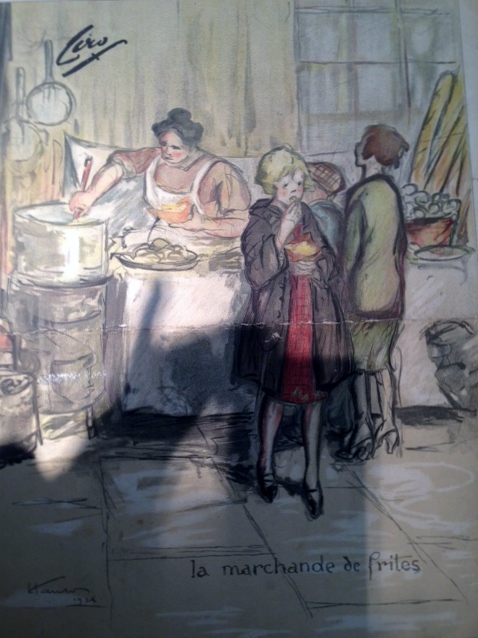
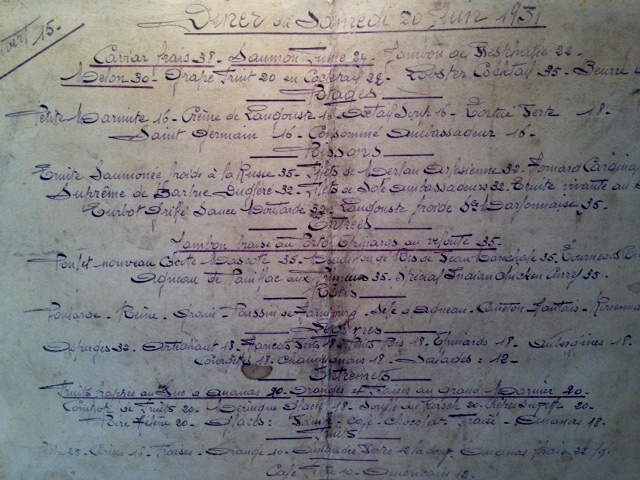
la marchande de fritesThe time was August, 1932. The place was Monte Carlo. This little gem is a menu from an eatery patronized by Helen and her fellow ballerinas, the “American Beauties.” Though the cover is a print, the interior meal selections were meticulously   penned in an ultraviolet flourish.

Helen collected a dozen or so such menus on her year-long excursion; pocketed from bistro’s, pubs, and cafe’s across Europe.  It is hard to say if management frowned upon this custom, or offered menus willingly for advertising purposes. Regardless, the simple beauty of the artwork and flowing cursive recalls a commitment to elegance and style long since abandoned.


la marchand menu

Gail Chumbley is the author of River of January, a non-fiction memoir.


I Wouldn’t Change A Thing

th


One of my earliest recollections is kneeling on the cold basement floor in our Spokane house, lining up plastic Yankee infantry against an equal number of plastic Confederates. My brother would narrate the battle that was about to break loose, building up the suspense and drama that was destined to follow. But the art and beauty of the exercise was in the meticulous preparations, lines crafted and lovingly placed by my brother, an expression of his deep reverence for the past. And our fascination wasn’t limited to the basement, but rose upstairs to the rest of the house.
Our childhood dinners consisted of meals cooked for quantity, not quality, my mother bending over backward to please her crew of picky eaters. One brother only liked tomatoes, no lettuce. Another wouldn’t eat onions, and I wouldn’t eat potatoes, (I’ll get fat!). My mother should have tossed a loaf of white bread and peanut butter on the table and said to hell with us. But in truth, our dinners weren’t ever about the cuisine. That table was a place of interaction, debate and information. And we, my parents and three brothers talked about all sorts of topics; politics, swing music, classical music, FDR, and JFK. My mother knew every actor and singer ever filmed or recorded, so popular culture also had a rich review over those dry, bland hamburgers. My younger brothers typically listened and chewed, passively soaking up the banter as a normal dinner conversation.
My childhood memories are mainly a potpourri of All-American road trips. Slides of Montana’s Lewis and Clark Caverns, the Little Bighorn Battlefield, Yellowstone Park, and Wall Drug, flash on the screen of my memory. These destinations were of such value to my folks; that they packed up a station wagon, replaced later by a truck and camper, crammed in their four noisy kids, and made many magical history tours. I especially remember standing on Calhoun Hill near Hardin, Montana, wondering how Custer missed the massive Sioux and Cheyenne encampments. Constructed in 1805 on the Pacific coast, Fort Clatsop, Oregon sheltered the Lewis and Clark Expedition. Visiting the site permitted me to physically touch this stockaded sanctuary of another time.
Wonder became permanently hotwired into my temperament.
A degree in American History came as no surprise to anyone. As in medical families, military families, or law enforcement families I followed my childhood path, nurtured in a family that treasured our nation’s history. As though I had been handed Diogenes lamp, illuminating past events became my present-day pursuit. I had to share this passion with others. This journey of discovery was not a solitary enterprise. So earning a secondary teaching certificate set my future into motion, allowing a way to disseminate the fire I felt for the past.
What a ride! I am now at the other end of my teaching career, and can honestly say that I even loved the tough days. I made a living out of being myself, constantly reinforced with a sense of liberation, and vindication. Magic happened after that tardy bell rang. And I knew then as I know now, that there was no cooler place to work than in my classroom. Who needed Hogwarts, I had Lincoln! Service projects came to life behind that door, efforts such as the Veterans Oral History Project in conjunction with the Library of Congress—fund raising for the World War Two Memorial—donations to support local history museums, and the yearly spray of flowers for the Vietnam Memorial each Memorial weekend.
And most gratifying of all was the connection students made to an earlier America. They grew beyond what they could see, feel and touch. They became more than just themselves. I can recall an essay on Richard Nixon where a girl ruled his desire to win at all costs, cost Nixon his place in history. Another student who pointed out that after Washington’s humiliation at the 1754 Battle of Fort Necessity near present-day Pittsburgh, later foreshadowed the President’s crack down on the 1794 Whiskey Rebels in the same location. The student pointed out that Washington would not be made a fool twice in the same place forty years later. Brilliant, brilliant, brilliant.
Those voila moments transcend the past to a present relevance. How Washington used his few military strengths to undermine the military strengths of the British in the Revolution. How Ho Chi Minh used those same strengths to undermine the same American efforts in Vietnam. Likewise how British violation of American trade lead the US into the War of 1812. And later how German violation of American trade lead the US into World War One. The examples are vast and instructive, processed with the same reverence and regard as my brother and his toy soldiers.
Now, in retirement, an entire archive of historic primary sources have fallen into my lap. An original story has come my way detailing a young ambitious couple who challenged the Twentieth Century and left a notable trail. I have been handed a micro-history narrative, to add to the larger picture of America. What an unexpected gift for this history addict!
Writing River of January has fed my soul. It turns out that Chum, my main character, rubbed shoulders with aviators Howard Hughes, and Amelia Earhart, and even actress Kathryn Hepburn. And from his words and records, he barely took notice of their celebrity. Helen, the other main character, knew “Red Hot Mama,” Sophie Tucker, the dashing Frenchman Maurice Chevalier, and a very young Humphrey Bogart in his first film. Those people were her peers and she rolled with that crowd on an equal footing.
This story grips my heart. I’ve was groomed from my parents dinner table to craft such a book. This Saturday missive is perhaps my long overdue expression of gratitude. I am thankful for my hardwired passion for earlier times, and how vital a role the past eternally plays. I am grateful that I value ideals, ideas and vibrant lives over material possessions . . . I will never be poor. I thank the Lord my heart is enriched by remembering what came before.

Gail Chumbley is the author of the creative non-fiction work, River of January

September Song

 th

This was our first book talk of the new year. We left the house around noon to travel to a small senior facility with an equally small number of residents. I held low expectations of selling any books, but hoped to brighten up the day for a few folks. We had earlier decided to focus on retirement homes because River of January touches on many events that this elderly generation finds familiar.

Finally securing a couple of extension cords my projector flickered on, illuminating an empty wall, and the power point show began. The nurses aides rolled in some residents in their wheel chairs, where they remained quietly seated for the duration. Two other people wandered in at the same time and began a turf war over the ‘good’ chair. The gentleman didn’t move, nor did he say a word, but he meant to sit in that chair. The woman who demanded that same seat kept insisting that it was HER chair. Watching the showdown, I was reminded of how ornery my kids could get, fighting over preferential seating, either in front of the television, or riding in the car. In this instance, the feisty woman prevailed, and the old guy had to settle for the love seat. Once he settled into the cushions, he promptly fell asleep–for the whole presentation.

Two other fellows seemed to enjoy the pictures and the talk. As images of Helen Hayes and Maurice Chevalier flashed on the wall, I caught both respond with slight nods and faint smiles. Another woman sitting apart, back in the corner appeared very sharp, seeming to deliberately separate herself from the her failing comrades. Perhaps I sympathized with her, hiding in that corner, when our victorious friend from the ‘chair wars’ piped up, “I saw this show on tv!”

When I attempted to engage the group with rhetorical questions, they just stared, eliciting next nothing. And in a brief moment of insight I decided that these  people had given enough in life. I was there to bless their day, perhaps make it better for that short time, than it otherwise might have been. All was as it should be, I was in the right place at the right time.

After I finished the program one of the quiet gentleman from his wheelchair tried to speak. His voice was quite weak with age and poor health. He was difficult to understand. Listening hard, reading his dry lips I made out B-24’s. “You flew B-24’s in the war?” I asked. He nodded and smiled. I took his hand, shook it and said, “Thank you sir for your service.” He whispered a couple more unintelligible words, and I smiled in return.

Time is a demon. For these people, idle hours can feel an insufferable burden. Still, sealed up inside their frail bodies exist dramatic stories, from dramatic lives already lived in full.

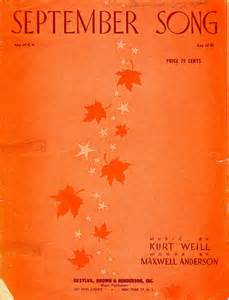
The old standard, September Song captures the beauty and melancholy of those facing a day identical to the day before, until those days run out.

Oh, it’s a long, long while from May to December
But the days grow short when you reach September
When the autumn weather turns the leaves to flame
One hasn’t got time for the waiting game

Oh, the days dwindle down to a precious few
September, November
And these few precious days I’ll spend with you
These precious days I’ll spend with you

I am looking forward to our next retirement home visit in February.

Gail Chumbley is the author of River of January. Visit the website at www.river-of-january.com

At Amazon

West Palm Beach

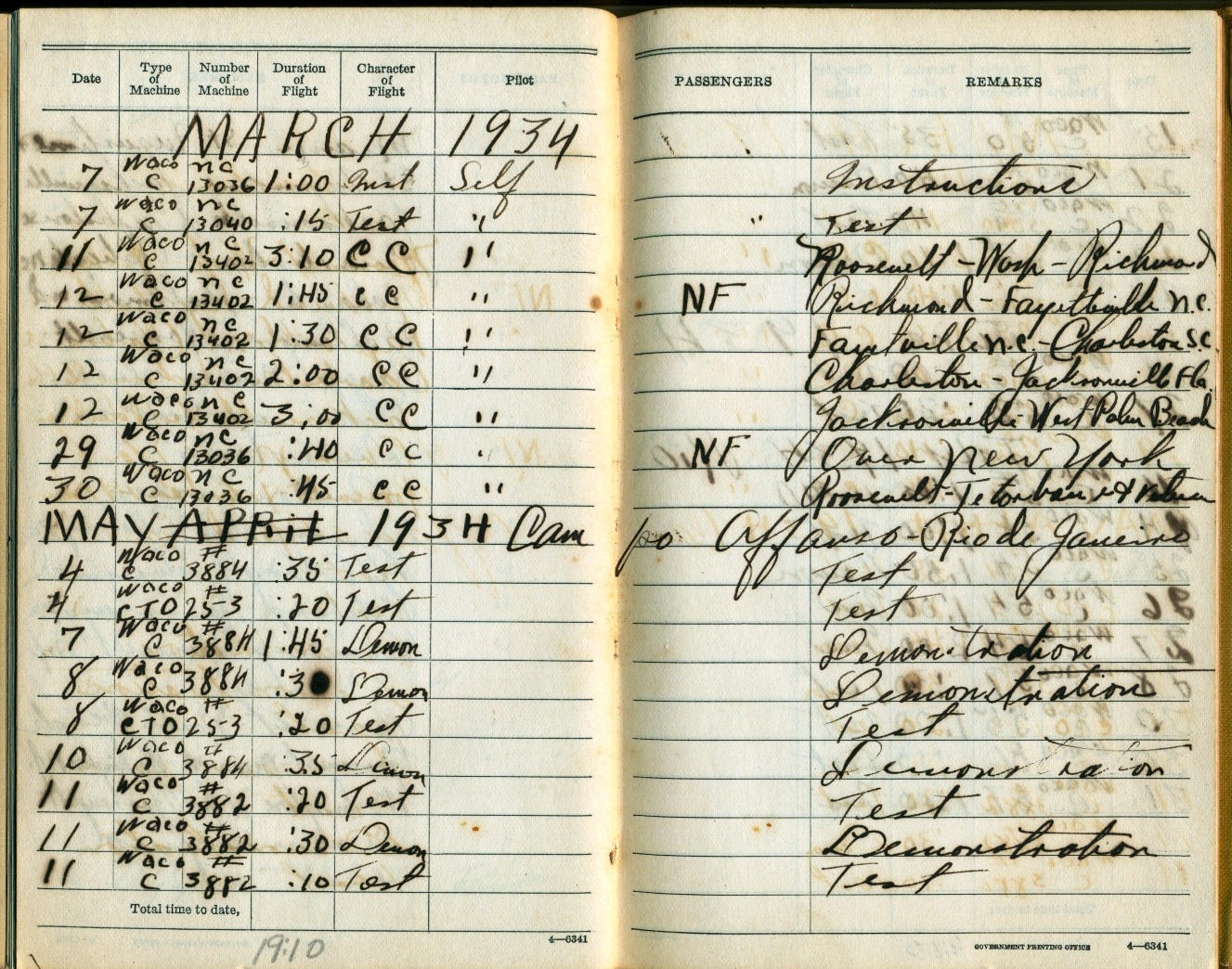
logbook2An excerpt from River of January for your Sunday evening.
At first he told himself that Howard Hughes’ good wages kept him in West Palm Beach. But Chum also knew his curiosity played a big part in remaining at the field. The famous tycoon was already a legend in aviation, as well as in motion pictures, and the young pilot had long admired self-made men. And though he looked forward to his new job, he was just as eager to watch the millionaire up close.
Over the next few weeks, Chum noticed that Hughes followed the same pattern each day. His driver motored up to the hangar in a Cadillac LaSalle, closely shadowed by another large Oldsmobile. The famed pilot stepped from the backseat, unfolding all six foot four inches of him. At same time, an entourage of followers poured out of the second car, casually circling the celebrity.
Chum also noticed that the aviator only spoke to his head mechanic, nodding frequently while he smoked a cigarette. Then Hughes and company inspected the rest of the facility—the tall tycoon facing the ground, continuing to acknowledge his lead man’s comments.
If he looked up, Hughes sometimes nodded to Chum or to the other men in the hangar. Then with this morning ritual finished, Mr. Hughes and his retinue returned to their waiting cars and drove off to other unknown destinations.
On one especially stifling afternoon, Hughes unexpectedly turned up at the steamy buggy hangar, departing from his usual routine. Caught off guard, the crew quickly picked up their tools and bustled around, appearing busy. Hughes seemed not to notice.
Instead the famed pilot looked at his head mechanic and loudly announced, “These gentlemen and I,” pointing to his cohorts, “are leaving for Los Angeles. Since that plane,” Hughes stuck his thumb toward the Waco still on the tarmac, “was used, we will travel by rail.” A few of the boys glanced Chum’s way.
“Yes, sir, don’t worry about a thing here, sir,” the foreman answered. Hughes nodded again, and he and his associates left the field in a caravan of black autos.
“Wonder which beautiful actress Hughes is meeting.” A young grease monkey sighed as he twirled a ratchet around his finger.
“Jean Harlow, you think?” said a kid still staring out the hangar doors.
“My money is on Paulette Goddard,” added another, plunking coins into a soda machine.
“Back to work, boys.” The head mechanic laughed. “We’re not going anywhere.”
Chum smiled. Just the phrase, “back to work,” began to amuse him. As far as he could see the commotion was all “make work” instead of real industry. He was becoming restless from boredom.
After Hughes’ dramatic exit, the crew mostly loitered around the hangar, sweating in the muggy heat—listening to the radio, smoking, sipping cokes, and playing cribbage. After a week of this meaningless inactivity, the young pilot, staring blankly into an immaculate engine, abruptly resolved, “As soon as I’m paid, I’m gone.”
Three monotonous days later, Hughes and his party surprisingly reappeared at the field. The aviator had apparently changed his plans at the rail switching station in Jacksonville and never turned west. Still, Hughes’ return made no noticeable impact, and the days continued to drag on: Cokes, cigarettes, cribbage, and heat.
While he was perched on a ladder examining another pristine Lycoming engine, Chum heard his name from across the facility.
“Over here,” Chum called back, “Up on the ladder.”
“Telephone call, buddy,” a mechanic hollered. “In the hangar office.”
“Thanks, JJ,” he yelled, climbing down.
The voice on the line hollered, “Chum? That you, sport?”
Chum paused, trying to place the echoing but familiar voice. “It’s me, boy, Hugh Perry.”
Recognition lit Chum’s eyes,
“Hey Mr. Perry, good to hear your voice. How are things up north?” Perry worked as the executive of sales for Waco Aircraft in Troy, Ohio, the company that manufactured his airplane.
“Well, now, I’m real good Chum, and business is pretty good. In fact, that’s what I’m calling about.”
Chum felt his pulse quicken. “What can I do for you sir?”
“You know, you did so damn good in that race and, well, would you be interested in working for us, Chum?”
Feeling his spirits begin to soar, Chum had to ask, “What would the job entail, Mr. Perry? Would you want me in Troy?”
“No, no, wouldn’t do that to you, Chum, Troy is no place for a dapper gent like you,” Perry chuckled. “We have this new model and there is some interest for it in South America. Smiling, Chum sensed the skies were opening and the archangels were tuning up a hallelujah chorus.
“That sounds real attractive, Mr. Perry. I think I would be interested in a job like that,” even his voice smiled.
“And here I thought you would be all star-struck, slumming it with Howard Hughes,” Perry laughed. “But when this position came up, your name was the first to come to mind. I thought I would give you first refusal.”
“I’m glad you did Mr. Perry, and your timing is pretty good, I was thinking about a change anyway. Guess I miss my Waco,” Chum laughed. But before hanging up, the young pilot suddenly wondered, “Mr. Perry, what equipment are the South Americans interested in?”
“Keeping up with our new aircraft are you, kid?” Perry sounded pleased.
“I guess I have, sir.”
“Well, the Brazilians are very eager about a new fighter plane we’ve developed.”
“A fighter?” Chum repeated, baffled.
“I know, I know—don’t understand what they would need it for either.”
Chum quieted in thought, wondering who could possibly threaten Brazil. “You still there, kid?”
“Yeah, Mr. Perry, I’m here. Just strange to imagine any South American trouble that would require machine gun strafing.”
Shaking off that concern, Chum again became enthused. “You shipping the demo model to Roosevelt Field?”
“At the moment the plane’s with the Navy. They want to test it, too,” Perry explained. “Our agreement was three months for those flyboys to check it out. We’ll ship it down to Rio de Janeiro after the military is done with it.”
Chum hung up the office telephone, and stood motionless, absorbing this implausible change of fortune. Chum slowly walked out of the office, stopping to appraise the entire, immense working space.
Mechanics continued to poke around the equipment, the lead man in the far corner looked over a clipboard, a cigarette, ash dangerously angled, wedged between his right hand fingers. Silently, the young pilot made his decision and headed out the open hangar door, leaving behind Ailor’s Waco Cabin, still parked to the side of the facility, and away from Howard Hughes and his West Palm interests. With a sense of elation, he cheerfully hiked the three miles to his hotel, collected his belongings, and caught a taxi to the train depot.
Restored, and back in control for the first time since the air race, Chum looked forward to returning to New York.

Gail Chumbley is the author of River of January. The book is available at www.river-of-january and on Amazon.com


The Working End of Tomorrow

815528365b25248630140a659ad44ffa


“A politician looks forward to the next election cycle, while a statesman looks forward to the next generation.” This admirable sentiment has been attributed to a number of speakers including Thomas Jefferson and the 19th Century Reverend James Freeman Clarke. But I heard the quote attached to President Gerald Ford. Whoever uttered these words has my full endorsement.

This morning began well. I awoke from a dream-filled sleep of taking roll, presenting lessons, and interacting with my students. They were all mixed up, hailing from a multitude of graduating classes, but still they were all my kids. I knew them well. In point of fact, most of my nights pass in a flowing narrative of teacher dreams, and I’ve gotten fairly used to this regular occurrence. The joke since retiring is, “I work so hard at night I should still be on the payroll.”

At any rate, after waking up, my mood remained jovial, still dialed in to happy. Tapping on my iPhone a picture appeared of a former student, now in a military uniform singing with three other soldiers. He and his brothers-in-arms were performing a rendition of the National Anthem at a public event. In another post a young lady, newly attending college revealed her fears about losing interest in reading for pleasure—a concern she happily resolved by opening a new book. Scrolling down the wall a bit, a wonderful family picture appeared of one of the kindest student’s I’ve had the pleasure to know. She posed before a Christmas tree with her three little boys, the youngest only two months old. Her husband’s caption clearly revealed his love for her and his boys. These posts are just, well, just so cool!

Not all teaching reminders and memories are as bright as those that I experienced this morning. Still, I wouldn’t have missed my time with these young people for a king’s ransom. Magic occurred in those classrooms; pure joy a guaranteed bi-product of the learning process.

I discovered over the years, that basic to the art of teaching and learning, is a faith in the future, a tangible something waiting ahead for every individual—a realized dream. All the hours of classroom preparation devoted to listening and thinking skills, observation, and problem-solving, were simply a training ground for young people to eventually find their place in the larger world.

While grappling with today’s incessant demands, it is far too easy to gloss over thoughts of the future. Caught up in the crowded moments that make up the present, many lose sight of the certainty of tomorrow. Teachers, however, are not permitted the luxury of settling in the moment. We must skip ahead of the “now,” planning and adjusting, then planning further. Intrinsic to our professional calling is the absolute assurance of a looming future, and we have to get our kids ready.

Perhaps stake holders could gain some perspective by casting aside trivial, momentary agendas—the noisy culture wars taking place across media battlegrounds, jousting in never ending finger pointing. Those distractions impede the progress available to our students, who are rapidly passing through the system. These kids are here today and gone tomorrow, quite literally.

When I assessed my students in class, I often envisioned them as adults, figuring out their individual niche. With that objective as my guide, I tried to design the best methods available to reach practical benchmarks. Even so, in the end, I had to let each class move on, a natural continuation forward to meet their futures, hopefully carrying my small contribution. An act of faith.

With our eyes vigilantly fixed on the countless tomorrows yet to come, would teachers be considered President Ford’s definition of statesmen? I’d like to think so.

Gail Chumbley is a retired educator and author of River of January. Also available on Kindle. Watch for “River of January: Figure Eight” this Fall.

Air Race, Willie Whopper Cartoon, 1933

willie_whop1

https://www.youtube.com/watch?v=S66wOkha0aU

A vintage piece of celluloid from the Golden Age of Aviation. This cartoon has it all: racism, sexism, the boy hero, the hairy villain, and a hot girl (Earhart, sexy?). Reminded me of the pod races in Star Wars. This whimsical cartoon premiered  the year Chum won his air race, “The Darkness Derby.”


River of January is available on Amazon.com and www.river-of-january.com