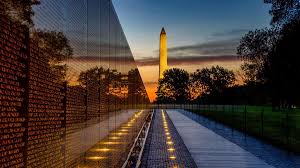
A Fabricated War

It was early August in 1964 when two American ships cruised into the Tonkin Gulf near the coastline of North Vietnam. The long narrow country facing the South China Sea had been divided following World War Two as had Germany and Korea. The demilitarized zone bisecting Vietnam lay somewhere near 17th parallel with the French controlling the South and Nationalist Chinese in the North.

From 1946 until 1954 the French and the Northern army, the Vietminh, jockeyed to unify the country, culminating with the Battle of Dien Bien Phu where the French got their clocks cleaned and arbitration in Geneva formalized the 17th parallel boundary. The US took an active interest in the fate of Vietnam because this was the Cold War Era. It was as if a global chess match shaped foreign policy with Soviet and Chinese Communism, and western democracies calculating strategic moves. As the preeminent post war power, the United States took the forefront in limiting Communist aggression, first in Korea, and then Vietnam.

By 1964 President Lyndon Johnson set his sites on Vietnam to limit the threat of Communist influence. To the President this was a backward country and people, and an overwhelming American force would easily conclude any resistance from Vietnamese Communists. After all how could people in black pajamas defeat the greatest nation in the world? President Johnson only needed a pretense, or provocation to commit American forces south of the demilitarized zone.

And that provocation cruised into the Gulf of Tonkin in early August of 1964. First the US destroyer, Maddox followed by another destroyer, the Turner Joy reported receiving fire from North Vietnamese forces. The ‘Gulf of Tonkin Incident’ as it became known resulted with President Johnson deploying Marines to Vietnam in March of 1965.

And that my friends was how the United States blundered into a land war in Southeast Asia.

Unknown to Johnson or his Warhawk cabinet was the character of their foe. Ho Chi Minh had been a Vietnamese Nationalist from his earliest days. Educated in France, Ho Chi Minh, as a student, bought a suit in Paris and made his way to the Hall Of Mirrors in Versailles. World War One had ended and he had hoped to plead Vietnam’s desire for relief from French Colonial occupation to President Wilson. But of course racism prohibited his entrance and embittered, Ho bided his time returning to Vietnam in 1941. He and his Vietminh worked with the Americans fighting Japan believing independence would come at the hands of the United States.

That didn’t happen.

Over time Ho Chi Minh became the indispensable man in freeing Vietnam. A George Washington if you will, of the Vietnamese people. President Johnson ought to have understood that.

But no.

The American land war escalated and the bombing raids under “Operation Rolling Thunder” and Nixon’s “December Bombing” did nothing to bring the North Vietnamese to heel.

From President’s Johnson to Nixon to Gerald Ford the conflict dragged on until in 1973 all American forces came home. Over 58 thousand Americans died in Vietnam and the truth was the provocation that sparked the war never happened. The Gulf of Tonkin Incident. For real. The so-called incident had been fabricated.

Now we again are under the knuckle of a completely vacuous man who believes he can bomb a nation and culture centuries old. Ramping up force garners nothing from a proud people, in this case the Persians, to quit. Like the deadbeat he is, Trump believes he can wear down the Iranians like a window installer he’s refused to pay. But he doesn’t know who he is dealing with, and he can’t sue or counter sue or in anyway wait out Iran until they tire and give up. That will never happen, like it never happened in Vietnam.

A greedy, hateful, racist goomba from Queens cannot win this fabricated war. Reality doesn’t work like that.

Gail Chumbley is the author of the two-part memoir “River of January,” and “River of January: Figure Eight,” co-writer of the screenplay, “Dancing On Air” based on those books. She has penned three stage plays on history topics, “Clay” on the life of Senator Henry Clay, “Wolf By The Ears” examining the beginnings of American slavery, and “Peer Review” where 47 is confronted by specters of four past presidents.
To Capture War

th

I came of age during the lengthy era of the Vietnam War.

This so called “police action” began quietly as a post-WWII policy challenging Communist expansion. Vietnam had been divided as had Germany, China, and Korea, leaving a divide of western leaning democracies pitted against Communist dominated systems. America’s commitment to the Vietnam conflict officially began in 1959, with US aid to the South, and officially ended with the Paris Peace Accords in 1973. Said another way, I was a preschooler when Ike dispatched advisers, and in my first year of college when Nixon ordered troops home.

Though almost moot today, opinions vary on why this war became so universally unpopular. One assessment claims the intense media coverage, particularly on American television, soured the public on the war, while others claim support declined when the draft expanded to middle class, college-bound sons. Not that it matters. In retrospect, whether soldiers were poor or affluent, the draft sent them hell in Southeast Asia.

The view that more affluent Americans across the country grew alienated, does hold some merit. the days, weeks, months, and years of guerrilla assaults, deadly fire fights in the jungle, and the daily tally of “body counts,”* drained public support for this sweltering nightmare.

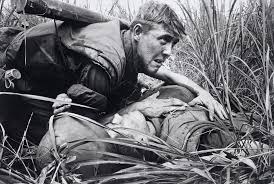
I recall many evenings washing dishes from dinner, watching a little black and white Sony portable tv. The network didn’t seem to matter; Cronkite, Huntley-Brinkley, or Frank Reynolds, all showed the same harrowing footage. Sweating soldiers slogging through a blur of elephant grass, the wounded medevaced onto thundering Huey’s, then wrapping up with an updated casualty count.

The Vietnam War was not presented through paintings, photographs, or sanitized movie newsreels. Instead the American public, including this growing girl from Spokane, Washington, absorbed the unfolding drama as a grim reality program, years before that term was coined. And that little 10 inch window to the world told me, as young and unsophisticated as I was, that this war was awful. That war is altogether an awful ordeal.

Film crews exposed the jarring horror of  surgical personnel splattered with blood, fighting their own war to save lives. The desperate Marines being interviewed while under assault at a stone wall in the ancient Vietnamese capitol of Hue; the massacre at My Lai, all of it awful. Americans watched firsthand their native sons give what Lincoln called “the last full measure.”

So many years have passed, and this “little girl” is now officially a graying Grandmother. Yet, as I type, my  recollections of fifty years ago remains vivid. And I know that, at this very moment, young people in battle zones face the exact same hell as the lethal jungles of Vietnam. And current American commitments have dragged on far longer than my childhood.

Still, the human cost of war has not changed–not one bit. And though the the draft is inactive, and the American public distracted, the price of conflict remains the same for those young souls presently in harms way.

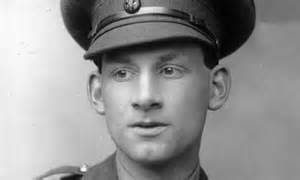
In the spirit of comforting the disturbed, and disturbing the comfortable, I would like to finish this piece by reprinting a poem by WWI soldier and poet, Siegfried Sassoon. With words alone, Sassoon captures the true degree of awful, using no film crew, photographer, or painter.

Dreamers

By Siegfried Sassoon

Soldiers are citizens of death’s grey land,
Drawing no dividend from time’s to-morrows.
In the great hour of destiny they stand,
Each with his feuds, and jealousies, and sorrows.
Soldiers are sworn to action; they must win
Some flaming, fatal climax with their lives.
Soldiers are dreamers; when the guns begin
They think of firelit homes, clean beds and wives.
I see them in foul dug-outs, gnawed by rats,
And in the ruined trenches, lashed with rain,
Dreaming of things they did with balls and bats,
And mocked by hopeless longing to regain
Bank-holidays, and picture shows, and spats,
And going to the office in the train.
 
*Covid 19 deaths are currently presented in the same visual manner. Grim statistics take a toll.
Gail Chumbley is the author of the two-part memoir, “River of January,” and “River of January: Figure Eight.” Both titles are available on Kindle.

The Outside World

My mom took a job in the early sixties with the US Postal Service. At first it was part-time, mostly needed at Christmas, but by 1966 she hired on full time. 

There were four kids, a house, and a yard, and Mom probably was pretty overwhelmed—something today I fully understand. For help my parents decided to host a student each term who attended a secretarial school in Spokane, called Kinman Business University. Lord knows what kind of credential awaited these young ladies after completion, but students did acquire skills such as shorthand, typing, filing, and other tasks.

The first girl who who came to stay with us was named Corrine. I can’t remember exactly the year, most likely around 1965 or 1966. I was in fourth grade. 

Corrine came to us from Alaska, and I remember she told me she was part Filipino or Native American, or both. I thought that pretty cool, Corrine to me symbolized the wonder of the outside world. 

Our house was constantly in a state of chaos, with quarrels, messes, a blaring TV, with people coming and going—chaos. But to walk into Corrine’s small quarters felt like a completely different world. All of her things were neatly stowed away, her bed carefully made, and the space even smelled differently than the rest of the house. I loved visiting her room, as it felt like an oasis of tranquility in a sea of crazy disarray. And it was in her little sanctuary that serene Corrine shared her life with me just a little.

A picture sat on her dresser of a boy. When I asked who he was, she told me his name was Ty, and that they planned on getting married in a few years. Married! I never knew a girl who had plans to get married! The only people I knew who were married were parents, and they were boring. 

He was called Ty, short for Tyrone, and he was visiting Spokane soon. Ty had received his draft notice and following basic training in the Army, he would ship out to a country called Vietnam. Corrine clearly missed him very much, and was anxious to see Ty before he flew to Southeast Asia.

My memories of his first visit are a little vague. I do recall that they sat on the couch in our living room and held hands in front of my parents. That moment struck me as fascinatingly real. 

Looking back I am sure that there were much deeper emotions at play, but whatever vibes filled the room zoomed over my 10-year-old radar.

And then Ty was gone.

The school term ended, and Corrine packed up most of her things and returned to Cordova for the summer. I’m not sure of the details or decisions, but she did return to us the next fall. Once again her room became that wonderful respite from the anarchy of the rest of the house. Ty’s picture again graced her dresser. 

Letters began to arrive to our house written on onion-skin parchment, marked AIR MAIL, bearing Corrine’s name. I’d never seen stationary like that, and she explained that was the cheapest way she and Ty could exchange letters. The paper was light blue, and felt like stiff tissue, but held its shape without creasing. Corrine had stacks of it, both fresh and received—the only sign of clutter in her neat little world.

Finally Ty came back to our house, and this visit was very different from the first meeting. The couple did not sit on the couch and hold hands. Not this time. My pre-teen sensibilities were shocked to see a grown man lying across her lap on the couch sobbing like his heart had broken. 

Poor Corrine! She, too, was dissolved in tears; red, puffy eyes behind her glasses. Ty couldn’t seem to help himself,  or compose himself, and he wouldn’t let go of her. The whole situation felt very surreal. I didn’t understand. How could this orderly girl, and her once orderly fiancé come apart like this, and in front of all of us?

That chapter occurred a very long time ago. My mother still worked, and there were other girls we housed. Still sweet Corrine and Ty live on in my memory as if only yesterday.

I grew up, went away to college, earned a degree in American History, becoming a teacher. 

For years and years I taught a unit on the Vietnam War to high school juniors. I recited the facts surrounding America’s entrance into that long, long, conflict. But in all my experience with those lesson plans, the veterans who visited my class describing their personal war, the analysis by historians we studied, nothing affected me more than the tragic transformation of that broken young man from Alaska.

Gail Chumbley is the author of the two-part memoir “River of January,” and “River of January: Figure Eight.”

Chumbley has also authored two stage plays, “Clay” on the life of Statesman Henry Clay, and “Wolf By The Ears” an exploration of American racism and slavery.

gailchumbley@gmail.com