Everybody’s Dad

IMG_0822

September, 1974.

When my dad said we were getting up at 5am, he wasn’t kidding. His morning schedule demanded we jump out of bed and climb into the truck, the back flanked with high wood racks. Two or three chainsaws are stored in the truck bed, along with cans of gasoline, rusty chains, a yard stick, chalk, and a cooler. This equipment is secured under a green canvas tarp that effuses an oily, pine scent from previous visits to the woods. 

Dad takes the wheel of his 1968 white Chevy pickup, my friend, Mary sits in the passenger seat. I wedge in the middle, straddling the stick shift, attempting to sip coffee as we motor our way out of town. The dawn is chilly and new, the traffic quite light.

Getting up that early on a Saturday renders us among the very few who had places to go. 

Eventually, clearing out the cobwebs of sleep from my brain, the morning feels electric. We were heading to the woods! Somewhere north of Spokane,  my father had discovered a secret tract of fallen timber the previous spring. My dad had a sharp eye for suitable firewood, especially if the trees were already down and dry, insuring a superior burn.

After an hour or so, the Chevy turns onto a dirt road, bumping along deep into the forest. The terrain is steep, and he assures us we are close to his remembered destination. The coffee is long gone, and we need to stop soon and wander into the trees for relief.

His truck rumbles to a halt on a lone logging trace. We’re out of the cab at once stretching our legs, breathing in the morning warmth. He has already dropped the tailgate and is tending to the gas and oil in his Stihl chainsaw. We help haul out the rest of the equipment, and donning leather gloves follow him to the downed trees, lying right where he scouted them, above the road.

I go first, chalking the cut-length with the yard stick, measuring out the entire tree. His chainsaw roars to life and my dad follows me, slicing tree rounds to fit the wood stove. Mary is rolling the sections to the flat, and righting each round for further splitting with an axe.

The day has grown quite hot. We toss our flannel shirts into the cab, drink some water from a canteen, and go back to it.

By 11:00am the trees are no more. Where logs had rested for a season, only skiffs of sawdust remain, the firewood secured in the truck-bed. It’s now that Dad lifts the lid of the cooler and we dine on bologna sandwiches and warm Shasta cola. Somehow the white bread tastes surprisingly good, though only lunchmeat and butter. We had worked up powerful appetites. 

My father relaxes now that the job is complete, and we rest on the tailgate. The three of us chitchat and laugh, sweating and smelling of pinesap. 

That he loves the woods is clear by his smile and satisfaction. And there, on the back of that truck we socialize–two teenaged girls and our genial guide, resting our backs against neatly even, stacked rows of wood.

July, 2018

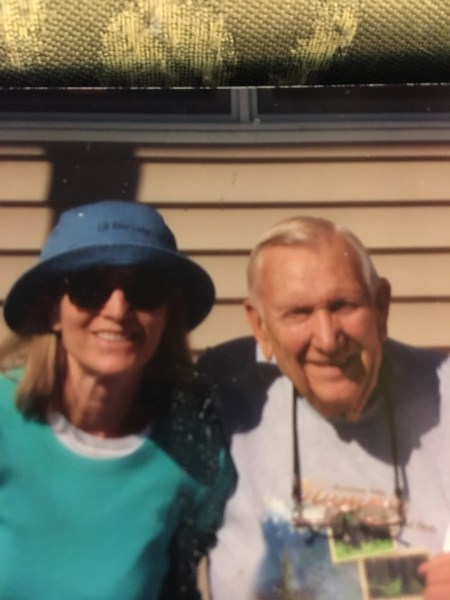
My father is in the hospital. The ravages of Parkinson’s Disease, chronic blood clots and advanced age has faded his once vibrant presence. We don’t know how much time he has left, as he grows weaker by the hour. And perhaps this isn’t the best way to inform friends and acquaintances of his failing condition. Still, we can choose to remember him, as I have, during his halcyon days when he was everybody’s dad.  

June, 2019

Dad would have celebrated his 87th birthday on June 15th, but didn’t survive his illness. He has been sorely missed this last year since his passing.

To forget his generous character would be a second sort of death, so I will keep him alive in my writing, and my grandchildren will learn all about him. In that way my Dad’s spirit will carry on through their lives.

Happy Fathers’ Day.

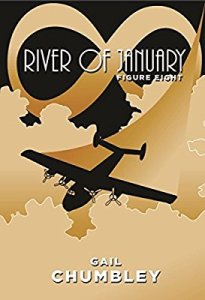
Gail Chumbley is the author of the two-part memoir “River of January,” and “River of January: Figure Eight.” Both books are available at http://www.river-of-january.com and on Kindle.

gailchumbley@gmail.com

Mistinguett

gail chumbley's avatarGail Chumbley

Sun Valley Idaho is especially beautiful in the fall. We had driven to the resort through steep, intimidating mountain passes, to finally descend among groves of whispering Aspen trees. We had traveled over for a book presentation on “River of January,” the first volume of my two-part memoir at the local Library. We had arrived with hours to spare.

With tons of time to kill we walked the boarded walkways of Blaine County’s most famous community. My eyes were peeled for a glance of the the rich and famous; perhaps Arnold, maybe Bruce, or Demi, or even Tom and Rita. They pop up once in a while to relax in the natural beauty, away from the rat race.

Wandering, we chanced across a dress shop, and I slipped inside the glass door, leaving my husband sitting on a bench outside. The clothes were beautiful; plaids in silky fabric, and fashionable…

View original post 320 more words

Go Get ‘Um

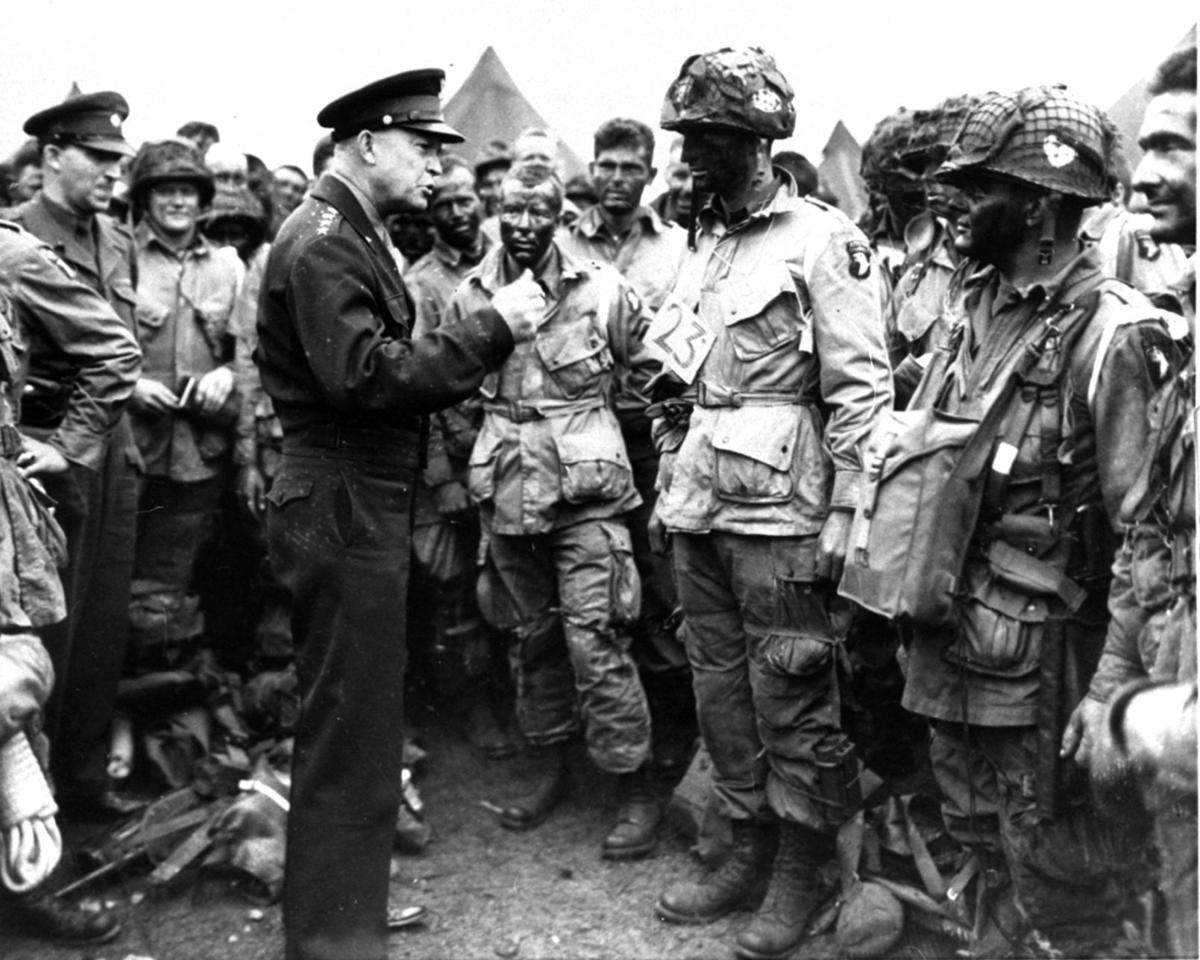
5825241068ff3.image

The date was June 5, 1944, and General Dwight D Eisenhower had made the decision to begin the Allied invasion of France the next morning. Christened “Operation Overlord” the massive campaign required disruption inland from the Normandy coast to insure a solid beach-head. The task fell to soldiers of the US 82nd Airborne, the US 101st Airborne,  and members of the 6th British Airborne. The mission was to impair the Wehrmacht’s ability to move their Panzer units toward the five invasion points.

General Eisenhower met informally with soldiers of the 101st, chatting and encouraging, to build morale. He must have felt an enormous responsibility sending these young Americans on such a hazardous and vital mission. While he mingled with the men, Ike suddenly wondered, “Is anybody here from Kansas?” A voice replied from the crowd, “I’m from Kansas, sir.” Ike looked the boy in the eye and responded, “Go get ‘um, Kansas.”

That story always leaves me teary. I don’t cry in movies, poetry doesn’t move me, and books have to be awfully emotional to elicit a sob out of me. But that moment of raw, honest regard, with so much at stake, hits me in the heart.

Washington at Trenton, Grant at the Wilderness, Doughboys in the Argonne, GI’s at the Bulge, Marines at Hue: the devotion to duty chokes me up. Every time.

But today Americans seem somehow lessened, cheapened. There are no Eisenhowers, or Washingtons, or Lincoln’s to describe what we represent. The institutions that inspired countless young people to lay down their lives are now attacked by an ersatz strongman from within. How could this happen? How can citizens of good conscience condone this very real threat? Where is our collective honest regard for our past, present , and future?

Makes me want to cry.

Gail Chumbley is the author of the two-part memoir, “River of January” and “River of January: Figure Eight.” Both are available on Amazon.com

Mistinguett

Sun Valley Idaho is especially beautiful in the fall. We had driven to the resort through steep, intimidating mountain passes, to finally descend among groves of whispering Aspen trees. We had traveled over for a book presentation on “River of January,” the first volume of my two-part memoir at the local Library. We had arrived with hours to spare.

With tons of time to kill we walked the boarded walkways of Blaine County’s most famous community. My eyes were peeled for a glance of the the rich and famous; perhaps Arnold, maybe Bruce, or Demi, or even Tom and Rita. They pop up once in a while to relax in the natural beauty, away from the rat race.

Wandering, we chanced across a dress shop, and I slipped inside the glass door, leaving my husband sitting on a bench outside. The clothes were beautiful; plaids in silky fabric, and fashionable shoes among displays of accessories. The owner was on her phone, behind the counter, speaking to what sounded like a potential customer.

And she was clearly French.

I continued to browse the merchandise, but was more taken with the French lady. I had a good reason.

She soon closed her call, then addressed me. “May I help you?,” the lovely woman trilled.

“Well, maybe.” I replied. “I’m a writer. In fact, I’m here to discuss my new memoir at the library. By any chance have you heard of Mistinguett?”

The shop owner stopped, and looked into my eyes. “Oo La La!” she gasped. “She is a legend.” I smiled, my day made.

Mistinguett was a French music hall entertainer, born late in the 19th Century. At one time this singer-dancer was the highest paid entertainer in Europe, best remembered for her torch song, Mon Homme. Americans might recognize the tune better as My Man, a hit, first for Ziegfeld headliner, Fannie Brice, and later Barbra Streisand.

A fun fact about Mistinguett is she had her legs insured for 50 Francs during her prime. Another fun fact is she discovered Maurice Chevalier, pulling him from the chorus, and making him a star.

The best news about Mistinguett concerns Helen Thompson. Just a girl, this American dancer who’s life story appears in “River of January,” toured with the “Oo la la” French legend from 1932-33.

Enjoy this film clip of the iconic entertainer, dated 1936, and look for Helen in the cast photos of Viola Paris, the Mistinguett variety show from three years earlier.

Error
This video doesn’t exist

missgroup0001

Mistinguett sits in front holding flowers. Helen Thompson is in the top row center right–the blonde wearing the fur-collared coat.

Peacock0001

Here Mistinguett is wearing a giant head dress, and Helen is second girl to the right.

Gail Chumbley is the author of the memoir “River of January,” and “River of January: Figure Eight.” Also available on Amazon.com

Our Mutual Bounty

images-10

“For the Benefit and Enjoyment of the People.”

I’m finishing up the last of a series of Presidential talks, closing with an examination of the life of Theodore Roosevelt, our 26th President. TR’s formative years involved a great deal of outdoor activity, pursuing what he called the Strenuous Life. And that life dramatically shaped his later terms of office. Next to George Washington and Abraham Lincoln, subjects of previous presentations, TR might be one of most thoroughly decent chief executives in the series.

Theodore Roosevelt liked to hunt, a lot. As a boy, while on holiday, floating the Nile, young “Teedie” bagged literally hundred of birds, picking them off along the riverbank. Toting a new shot gun, a gift from his father, and a new pair of glasses, he combed the grasses along the ancient river searching for winged prey. Back on board the family’s rented houseboat, he promptly performed amateur taxidermy on his take, as bewildered Egyptian servants and crewman stood silently by, watching. The finished collection eventually went on display in young Roosevelt’s own natural history museum, located on the top floor of the family’s elegant Manhattan home.

As a young adult, Roosevelt tracked countless paths through forested mountains, the prairies, and even the Great Plains, shooting and crating home countless pelts and game trophies. TR climbed the Matterhorn on his honeymoon, returning to Long Island rowing and sailing near his home at Sagamore Hill. The Roosevelt fortune made for comfortable, and convenient travels.

However, TR, through his innate sense of fair play came to a more enlightened conclusion, scrutinizing the inequity of his privileged lifestyle. In 1903, after a two-week trek into Yellowstone National Park, America’s first park, President Roosevelt was requested to make remarks to a small crowd of local Montanans. He agreed and took the opportunity to extoll his new democratic philosophy of America’s natural wonders. TR told listeners that day:

“The only way that the people as a whole can secure to themselves and their children the enjoyment in perpetuity of what the Yellowstone Park has to give is by assuming the ownership in the name of the nation and by jealously safeguarding and preserving the scenery, the forests, and the wild creatures . . . the Park is simply being kept in the interest of all of us, so that every one may have the chance to see its wonders
with ease and comfort at the minimum of expense. This pleasure, moreover, can under such conditions be kept for all who have the love of adventure and the hardihood
to take advantage of it . . .”

This world-traveling aristocrat spoke of the essential equality of America’s public lands–open places tourists can all savor equally, rich or poor. Grasping the finite dimensions of land and wildlife, TR changed his earlier approach to hunting and camping. He came to embrace a classless ideology to accessing our mutual bounty. In spite of his famous name, wealth, and public prominence, President Roosevelt realized that natural wonders were meant to inspire us all.

Gail Chumbley is the author of the two-part memoir, River of January and River of January: Figure Eight. Available at http://www.river-of-january.com and at Amazon.com

Political Science


We were in the midst of text book adoption some years ago when an unexpected snag brought the process to a halt. 

The Social Studies Departments across our district were asked to pilot an array of textbooks for the Fall of 1994. Publishers had generously provided sample texts, and we spent hours previewing different titles, passing our preferences to our District Social Studies Coordinator.

Government teachers decided, unanimously, that they would replace their current text with the newer edition of the book they had used for some years. To a person, instructors agreed to readopt Magruders American Government; a trusty standard, and the hands-down favorite of most 12th grade teachers across the country. Our staff had ready-made units, lessons, speakers, ancillary materials,, film clips, debate resolutions, etc . . . only requiring the newer book with updated factual information. And their decision appeared to be resolved.

But in the last phase, presentation for final adoption, the Board of Trustees suddenly slammed on the brakes, visibly unhappy with the choice.

 Magruders, as a tradition, had placed a photo of the current first lady inside the first page of their textbook. The old copies may have still been of Mamie Eisenhower by the tattered condition of the old copies. But no longer. The inside photo of this new edition featured First Lady, Hillary Rodham Clinton, and board members, reactionaries to the core, lost their minds.

I taught AP American History at that same time, and thought nothing of reordering Thomas Bailey’s American Pageant, another classic. We had used this text for some time, but needed an updated edition, too. However, in light of the fiasco over Magruders, I too, found my text in the crosshairs.

Wearing an understanding, sympathetic expression the district coordinator said I had to prepare a defense of my book, too. And it wasn’t that I minded touting the virtues of the book, I liked Pageant a lot, but I did mind the time lost in preparing my classroom work. Plus, it was so annoying that we all had to jump for the Board because Mrs. Clinton had the audacity to be the new First Lady.

I supposed, fair was fair, if one book was attacked for fallacious reasons, attack the rest-a convenient diversion to camouflage the real aim of thought suppression.

The central thrust is that Trump era of intolerance had been in the making for quite some years. The irrational politics of 2016 was clearly hardening across the nation years earlier. From School Boards, to City Halls, to library districts, restriction of free thought was under assault. 

Nothing pisses off the far right more than a rational challenge from open-minded, articulate, and educated thinkers.

Gail Chumbley is a retired history educator, and author of the two-part memoir River of January, and River of January: Figure Eight.

gailchumbley@gmail.com


Mixed Emotions

This is a reprint of an earlier post.

th

It’s been uncomfortable to watch the media coverage from Louisiana about the removal of General Robert E Lee’s statue in New Orleans. As a life-long student of the Civil War the idea of removing reminders of our nation’s past somehow feels misguided. At the same time, with a strong background in African American history, I fully grasp the righteous indignation of having to see that relic where I live and work. Robert E. Lee’s prominence as the Confederate commander, and the South’s aim to make war rather than risk Yankee abolitionism places the General right in the crosshairs of modern sensibilities. Still, appropriating the past to wage modern political warfare feels equally amiss.

Robert Edward Lee was a consummate gentlemen, a Virginia Cavalier of the highest order. So reserved and deliberate in his career was Lee, that he is one of the few cadets who graduated West Point without a single demerit. Married to a descendent of George and Martha Washington, Mary Anna Randolph Custis, Lee added stature to his already esteemed pedigree. (The Lee-Custis Mansion, “Arlington House” is situated at the top of Arlington National Cemetery. And yes, this General was a slave holder, however he appears to have found the institution distasteful).

When hostilities opened in April of 1861, the War Department tapped Lee first to lead Union forces, so prized were his leadership qualities. But the General declined, stating he could never fire a gun in anger against his fellow countryman, meaning Virginians.

On the battlefield Lee was tough to whip, but he also wasn’t perfect, despite his army’s thinking him so. Eventually, after four years of bloody fighting, low on fighting men and supplies–facing insurmountable odds against General Grant, the Confederate Commander surrendered at Appomattox Courthouse, Virginia.

Meeting Lee face-to-face for the first time to negotiate surrender terms, Ulysses Grant became a little star-struck himself in the presence of the General, blurting out something about seeing Lee once during the Mexican War.

After speaking with General Grant, in a letter addressed to his surrendering troops Lee instructed, By the terms of the agreement Officers and men can return to their homes. . .

But Robert E. Lee’s story doesn’t end there.

Despite outraged Northern cries to arrest and jail all Confederate leaders, no one had the nerve to apprehend Lee. And that’s saying a lot considering the hysteria following Lincoln’s assassination, and assassin John Wilkes Booth’s Southern roots. The former general remained a free man, taking an administrative position at Washington College, now Washington and Lee University, in Lexington, Virginia. It was in Lexington that exhausted Lee died in 1870, and was  buried.

Robert E. Lee led by example, consciously moving on with his life after the surrender at Appomattox. He had performed his duty, as he saw it, and when it was no longer feasible, acquiesced. He was a man of honor. And from what I have learned regarding General Lee, he would have no problem with the removal of a statue he never wanted. Moreover, I don’t believe he would have any patience with the vulgar extremists usurping his name and reputation for their hateful agenda.

This current controversy isn’t about Robert E Lee at all. It’s about America in 2017.

Gail Chumbley is the author of the two part memoir, River of January and River of January: Figure Eight. Also available on Amazon.