The American Gentry


Note: My students used to ask how the planter aristocracy persuaded poor whites to fight for their interests in the Civil War. I think the answer lies in the power and position that the underclass envied and hoped to attain.

Please permit me to reintroduce these four figures from America’s antebellum period.

Thomas Jefferson Best recognized as the author of the Declaration of Independence, the third president of the U.S., and the man behind the 1803 purchase of the Louisiana Territory.

Andrew Jackson The celebrated hero of the Battle of New Orleans, noted Indian fighter, and seventh president of the U.S.

John C. Calhoun Congressman, turned Senator from South Carolina, who served two separate administrations as Vice President.

Jefferson Davis, a former soldier in the Mexican War, one-time Secretary of War, and later President of the Confederate States of America.

These four men forged political careers prior to the Civil War that fully embraced the social norms of early America. To a man, all hailed from the Old South, where each man shaped distinguished reputations, built spacious mansions, entertained illustrious guests, all on the backs of slave labor.

Ironically if one asked these men’s occupation, not one would have mentioned politics. Instead, each would have replied, “I am a farmer.”

To modern ears that answer feels a bit misleading and absurd. However, in the early nineteenth century, exercising dominion over large tracts of land, and cultivating crops as far as the eye could see, was viewed the most noble and honorable of pursuits. But a gnawing truth lay behind the practiced manners and broad, fertile fields. A profound self deception had also taken root, sowing an overblown sense of racial superiority, and human oppression of nightmarish proportions.

That these “farmers” were all slave masters is the cruel truth–Lords of the Lash, who derived a living “wringing their bread from the sweat of other men’s faces,” (As Lincoln so eloquently phrased).

These four planters also minimized the brutal underpinnings which sustained each man’s fiefdom. Jefferson, Jackson, Calhoun, and Davis capably hijacked, and sheltered behind “republican virtues,” including freedom and the social contract to suit their own interests.No higher authority held any sway over these planters–they were marked as privileged.

The patriarch of this sophistry was Thomas Jefferson.

Esteemed as the “Sage of Monticello,” Jefferson brilliantly articulated a vision of America where all lived freely upon private land, untroubled by outside interests. Residing upon acres of personal liberty, this master managed his estate immune from any overreaching government. For Jefferson, he and his fellow planters were the “natural aristocrats,” of the new nation, meaning they held the only legitimate claim to power. Only the elite of the community, like Jefferson, knew what was best for all.

The Sedition Act, passed by Congress in 1798, moved Thomas Jefferson to show his true political colors. President John Adams had wanted to silence political critics of his administration, and jammed this dubious legislation through Congress. In reply Jefferson authored a protest titled the “Kentucky Resolution.” In his tract, submitted to the Kentucky Legislature, Jefferson introduced the concept of ‘nullifying’ Federal law. Specifically, when a majority of state delegates, assembled in special convention, renounced a Federal statute, the law was rendered null and void within that state.

For the first time, in one pivotal moment, Jefferson’s insidious principle found its way into the bloodstream of American politics.

Ironically Andrew Jackson didn’t care for the intellectual, and philosophical Jefferson. Still, despite temperamental differences, Jackson did share Jefferson’s world view of complete dominion over his land and “people.” A ferocious master, Jackson answered to no civil law, but his own. Dabbling in both horse and slave trading, Old Hickory frequentlyoften challenged any man who questioned his conduct or honor.

To his credit Jackson did not pretend to care about high brow thinking or civic virtue. His philosophy was simple; the master was never wrong.

Before Senator John C. Calhoun of South Carolina soured into a states’ right’s militant, his political outlook had been national in scope. With unusual candor a very young Congressman Calhoun self-consciously confessed that slavery was a “necessary evil,” vital to South Carolina’s prosperity. But his marriage to a wealthy Charleston cousin elevated his social status, which in turn, adjusted Calhoun’s thinking. Assuming the role of a gentleman, while cultivating a prominent political reputation, Calhoun also became a slave master. Much like Jefferson’s Monticello, or Jackson’s Hermitage, Calhoun’s plantation, Fort Hill, was an ever-expanding operation, endlessly renovated using teams of slaves who also tended his fields.

In 1829, as Jackson’s new Vice President, Calhoun quickly butted heads with America’s new President. Steadily embittered by Jackson’s arbitrary, monarchial style, and indifference to law, Calhoun resigned the vice presidency and returned to Fort Hill an angry man. His stance on slavery hardened as well, leaving him a vitriolic defender of the practice. Under increasing pressure from Northern abolitionist, Calhoun, picked up his pen and insisted that slavery was not evil after all, but a ‘positive good.’

When Congress passed a protective tariff for northern goods, this former Vice President organized a state convention to fully resist the new Federal law. Calling his defiance “nullification,” Calhoun put into action Jefferson’s “resolution” that refused obedience to Washington.

Fortunately this particular crisis was averted by cooler heads in Congress, delaying the curse of fraternal bloodshed for a later generation.

By 1860 nullification had bloomed into full secession. No longer would the planter class tolerate insults or challenges to their natural superiority and authority.

It came as no surprise when South Carolina became the first of the eleven states to secede from the Union. Delegates attending a state convention in Columbia did not wait for the final electoral results to reject the election of Abraham Lincoln. So enraged were these aristocrats that Lincoln’s name had not even appeared on the ballot in most southern states.

I’ve added Confederate President Jefferson Davis to this piece because of his later role in perpetuating the genteel myth of the South. After four years of bloody battle and countless bullets finally settled the issue of Federal authority, Davis, released from jail began a writing career. He first penned, The Rise and Fall of the Confederate Government, followed later by A Short History of the Confederate States of America. In both of these works, Davis invented a romantic world of gentlemen, belles, and contented slaves in the fields. The fantasy was bunk, but Davis, the onetime master of of Belvoir, and Brierfield, Mississippi, somehow got in the last word.

Davis’s fanciful yarn was only concocted as a charming fable to disguise a legacy of hubris, power, greed, hate, racial exploitation, and violence.

In answer to the question posed by my history students, poor whites defended the southern gentry because they wished to live just like them.

Gail Chumbey is the author of the two-part memoir,  “River of January,” and “River of January: Figure Eight,” available on Kindle.

gailchumbley@gmail.com

Thanks for Noticing

“River of January,” and “River of January:Figure Eight” have garnered some recognition. Find out why today. Click this link www.river-of-january.com, and order your own copies, personally signed by the author.

Award winning history instructor, Gail Chumbley is the author of the two-part memoir River of January and Figure Eight.

Saddle Shoes, Florida, & Rosalie Sorrels

Screen Shot 2017-06-17 at 4.24.53 PM

I never imagined a living legend would grace my home.

The weather had finally turned at the cabin; brief, chilly showers shifting into warm sunny intervals–golden debris blowing across the deck. I had given up clearing away leaves and pine needles, settling instead for mopping rainwater off of plastic chairs. In our cabin for less than a year, my husband and I had volunteered our small place to host a fund raiser for two local candidates running for county offices.

Guests began arriving in late afternoon, carting in plates of finger food and bags of chips. Visitors commandeered my little kitchen, quickly producing cheese & meat trays, while toasting garlic bread in the oven. Shuffling knives and serving spoons, I glanced up to an opening door to greet one of the arriving candidates. Her husband followed her bearing a big smile and carrying an old fashioned squeeze box—a melodeon. I sensed a forthcoming singalong.

I vaguely recognized the third visitor passing through the threshold. After introductions were made, the mystery cleared; the lady was legendary folk singer, Rosalie Sorrels. She had driven over with the candidate and her husband, as they were friends from the other side of the county. I had seen Sorrels before in concert, and honestly grew tongue-tied meeting her in person.

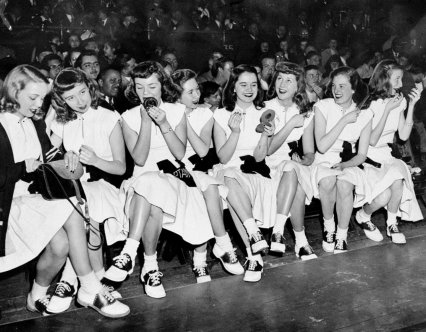
The room filled and the evening warmed–mellowed by good wine and friendly camaraderie. Ms Sorrels drifted around the room, chatting here and there, while perusing our limited artwork. She admired, in particular, a panel of over-sized Florida scenes, soon sharing tales of chauffeuring her children through the Sunshine State many years earlier. At one point, she and I shared a moment out on that leaf-strewn deck, agreeing that cutting down a tree, even as a safety measure, was still a shame. But the big conversation that memorable night centered on my footwear, a pair of vintage saddle shoes.

One woman told us that at her California high school everyone called these shoes Oxfords, and were acceptable only in white. Ms. Sorrels happily joined in with a story of her trusty black and white pair. Mine were coffee and cream, the same as I wore when I attended grade school. Odd, but in that moment we all seemed to channel our long ago girlhoods; guarded adult caution melting away in the banter. Animated with a gentle, expressive smile, Rosalie, too, swapped memories, chuckling along with the rest of us.

As dusk fell, and lamp light filled the house, our company began to depart. There were long drives ahead, and people needed to get going. My husband and I waved goodbye, pleased we had opened up our home for the event. And in the following days we shared with anyone who would listen that Rosalie Sorrels visited our cabin. If they didn’t recognize the name, they did after we were through singing her praises.

That was nearly ten years ago.

When it came across the news last week that Sorrels had passed away in Reno, my mind traveled back to that singular Fall evening. I recognized then, and I still believe, that the cosmos handed us a mighty gift in that visit, of a luminary who had once driven to Florida with her kids and, like the rest of us wore saddle shoes.

Gail Chumbley is a nationally recognized history instructor, and the author of the two-part memoir, River of January and River of January: Figure Eight. Also on Amazon.

Always On My Mind

fullsizeoutput_55c

Had a six-plus hour drive today; Salt Lake City to my mountain cabin in Idaho. Lengthy car-time, for this Indie writer, always results in exploring fresh ideas for book marketing. I don’t say much to my family, but promoting the two-part memoir, “River of January,” and “River of January: Figure Eight,” is never far from my thoughts, and I’m pretty sure this is true of fellow writers.

Finally made it home, chatted with the husband, did a little of this and that, then idly picked up today’s newspaper. Now, I’m not an avid follower of the mystic, but being an Aquarian, (there’s a song about us, you know) I sometimes do indulge. And, as you can see the cosmos told me to do this, so by damn, I am.

Dear reader, if you enjoy a true American story, set in the American Century, get River of January and River of January: Figure Eight. In the pages, you will experience adventure, travel, glamour, and romance. Aviation enthusiasts relive the thrills and peril of early flight, theater fanciers follow an aspiring dancer as she performs across international stages, and takes her chances in Hollywood.

Take it from the author–in peacetime and in war–this two-part memoir is richly entertaining.

http://www.river-of-january.com. Also available on Amazon.com

Gail Chumbley is an award winning instructor of American history and the author of the two-part memoir, “River of January.”


Tagwords

World War One, The Great Depression, Vaudeville, Golden Age of Aviation, Amelia Earhart, Golden Age of Hollywood, Rise of Fascism, Waco Aircraft, Professional Ice Skating, Sonja Henie, World War Two, Battle of the Atlantic, Pearl Harbor, War in the Pacific, Cold War, Sun Belt, America as a World Power.

Get the two-part Memoir, River of January and River of January: Figure Eight and connect these fascinating dots. Also available on Amazon.com

If you’ve enjoyed this adventure, leave a review on Amazon.com. Thanks, Gail.


New Birth of Freedom

th

We all know the story.

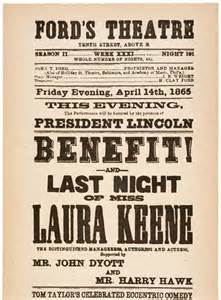
On a mild April night, President and Mary Lincoln attended the final performance of the popular comedy, “Our American Cousin,” at Ford’s Theater. Lincoln, by all accounts was in a light, blissful mood. A week earlier Confederate forces commanded by Robert E. Lee had surrendered at Appomattox Courthouse, Virginia, and except for some dust ups, the Civil War had ceased. We also know that John Wilkes Booth, and fellow conspirators plotted to kill, not only the President, but the whole order of presidential succession; Vice President Andrew Johnson, Secretary of State William Seward, etc . . . but only Booth followed through with that night’s violence.

Andrew Johnson took office in a whirlwind of shifting circumstances. In the year up to President Lincoln’s death a notable power struggle had taken shape between the President and Congress. America had never before endured a civil war, and the path to reunion had never been trod. As President, Lincoln believed the power to restore the Union lay in the executive branch—through presidential pardon. But an emerging faction in the Republican Party, called the Radicals saw the issue differently. These men operated from the premise that the Confederate States had indeed left the Union—committed political suicide at secession—and had to petition Congress for readmission. (Congress approves statehood). And this new president, Andrew Johnson, was determined to follow through with Lincoln’s policies.

Unfortunately, Johnson was by temperament, nothing like Abraham Lincoln. Where Lincoln had a capacity to understand the views of his opponents, and utilize humor and political savvy, Johnson could not. Of prickly character, Andrew Johnson entered the White House possessed by deeply-held rancor against both the South’s Planter Class, and newly freed blacks. This new Chief Executive intended to restore the Union through the use of pardons, then govern through his strict interpretation of the Constitution. Johnson had no use for Radical Republicans, nor their extreme pieces of legislation. Every bill passed through the House and Senate found a veto waiting at Johnson’s desk, including the 1866 Civil Rights Act, and the adoption of the Freedmen’s Bureau. Congress promptly overrode Johnson’s vetoes.

Reconstruction began with a vicious power struggle. And much of the tumult came from Andrew Johnson’s inability to grasp the transformation Civil War had brought to America. While the new president aimed to keep government limited, the Radicals and their supporters knew the bloody struggle had to mean something more—America had fundamentally changed. Nearly 700,000 dead, the emancipation of slavery, the murder of Father Abraham, and a “New birth of Freedom” had heralded an earthquake of change.

But Johnson was blind to this reality, seeing only an overreaching Congress, (Tenure of Office Act) and Constitutional amendments that had gone too far. And so it was a rigid and stubborn Andrew Johnson who eventually found himself impeached by a fed-up House of Representatives. Johnson holding on to his broken presidency by a single Senate vote.


There have been other eras in America’s past that fomented rapid changes. The Revolution to the Constitutional period, the First World War into American isolation, the Vietnam War stirring up protest and social change. All concluding with reactionary presidencies. No less occurred with the 2016 election of Donald Trump.

2008 to 2016 witnessed social change of a new order. Administered by America’s first African-American President, Barack Obama, liberty reached further, bringing about change where once-closeted American’s hid. Gay marriage became the law of the land, upheld by the Supreme Court in Obergefell V Hodges. The trans community found their champion in Bruce, now Caitlin Jenner. Health care became available to those caught in relentless poverty and preexisting conditions. Undocumented young people were transformed into “Dreamers.” And though he didn’t take the Right’s guns, President Obama did successfully direct the mission to nab Osama bin Laden, America’s most wanted man.

So when former students began sending horrified texts to me, their old history teacher on election night, 2016, I gave the only explanation history provided. The Obama years introduced change to America that reactionaries could not stomach. (And yes, racism is certainly a large part of the equation).

So now we deal with a Donald Trump presidency. But, Mr. Trump would be wise to acknowledge and accept what has transpired in the last eight years. The thing about expanding the ‘blessings of liberty,’ is no one is willing to give them back. When push comes to shove, the new president may find himself facing the fate of Andrew Johnson.

Gail Chumbley is the author of River of January and River of January: Figure Eight. Also on Amazon.

To Capture War

th

I came of age during the lengthy era of the Vietnam War.

This so called “police action” began quietly as a post-WWII policy challenging Communist expansion. Vietnam had been divided as had Germany, China, and Korea, leaving a divide of western leaning democracies pitted against Communist dominated systems. America’s commitment to the Vietnam conflict officially began in 1959, with US aid to the South, and officially ended with the Paris Peace Accords in 1973. Said another way, I was a preschooler when Ike dispatched advisers, and in my first year of college when Nixon ordered troops home.

Though almost moot today, opinions vary on why this war became so universally unpopular. One assessment claims the intense media coverage, particularly on American television, soured the public on the war, while others claim support declined when the draft expanded to middle class, college-bound sons. Not that it matters. In retrospect, whether soldiers were poor or affluent, the draft sent them hell in Southeast Asia.

The view that more affluent Americans across the country grew alienated, does hold some merit. the days, weeks, months, and years of guerrilla assaults, deadly fire fights in the jungle, and the daily tally of “body counts,”* drained public support for this sweltering nightmare.

I recall many evenings washing dishes from dinner, watching a little black and white Sony portable tv. The network didn’t seem to matter; Cronkite, Huntley-Brinkley, or Frank Reynolds, all showed the same harrowing footage. Sweating soldiers slogging through a blur of elephant grass, the wounded medevaced onto thundering Huey’s, then wrapping up with an updated casualty count.

The Vietnam War was not presented through paintings, photographs, or sanitized movie newsreels. Instead the American public, including this growing girl from Spokane, Washington, absorbed the unfolding drama as a grim reality program, years before that term was coined. And that little 10 inch window to the world told me, as young and unsophisticated as I was, that this war was awful. That war is altogether an awful ordeal.

Film crews exposed the jarring horror of  surgical personnel splattered with blood, fighting their own war to save lives. The desperate Marines being interviewed while under assault at a stone wall in the ancient Vietnamese capitol of Hue; the massacre at My Lai, all of it awful. Americans watched firsthand their native sons give what Lincoln called “the last full measure.”

So many years have passed, and this “little girl” is now officially a graying Grandmother. Yet, as I type, my  recollections of fifty years ago remains vivid. And I know that, at this very moment, young people in battle zones face the exact same hell as the lethal jungles of Vietnam. And current American commitments have dragged on far longer than my childhood.

Still, the human cost of war has not changed–not one bit. And though the the draft is inactive, and the American public distracted, the price of conflict remains the same for those young souls presently in harms way.

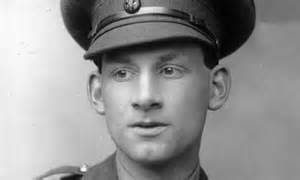
In the spirit of comforting the disturbed, and disturbing the comfortable, I would like to finish this piece by reprinting a poem by WWI soldier and poet, Siegfried Sassoon. With words alone, Sassoon captures the true degree of awful, using no film crew, photographer, or painter.

Dreamers

By Siegfried Sassoon

Soldiers are citizens of death’s grey land,
Drawing no dividend from time’s to-morrows.
In the great hour of destiny they stand,
Each with his feuds, and jealousies, and sorrows.
Soldiers are sworn to action; they must win
Some flaming, fatal climax with their lives.
Soldiers are dreamers; when the guns begin
They think of firelit homes, clean beds and wives.
I see them in foul dug-outs, gnawed by rats,
And in the ruined trenches, lashed with rain,
Dreaming of things they did with balls and bats,
And mocked by hopeless longing to regain
Bank-holidays, and picture shows, and spats,
And going to the office in the train.
 
*Covid 19 deaths are currently presented in the same visual manner. Grim statistics take a toll.
Gail Chumbley is the author of the two-part memoir, “River of January,” and “River of January: Figure Eight.” Both titles are available on Kindle.

Fighting Joe

IMG_0791

His name was Joseph Andrew Tucker, and he was my grandpa–my mom’s biological father. We didn’t see him very often growing up, as he had remarried and devoted himself to his new wife’s family. I can’t say that I ever felt particularly close to this grandparent, though he was always kind to me.

Looking back, I came to realize that I did respect him. There seemed to be an aura of purpose and certainty around Grandpa Joe, along with a perpetual cloud of cherry tobacco, curling from his pipe. Yet, other than that youthful impression, I honestly knew very little about Joe.

The following is what I’ve pieced together since his death.

Joe Tucker arrived in Spokane, Washington in 1937. He came west from Arkansas following his five-year-old daughter, (as his ex-wife had settled in the Pacific Northwest). Joe found work with the Great Northern Railroad, because Spokane was, and still is, bisected with busy, screeching rail lines. At about the same time he found work, Joe met and married a local widow, a woman named Velma, who brought three children of her own into the marriage.

In and out of the US Army since initially enlisting in 1929; he was discharged after a second hitch in 1938. However, following the Pearl Harbor attack, and America’s entry into World War Two, Joe realized he’d surely be called back for active duty. Not anxious to leave his young daughter, or his new family, he requested a deferment of some kind, due to his previous service, and current domestic responsibilities. He was promptly denied. And, once again, Joe found himself in uniform.

Part of the XIX Corps, Joe Tucker and his new outfit underwent infantry training in support of an armored division. (When he departed Spokane, his new wife, Velma, switched on a kitchen radio, and didn’t turn it off for the next four years).

After six months at Camp Polk, Louisiana, the entire Corps shipped out for England as part of the buildup for the D-Day invasion. Joe and his company was stationed in the south of England, in Wiltshire, adjacent to Southampton, the primary staging area for Operation Overlord. In a letter to Velma on eve of the June invasion he cautioned her that Your’e going to see a lot of frightening news, but really, it’s not as bad as they say.

On June 6th, the first Allied wave crossed the English Channel, securing a beachhead in Normandy in exchange for thousands of American soldiers. Days later, Joe’s infantry unit, and accompanying tanks, rolled onto those same blood-soaked beaches; members of the XIX Corps bracing for their own European crusade.

For the next five months the XIX slugged their way from Castilly, to St. Lo, battling their way through the storied Siegfried Line, crossing the Meuse River in Holland. However, by mid-December, the slog to Germany came to a violent halt with an unexpected push-back in the Ardennes Forest, later called “The Battle of the Bulge.” During the darkest days of this German counter offensive, Joe and his buddies switched to defensive warfare, retreating back into Belgium.

My grandfather’s utter surprise at this sudden German attack is evidenced by an optimistic Christmas card he mailed to my mother’s elementary school in early December, 1944.

IMG_0793

IMG_0794

Late one night, Joe found himself on guard duty in the worst of the stalemate. His Sergeant voiced concern that my grandfather might have fallen asleep at his post. “Go check on Tucker, make sure he’s awake,” the Sarge ordered one of Joe’s buddies. But the fellow soldier came to his friend’s defense. “Sir, you can bet Tucker’s eyes are open.” And they were, Joe heard the whole exchange from his post.

fullsizeoutput_524

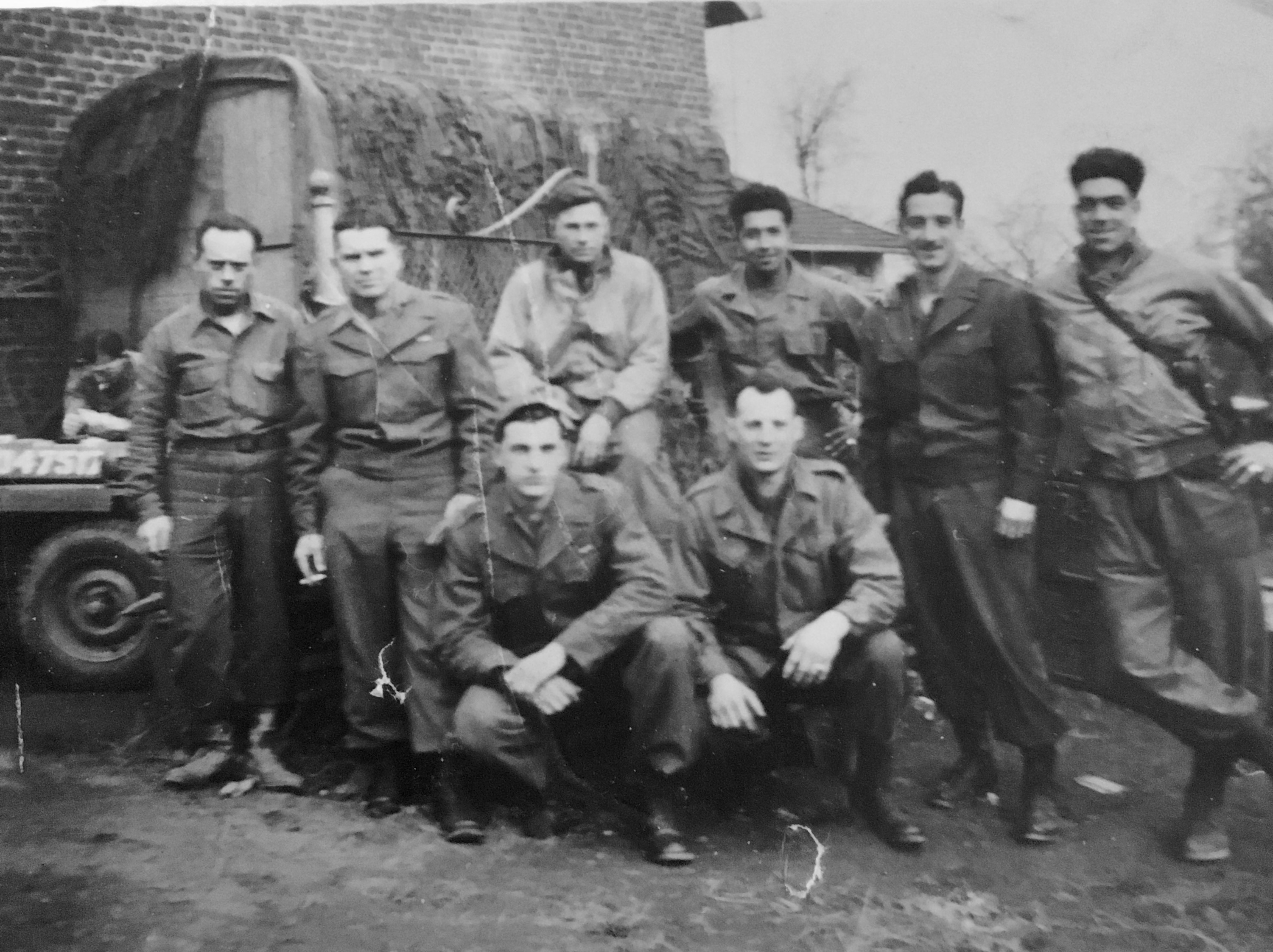
Joe Tucker, second from left.

When Hitler’s last gamble failed in early 1945, the XIX Corps turned toward the east, battling their way into the Rhineland. Near Katzenfurt, Germany, an exhausted Joe Tucker, stumbled across an abandoned American tank left by a roadside. Weary, he crawled inside the hatch, falling asleep almost at once. Waking hours later, uncertain of where he was, or the time, Joe bolted awake to the sound of men shouting. He realized at once that the language was German, and that some kind of patrol was approaching his armored sanctuary. Alert, Joe sat up and seized the 50 calibre machine gun mounted on the tank. He opened up on the German patrol, saving his, and probably other GI lives. For this action, Tucker was awarded the Bronze Star.

German resistance began to noticeably give way the deeper into Germany the XIX Corps marched. Reaching the Elbe River, in Southern Germany, the Army encountered the Red Army for the first time. When the German surrender came, and the war officially ended,  Joe Tucker received his orders to head home.

Finally back in Spokane by September, 1945, Sergeant Joseph Tucker was formally discharged. His wife, Velma switched off that kitchen radio. Her Joe had come home.

Once again, my grandfather resumed his job as a switchman at the Great Northern Railroad. And despite his earlier reluctance to activate in 1942, Joe Tucker volunteered for duty with the Washington National Guard.

In the years following the war, Grandpa became an active member of the Spokane Democratic Party. Influenced by his deep Arkansas roots, Joe carried New Deal sensibilities to Eastern Washington politics. His tireless work canvassing neighborhoods for local, state, and national candidates, eventually earned notice across the Cascades, in Olympia, and from gubernatorial candidate Albert Rosellini in Seattle.

By the late 1950’s, Joe Tucker’s modest home on Boone Avenue became the center of vital party planning. Velma later remarked on one occasion when Governor Rosellini, Senators Henry Jackson, and Warren Magnusson all conferred among her couch pillows and crocheted afghans consulting with my grandfather on major strategy. Joe was an esteemed asset, working city precincts with the same determination that carried him from Normandy to Germany. And the party counted him a senior operative.

All Joe wanted was a level playing field–that those with power and money would have to follow the rules everyone else did. The powerful could not exploit those who lacked position and privilege. He saw firsthand the power that every day American’s brought to enormous obstacles–he fought along side them in Europe. Joe believed that the rest of us were as worthy as the richest people in the country. His wartime experiences reinforced the curse of tyranny, and the absence of democracy.

You see, Joe Tucker was a foot soldier, nothing more, nothing less. In war, he committed himself to serve his country–an enlisted guy who lugged a rifle for the rest of us. In peace he poured that same devotion to his family, his job, and his wider community. There was work to do for America in all three spheres, and my grandfather never shirked away from doing his bit.

Have a safe and thoughtful Veterans Day.

Gail Chumbley is the author of the two-part memoir, River of January and River of January: Figure Eight. http://www.river-of-january.com. Also available on Kindle.

gailchumbley@gmail.com

Mixed Emotions

th

It’s been uncomfortable to watch the media coverage from Louisiana about the removal of General Robert E Lee’s statue in New Orleans. As a life-long student of the Civil War the idea of removing reminders of our nation’s past somehow feels misguided. At the same time, with a strong background in African American history, I fully grasp the righteous indignation of having to see that relic in the middle of my city. Robert E. Lee’s prominence as the Confederate commander, and the South’s aim to make war rather than risk Yankee abolitionism places the General right in the crosshairs of modern sensibilities. Still, appropriating the past to wage modern political warfare feels equally amiss.

Robert Edward Lee was a consummate gentlemen, a Virginia Cavalier of the highest order. So reserved and deliberate in his life and career, that he was one of a very few who graduated West Point without a single demerit. Married to a descendent of Martha Washington, Mary Custis, Lee had American stature added to his already esteemed pedigree. (The Lee-Custis Mansion, “Arlington House” is situated at the top of Arlington National Cemetery. And yes, this General was a slave holder, however he appears to have found the institution distasteful).

When hostilities opened in April of 1861, the War Department tapped Lee first to lead Union forces, so prized were his qualities. But the General declined, stating he could never fire a gun in anger against his fellow countryman, meaning Virginians.

On the battlefield Lee was tough to whip, but he also wasn’t perfect, despite his army’s adoration. Eventually, after four years of bloody fighting, low on fighting men and supplies–facing insurmountable odds against General Grant, the Confederate Commander surrendered at Appomattox Courthouse, Virginia.

Meeting Lee face-to-face for the first time to negotiate surrender terms, Ulysses Grant became a little star-struck himself in the presence of the General, blurting out something about seeing Lee once during the Mexican War.

In a letter to his surrendering troops Lee instructed, By the terms of the agreement Officers and men can return to their homes. . .

But Robert E. Lee’s story doesn’t end there.

Despite outraged Northern cries to arrest and jail all Confederate leaders, no one had the nerve to apprehend Lee. And that’s saying a lot considering the hysteria following Lincoln’s assassination, and John Wilkes Booth’s Southern roots. The former general remained a free man, taking an administrative position at Washington College, now Washington and Lee University, in Lexington, Virginia. It was in Lexington that the General died in 1870, and was  buried.

Lee led by example, consciously moving on with his life after the surrender at Appomattox. He had performed his duty, as he saw it, and when it was no longer feasible, acquiesced. He was a man of honor. And from what I have learned regarding General Lee, he would have no problem with the removal of a statue he never wanted. Moreover, I don’t believe he would have any patience with the vulgar extremists usurping his name and reputation for their hateful agenda.

This controversy isn’t about Robert E Lee. It’s about America in 2017.

Gail Chumbley is the author of the two part memoir, River of January and River of January: Figure Eight. Also available on Amazon.