Who Was Big?


Image

My son just text me with bad news. His kitty, Dusty died at the animal hospital about an hour ago. And on Memorial Day of all days!

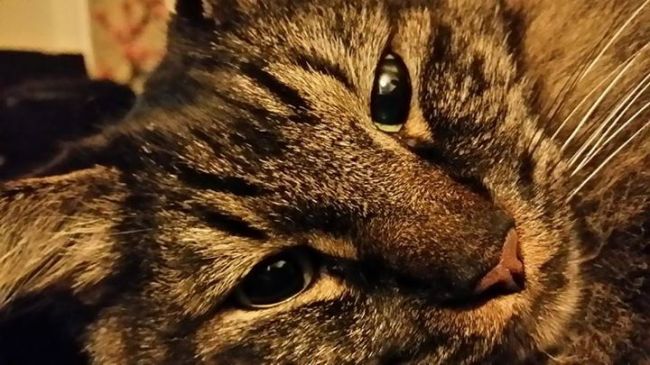
He was a huge Maine Coon Cat, and had character in abundance. The poor fella was so enormous, (not fat, mind you) that he couldn’t fit into the nooks of his carpeted kitty tower. It wasn’t for lack of effort either. Leveraging into those little tunnels and rooms provided him with a constant daily challenge. Dusty, you see, didn’t understand his bigness. His lack of personal awareness was part of his charm.

When Dusty wanted in your lap, which was often, the sitter became immediately aware of his bulky girth. And more than his physical size was the size of his gentle heart.

That gi-normous lug was also the family’s goodwill ambassador. A thudding leap accompanied by a throttling chainsaw of a purr welcomed all visitors to his home. Forget the meow though. His tiny little squeak reflected more his self-awareness. A sweet little kitten trapped inside the body of the Incredible Hulk.

Though ole Dusty wasn’t with us long, he leaves big paw prints on all of our hearts. Of all the massive bones in his massive body, not a one was mean. He was a good kitty. Clint and David, and the rest of us who loved him will keep his memory alive long after this Memorial Day.

Who Was Big?

Dusty Was.

Good Times Bad Times


Image


This is not a blog about Led Zeppelin. I have shamelessly used this title and image to get your attention. I am sort of sorry, but not really.

This blog however does concern the song title, “Good Times, Bad Times.”

At a book publishing seminar I attended a while back the speaker warned that marketing books was much more difficult than writing books. I didn’t believe her, or more accurately I couldn’t allow myself to believe her. At the time I was slinging rubbish into my manuscript and worse, knew my style was bad.

A couple of years later here we are–River of January is complete and I am finding that wise facilitator’s words haunting me. I think we are doing everything right, talking about the work whenever and wherever I can find a platform. Book stores, libraries, service clubs, book clubs, pushing the story on friends–you get the picture, Those who have read River, for the most part, ooze with enthusiasm and push me to complete part 2, The Figure Eight. And I am trying to get back into that writing zone, communing with Helen and Chum, by studying their mementos, listening to Chum’s taped interviews, and brushing up on the historic background of their lives. But there is this big problem in my attitude toward the second manuscript . . . plunging into the marketing angle again, when I have only sold around two hundred books with the first one.

My husband is a good cheerleader, claiming that everything with the book is good, and that we will meet our goals. We will sell books, and the public will respond in a positive manner. I think he might be right, the whole package is gorgeous: cover, interior design, pictures, font, paper color and yes, even the style and especially the story.

So Good Times must certainly follow this funk in the process of publication, and leave behind the episodes of Bad Times.

So once again consider River of January. It’s a pretty good read, even if I say so myself.

El Dorado


Image

In the far west lay the Kingdom of Idaho. It is a vast, lovely realm; rich in scenic wonder, mountainous regions covered in timber, and a verdant plain of abundant fertility. The kingdom, in truth, a land of ceaseless beauty and bounty.

And the people are free in this land. And if a subject ever questions that truth, they only need ask Idaho’s barons who, every two years, remind them of their autonomy.

By regularly invoking the peasants liberty, these insulated aristocrats have much to gain.

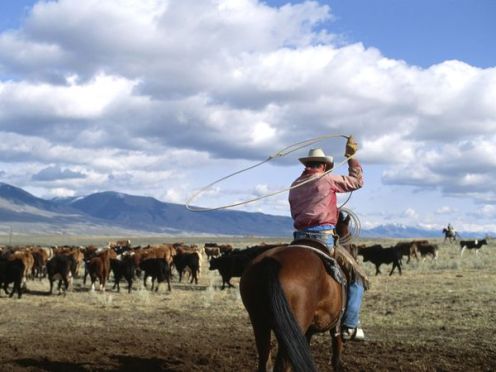
The lordly use many devices to sway the masses. These powerful figures often array themselves in the garments of Idaho’s historic past–recognizable symbols of western freedom. Stetson hats, Tony Lama boots, lasso and horse in hand parading potent images of liberty to the populace. These cagey barons cleverly propagandize, through these symbols, the peasants good fortune in living in such a utopia.

And the powerful do not suffer challenges from the foolish–other non-barons holding competing beliefs. In fact, the most strident pretenders are set up for mockery, and honest contenders are marginalized and disenfranchised. These barons know what is best for their Kingdom.

Meanwhile the realm decays. The highways and byways, prove perilous, pocked in ruts and potholes. The young are packed into schools in overwhelming numbers, to be promoted through the education system with no regard for learning. The vulnerable, the sick, and others outside the barons’ understanding have no voice in this Kingdom of Idaho.

Still the barons persist in flourishing the images of freedom to placate the peasants in the domain. Indeed these humble folk predictably embrace this idealized portrait of their land, and reassured, most gleefully continue to support the Kingdom’s seated nobility.

The subjects residing in this beautiful realm live satisfied that they are, indeed, the freest, and luckiest, and the most independent folk around.

Their leaders, flourishing the domain’s revered symbols every two years, remind them so.

Eyes of the Beholder

Image

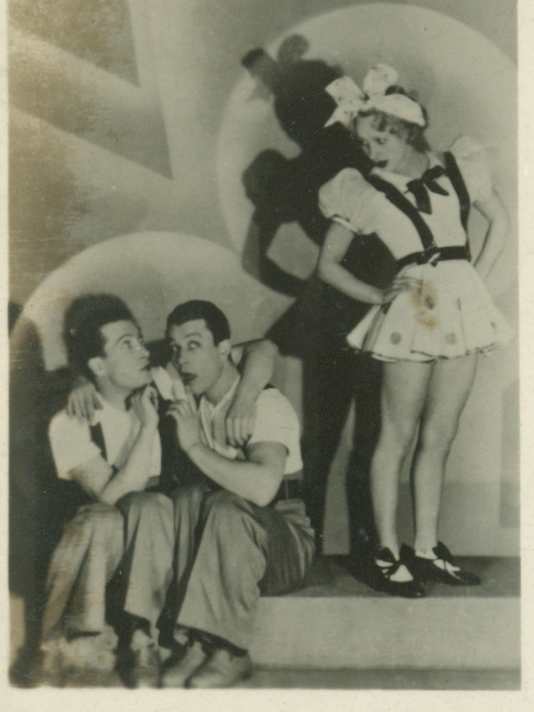
Is he trying to hold her hand? I have stared, examined, and analyzed this snapshot a zillion times and wonder what Grant is thinking about Helen.

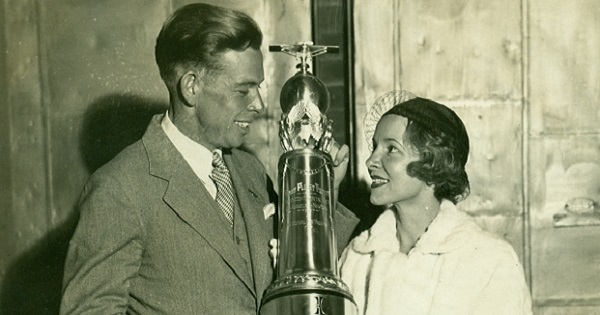
Pictured above was the Vaudeville team of Garrett & Thompson–a team of hoofers out of Los Angeles touring Depresson-era America. Cracking jokes, singing, and of course blending in Helen’s ballet talent, the two traveled from here to there earning scarce cash to get by.

River of January  is not a romance novel (not that there is anything wrong with those). However the story does include the twenty-something search for love, finding flirtations along the path to adulthood. Grant Garrett became Helen’s first passion–the team leader, writer, and choreographer. She was very young, just eighteen, when she fell under the spell of her partner.

Since the publication of the book, I’ve asked readers their views on this chapter, on Grant Garrett. One young lady admitted she had a “crush” on Grant. A man-friend dismissed the dancer as a “cad.” Many others simply want to know what became of this debonaire song and dance man. (I smile and reply “Book Two).

His letters reveal much on his growing ardor concerning Helen. He fell hard for her and desperately wanted to make her his wife. But that never happened. What does that say about Helen? What does that reveal about the smitten suitor? Was it love? Was it for the moment? Was he actually a cad?

That is the beauty of releasing a book. It immediately becomes the property of the reader, and in more ways than a purchase. All whose eyes rake the pages decide for themselves the quality and nature of the characters, and their intentions.

As for me, I too have a crush on Grant. His letters entertained me all through the research for this creative nonfiction work. A handsome face, and razor sharp sense of humor, and an eagerness for success are hard for this writer to resist.

Now for my pitch: If you have read River, please comment on the smooth operator pictured above. I’d love, LOVE, to hear your opinions on his character.


My Rock, My Refuge, My Library

It wasn’t yet 10:00am, but parking spaces were filling up fast. The library would open soon.

Be-bopping up the sidewalk, dressed completely in black, ear buds stuffed under his knitted cap, came the happiest Goth in high-tops. A young mother followed behind, a stack of books awkwardly balanced under one arm, and a wiggly baby in the other. The time was 9:58.

Older folks, hipsters, Lexus drivers, the tattooed poor–all queued together for their morning stop at the public library. How remarkably American.

When the doors finally did slide open, this society of seekers disappeared inside, striding with purpose to stake their domain. A no-nonsense aura filled the air as each card holder claimed their chair, booth, or computer to commence their business.

If ever there existed a reflection of perfect democracy it is America’s neighborhood library.

Visits make a lot sense. The facility is clean, climate controlled and the interior is well lit for reading and research.

More, public libraries offer a multitude of services for the community. The unemployed  gets out of the house, and can search job openings on the internet, maybe check out a DVD or two at no cost. For the housing insecure, the interior offers sanctuary, a chance to safely close one’s eyes or relax and catch up on some reading. Mothers toting little ones make use of programs such as story-time, organized games and crafts, providing a diversion from hours at home.

My own elderly parents used to check out their book limit every two weeks. The librarian knew them well, suggested titles, and bagged up their books. They, too, waited in the parking lot. When those doors glided apart, canes in hand, they hobbled inside, joining the democratic wave claiming library privileges.

It was Benjamin Franklin who modeled this fixture in America’s beginnings. Franklin knew national longevity demanded literacy, and in that spirit he established the first lending library in Colonial Philadelphia. A true visionary, Dr. Franklin set the course for public good by founding these centers of learning. If he could see what I saw in that library parking lot, Franklin would rest a gratified patriot.

Next to public schools, a library card is the ultimate equalizer–from the richest to the poorest among us. No amount of status or money can elbow us out. My access is equal to yours.

To politicians fearful of books on the shelf, you strike a blow not only against the First Amendment, but to all the connecting tissue of American society. A misguided, self-righteous streak exposes a dark agenda which should give us all pause. Attacking libraries attacks us all. 

Gail Chumbley is the author of two books, “River of January,” and “River of January: Figure Eight.” Both titles available on Kindle. Chumbley has also authored two stage plays, “Clay,” and “Wolf By The Ears.”

gailchumbley@gmail.com
The Power of Wonder

Image

This morning we jumped out of bed at o-stupid thirty for a book talk in town. It was for a Rotary Club’s weekly sunrise breakfast gathering. The meeting quickly came to order, beginning with the Pledge, a brief prayer and a Rotary song. Then the agenda moved quickly to business.

These people seem to pursue all sorts of public service endeavors: literacy programs, charity work, and supporting community health projects. It was quite impressive to think that these folks could have stayed in bed an hour longer, and not involve themselves in public service, but they choose otherwise to make a difference.

When my slot came up in the program, my husband pressed the power button on the projector, and the show kicked off with alacrity. You see, I love not only talking about the book, River of January, but the process behind the writing, as well. On this occasion, I shared the story of Helen’s father writing and producing a comedy, “Where’s Your Wife,” at the “Punch and Judy” Theater in New York. Now I knew from family records that Floyd Thompson had indeed written and produced the work, but still felt a shot of adrenalin when an internet site for the now-defunct “Punch and Judy” verified the production’s debut in 1919. That one moment of outside validation was thrilling, and I couldn’t help but gush to this group my still bubbling reaction, and with many other, similar discoveries.

I suppose much of my willingness to tell the tale of River to anyone, anytime, anywhere, stems from the hours of piecing through materials, and squaring family mementos to well known events of the past. Wonder doesn’t begin to describe the sensation when family incidents fitted neatly into the historic record.

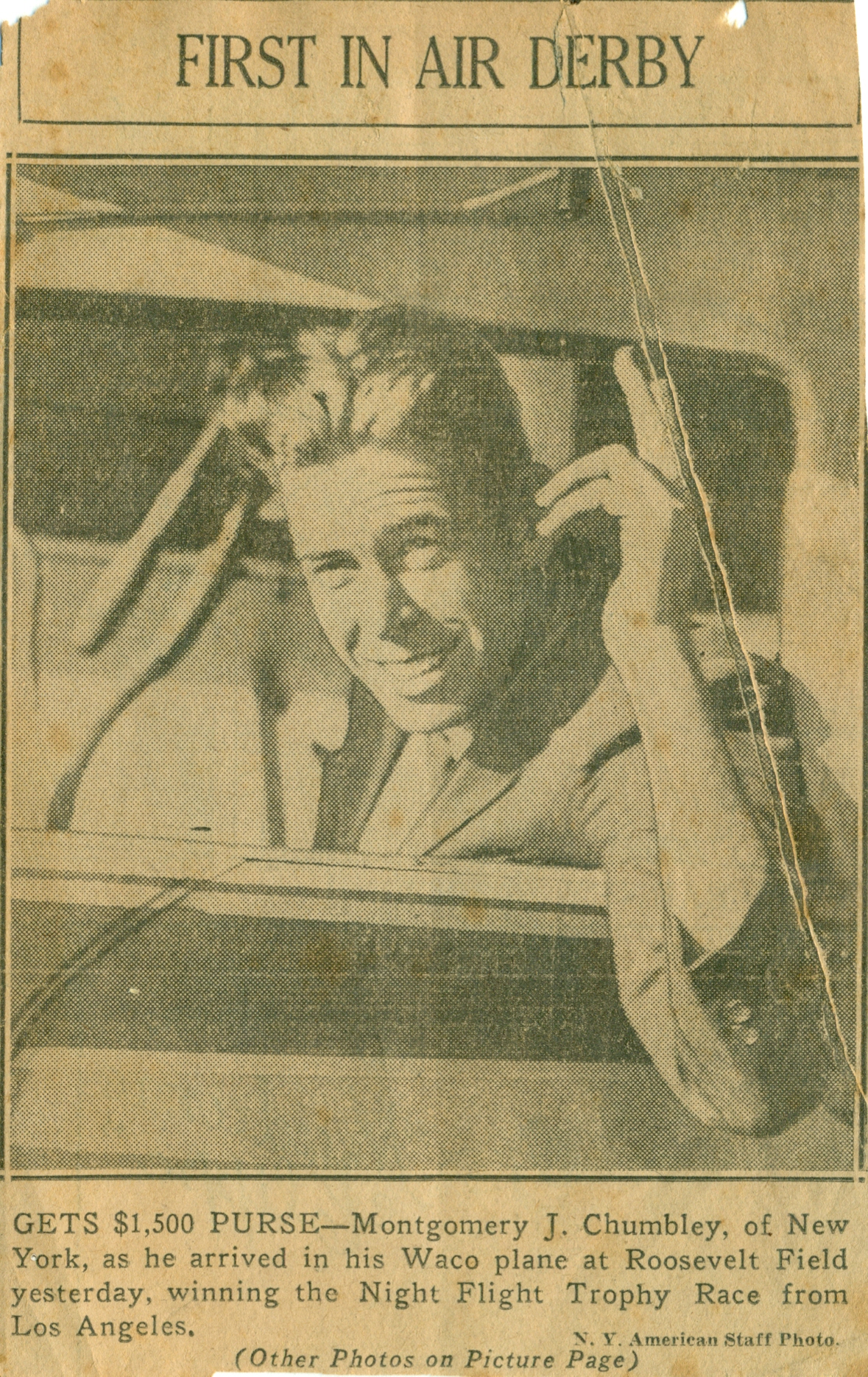
Another example was an extremely fragile clipping of Helen and her sister in a publicity photo for some Universal Studio musical. I have yet to locate the film, but in my hunt for the unknown movie, I accidentally found another glossy of Helen in another film! She really was there, in Hollywood around 1930, and made more film appearances than we initially believed.

I can only describe my reaction to these revelations as that portrayed by Chazz Palmenteri in “The Usual Suspects.” If you have seen the film you may recall the ending when the police detective has his moment of epiphany. After questioning and releasing a primary suspect, the cop looks around his office casually, (at first) reading the names and labels of his room furnishings. Catching on, the policeman comprehends that the now-released suspect used those same names to weave a big pile of phony information. The look on the duped detective’s face reflects utter astonishment. The power of this clarity leaves him momentarily stunned, as if hit over the head by a sledge hammer–then running in pursuit.

Certainly my moments were more celebratory than the cop’s, but my astonishment, over and over, was just as powerful. There is nothing like unearthing and revealing a true story, with all the names and places falling into place, leaving a much clearer, and ultimately more fascinating story.

River of January is available at www.river-of-january.comAmazon.com   and Ebay 

A New April

Image

Right now, in classrooms across America, and overseas, thousands 17-year-olds are preparing for the AP US History exam. They, and their instructors are obsessed with cause and effect, analyzing, and determining the impact of events on the course of America’s story.  Moreover, they are crazed beyond their usual teen-angst, buried deep in prep books, on-line quizzes, and flashcards. As a recovering AP teacher, myself, I can admit that I was as nuts as my students, my thin lank hair shot upward from constant fussing.

My hair fell out too, embedding in combs and brushes, as I speculated on essay prompts, that one ringer multiple choice question, and wracking my brains for review strategies. The only significance the month of April held was driving intensity, drilling kids on historic dates; Lexington and Concord, the firing on Fort Sumter, the surrender at Appomattox Courthouse, President Wilson’s Declaration of War in 1917, the battle of Okinawa, MLK’s murder, and the Oklahoma City bombing, That was what April meant in April.

To quote John Lennon, “and now my life has changed, in oh so many ways.”  Today April holds a whole new definition. My husband rises first in the morning, putters in the kitchen, fetches coffee, tends to the dog, and is back in bed, back to sleep. Big plans for my morning include writing this blog, making some calls related to book talks, a three mile walk through the Idaho mountains, then working on Figure Eight, the second installment of River of January. What a difference!  Nowadays, getting manic and crazy is optional. My hair has grown back in, standing up only in the morning, and the only brush with AP US History occurs in my dreams; the responsibility passed on into other capable hands.

This month, at least here in the high country, has been especially beautiful. We have already enjoyed a few 70 plus degree days, and the green is returning to the flora. Our sweet deer neighbors are no longer a mangy grey, emerging from the trees wearing a warm honey coat. With a little snow still on the peaks, the sky an ultra blue, and the pines deep green and rugged, I think sometimes this must be Eden.

My years as a possessed, percolating history instructor provided a gift of passionate purpose that enriched me more than depleted.  But, now . . . I wouldn’t trade this new phase of my life for all the historic dates in April.

Gail Chumbley is the author of River of January also available on Kindle.