It’s Only Fair

In his 1975 book, “The Russians,” author Hedrick Smith tells a story about a domestic fire in Moscow. He noticed passersby strolling along without a glance, despite urgent smoke and water damage. Neither Tass, nor Pravda covered the story–for Soviets, there was no bad news. This lack of public reaction, Smith concluded came from weary resignation. Citizens had long ago given up on honesty from Party authorities.

In stark contrast, an informed electorate founded the American system; information an essential component of our democracy. Cynical will not do. Without facts reported by a free press, it is game over.

Recognizing the influence of television as a news source, Congress, in 1949, codified equal time when broadcasts touched on public policy. The Fairness Doctrine the second of its kind (the first governed radio) was enforced by the Federal Communications Commission (FCC) mandating broadcasters to present equal sides of public information, or lose their license to operate.

And that doctrine governed news coverage until killed by the smiling, ever popular Ronald Reagan in 1987. His personal charm camouflaged the catastrophe his administration lobbed against journalism and, in turn, our democracy.

In 1968 when the most revered news anchor of his day, Walter Cronkite, returned from assignment in Vietnam, he broke with precedent by publicly admitting Vietnam a lost cause. Later the anchor conceded Woodward and Bernstein were probably on to something with Watergate. Cronkite’s statements spelled the end for both the war, and the Nixon Administration.

The modern GOP hasn’t cared much about the equal time component since Richard Nixon crashed and burned in 1974. From his earliest days “Tricky Dickey” gained attention as a ruthless Communist-hunter, first in the House, as a Senator, and then as Vice President. Following his 1960 loss to JFK, Nixon loathed the press and like Trump saw the media as “The Enemy of the People.” In Nixon V The New York Times, the White House challenged publication of the Pentagon Papers, and lost, then in US V Nixon, ruled the release of the disastrous tapes proving Nixon’s Watergate coverup.

Nixon and other Republicans believed reporters, the networks, and the media, in general, was out to get them.

Before his own 1973 resignation in a separate scandal, Vice President Spiro Agnew did not mince words concerning the press. Agnew referred to the media as the “Nattering Nabobs of Negativity.” Soon the press found there was quite a bit to natter on, when Agnew pleaded guilty to bribery and resigned.

Today, the far Right has capitalized on the end of the Doctrine, manipulating facts, and generally reporting misinformation, without even a blush.

In some respects the end of the Fairness Doctrine has set a course for gutting American democracy.

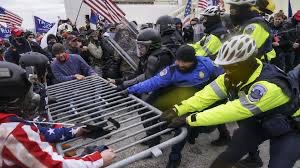
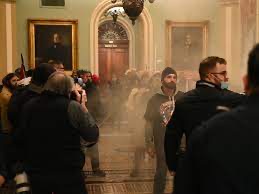
To hear about it now, the fiasco of January 6, 2021, according to the right-wing media, was no more than a pleasant tour group visiting the nation’s capitol. That violence we all witnessed, is just a misunderstanding. Bear spray, tear gas, and baseball bats used against the D.C police didn’t actually happen. The “Liberal” press exaggerates.

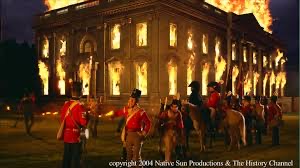
Perhaps before 1987 Americans actually wanted to know whether or not a national fire was raging.

Gail Chumbley is the author of the two-part memoir, “River of January,” and “River of January: Figure Eight.” Both titles are available on Kindle.

gailchumbley@gmail.com

Don’t They Realize?

A debt we owe and can never repay.

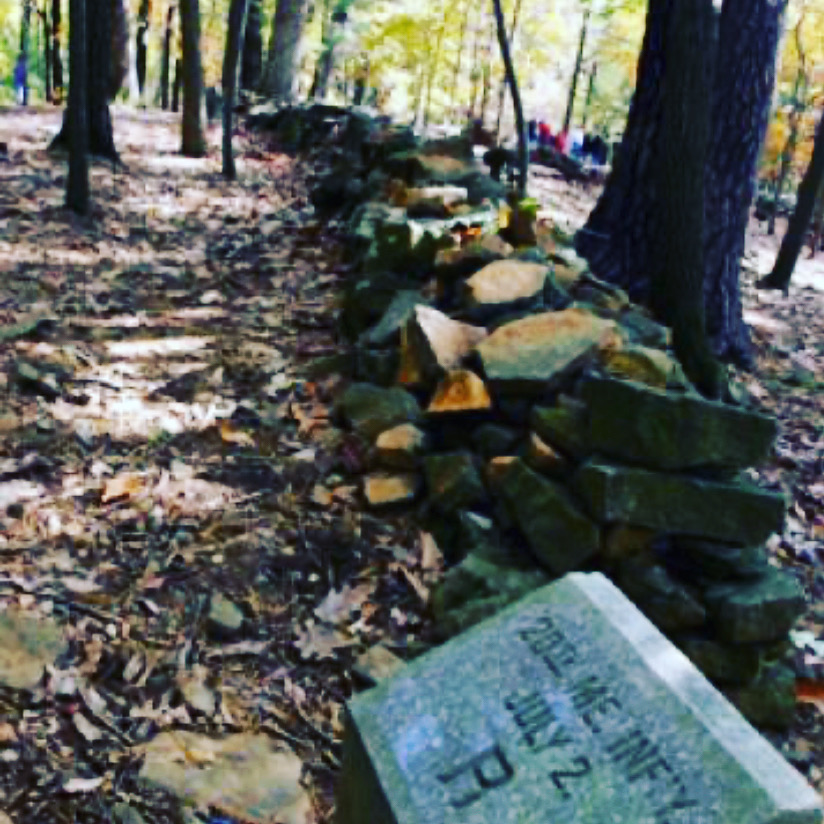
The attack did not come until almost 5:00pm on July 2, 1863. The Yankees under the command of General George Meade held on to both Cemetery Hill, and Cemetery Ridge, south of the town of Gettysburg. Situated across an open ground of boulders, orchards, wheat and corn fields, waited invading Confederates commanded by Robert E Lee.

Issued vague orders the day before by General Lee the boys in grey had failed to capture the vital high ground on the northern end of the Union lines, and were forced to deploy upon less desirable ground called Seminary Ridge. Imagine an irregular stadium from north to south, with foes facing one another across a lethal killing zone.

On that second day, Lee had ordered fresh assaults on the southern end of the Yankee lines. Fierce fighting commenced in the Wheat Field, and upon the boulders of Devil’s Den, culminating in a main assault on a rise called Little Round Top.

The lower of two southern summits, Little Round Top appeared vulnerable to the Rebs massing below. Alabamians were ordered to angle around to their right, and cut to the rear of Union lines. However, their movements were detected by Union Colonel Strong Vincent, and Vincent acted at once.

Issuing orders boys from Pennsylvania, New York, Michigan, and Maine units were to double-quick to defend rubble-strewn, steep, Little Round Top. Holding the end of that hastily formed line stood Colonel Joshua Lawrence Chamberlain and his 20th Maine. And as many readers know, Colonel Chamberlain held off three assaults by the Alabamians scrambling up the steep terrain. Finally out of ammunition, Colonel Chamberlain in desperation ordered a bayonet charge, sweeping down the hill against another attack. And miraculously that bladed downhill charge worked. 

A less known story concerns the Yankee soldiers assigned to guard that hard-won hill that night. Under orders to detect any further Confederate threats, these sentries could hear the moans and piteous cries of their brothers wounded and dying below them in the darkness.

Distressed by the audible suffering and with no way to help, the guards kept to their orders. Somewhere in that endless night one sentry was said to have cried, “Don’t they know they saved the country today?”

And those words echo to us today, on this July 2.

Those of us who serve honorably in public office we stand for America.

Those of us who get involved in community action, or contribute to candidates and causes stand for America.

Those of us who rally for freedom in good and bad weather stand for America.

Those of us who believe in fair play and government by the people stand for America.

To those of us that will never submit to authoritarianism stand for America.

And we will save our country.

Gail Chumbley is the author of the two-volume memoir, “River of January,” and “River of January: Figure Eight.” Both titles are available on Kindle. Chumbley has also written three stage plays. “Clay” regarding the life of statesman Henry Clay, “Wolf By The Ears” a study of slavery and racism, and “Peer Review” where 47 converses with four past presidents. In addition Chumbley has co-authored a screenplay, “Dancing on Air,” based on her two books.

gailchumbley@ymail.com

Smiling in Their Graves

As the fog of war lifted and an uncertain peace settled over the defeated Confederacy, anxiety grew among the vanquished as to what lay ahead. Abandoned plantations withered in disarray, and a popular idea gathered momentum it should go to the newly freed. “Forty Acres and a Mule,” became an expectation that, in the end never materialized. Instead Southern landholders who had fled, slowly returned to reclaim their estates and continue their lives. 

Outside of Freedman Bureau schools, and temporary bluecoated occupiers, no meaningful assistance for Freedmen materialized.

At the same time, three categories of defeated Southerners turned their attention to meeting the new reality. Military leaders, like Robert E Lee, and James Longstreet accepted defeat, and encouraged fellow veterans to follow suit. In fact, Longstreet, an old army friend of Ulysses Grant, cooperated with the Republican occupiers, earning the pejorative of “Scalawag,” a Confederate who collaborated with the enemy.

Outraged citizens who could not accept defeat were called “Fire Eaters.” Foremost among these was Jefferson Davis, incarcerated president of the Confederacy, Lee’s wife, Mary Custis Lee, who lost her ancestral home in Arlington, where Union forces buried their dead, and politician Edmund Ruffin. So enraged was Ruffin that when news of the defeat at Appomattox Courthouse reached him, Ruffin blew his brains out. 

Redeemers made up the balance of Southern Whites who were dangerously patient. These community leaders played their cards carefully, drifting into the Fire Eater lane at times, and back to deadly quiet redemption. Nathan Bedford Forrest was a great example of men who waited. Founding the Ku Klux Klan soon after the war ended, nightriders terrorized freedmen, discouraging blacks from enjoying their new guarantees as citizens. Other terms fit well into this particular era. Share Cropping, and the Crop Lien System invisibly chained blacks to the land that still bound them. Black Codes, and Vagrancy Laws sentenced laborers to the same bondage as before Fort Sumter. No serving on juries, no testifying against whites, Poll Taxes and Literacy Tests limited access to the ballot box. As Federal oversight declined over time, the Redeemers reasserted direct control.

Case law does remain on the books to protect minority voters but without vigilance and resolve remain fragile. These people, these Redeemers are still dangerously patient, and can shift to Fire Eater on a dime. In light of January 6, these zealots have demonstrated they still are quite lethal.  

By crafting misleading, banal language in new voting laws, the modern GOP has taken a page from that old Reconstruction playbook. Ironically, it was the Republican Party who protected Freedmen after the Civil War, but now play the part of oppressor, inserting bad legislation to cut off Federal influence. 

The old Redeemers must surely be smiling in their graves.

Gail Chumbley is the author of the two-part memoir, “River of January,” and “River of January: Figure Eight.” Both titles are available on Kindle.

gailchumbley@gmail.com

The Final Straw

The September 11th attacks in 2001 got our school year off to a strange start. There was, of course, the horror, and a lot of unplanned discussion about the Middle East. The course I taught covered Early American History through Reconstruction, and I couldn’t afford to take a lot of time to debrief. Nonetheless, the events of that day provided useful lessons that surfaced later in the year. 

By the following Spring the curriculum arrived to the series of calamities that led to the Civil War. The last compromises crumbled, and blood had spilled at Harpers Ferry. The story then turned to John Brown, God’s Avenging Angel, determined to slay slavery. 

Brown is a complicated figure, believing he had been chosen by the Great Jehovah, to draw the sword of mighty justice.

And a debatable issue offered itself.

The link to Brown and 911 suspect, a French-Moroccan terrorist, Zacarias Moussaoui, centered on jail time. Moussaoui’s trial was underway and came up in class discussion.

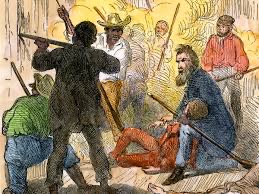
John Brown had been captured in Harpers Ferry, after a standoff with Marines under the command of Colonel Robert E Lee. Intending to spark a slave insurrection, Brown and his raiders, including his sons had occupied the Federal arsenal in that river town. But once the military arrived the old man subsequently surrendered. 

As Brown awaited trial in Charles Town Virginia, the Governor, Henry Wise permitted reporters from Northern papers to interview Old Brown. To the press, Brown passionately defended his cause, insisting it was the work of righteousness. Newspaper readers throughout the North responded with support and compassion, gathering disciples for the cause of freedom.

However, in the South, the old man’s name was reviled. Viewed as a criminal below the Mason-Dixon, Brown was vilified as evil incarnate, hell bent on inciting slaves to murder their masters. Military training increased across the South, in preparation to defend their “peculiar institution.”

John Brown’s raid is often seen as one of the final straws, aside from Lincoln’s election the next year, leading to secession and a force of arms.

Prior to of horror of 911, Zacarias Moussaoui was detained in Minnesota. His immigration status apparently had irregularities, and his flight school enrollment tripped some security wires. At his trial, Moussaoui put on a noisy show, acting as his own attorney, and pitching frequent temper tantrums in the courtroom for all to see, including journalists. Initially the accused insisted he was innocent, then later confessed. Quite the circus.

During and following the conviction of the terrorist, Moussaoui demanded the judge permit him access to the press. The French terrorist had his side of the story, and he wanted to air his grievances on a national and international platform.

The judge said no. And Moussaoui today is a lifer, quietly incarcerated at Super Max in Florence, Colorado, and barely a footnote in history.

The significance of this complicated, and controversial comparison? Surely the Civil War would have transpired regardless of Brown; slavery was inconsistent in a nation that professed liberty.

But that fifteen minutes of notoriety can produce real dangerous blowback.  

In light of the events on January 6th, thank the Lord DJT is grounded from social media.

Gail Chumbley is a history educator and author of the two-part memoir, “River of January,” and “River of January: Figure Eight. Both titles on Kindle.

Pickaxe To Nerve Agent

Josef Stalin was the embodiment of evil. Moreover, if one figure set the standard for Russian despots, it was Stalin. His reign of domestic brutality and foreign terror set the tone for a long, dangerous Cold War. Czarist Russia had set a particularly high bar for authoritarianism, but Uncle Joe inflicted monstrosities that would make Ivan the Terrible cringe.

After Russia withdrew from WWI, through a series of moves, the Bolsheviks, headed by Vladimir Lenin prevailed in gripping the reins of power. Through the aid of Leon Trotsky, a brilliant intellectual, and Josef Stalin a seasoned street fighter, the Bolsheviks founded a peoples state, loosely framed around the teachings of Marx.

During the next few years The US provided relief to the starving of Europe from Great Britain to Vladivostok. But aid made no difference to Lenin. In 1919 the Comintern was established in Moscow, professing the aim of Communist takeover of the world.

In 1924 Lenin died, and a fresh struggle for power ensued. When the snow storm settled Stalin was in command and Trotsky exiled.* Conditions in Stalin’s USSR flowed a crimson red. The Kremlin’s secret police cracked down on the people, through arrests, murders, and spying. By 1934 the NKVD began a purge that included the liquidation of middle class Ukrainian farmers resulting in the deaths of millions.

And those policies were domestic.

At the same time, spying took center stage in Stalin’s foreign policy. English and American assets were turned including left-leaning Americans disillusioned by the Depression, and England’s Cambridge Five, headed by Kim Philby. Philby held a high clearance in British intelligence. The use of such double agents allowed Stalin to essentially shoot fish in a barrel.

Atomic weaponry literally mushroomed on the scene, raising the stakes in East West relations. America lost it’s mind in the Red Scare, and Soviet agents burrowed deeper undercover.

That was then. But it is also now. Excluding reformer, Mikhail Gorbachev, Russian leadership emulates the tone set by Josef Stalin. Infiltrating the National Rifle Association, political misinformation, cyber hacking, and buying off scoundrels with generous loans, Vladimir Putin is an apt pupil of old Uncle Joe.

On January 6, 2021 as white supremacists broke past Capitol barriers, vandalizing and assaulting law enforcement, the winner of that moment was Vladimir Putin. Destabilizing America has been the object of the struggle since the Russian Revolution. 

Dear GOP, you are indeed Putin’s puppets.  

*Trotsky was murdered in August, 1940. An operative bludgeoned him to death outside Mexico City with a pickaxe. Putin critic, Alexei Navalny is currently in a Russian jail, weakened by a nerve agent that was meant to silence him.

Gail Chumbley is an author, and history educator. Her two-part memoir, “River of January,” and “River of January: Figure Eight,” are both available on Kindle.

gailchumbley@gmail.com

The Bloody Shirt

Principled soldiers of conscience, the victorious army knew they had served well, defending the Constitution to the last full measure.

May of 1865 witnessed Washington’s Grand Review of the Union Army. Smartly uniformed soldiers filed past crowds, in a river of Union blue. The guns had silenced a mere month earlier at Appomattox, Virginia; the Republic preserved.

A brilliant sun glinted off polished bayonets, and the parade route decorated with miles of silk banners, tattered company colors and patriotic bunting. Rejoicing greeted the passing soldiers in shouts and fluttering handkerchiefs. Flower petals rained down in a fragrant carpet of gratitude. 

The bloody war finally, truly, had ended. 

One year later, near Springfield, Illinois, a group of veterans established a fraternal association, the Grand Army of the Republic. The idea caught fire nationally as other veterans founded their own local chapters; a place men could remember, share, and grieve for lost friends. Soon these war horses got busy extending their service to those they had defended.

First, survivors lent aid to disabled fellow veterans, assistance to widows and their dependents, and orphan homes. Soon preserving battle sites added to the group’s outreach. Before long members began seeking electoral office to further serve the nation.

A story has it General Benjamin Butler, now a Congressman, grew extremely agitated while speechifying, and produced a torn, and bloody shirt he claimed came from the battlefield. Soon the practice of “waving the bloody shirt,” invoking war credentials, became customary for candidates. The saying “vote the way you shot,” launched the careers of numerous politicians. 

Presidents from Ulysses Grant, (1868-1876) through William McKinley (1896-1901) had faced the rebels on the battlefield.*

War memorials and monuments mushroomed, funded with GAR donations. Reunions, benevolent societies, veterans homes, and hospitals kept local chapters busy. In fact, much of GAR efforts were eventually assumed by the Federal Government, particularly pensions for those who had served.

Over time survivors of the Civil War dwindled in number. However, the organization soldiered on until 1956 when it finally faded. Loosely related, though more a coincidence, our last five star general was serving as president when the GAR closed its doors. President Dwight David Eisenhower, who kept a farm in Gettysburg, happened to occupy the White House.

This brotherhood, this Grand Army of the Republic, rose to defend our democracy in the mid-19th Century. This model of valor, and sacrifice shaped the character of the military for years to come. 

But one truth is quite clear, no officer ever advocated for a coup, and there was not one sucker or loser in their ranks.

In 2021 we can do no less.

*Chester Arthur served in the New York Militia, Grover Cleveland did not serve.

Gail Chumbley is a history educator, author and playwright. Her two-part memoir, “River of January,” and “River of January: Figure Eight,” are both available on Kindle.

gailchumbley@gmail.com

The Arrogance of Now

Each year I prepared for two major wars, the finale if you will, of second semester US History. With a combined sense of dread and anticipation, I led the kids through the causes, and progression of the Civil War (with 10th graders), and WWII (with my Juniors). 

A lifetime of study in these eras, especially Antebellum America, tells an anxious story, as two passionate belief systems came to blows. Sophomores learned that our nation, a democracy born in such promise, plunged into the abyss over America’s original sin, slavery.

Meanwhile, for Juniors, the failures of the uneasy peace that followed WWI shaped a broader corrosion. The world after 1919 disintegrated into deadly factions, underscored by exaggerated entitlement, racial hate, and lust for revenge.

Much like America’s 19th Century plunge into the breach, the 20th Century also debased human life, sliding into scapegoating, unthinkable cruelty, and massacre. This record is hard to face, let alone study. 

Real monsters masqueraded as heads of state; Stalin, Hitler, Mussolini, and the War Lords of Japan. All, to varying degrees, convinced regular people that the “worth” of others was suspect, and targeting civilians an acceptable strategy. Yet, as awful as both conflicts were, it’s hard not to stare, and to hopefully recognize the signs when hate again emerges as a justification for horror.

The heresy of exceptionalism, normalizing violence on the vulnerable, and extremism, unleashed evil on the world. Andersonville Prison, Fort Pillow Massacre, the Rape of Nanking, Bataan, the Warsaw Ghetto, and death camps. More than one a student wondered aloud, how could that happen?

In increments.

These signs are clear again. Those same pre-conditions have resurfaced, right now, here in our communities, states, and nation. 

A white nationalist parade in Charlotte that kills one, where there were “good people on both sides.” Normalized daily murders of people of color, and incendiary rhetoric that ends with an attack on the US Capitol, killing five. All offenses excused and minimized by a once great political party, that has forsaken its moral underpinnings. 

The only difference between the Proud Boys and the Brown Shirts is the Brown Shirts didn’t wear Carhartt and flannel.

This endless playlist has looped over repeatedly, cursed by the “blind arrogance of now.” But dear reader, now is then, and deluded people do not change with time. The descent into barbarity is more predictable than exceptional. 

When reasonable folks are manipulated by the chorus of the Big Lie, the era doesn’t matter. Society inevitably falls into depravity.   

Gail Chumbley is a career history educator, and author of the two-part memoir “River of January,” and “River of January: Figure Eight.” Both titles on Kindle.

gailchumbley@gmail.com

Vision

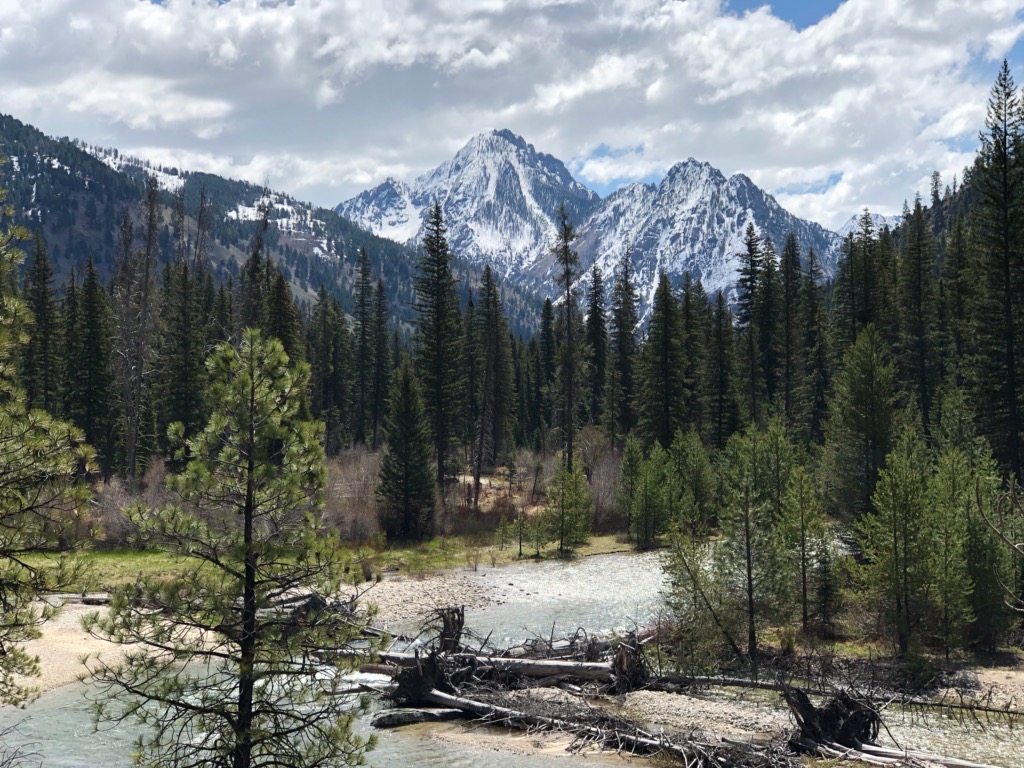
Along Highway 55, northwest of McCall, Idaho, lies a stretch of highway winding through breathtaking mountains. The terrain tinges a powdery blue, set against traces of white from the previous winter, while the Payette River churns beside the roadway. This route isn’t fast, but the scenery more than compensates for the slow pace. 

After a steep descent from the mountain town, the highway straightens and a number of cabins and trailers are visible. Trump signs abound, (not unusual) along with flags emblazoned with Don’t Tread On Me or, the black, blue, and white version of the Stars and Stripes.

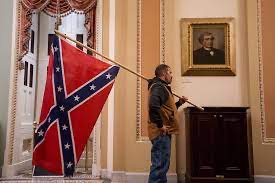
One particular double-wide sits near the highway’s edge, where bikes and snowmobiles sit forgotten in the tall grass. Passing that property always catches my eye. Cemented between the gravel shoulder and the dirt driveway stands a mailbox bearing the Confederate flag.

The irony of that dated symbol on a rural mailbox, is that the Confederate mail system had actually broken down by the end of the Civil War. Any Rebel correspondence between battle front and home became haphazard at best. Often soldiers, who were able, walked letters home for their comrades still fighting in the field.

At the same time, the Northern mail system witnessed an important innovation. The grim number of Union dead, posted publicly in northern town squares, grew too long for privacy and decency. Families had been forced by circumstance to endure their devastating losses in the company of an entire community, an unseemly breach of 19th Century etiquette. Congress responded to this situation by requiring mail delivery to be private, sent to each home.

Needless to say, that stenciled mailbox, standing along the highway struck me as absurdly ironic. Those in our state, who peddle in conspiracy and fan contempt for the Federal Government, would collect no mail, nor enjoy any other public-funded service.

An expansion bridge those residents must cross to reach Boise, was constructed by agencies of FDR’s New Deal back in the 1930’s. The forest fires that increasingly threaten that little enclave of homes, are fought through funds from the Department of the Interior. 

More national programs underscore the paradox of that small protest of painted aluminum. Flood control, WIC nutrition, Title 1 Education funds, Medicare and Medicaid, all making life better for those residing in that remote, road-side residence. 

The South lost the Civil War because intractable people and their leaders lacked both organization, unity, and vision. These “dissatisfied fellow countrymen” to use Lincoln’s phrase, understood only grievance and fury. For example, hard-pressed Jefferson Davis in Virginia could not persuade the Governor of Georgia to dispatch fresh reinforcements to stave off Robert E. Lee’s ultimate defeat. 

In the end, the politics of simmering outrage and division is unfocused and unproductive. State leaders who promote incendiary hogwash for short-term gain, leave followers pointlessly aggrieved, and easily manipulated, exactly where agenda-driven politicians want them. And this pressure-cooker style of propaganda and defiance quickly deteriorates into blind violence, destroying much of what Americans wish to preserve. (January 6, 2021 comes to mind.)

So express yourselves, my fellow Idahoans, let your freak flags fly. Though emotions and symbols do not violate federal law. However, if political leaders agitate an overthrow of the system, that is treason. And we all would all lose more amenities than you realize.

Including an empty mailbox.

Gail Chumbley is a history educator and author. Her works include “River of January” and “River of January: Figure Eight,” both available on Kindle. Chumbley has also written three historical plays, “Clay,” “Wolf By The Ears,” and “Peer Review.”

gailchumbley@ymail.com

Kindred Spirit?

Sen Henry Clay portrait (left of door.)

The word from a Kentucky acquaintance is that Mitch McConnell fancies himself a Henry Clay scholar. That probably means little to most, but Senator Clay (1777-1852) nearly single-handedly held the US together, postponing Civil War for over 40 years.

With a name that epitomizes progress and compromise, it feels odd Mitch McConnell proclaims a kindred spirit in Senator Clay. This earlier Kentucky Senator bent over backwards to protect and promote the vitality of our young republic.

Clay rolled up his sleeves and cultivated coalitions among his fellow law makers to keep the nation from fracturing. He orchestrated the passage of the Missouri Compromise in 1820, the Compromise Tariff of 1833, and the Compromise of 1850; all crafted to maintain the Union. In fact, the Civil War erupted AFTER Clay’s death, as no other Senator possessed the talent and determination to keep Congress talking.

In the interest of full disclosure, yes, Henry Clay owned slaves. And yes, he believed in gradual emancipation, as slavery proved antithetical to economic progress. The Senator’s commitment to America drove his efforts, and Clay worked with all political factions, even those he opposed.

McConnell does nothing, and takes pride in doing nothing. Invoking Senator Clay, who did a lot, is poor cover for an old obstructing politician to presume. Clay did not dig in his heels to impede the opposition party’s efforts to govern.

Henry Clay served his country, McConnell serves himself.

Gail Chumbley is the author of the two-part memoir, “River of January,” and “River of January: Figure Eight,” and the stage play, “Clay.”

gailchumbley@gmail.com

Deathwatch

A new plan had been designed to unite political power from 13 squabbling fiefdoms, to one central government representing the people.

Statesman, James Madison fully intended his new national blueprint to quiet interstate turf wars. Until 1787 no central mediator had existed, and the constant turmoil looked to nearly finished off the fledgling nation. Madison’s remedy, his Virginia Plan would count population, and without fear or favor, allocate direct representation. However, once his proposal was disclosed to his peers, the forces of inertia nearly derailed the Constitutional Convention.

This is the short version of details:

America, though victorious over the British in the recent war, was falling apart. No money, no credit, no court system, and European enemies on a deathwatch of sorts.

Internal disputes wreaked havoc among citizens, as each former colony hustled to press state interests over national. This upheaval grew especially violent in Western Massachusetts when musket shots were exchanged in a tax uprising.

In September, 1786 only a handful of delegates reported to a Maryland convention summoned to deal with the mess. But with only a handful of states reporting, attendees couldn’t vote on any binding measure–too few were present.

Distressed by intensifying disorder, and no real authority to act, James Madison and his colleague, Alexander Hamilton agreed the time had come for a new framework of government. The two, a Virginian, and New Yorker called for another convention; one that promised to address the failing system. (See “Rope of Sand” on this blog site).

Arranged for May, 1787, in Philadelphia, Hamilton and Madison attracted participants by promising General Washington himself, would attend.  However, Washington declined at first, that is until the gunshots in Massachusetts changed his tune. He, along with fifty four other men gathered, and the process began.

In the run-up to the Philadelphia Convention, James Madison kept busy. Though this gathering had been advertised as tweaking the existing system, Madison’s plan actually abolished it, in favor of his new Virginia Plan

He and his allies clearly understood the historic risk they were taking.

In a panic, the states with fewer people balked at losing influence. A William Paterson of New Jersey, moved for recess to craft a counter plan, one that would preserve state interests against Madison’s people-based plan. 

Called the New Jersey Plan, this model would establish a one-chamber legislative branch, each state equally represented. 

Then more hell broke loose.

In another recess a middle ground was devised by Connecticut delegate, Roger Sherman. 

Called the Connecticut Compromise, or the Great Compromise, a solution emerged. Sherman brokered a lower house by representation, and the upper house of two Senators from each state. That calmed the small states, relieved they would not be diminished by population-heavy states.

There are so many more details to the development of the Constitution, but this agreement signified a start. 

That kind of goodwill and commitment to duty has sustained the United States through rough times. Granted, flaws remained regarding slavery, the slave trade, women’s rights, and Native American policy. Still, this ballast was enough to move the ship of state forward. 

Today the national GOP promotes chaos and gridlock as somehow virtuous, while our adversaries still maintain America’s deathwatch.

Perhaps 1787 produced a better caliber of political leadership, Americans who served the common good.

Gail Chumbley is the author of the two-part memoir, River of January, and River of January: Figure Eight. Both title are available on Kindle.

gailchumbley@gmail.com