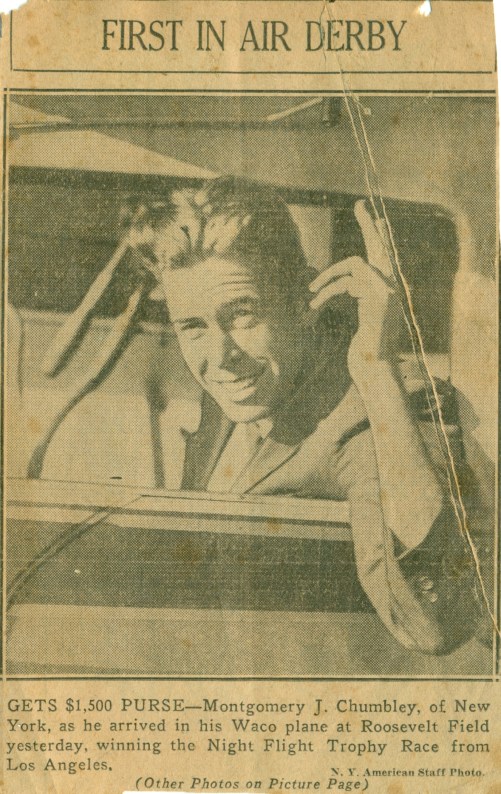
A Seasoned Veteran

This is an excerpt from “River of January: Figure Eight.”

After waiting nineteen months for his transfer west, the actual trip raced by almost too rapidly. One morning he boarded a train in New York City, the next he soared over the Ko’olau Mountains of Oahu. This war waited for no one, and Chum’s new duties began at once.

Lesser damage from the 1941 assault on Pearl Harbor had been cleared away. The runways, taxiing strips, airfields, and hangars bore little evidence of the strafing and bombing that had rained down a year and a half earlier. Not gone from view, however, was the lifeless hulk of the once proud battleship USS Arizona. Broken in the harbor, she had been cut dead in her moorings. Nearby, her sister, the USS Oklahoma, listed unnaturally on her side—both vessels now sacrificed ruins lying prostrate on Battleship Row. The twin wreckage supplied all the reminders Chum needed of why he had come to the Pacific.

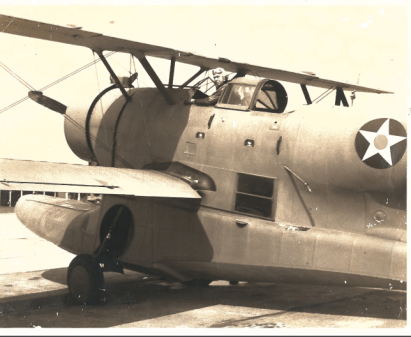
Billeted in junior officer housing at Makalapa, the pilot began each morning commuting past the somber remains in the harbor to attend briefings and equipment familiarization. Assigned to Air Transport Squadron Ten, Chum straightaway began logging air time aboard another giant seaplane—the Martin PBM-3 Mariner. Designed for heavy cargo and armaments, this aircraft was enforced with a deep hull. The lieutenant spent his flight time practicing raising the titan from the sea and maneuvering under the weight of heavy payloads.

Opening his orders on July fifth, the lieutenant—along with his newly attached co-pilot, Lieutenant Richard Forman, and seven crewmen—departed from the waters of Pearl Harbor for Johnston Island, 750 nautical miles deeper into the Pacific. On board, the Mariner carried a hefty cargo of medical supplies, military dispatch files, and bags of civilian mail. Lieutenant Chumbley covered his maiden flight in five hours and forty minutes—enough hours, under wartime conditions, to render him a seasoned veteran.

Gail Chumbley is the author of “River of January,” and “River of January: Figure Eight.” Both titles available at http://www.river-of-january.com and on Amazon and Kindle.
Catalina2


Happy Tidings


Image41MhW6BOdRL._SY400_

An extraordinary event has come our way. River of January, then River of January:Figure Eight are to become feature films. We have signed an option agreement with Falls Park Entertainment of Greenville, South Carolina to bring Helen & Chum’s story to the silver screen. Pinch me, I must be dreaming.

Books are available at http://www.river-of-january.com, and at Amazon.com

History of an Era

airclip0001

October, 1933

By luck or accident the review below popped up on the internet. It’s nearly a year old, and a bit of a nice surprise. Thank you Connie Daugherty wherever you are.

Recommended Reading: River Of January

Posted By: idahosrind

by CONNIE DAUGHERTY

River of January by Gail Chumbley; 2014

Mont “Chum” Chumbley is a pilot. He’s a natural, and he lives to fly. Helen Thompson is a dancer. She’s a natural, and she lives to dance. They come from different worlds and have nothing in common. Yet they are very much alike and destined to be together.

In her 2014 award-winning biography, River of January, Gail Chumbley follows the lives of her husband’s parents from 1927 through 1936. Using their letters, shared stories, and interviews, along with her own storytelling skills, Chumbly has created an informative and entertaining book that reads more like a novel than a biography. It details the struggles of not only the individual characters, but of the world through the Great Depression and events leading to WWII.

River of January includes historical details of the entertainment business from the decline of vaudeville to the emergence of talkies (motion pictures with sound). As well, the book reveals how developments in aviation also moved quickly in the 1930s. Chumbly adeptly follows those drastic historical changes.

Having both come from humble beginnings, Helena and Chum each choose career paths eventually lead them to their first meeting.

At 18, Chum joins the Navy with the hopes of becoming a pilot. He works his way through the military bureaucracy, getting assignments everywhere, it seems, other than at flight school. His lack of education holds him back, but he’s determined to fly.

He has something to prove to his family, to himself. So, when an opportunity presents itself Chum accepts it.

“A nervous and sleep-deprived Mont Chumbley reported for flight elimination exercises.” Everyone expects him to wash out; after all, he has failed the entrance exams more than once. But Chum knows all he needs is a chance to prove himself.

Meanwhile, Helen has her own struggles. While confident and self-assured on stage, off stage she is a pawn of her controlling mother’s insecurities and personal dreams. The only way Helen seems able to escape—while keeping her mother at least somewhat satisfied—is to accept jobs that take her away from her New York home. She finds herself traveling with dance troops throughout Europe.

This need to escape home and family in order to discover and develop their true potential is one thing Helen and Chum have in common, though the way they deal with it is very different.

Eventually, the stock market crash throws the whole world into economic turmoil, which leads to political turmoil, and Helen and Chum are caught up in it all as the entertainment business and the technology of aviation transform.

Chum finds himself, restless and bored, with a job in West Palm Beach, Fla. He jumps at an opportunity to demonstrate Waco Aircraft Company’s new fighter plane for the Brazilian government down in Brazil.

Meanwhile, Helen is back in New York as 1934 slides into 1935, working in a three–person act under her mother’s watchful and domineering presence. Helen, too, is getting restless and ready for change. “She also knew her time had come to move on from their partnership. She hoped her mother would see it the same way.”

Helen flees New York on a ship to Brazil and lands a gig dancing in a club regularly frequented by Americans. “Three young men seated near the dance floor caught her eye, clearly American by their dress and relaxed posture.” One of those young men is Chum, and he catches her attention immediately.

“This new girl, this sparking, compelling blonde on the stage, radiated a magnetism that surprised him.” In a moment, as their eyes meet, the pilot and the dancer connect. And although they try to be together as much as possible, they each have careers and obligations that take them in different directions.

Eventually, Chum proposes, and Helen accepts. They plan to live in Rio de Janerio, but it isn’t that simple.

Between Helen’s mother, who disapproves of their union, and the war, the young couple’s letter transcripts reveal their struggle against seemingly unmovable objects to continue their love and establish a life together.

In 2016, Chumbley published River of January: Figure Eight, picking up where the award-winning River of January dramatically left off. In the sequel, she tells the story of their continued courtship, marriage, and struggle to keep their love intact, despite the challenges of WWII and the unrelenting interference of Helen’s mother. It is the realism of the story—the struggles and successes, the bad times and the good, as well as the author’s narrative—that keeps readers enthralled and turning pages. These two books are more than a family biography. In telling the story of these two intriguing and imperfect people, Chumbley has captured and preserved the history of an era.

Chumbley is a retired history teacher. In 2005, she received the Outstanding Teacher of American History from National Daughters of the American Revolution in Washington DC. A native of the Pacific Northwest, the author was born and raised in Spokane, Wash., and earned a history degree from Western Washington University in Bellingham, Wash. Chumbley and her husband currently live near Boise, Idaho. She received the 2016 Idaho Author’s Award for Memoirs and Biography for River of January.

https://idahoseniorindependent.com/recommended-reading-river-january/

Gail Chumbley is the author of the two-part memoir River of January and River of January: Figure Eight. Available at http://www.river-of-january.com, and on Kindle.

gailchumbley@gmail.com
Aftermath

The Constitution was slightly over twelve years old. The rules laid out for presidential elections appeared precise on paper, and in 1800 the front runner, Thomas Jefferson looked to enter the White House with ease. However, though designed by the best minds of that, or any other era, the flaws inherent in the Electoral College system failed to deliver Jefferson his expected victory. Something had gone terribly awry in the electoral process triggering America’s first voting crisis. 

New York Republican, Aaron Burr was chosen as Jefferson’s running mate. The thinking was to balance the ticket with a Virginian at the top, and a New Yorker in the second spot for national unity. Thus the stage was set for a painless triumph over the faltering Federalist Party. However, when the electoral votes were tallied as prescribed by Article 2 in the Constitution, the running mates unexpectedly tied for the top spot.

The fault lay in the statute itself by failing to anticipate such a scenario. Jefferson soon realized Burr would not passively concede the office, and the tie crisis festered until forced into the House of Representatives. In the end the stalemate broke when Alexander Hamilton intervened, persuading the hold-over Federalist majority to choose Jefferson as the lesser of the two evils. (One of the grievances leading to the later duel with Burr).

This was personal. New Yorkers both, Hamilton and Burr had come to detest one another. The former Secretary of the Treasury’s intent was to protect the new nation from his nemesis, and block the supposed scoundrel from assuming the highest office in the land.

Jefferson eventually was sworn into office, and later, in 1804, the Constitution was modified with the Twelfth Amendment, rectifying the design flaws in the original document. 

Twenty years later, in 1824, another impasse materialized that touched off national outrage for decades. The shifting winds of political change found a champion in the person of General Andrew Jackson, the victor of the Battle of New Orleans. Old Hickory had built his reputation as a ruthless Indian fighter, slave holder, and conqueror of Spanish Florida. His feats were celebrated throughout the growing nation, and Jackson’s prospects for election seemed assured. But again, events proved otherwise.

When John Quincy Adams was unexpectedly named President the public outcry was deafening. In defiance of the people’s will, Henry Clay, the former Speaker of the House, used his considerable influence to place Quincy Adams in the White House. When Clay became Adams nominee for Secretary of State, cries of “Corrupt Bargain” echoed across the nation. A furious Andrew Jackson at once began his bid for the presidency in 1828.

Other questionable elections have repeated through the years. In 1876 with the election of Ruther”fraud” B Hayes, and again in 2000 with the Bush V Gore “hanging chad” debacle.

Today America is still sorting out another administration struggling for legitimacy.

The Election of 2016 has left the American public uncertain that their votes actually count. Russian interference through social media, and electronic hacking is an undeniable factor in the outcome. Sinister and new in electoral history, cyber espionage gave America a Chief Executive acutely aware of the dark subversion undermining his victory.

Losing the popular vote by over 3 million, the president-elect claimed those votes were cast illegally, and demanded voting rolls from the states be turned over to a government committee for analysis. Nothing significant came of that effort, and questions continued to swirl around this shady election cycle. 

Somewhere in the chaos the Russian government reaped apparently what it wanted: domestic turmoil. A long-standing enemy of the United States, the former Soviet Union aims to re-elevate its international stature. What better way could Putin’s objectives be met, than hijacking an American election, and produce enough confusion for a sort of sweet revenge.

Deals have been brokered since the beginning of the Republic, but the players have been competing American interests. We may squabble our political beliefs, but that is the messy nature of democracy. Now the arrangements appear to be negotiated by foreign players. This cannot be repeated, we have future American generations to protect.

Update: Putin’s masterstroke is still in play. The squawking loser in 2020 continues what Putin began. Red states throughout the country are undermining election integrity by propagating the “Big Lie.” Contact your Senators to support HR1, “For the People Act.” (202) 224-3121

Gail Chumbley is the author of the two-part memoir River of January, and River of January: Figure Eight.

Available on Kindle

gailchumbley@gmail.com

Everybody’s Dad

IMG_0822

September, 1974.

When my dad said we were getting up at 5am, he wasn’t kidding. His morning schedule demanded we jump out of bed and climb into the truck, the back flanked with high wood racks. Two or three chainsaws are stored in the truck bed, along with cans of gasoline, rusty chains, a yard stick, chalk, and a cooler. This equipment is secured under a green canvas tarp that effuses an oily, pine scent from previous visits to the woods. 

Dad takes the wheel of his 1968 white Chevy pickup, my friend, Mary sits in the passenger seat. I wedge in the middle, straddling the stick shift, attempting to sip coffee as we motor our way out of town. The dawn is chilly and new, the traffic quite light.

Getting up that early on a Saturday renders us among the very few who had places to go. 

Eventually, clearing out the cobwebs of sleep from my brain, the morning feels electric. We were heading to the woods! Somewhere north of Spokane,  my father had discovered a secret tract of fallen timber the previous spring. My dad had a sharp eye for suitable firewood, especially if the trees were already down and dry, insuring a superior burn.

After an hour or so, the Chevy turns onto a dirt road, bumping along deep into the forest. The terrain is steep, and he assures us we are close to his remembered destination. The coffee is long gone, and we need to stop soon and wander into the trees for relief.

His truck rumbles to a halt on a lone logging trace. We’re out of the cab at once stretching our legs, breathing in the morning warmth. He has already dropped the tailgate and is tending to the gas and oil in his Stihl chainsaw. We help haul out the rest of the equipment, and donning leather gloves follow him to the downed trees, lying right where he scouted them, above the road.

I go first, chalking the cut-length with the yard stick, measuring out the entire tree. His chainsaw roars to life and my dad follows me, slicing tree rounds to fit the wood stove. Mary is rolling the sections to the flat, and righting each round for further splitting with an axe.

The day has grown quite hot. We toss our flannel shirts into the cab, drink some water from a canteen, and go back to it.

By 11:00am the trees are no more. Where logs had rested for a season, only skiffs of sawdust remain, the firewood secured in the truck-bed. It’s now that Dad lifts the lid of the cooler and we dine on bologna sandwiches and warm Shasta cola. Somehow the white bread tastes surprisingly good, though only lunchmeat and butter. We had worked up powerful appetites. 

My father relaxes now that the job is complete, and we rest on the tailgate. The three of us chitchat and laugh, sweating and smelling of pinesap. 

That he loves the woods is clear by his smile and satisfaction. And there, on the back of that truck we socialize–two teenaged girls and our genial guide, resting our backs against neatly even, stacked rows of wood.

July, 2018

My father is in the hospital. The ravages of Parkinson’s Disease, chronic blood clots and advanced age has faded his once vibrant presence. We don’t know how much time he has left, as he grows weaker by the hour. And perhaps this isn’t the best way to inform friends and acquaintances of his failing condition. Still, we can choose to remember him, as I have, during his halcyon days when he was everybody’s dad.  

June, 2019

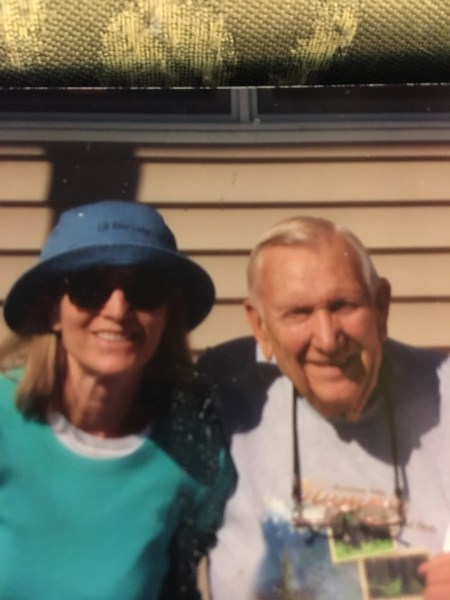
Dad would have celebrated his 87th birthday on June 15th, but didn’t survive his illness. He has been sorely missed this last year since his passing.

To forget his generous character would be a second sort of death, so I will keep him alive in my writing, and my grandchildren will learn all about him. In that way my Dad’s spirit will carry on through their lives.

Happy Fathers’ Day.

Gail Chumbley is the author of the two-part memoir “River of January,” and “River of January: Figure Eight.” Both books are available at http://www.river-of-january.com and on Kindle.

gailchumbley@gmail.com

Go Get ‘Um

5825241068ff3.image

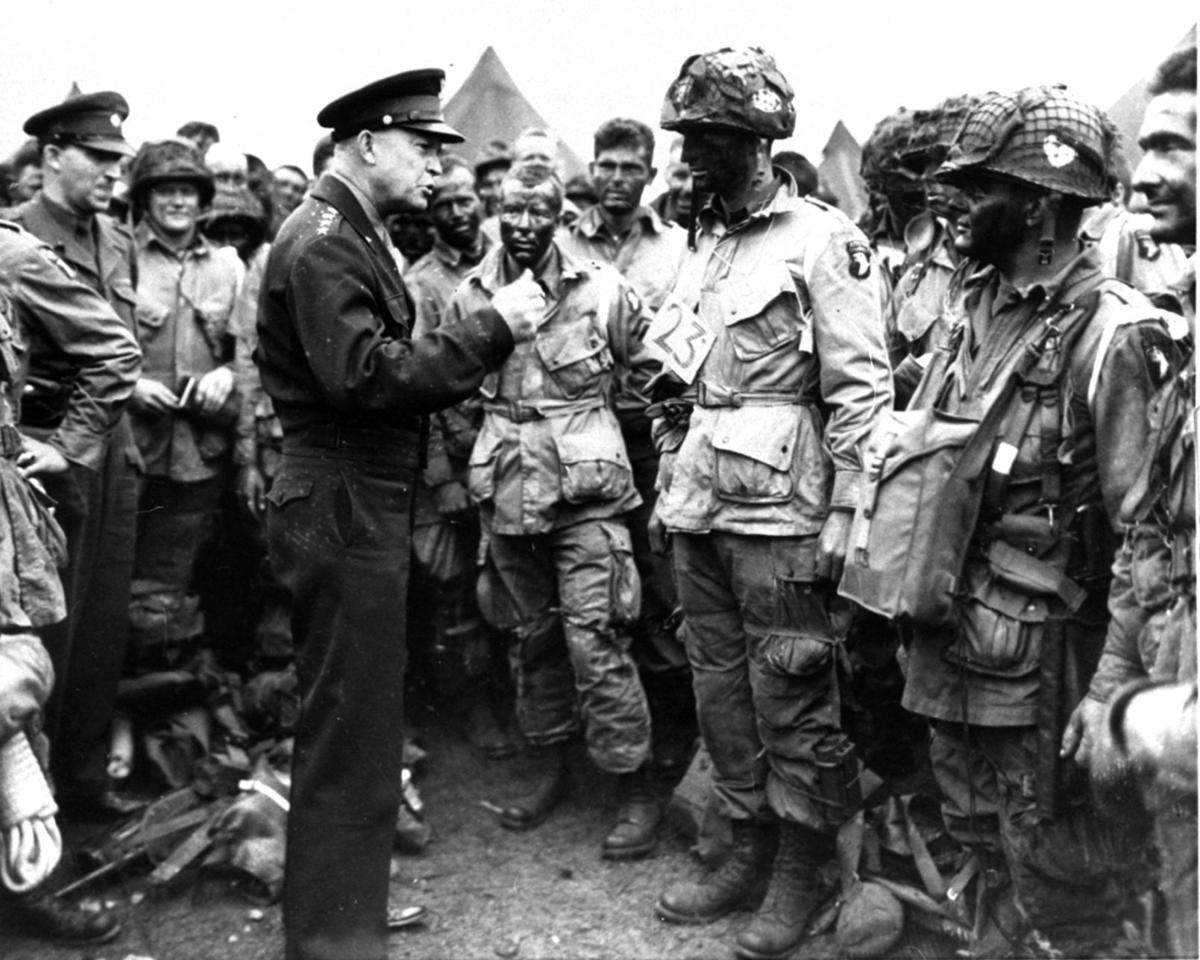
The date was June 5, 1944, and General Dwight D Eisenhower had made the decision to begin the Allied invasion of France the next morning. Christened “Operation Overlord” the massive campaign required disruption inland from the Normandy coast to insure a solid beach-head. The task fell to soldiers of the US 82nd Airborne, the US 101st Airborne,  and members of the 6th British Airborne. The mission was to impair the Wehrmacht’s ability to move their Panzer units toward the five invasion points.

General Eisenhower met informally with soldiers of the 101st, chatting and encouraging, to build morale. He must have felt an enormous responsibility sending these young Americans on such a hazardous and vital mission. While he mingled with the men, Ike suddenly wondered, “Is anybody here from Kansas?” A voice replied from the crowd, “I’m from Kansas, sir.” Ike looked the boy in the eye and responded, “Go get ‘um, Kansas.”

That story always leaves me teary. I don’t cry in movies, poetry doesn’t move me, and books have to be awfully emotional to elicit a sob out of me. But that moment of raw, honest regard, with so much at stake, hits me in the heart.

Washington at Trenton, Grant at the Wilderness, Doughboys in the Argonne, GI’s at the Bulge, Marines at Hue: the devotion to duty chokes me up. Every time.

But today Americans seem somehow lessened, cheapened. There are no Eisenhowers, or Washingtons, or Lincoln’s to describe what we represent. The institutions that inspired countless young people to lay down their lives are now attacked by an ersatz strongman from within. How could this happen? How can citizens of good conscience condone this very real threat? Where is our collective honest regard for our past, present , and future?

Makes me want to cry.

Gail Chumbley is the author of the two-part memoir, “River of January” and “River of January: Figure Eight.” Both are available on Amazon.com

Mistinguett

Sun Valley Idaho is especially beautiful in the fall. We had driven to the resort through steep, intimidating mountain passes, to finally descend among groves of whispering Aspen trees. We had traveled over for a book presentation on “River of January,” the first volume of my two-part memoir at the local Library. We had arrived with hours to spare.

With tons of time to kill we walked the boarded walkways of Blaine County’s most famous community. My eyes were peeled for a glance of the the rich and famous; perhaps Arnold, maybe Bruce, or Demi, or even Tom and Rita. They pop up once in a while to relax in the natural beauty, away from the rat race.

Wandering, we chanced across a dress shop, and I slipped inside the glass door, leaving my husband sitting on a bench outside. The clothes were beautiful; plaids in silky fabric, and fashionable shoes among displays of accessories. The owner was on her phone, behind the counter, speaking to what sounded like a potential customer.

And she was clearly French.

I continued to browse the merchandise, but was more taken with the French lady. I had a good reason.

She soon closed her call, then addressed me. “May I help you?,” the lovely woman trilled.

“Well, maybe.” I replied. “I’m a writer. In fact, I’m here to discuss my new memoir at the library. By any chance have you heard of Mistinguett?”

The shop owner stopped, and looked into my eyes. “Oo La La!” she gasped. “She is a legend.” I smiled, my day made.

Mistinguett was a French music hall entertainer, born late in the 19th Century. At one time this singer-dancer was the highest paid entertainer in Europe, best remembered for her torch song, Mon Homme. Americans might recognize the tune better as My Man, a hit, first for Ziegfeld headliner, Fannie Brice, and later Barbra Streisand.

A fun fact about Mistinguett is she had her legs insured for 50 Francs during her prime. Another fun fact is she discovered Maurice Chevalier, pulling him from the chorus, and making him a star.

The best news about Mistinguett concerns Helen Thompson. Just a girl, this American dancer who’s life story appears in “River of January,” toured with the “Oo la la” French legend from 1932-33.

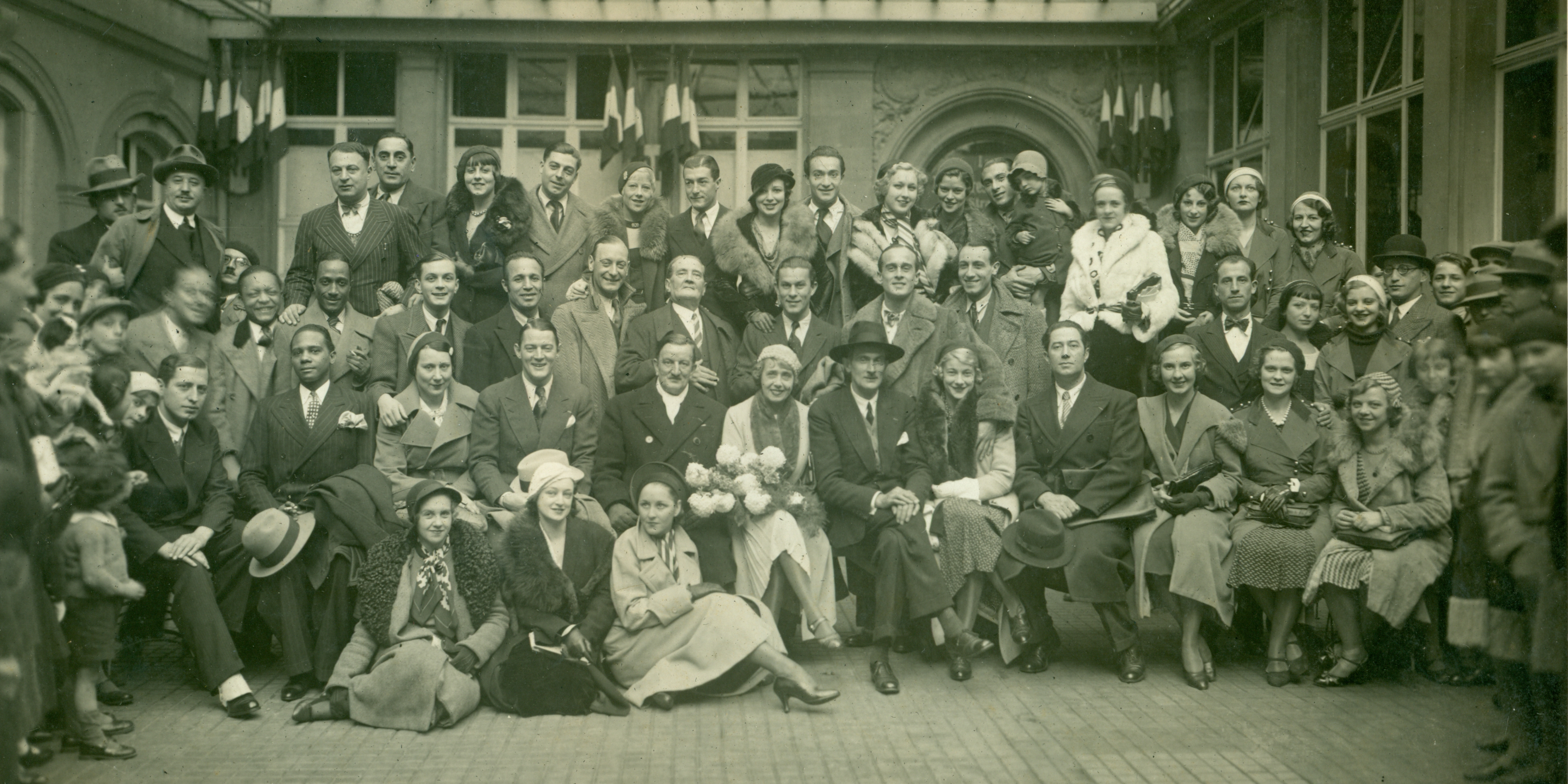
Enjoy this film clip of the iconic entertainer, dated 1936, and look for Helen in the cast photos of Viola Paris, the Mistinguett variety show from three years earlier.

Error
This video doesn’t exist

missgroup0001

Mistinguett sits in front holding flowers. Helen Thompson is in the top row center right–the blonde wearing the fur-collared coat.

Peacock0001

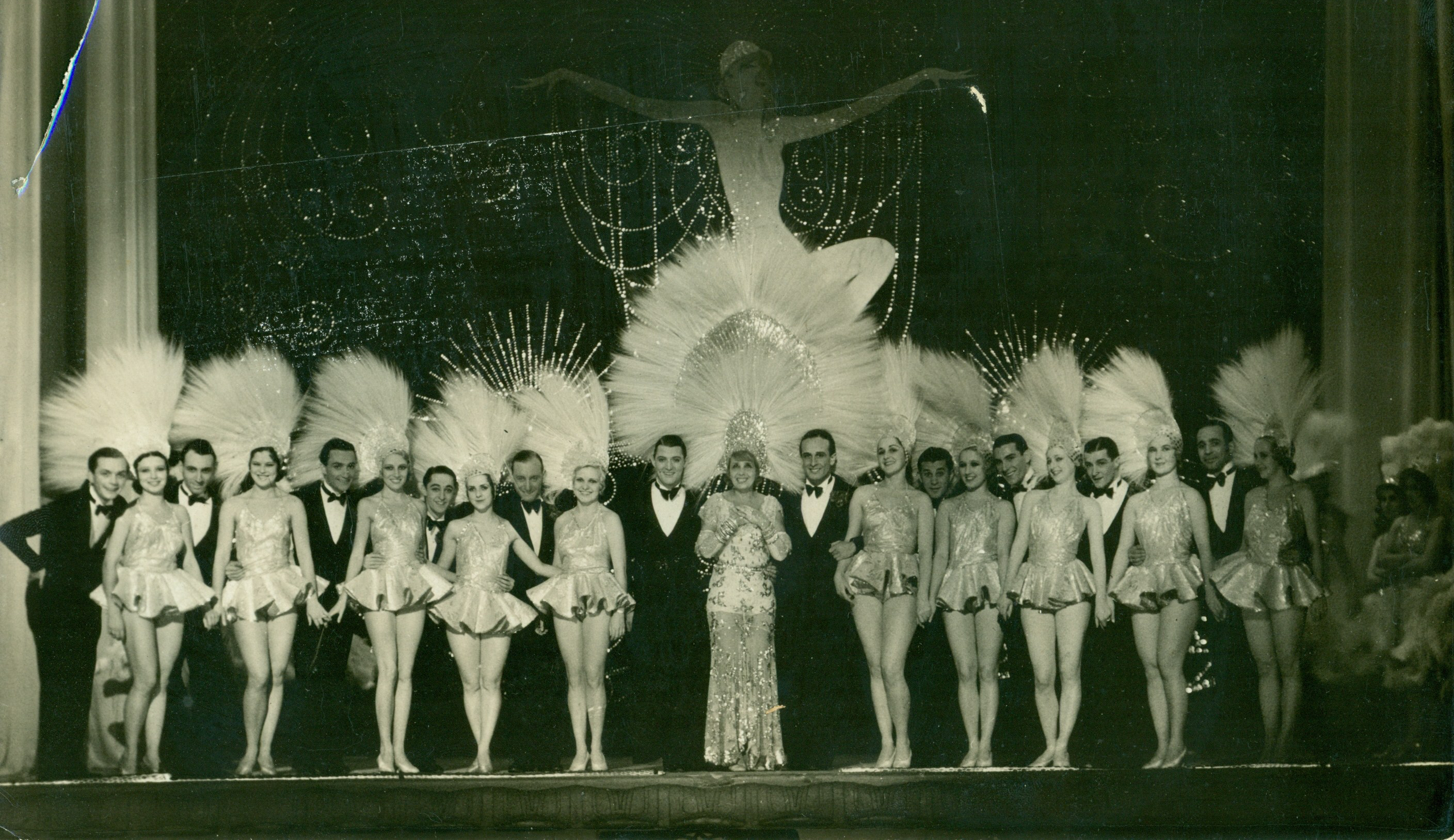
Here Mistinguett is wearing a giant head dress, and Helen is second girl to the right.

Gail Chumbley is the author of the memoir “River of January,” and “River of January: Figure Eight.” Also available on Amazon.com

Political Science


We were in the midst of text book adoption some years ago when an unexpected snag brought the process to a halt. 

The Social Studies Departments across our district were asked to pilot an array of textbooks for the Fall of 1994. Publishers had generously provided sample texts, and we spent hours previewing different titles, passing our preferences to our District Social Studies Coordinator.

Government teachers decided, unanimously, that they would replace their current text with the newer edition of the book they had used for some years. To a person, instructors agreed to readopt Magruders American Government; a trusty standard, and the hands-down favorite of most 12th grade teachers across the country. Our staff had ready-made units, lessons, speakers, ancillary materials,, film clips, debate resolutions, etc . . . only requiring the newer book with updated factual information. And their decision appeared to be resolved.

But in the last phase, presentation for final adoption, the Board of Trustees suddenly slammed on the brakes, visibly unhappy with the choice.

 Magruders, as a tradition, had placed a photo of the current first lady inside the first page of their textbook. The old copies may have still been of Mamie Eisenhower by the tattered condition of the old copies. But no longer. The inside photo of this new edition featured First Lady, Hillary Rodham Clinton, and board members, reactionaries to the core, lost their minds.

I taught AP American History at that same time, and thought nothing of reordering Thomas Bailey’s American Pageant, another classic. We had used this text for some time, but needed an updated edition, too. However, in light of the fiasco over Magruders, I too, found my text in the crosshairs.

Wearing an understanding, sympathetic expression the district coordinator said I had to prepare a defense of my book, too. And it wasn’t that I minded touting the virtues of the book, I liked Pageant a lot, but I did mind the time lost in preparing my classroom work. Plus, it was so annoying that we all had to jump for the Board because Mrs. Clinton had the audacity to be the new First Lady.

I supposed, fair was fair, if one book was attacked for fallacious reasons, attack the rest-a convenient diversion to camouflage the real aim of thought suppression.

The central thrust is that Trump era of intolerance had been in the making for quite some years. The irrational politics of 2016 was clearly hardening across the nation years earlier. From School Boards, to City Halls, to library districts, restriction of free thought was under assault. 

Nothing pisses off the far right more than a rational challenge from open-minded, articulate, and educated thinkers.

Gail Chumbley is a retired history educator, and author of the two-part memoir River of January, and River of January: Figure Eight.

gailchumbley@gmail.com