A Surreal Landscape

In a scene from Hitchcock’s The Birds locals are gathered in a cafe eating and chatting. An attractive blonde is on the telephone explaining that children at the local school were dive-bombed by attacking crows. An elderly lady in a beret and smoking cigarettes lectures the other diners that crows don’t behave in such an aggressive manner and that there has to be another explanation. The woman identifies herself as an ornithologist and holds forth explaining crows and even seagulls do not do such things. Immediately after her expert testimony all hell breaks loose outside the cafe window, with masses of birds swooping down on passersby. The scene is chaotic and bloody leaving no doubt these attacking birds are in fact lethal. As the nightmare scene ebbs, the camera catches the bird expert, her head bowed in grief and bewilderment, stunned everything she knew and believed no longer applied to any bird in her understanding.

That woman resembles this lifetime American history educator. I’m a fairly decent generalist in subjects ranging from PreColumbian America through today, give or take minutia. But I too, am stunned by the surreal landscape of what I believed about democracy has been easily undone by a vulgar man-child and a compromised and opportunistic Republican Party.

It feels like all my understandings of my country no longer apply. The epic and fraught-filled struggle of forging the Constitution, the furnace of Civil War, the reforms of the Progressive Age, the promise of the New Deal, and Great Society are gone, rapidly destroyed by sinister design. A totalitarian despot has seduced a once noble political party rendering the valiant patriotism of those whom came before moot. Simply writing this lament is difficult, as all I once believed and explored is no longer valid.

An online troll explained it as “no one cares about that anymore.”

That means the principled determination of General Washington to serve our nation doesn’t matter. The misguided genocide of the Five Civilized Tribes upon the Trail of Tears doesn’t matter. With nearly 700,000 deaths, the crucible of Civil War no longer matters. Those brave GI’s on Omaha Beach, (including my own grandfather) and at the Battle of The Bulge no longer matters. Those brave students who occupied lunch counter stools in the face of racial violence did so for nothing. Those boys who perished in the Vietnam War are irrelevant. In point of fact no veteran matters anymore.

American history and all the sacrifice of our forefathers and mothers doesn’t count.

That 47 can fly in a foreign “gift” aircraft with a classified budget is a good thing to do with our tax money. That he remodels a room in the White House in a golden gilt is a good thing. Who really cares if former medicaid recipients suffer.

Suck it up buttercup, these are the new rules of Trump’s America.

That he has done away with investments in the Arts and Humanities is a positive. That he has placed incompetent sycophants from Fox News in high Federal positions is good. Forget he stole top secret intelligence documents. The country elected him anyway. That he has drastically shifted the tax burden onto the middle class and off of the super wealthy is how God wants it, just ask today’s Christians.

That old white men rape girls is a good thing. 

The GOP bows at his feet and gleefully ratifies every stab-wound of domestic legislation is now to be celebrated, so pop a cork. In fact destroying America for profit is now simply wholesome and righteous. 

America’s heroes, like Sergeant Alvin York in the Argonne Forest, or Colonel Joshua Lawrence Chamberlain at Gettysburg endured their generations difficulties so that Trump can plow up Mrs Kennedy’s rose garden for a putting green. Suffragette Alice Paul who went on a hunger strike and endured the torture of forced feeding did so that the current president can manipulate votes is just fine. The murders of JFK, Dr King, Harvey Milk, or the murder of Minnesota State Senator Melissa Hortman is merely a part of the 24/7 news cycle.

Indeed nothing of our past story matters because Mr 47 has disqualified all of it to make money, and more money because that’s all that matters today. Plus of course he is a convicted felon and is terrified of going to jail where he belongs.

So when you see this disoriented American History educator with her forehead in her hand, much like the bird expert in the movie, please understand the gravitational pull of her entire life’s work is today rendered null and void. 

Gail Chumbley is the author of the two-part memoir “River of January,” and “River of January: Figure Eight,” co-writer of the screenplay, “Dancing On Air” based on those books. She has penned three stage plays on history topics, “Clay” on the life of Senator Henry Clay, “Wolf By The Ears” examining the beginnings of American slavery, and “Peer Review” where 47 is confronted by specters of four past presidents.

An American Prayer

Whatever your beliefs it’s time to lift your voice and be heard

O beautiful for spacious skies,

For amber waves of grain,

For purple mountain majesties

Above the fruited plain!

America! America!

God shed His grace on thee

And crown thy good with brotherhood

From sea to shining sea!

O beautiful for heroes proved

In liberating strife,

Who more than self their country loved

And mercy more than life!

America! America!

God shed His grace on thee

And crown thy good with brotherhood

From sea to shining sea

Katherine Lee Bates, Samuel Ward

Gail Chumbley is the author of the two-part memoir “River of January,” and “River of January:Figure Eight.” She has also authored three stage plays, “Clay,” “Wolf By The Ears,” and “Peer Review,” all examining moments in American History. In addition, Gail is the co-writer of a screenplay, “Dancing On Air,” based upon the River books.

Peer Review Excerpt 2

This post comes from a full stage play titled Peer Review. It was composed during DJT’s first term and serves to illuminate the contrast to earlier presidencies.

SCENE TWO

The stage lightens in a mix of gold and white. A bed and two arm chairs made in the same colors sit center stage, The New York City skyline is projected on the back curtain. The sound of papparazzi and cameras snapping is heard offstage. An elevator dings. After a moment the President enters stage right with two men in suits wearing earpieces. The men walk around the area and bed. The President turns and speaks.

THE PRESIDENT
Call maintenance, that damn elevator shouldn’t stall between floors. That was a good ten minutes, dammit. I’m gone a few weeks and the building goes to hell. There’s nothing in here. Get out.

The men exit. The President removes his jacket, and walks to the dresser. He peers down in a drawer, then finds what he is looking for. A file of yellow and red.

Except this little gem and it’s really something.

He lies on the bed reading and chuckles happily. His cell phone plays “Hail To The Chief.” The President answers.

Where are you? I just got here, great crowd outside. Yeah, I’ll get it done. Hey, I said I’d do it. What do you mean you don’t trust me? Give me a break, That whole Stormy Daniels garbage is . . . No. Don’t hang up. We’ll sit down with the lawyers and renegotiate the whole deal. But then you will join me in DC, and the boy, too. This staying in New York is no good, makes me look bad to the country. Yeah, yeah, I’ll get Reince on it today. Hey, I said I will.

He tosses the phone on the bed and resumes reading.
Huh. Erdogan didn’t tell me this. How does the CIA find this crap out? I need some Putin-Ukraine stuff. Who woul’da thought I’d read something?

He chuckles, and soon grows sleepy. The President drops the open file and closes his eyes. After a moment a spot rises on a figure entering the stage.

He is tall, wearing a 18th Century blue and buff military uniform, knee breeches, white stockings and carries a sheathed saber. His white hair is combed back, and tied with a black ribbon at the nape of his neck. Standing near the bed, he speaks slowly with elegance.

THE GENERAL
I am very fond of New York City. During the War for Independence I maintained camp nearby for much of the duration.

The President sits upright, and reaches for a pillow to shield himself. He squeaks.

THE PRESIDENT

Shit!

THE GENERAL
Congress had directed me to burn Manhattan ahead of invading British Regulars. You see, Congress wished to leave nothing of use for the Redcoats. Destroying the city left me conflicted, and alas, that order I could not obey. As fate would have it, a fire did erupt in the chaos, demolishing vast tracts of the city. A very regrettable situation.

The General poses regally, glancing at the president. He continues.

Sometime later I returned to serve as President here in New York.

He gestures with his saber to the skyline.

Concerning the demands made upon me as I served those first critical years, none resolved easily, nor without great cost. But our fledgling nation teetered on dissolution and we, as the first government under new Constitution, had to stand resolute.

The President lowers his pillow to speak in a forced, but faltering menacing tone.

THE PRESIDENT
I don’t know who you are, or how you got in here, but this is my room, and my 30,000 square foot apartment, in my extremely valuable building. So clear out!

The General appears not to hear, serenely seating himself in an arm chair. He levels his gaze at The President.

THE GENERAL
My colleague said you were tiresome, however, I am staying.

THE PRESIDENT
Who said that? What colleague . . .oh, jeez, him. Well I’m important NOW. So you and that other fossil can beat it back to central casting.

THE GENERAL (Untroubled)

I, too struggled with grandiosity. In my youth I pined for the advantages of wealth and status that surrounded me. Stately mansions dotted the inlets and vast river systems of Tidewater Virginia, the place of my birth. I longed for a life of importance, gentility, and of wealth. I would be an English gentleman residing in elegance upon his landed estate.

THE PRESIDENT
The English are wusses, and you’ve blah blah’d enough. I’m in New York to get away from all that history garbage. That old dump where I have to stay is filled with that crap. So goodbye Rambo.

The General waits, then rises and un-sheaths his blade. The President again grasps his pillow. The General resumes his story.

THE GENERAL
Born the first son of a second family, I fell heir to nothing but my father’s name. Augustine and Lawrence, my older brothers, received all the honors of a gentleman’s life. I loved them, idolized them, especially dear Lawrence, and begrudged him nothing of his inheritance. However, I cannot deny the depth of my anguish as a second class Virginian.

THE PRESIDENT (To himself)

When my Father died I stuck it to my brother. He couldn’t handle money, the guy was a drunk.

THE GENERAL
Another temptation concerned a young matron, the wife of my best friend. Sally was her name, and I loved her very much. Our correspondence, especially while I served in the war against the French was perhaps too forward, and flirtatious. I longed for Sally, but she was not, nor ever could be mine.

The General sighs, deep in thought.

THE PRESIDENT
I never let any marriage license stop me. Mine or any available broad. That’s all they’re good for, arm candy and a roll.

THE GENERAL
We are all too aware of your misogyny, and absence of propriety. Even Mr. Kennedy said he attempted more discretion in his dalliances. I’m reminded of a letter from the Marquis de Lafayette informing me of his wife’s passion for me. Amused, I replied youthful women are inclined to youthful men, not those of graying hair. And still it is so.

The president sits up with his pillow on his lap.

THE PRESIDENT
Younger women love me. They really do. I’ve dated some beauties, too. You should see some of the pageant contestants I’ve bagged-and Playboy bunnies, too.

From the wing a soldier in Continental uniform approaches the General handing him a dispatch. The General reads the parchment, and marks it with a quill pen. The soldier leaves.

THE GENERAL
Sir, I do not believe ‘love’ is quite the term for what you’re describing. unbridled debauchery perhaps is more precise?

THE PRESIDENT

What the hell? How did he . . .?

THE GENERAL
It is the disciplined man who owns his passions. Decorum is what separates us from animals, wouldn’t you agree?

The president sits mouth agape at the soldier. The General continues.

THE GENERAL
Elegant balls were quite popular venues for young people to meet. I don’t mind saying that I may have been one of the finer dancers in the Tidewater. Those evenings were grand; dinners, music, and refinement in abundance. Oh, how I yearned to rise in social rank.

THE PRESIDENT
I hear ya. Those Manhattan snobs, that artsy-fartsy Met crowd, boxed me out. Treat my kids that way, too. Jerks.

THE GENERAL
Envy did little to further my integrity as a gentleman. In the war against the French the royal governor entrusted me to offer land patents to volunteers willing to join the Virginia militia. Over the course of the conflict I made many of those acres my own. You see land was the mark of a gentleman, but I was an imposter. That villainy has troubled me for an eternity. I pray my service to my nation has polished away some of the tarnish.

THE PRESIDENT
Don’t sweat it, business is business. Regulations are a pain in the ass. If you have an opening take it. Never hesitate. I’d a done the same thing.

The soldier-courier again appears on stage carrying more documents and a feather pen. The general agains peruses the contents, and marks the paper. The president raises his hands in a questioning gesture. The courier disappears.

THE PRESIDENT
There is a squadron of Secret Service out in that living room! How does that guy just walk in here?

THE GENERAL
Colonel Hamilton? He is a very clever young man. A great mind, that one. (Pauses) I disagree with your assessment of regulations. Had it not been for the rigor used to organize the army, particularly at Valley Forge, America would not exist. Good order was the key to eventual victory.

THE PRESIDENT
But you were the boss, right? You made the rules. Everyone I brought in has stabbed me in the back, didn’t follow my rules. Bunch of lowlife. Tillerson, Bolton, Mulvaney.

THE GENERAL
Perhaps those staff members possessed standards and realized you were not a leader worth following.

The president stands up outraged, the general stares him back down.

THE GENERAL
Those of my staff earned positions through merit. Tallmadge, Knox, and Hamilton, here, were gentlemen I trusted with my life. The hangers-on, the men who conspired for my command eventually revealed their ineptitude, and villainy. Those characters fell by the wayside.

THE PRESIDENT
A lot of people don’t realize this, but I don’t know American history. How did you win that war?

THE GENERAL
I never confronted the Regulars unless I had an advantage, like at Trenton, though I detested avoiding any fight. (Pauses) I kept the Continental Army together, and out of British hands. I knew the King could not fight forever. And I knew history was watching our every move, and we owed the future to never give up.

THE PRESIDENT
What the hell does that even mean? History watching! I could care less what happened before me, or when I go out.

THE GENERAL
And I am sorry for that, as will be your grandchildren. The family name is disgraced for all time. The rest of us, those whom I am representing, all understand this. Each chief executive found inspiration in taking part in something greater than ourselves. This, (he gestures toward the window) the United States of America has never been attempted before, a people’s government. The world is housed with predictable despots stealing from, and brutalizing the powerless.

THE PRESIDENT
Oh, come on, give me a break, everybody cheats and steals. Especially here in America.

THE GENERAL
Indeed. But we try to be better. We all have tried. President Chester Arthur felt you ought to know that he, too, served the monied interest. But once president, Mr. Arthur left the grift behind. Like the rest of us he found humility understanding all citizens, for all time would weigh his executive stewardship. He treasured America more than money and power.

The president slumps into a chair. He jabs a finger at the general, changes his mind and lowers his hand.

THE PRESIDENT
I didn’t take a salary. My people liked that, makes me look like a good guy.

THE GENERAL
All the while, behind the scenes, you pilfer on a grand scale. (The General glares) The Continental Army did not suffer want and cold at Valley Forge and Morristown for you to overcharge the federal government for lodging Secret Service at your resorts. Nor did they starve so guests at your Washington hotel could be egregiously overcharged.

The general continues to glare for a long moment and slowly cools down.

THE GENERAL
After Yorktown, and the surrender of Lord Cornwallis, hostilities slowly began to quiet. Royal ships, loaded with Redcoats set sail for England and our land stood liberated. Many difficulties remained such as discharging soldiers, and securing their long overdue pay for services nobly rendered.

The general again looks out at the New York skyline.

THE GENERAL
Word arrived that officers, also unpaid, had set into motion a plot to overthrow the slow-moving Congress and make me king. The ring leaders, encamped north of here in Newburg, awaited my arrival to complete the conspiracy.

THE PRESIDENT

King, huh? I like the sound of that.

THE GENERAL
As I had hoped the plot came to nothing, and that is when I resigned my commission and returned home to Mount Vernon.

THE PRESIDENT
Resigned? Went home! What is wrong with you? You had the whole deal on a plate!

THE GENERAL
Why? Because I am an American. We have no need of kings here, and I longed for home, longed for my wife and family. I’d been away for seven years and I yearned for my farm.

THE PRESIDENT
You could’a had the whole country at your feet and you went home to your farm? Gave up power for cowpies and dirt?

THE GENERAL
“’Tis not in mortals to command success. But we’ll do more, Sempronius, we’ll deserve it. When vice prevails, and impious men bear sway, the post of honor is a private station.”

The general sits down on the edge of the bed. The president, in his bed again clutches his pillow closer.

THE GENERAL
It’s a quote from my favorite stage play, Addison’s “Cato.” As Julius Caesar amassed growing power in the Roman empire, Cato the Younger, a lover of Republican virtue, stood in opposition to Caesar’s tyrannical grasp. When Cato could not accept life under extravagance and corruption he took his own life rather than submit to depravity.

The president stifles a yawn, shakes his head to clear it then speaks.

THE PRESIDENT

I liked the musical, “Cats.”

THE GENERAL
This work had a deep impact upon me and upon my generation. Patrick Henry’s “Give me liberty” quote reflects lines from the play, as does poor Nathan Hale’s last words regretting to have “only one life to give for his country.” During our miserable winter camp at Valley Forge I saw to it the play was performed for the men. We too, were confronting an extravagant and tyrannical empire.

The general rises and returns to the window.

THE GENERAL
And that is why I returned home. My duty had been fulfilled, and my services were no longer required.

The courier returns, this time in civilian garb, the general removes his hat, pistol, and sword. He examines the paperwork, scribbles, and the courier departs. The president stands, holding his pillow, watching the courier, then shrugs. He moves back to his bed.

THE PRESIDENT
Now just hold on. You, I mean, you’re the guy who became president, right? The first one?

THE GENERAL

Yes.

THE PRESIDENT
You should’a just grabbed power in the first place. People wouldn’t have cared. I can say or do anything, and my people love me for it. They’re a sad bunch of losers, really.

THE GENERAL
America did not, and does not now, need a king. I only returned to the public arena because my country called. An uprising in Western Massachusetts pitted war veterans against the state legislature in Boston. Vessels exchanged gunfire on rivers over navigation rights-Americans were battling Americans, again.

The general approaches the president who places his pillow over his face.

THE GENERAL
In Philadelphia a convention was set by Mr. Madison, and Colonel Hamilton to strengthen the national government. Though I was weary, short of funds, and reluctant to leave Mount Vernon, I eventually consented to join the assemblage.

The president lowers his pillow and speaks.

THE PRESIDENT

That sounds boring. But farming sounds boring, too.

THE GENERAL
America’s future rested upon what you term as boring. (He pauses) Though stifling hot that Philadelphia summer, with tempers running high, all members resolved to see the convention through. Unrest across this new country lent a sense of urgency, and we could not fail.

The president appears to not listen, fusses with his hair, staring at the ceiling.

THE GENERAL
Listen when I am speaking. Incorrigible halfwit. Leadership requires listening.

THE PRESIDENT
I’m listening. I give myself an A+ on listening. By the way, do you put powder or something on your hair? I worry mine doesn’t look natural in some light.

THE GENERAL
Addle pated oaf! Colonel Roosevelt cautioned me of your conceit. But I will not depart until I have spoken my piece. The Constitutional Convention labored from May, 1787 until September, and in all those sessions only one day concerned the role of the president, Article Two to be precise. And the reason so little time was allocated to this subject? Because I was, whether I wished it or not, the model for the chief executive.

THE PRESIDENT

One day?

THE GENERAL

One day.

The general pauses, then steps over to the bed. He leans over the intimidated president.

Delegates determined the age requirement, the rule for candidates being native born, with four year terms.

THE PRESIDENT

One day, huh. How come so short?

THE GENERAL
Please listen the first time! Because the office was designed for me. I gave up rank, and returned to civilian life, I could be trusted with power. My successor, later wrote, “May none but Honest and Wise Men ever rule under This Roof.” Since that blessing, with one exception, men of political restraint have served as Commander In Chief. Until you. A greedy, self-deluded dunce. Your infamy will never be forgotten, becoming instead a catchphrase for colossal incompetence.

The general rises, adjusts his hat, retrieves his gun and sword, then turns to the president.

THE GENERAL

When my dearest Martha died after my own passing, she was interred beside me, not in a New Jersey sporting green for a tax deduction.

As the general steps offstage an elevator ding is heard again, then a knock on the president’s door. A voice calls out.

SECRECT SERVICEMAN

The elevator issue is fixed, sir. We can go now.

The president adjusts his hair, and straightens his tie. He rushes off stage. A moment later a spotlight catches him hurrying back, picking up the security file, and placing it under his jacket, and again scurries offstage.

The stage goes dark.

END OF SCENE

Gail Chumbley is the author of the two part memoir River of January, and River of January: Figure Eight. She has also authored three stage plays, Clay, Wolf By The Ears, and Peer Review. Chumbley is the co-writer of Dancing On Air a screenplay based on her River books.

If interested in developing any of these pieces reach out at chumbleg.blog

The Business of America

President Calvin Coolidge once famously proclaimed “The business of America is business,” which meant his administration would pursue a “hands off” approach toward the business sector over the interests of the American people. In office from 1923 to 1929 President Coolidge kept to his pro-business principles that, in turn charged the roar into the Roaring Twenties.

By the end of October 1929, six months into the new Hoover Administration, Coolidge’s lax policies came due dropping the Dow Jones Industrial into free fall. This financial catastrophe capped off a decade of easy money made through frenzied and unregulated trades, not only by wealthy holders, but by regular folks taking stock tips from friends or newspapers.

A large portion of these everyday newbies purchased shares “on-margin,” meaning 10% down with 90% on credit, usually borrowed from private banks. The only collateral required was the promise of certain and endless gains. And why not? The market had grown at an astounding rate from $27 billion in the mid-1920’s to $87 billion by 1929. 

Coolidge’s free-market detachment produced a carnival atmosphere with everyday people hot in the market game.

By 1932 the party was over. The now suffering nation had had enough of hands off and predatory money practices. Massive unemployment, thousands of bank failures, hunger, homelessness, and a Dust Bowl in the heartland brought America to its knees, and Democrat Franklin Delano Roosevelt to the White House.

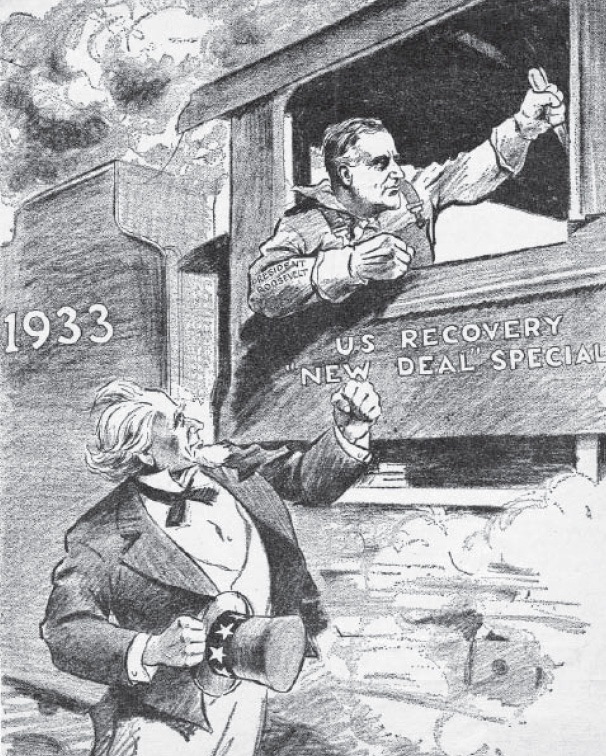
Seeing nothing beneficial for the American people in catering only to the rich, FDR brought an end to GOP policies. His administration instead offered a New Deal for economic revival. Through a massive legislative agenda Roosevelt and Congress intended to not only meet the emergency, but restore economic growth, and eliminate the conduct that led to the Depression in the first place.

One of the most popular New Deal relief programs was the Civilian Conservation Corps. Unemployed young men were put to work throughout the nation building trails and campsites in forests like the Great Smokey Mountain National Park, and urban building projects like the River Walk in San Antonio, Texas. (Consider that idle young men in Germany at the same time donned Black and Brown Shirts and broke heads for Hitler.)

Addressing the chaotic banking system FDR proposed systematic changes. Some 6000 banks had failed between 1930 and 1933 before the new president took office. Panicked depositors waited in long lines to demand their money until banks simply ran out of cash and locked their doors. Confidence collapsed. 

In his first days Mr Roosevelt announced a Bank Holiday where banks closed for four days to stop panic withdrawals. Auditors then inspected banking institutions across the country and surprisingly many banks were deemed solvent and reopened. Not finished with banking, FDR also took to the radio to explain the banking system, and with his cheerful confidence encouraged the public to take cash out of their mattresses, coffee cans, and backyard holes and return deposits to local banks. Thousands did just that. 

In order to prevent another such economic catastrophe the Glass-Steagall Act (1933), was passed by Congress to protect the public from high risk banking practices. One piece of the law was the Federal Deposit Insurance Corporation, FDIC, which is still in effect today. Depositors had the backing of the federal government to protect their funds from any loss. Moreover the Roosevelt Administration was determined to keep people in their homes, many of whom were facing foreclosure. The Home Owners Refinancing Act provided federal assistance to those who had paid their mortgages in good faith, but now faced eviction. 

In the first hundred days of Roosevelt’s New Deal 77 laws in total were passed by Congress, all aimed at restoring the health of the country. To the majority of Americans it felt like this president truly cared about their wellbeing. Roosevelt’s ascendency to the White House, next to Abraham Lincoln’s certainly stands as the most consequential in America’s continuing experiment in self government.

On a side note Franklin Roosevelt suffered from polio and could not walk, though he believed he’d walk again. FDR never gave up. And the truth of the matter is it took a man in a wheelchair to put the United States back on its feet. Franklin Roosevelt, unlike his predecessors knew that the business of America is “We The People.”

Gail Chumbley is a history educator, author, and playwright. Her work includes River of January, River of January: Figure Eight, both available on Kindle, plays Clay on the life of Senator Henry Clay, Wolf By The Ears a study of American slavery, and Peer Review where Donald Trump meets four past presidents.

If you like, please share this on social media.

Beyond The Symbols

Patriotic symbols, music, and the Pledge of Allegiance recited at a solemn ceremony can be deeply moving. A simple presentation of the flag at a formal function can be awe-inspiring. The lone, austere notes of Taps played at a military funeral elevates a moment into sacred reverence.

The sounds and symbols of American devotion are powerful.

Still, as commanding as recitations, patriotic colors, and America the Beautiful can feel, deeper symbols in our shared history can reveal so much more.

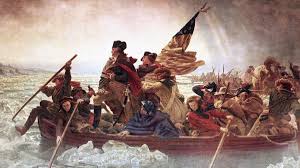
In his book, Washington’s Crossing, historian David Hackett Fischer introduces his volume with a discussion of Emmanuel Leutze’s famous painting of the same name. Fischer guides the reader through elements in the painting, noting passengers figure by figure as they frantically navigate the frozen Delaware River on that long ago Christmas night. 

Why is this particular work especially moving? Because at that juncture, December 25, 1776, the Revolutionary War looked to be flaming out after barely a start. Defeat had dogged Washington’s Continentals after being chased off of Long Island, and driven out of New York City the previous summer. As Washington planned his surprise Christmas attack, victorious Redcoats had settled into winter camp in New York City.

Humiliated, Washington knew he had to strike hard and he had to win.

Viewing his situation with the “clarity of desperation” the General ordered an assault on Hessian (German mercenary) held Trenton, New Jersey. The Continental army would have to use the element of surprise fighting against a better armed and better fed opponent. Risky to the extreme, Washington knew we, meaning America, for all time, was dependent upon his actions that night.

As for the painting, the artist depicts freezing soldiers huddled in a boat with more watercraft in the backdrop. From the starboard side, (to the right of General Washington) sits an oars-man, distinctly Black, putting his back into his strokes, ploughing through dangerous ice floes. Behind him, facing forward at the bow, is another swarthy figure, perhaps a Native American. He is desperately kicking ice with his left boot while handling a sharpened pole to break open a passage through the impossible crust. To the foreground an immigrant (a Scot by the look of his hat) studies the river’s surface closely as he pulls forward to port, while another behind him, in fisherman gear, studies the treacherous water. Others are made up of rustics, one at the tiller, along with a wounded passenger.

General Washington centers the painting as he is the central figure of the drama. Behind the General is Major James Monroe, and another rugged frontiersman by the looks of his garb. Both men are grasping a 13-star (Betsy Ross) flag, in a grip that elicits an attitude of determination and desperation, with perhaps a bit of warmth. Below both flag bearers sits a WOMAN, yes, a woman pulling her oar with an analytic eye upon the clotting water.

Black, Native, white, immigrant, the highborn, the humble, men and women, yesterday, today, and the future: all of our American lives balanced on the gamble played that night in 1776.

The point I believe Leutze is trying to convey is that we all don’t have to be the same. No one has to agree on the details of our beliefs to ride on that boat. The truth is Americans all have and had different realities and ambitions: differing views of liberty. Still, all onboard had to carefully respect each other’s space and not overturn that fragile vessel, Liberty, for we must stay afloat and row in the same direction. It is in all our interests to do so.

And that metaphor of America, that boat, tested our resolve on one of the nation’s most critical nights. Inspiration doesn’t come any better than from Leutze’s allegorical Washington’s Crossing.

Gail Chumbley is the author of the two-part memoir, River of January, and River of January: Figure Eight. Chumbley has also penned two stage plays, Clay, and Wolf By The Ears, concerning the life of Senator Henry Clay, and an in-depth examination of the beginnings of American slavery. Gail is currently working on another piece, Peer Review, best described as Dickens A Christmas Carol meets presidential history.

Fighting Bees

Young Abraham Lincoln came of age, politically speaking, during the administration of Andrew Jackson. And the rough, aspiring frontier politician did not approve of the Democratic Party and their blind, cult-like dedication to “Old Hickory.” Speaking first in New Salem, Illinois, then in Springfield, Lincoln held forth on the subject of Jackson’s arbitrary and autocratic style compared to his man, Senator Henry Clay of Kentucky.

Young Mr. Lincoln viewed Henry Clay as a true statesman. He admired Senator Clay for his rational, stable economic plans to nurture a growing America bursting with potential.

Central to Clay’s program was a bank, a central depository to finance new infrastructure projects like roads, canals, and railroads. Senator Clay championed the Federal Government as the best instrument to plan and carry out public works, improving commercial activity across the young nation.

To Lincoln scratching out a life in a muddy, stump-ridden western wilderness, Clay’s American System of improvements was welcome. Clay’s platform would bring order, jobs, prosperity, and hope to Lincoln’s own rough-hewn region.

Young Lincoln also shared Clay’s conviction that slavery did not belong in new western territories. All Lincoln wanted was a fair chance for all Americans, and that slavery impeded human talent, and he believed, like Clay, that slavery also devalued free labor. Free market capitalism and slavery could not co-exist.

To Lincoln, President Jackson’s mercurial style of leadership did not serve America’s future either. Jackson not only vetoed many improvement bills, arguing one state benefiting from federal funds was unfair to others, he in one instance vetoed a road bill because the project lay entirely in Kentucky, Henry Clay’s home state.

Excessive emotional discord in politics caused more problems than it remedied, and impeded national growth. Nation building wasn’t a sectional competition, a personal challenge, nor a game to pit political egos.

At the time of Jackson a religious revival burned hot across the country. Known today as the Second Great Awakening this movement, foaming over with emotion, had drenched politics as well, with candidates often taking on an evangelical, absolute tones.

Lincoln’s once joked he didn’t much like these stump orators unless they looked like they were “fighting bees.” To Lincoln, such emotional public displays had no value in advancing America.

So what did Lincoln believe? In the founders ideals of the United States of America. Embracing presidents as religious, messianic manifestations had no purpose, and produced only the tainted fruit of extremism.

Lincoln was, above all else, a moderate, logical, and measured man. His inspiration, his convictions, centered on a secular faith in the ideals of America.

Mr. Lincoln like to think of the Declaration of Independence as a golden apple, (equality and rights) set in the silver frame of the Constitution (the law). In other words certain inalienable rights protected by We the People.

Former President Obama exemplified Lincoln’s America in so many ways; relying on his cabinet, advisors, or his own formidable intellect to govern. And Lincoln’s Jackson nightmare repeated when a dumber version of Old Hickory proclaimed America is a terrible place.

Today the United States’ perpetual election cycle keeps emotions raw, but accomplishes little else. Mr. Lincoln would take a dim view of today’s constant political turmoil, arguing that we need to keep our wits about us and vote with our heads.

More infrastructure needs attention as well as national security, civil rights, and climate change. Instead a thin-skinned ego maniac welcomes billionaires to pilfer and taint good government. And the computer age has presented a complicated network neither Lincoln nor Clay could have imagined. We rely on those cooler heads to prevail, making policy, and conducting the people’s business, or we end up paying homage to wannabe dictator who is as arbitrary as he is vacuous.

Today, at this moment, in a country full of pointless Jacksons, be a thoughtful Lincoln. There is no need to fight bees all of the time, over and over, when the real work of America needs to be done.

Gail Chumbley is the author of “River of January,” and “River of January: Figure Eight.” Chumbley also penned two stage plays, “Clay,” examining the life of Senator Henry Clay, and “Wolf By The Ears,” a study of racism and slavery in America. Currently Chumbley is working on “Peer Review.” This piece is a cross of Dickens A Christmas Carol converges with presidential history.

chumbleg.blog

Kindred Spirit?

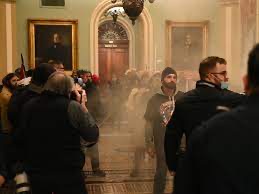
Sen Henry Clay portrait (left of door.)

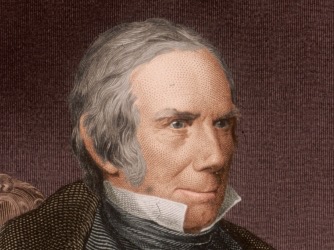
The word from a Kentucky acquaintance is that Mitch McConnell fancies himself a Henry Clay scholar. That probably means little to most, but Senator Clay (1777-1852) nearly single-handedly held the US together, postponing Civil War for over 40 years.

With a name that epitomizes progress and compromise, it feels odd Mitch McConnell proclaims a kindred spirit in Senator Clay. This earlier Kentucky Senator bent over backwards to protect and promote the vitality of our young republic.

Clay rolled up his sleeves and cultivated coalitions among his fellow law makers to keep the nation from fracturing. He orchestrated the passage of the Missouri Compromise in 1820, the Compromise Tariff of 1833, and the Compromise of 1850; all crafted to maintain the Union. In fact, the Civil War erupted AFTER Clay’s death, as no other Senator possessed the talent and determination to keep Congress talking.

In the interest of full disclosure, yes, Henry Clay owned slaves. And yes, he believed in gradual emancipation, as slavery proved antithetical to economic progress. The Senator’s commitment to America drove his efforts, and Clay worked with all political factions, even those he opposed.

McConnell does nothing, and takes pride in doing nothing. Invoking Senator Clay, who did a lot, is poor cover for an old obstructing politician to presume. Clay did not dig in his heels to impede the opposition party’s efforts to govern.

Henry Clay served his country, McConnell serves himself.

Gail Chumbley is the author of the two-part memoir, “River of January,” and “River of January: Figure Eight,” and the stage play, “Clay.”

gailchumbley@gmail.com

No Guarantee

Henry-Clay-9250385-1-raw-res-AB.jpeg

SCENE FOUR

The lights rise on an empty stage. The back curtain ripples with an image of the American flag, circa 1824. “Hail to the Chief” plays in the background. Only a table and two chairs rest at stage left, with a liquor bottle and two glasses. Clay enters from the wings. As Clay speaks the image and music fades.

CLAY A festive atmosphere greeted the 1824 election season. And some apprehension, as well.

Clay pours a drink, leaning against the table.

CLAY Secretary of War John C. Calhoun hoped he might find enough political momentum to land the highest office, but discovered little, outside his home state. Though I never forged a warm friendship with Calhoun, we shared common cause promoting a protective tariff and investment in the American system.

He sips his drink.

CLAY As electioneering heated up, reports circulated in Washington City that the frontrunner, Georgia’s William Crawford, had fallen perilously ill. Initially, details were scarce, but in due order, a diagnosis arrived suggesting apoplexy. His allies vowed to continue the race, though Crawford’s prospects appeared dim.

Clay ponders a moment before continuing.

CLAY My old associate, John Quincy Adams, entered as well, with support from the whole of New England, including dispersed Yankees throughout the North. His supporters detested slavery, and as it happened, me, the slave holder. Resolving the Missouri crisis did nothing to gladden our fellow citizens of the North. Such is the thankless plight of public resolutions.

He smiles sadly, and sips. A melody, “My Old Kentucky Home,” increases in volume.

CLAY Despite my very public stance on gradual emancipation, the Adams people were not moved a whit. Their fierce intransigence gave me pause.

Clay stares a long moment. The music fades.

CLAY Then there was Andrew Jackson.

He issues a mirthless laugh.

CLAY As Jackson waited to enter the 1824 race, the Tennessee legislature elected “Old Hickory” to the United States Senate. Taking great pains to avoid any public positions, the honor must have horrified him. Jackson had to publicly commit to policy votes, and vote he did. Bills for the protective tariff, and for funding internal improvements. Hrrumph! But he had nothing to fear. Jackson’s reputation remained firm with his states rights’ proponents. I believe he could have shot someone in the lane and preserved his support.

Clay refreshes his drink while sitting at the table. He rises.

CLAY I too, craved the presidency. Forgive my repetition, but the so-called “American System” program was too vital to tolerate an ignoramus in the White House.

He pauses.

CLAY Celebrity is no guarantee of competence.

Gail Chumbley is the author of the two-part memoir, “River of January” and “River of January: Figure Eight.” She is also the writer of Clay, and 3-act play, and Scenes Of A Nation, in progress. Both books are available on Kindle.

gailchumbley@gmail.com

Publicly Broken

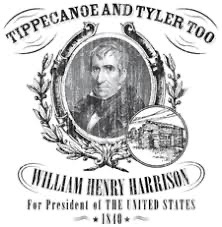
This was the situation in April, 1841. Newly inaugurated president, William Henry Harrison died after only a month in office. The 68-year-old Harrison apparently succumbed to pneumonia after delivering an exceptionally long inaugural address in foul weather. Harrison, the first Whig to win the presidency, was also the first chief executive to die in office, and the Constitutional protocol of succession had never before been exercised.

Harrison’s Vice President, John Tyler, moved quickly upon learning of the President’s demise. He located a judge to administer the oath of office, and moved into the White House. When members of Harrison’s cabinet informed Tyler they would take care of the daily business of governing, he cooly responded that they could either cooperate, or resign.

Tyler had been an odd choice for Vice President. The Whig Party had gelled during the Jackson administration, proposing financial and internal developments over sectionalism and states rights. The Whigs further found slavery not only inconsistent with liberty, but also an obstacle to the growth of a modern economy.

Foremost among the Whigs was the Party’s greatest voice, Senator Henry Clay of Kentucky. Clay had first been a presidential candidate in 1824, and again in 1836. However, in 1840 when the Whigs met in Harrisburg, PA to nominate their candidate, Clay failed to gain the top spot, and then declined the offer of the vice-presidency. Clay later regretted his momentary pique.

Though John Tyler had been a Virginia Democrat, he had publicly broken with Andrew Jackson over Jackson’s misuse of presidential power. In particular, Tyler objected to Jackson’s threats against South Carolina in the Nullification Crisis, leading Tyler to forsake the Democrats, but not the philosophy of states’ rights, or the institution of slavery.

The Whigs decided that Tyler’s opposition to Jackson was good enough to offer him the second spot on the Whig ticket, and Tyler accepted. Then a month into his term, Harrison died, and this Southern Democrat, a wall-to-wall sectionalist assumed the presidency. 

From there, Whig policies quickly unraveled.

If the Whig’s aimed to realize their platform of national economic growth, their hopes died under President Tyler’s veto pen. Predictably, the Whig cabinet soon grew frustrated, then disgusted with presidential obstruction. Members began to resign. Only Secretary of State Daniel Webster hung on, as he was in the middle of boundary discussions with the British. Then he, too, submitted his resignation. Shortly after the cabinet fled, and the Whigs formally expelled Tyler from the party.

To their credit the Whig leadership didn’t excuse Tyler, or defend his contrary actions. No one said ‘let Tyler be Tyler.’ They publicly broke and denounced the President’s antics, though the cost, for the Whigs, came due ten years later when they disbanded. 

Yet, the story doesn’t end with the demise of the Whigs, but begins anew with a stronger and more principled political movement. For, from the ashes came the birth of the Republican Party, much like a rising Phoenix. And that party still exists today, for now. That is, if they haven’t already submerged their once decent name in the cesspool of Trumpism. 

Gail Chumbley is the author of the two-part memoir, “River of January,” and “River of January:Figure Eight,” and “Clay,” a play in three acts. Books are available on Kindle and at http://www.river-of-january.com.

gailchumbley@gmail.com