A French Legend

Miss2

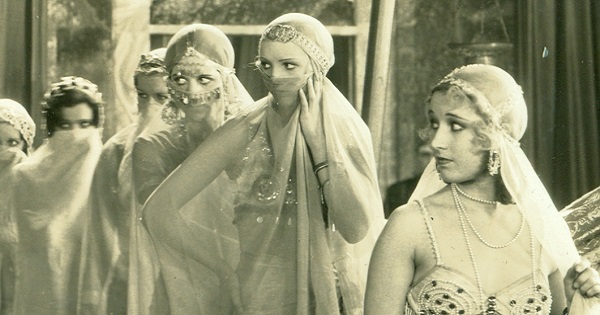
“Rumor has it that Mistinguett served as a spy for the French government during the Great War while she was dancing across the continent. They may be watching her again because of that new leader in Germany,” Lillian remarked as the company sunned themselves on exclusive Larvotto Beach.
“Who told you such a thing, Lillian?” Una, another dancer, asked skeptically.
“Didier, the older stage manager at the Terminus—he seems to know all about Miss.”
Charlotte’s eyes grew large. “How thrilling!”
“And she’s had many affairs with younger men,” Lillian continued, enjoying the attention. “You’re familiar with Maurice Chevalier?”
“Of course.”
“Supposedly they shared a passionate, very public romance. Miss launched his career when she plucked him from a music hall chorus line and cast him into his first film, La Valse Renversante.”
“No!” Charlotte blurted.
“Oh, yes!”
“Isn’t he a lot younger?”
“Thirteen years, according to Didier.”
“Lucky woman!” Charlotte said. The rest of the girl’s laughed at her response.

Page 75, River of January

Talk Back Wednesday

rojcover10

You’ve read the book, now share your reflections or questions.

Finish this sentence, ‘Chum’s greatest personal asset had to be . . . ‘

or

‘Helen traveled across the US and around the Atlantic world because?’

Post your responses and we’ll talk.

I would love to hear from you,

Gail

“River of January,” Oregon City Edition

Women600whelenhayes600w

             Hellooo Portanders!

Gail Chumbley presents her new work, “River of January,” Thursday, August 20th, 7:00 PM at the Oregon City Library.

Description OREGON CITY OREGON CARNEGIE LIBRARY copy.jpg

606 John Adams Street

Be grand to see you there!

Much Obliged

Peacock0002

Thank you for taking part in “River of January’s” free Kindle Weekend! Enjoy the story with my compliments.

Stay in touch. As you finish the book, drop me a line, add a review on Amazon.com, and be sure to tell a friend.

For more, visit the photo gallery at www.river-of-january.com

Book Two, “The Figure Eight” is in progress.

This Week, 1935

IMG_0191

The old pilot’s time with us grew to mean a great deal to me, personally, but made it that much harder to let him go at the end.

Chum’s last years brought him out west to Boise. It was much easier for my husband to care for him than the semi-regular flights to Miami, sorting out some kind of preventable crisis. Once his father settled in here, they were together every day at the assisted living facility. I believe their time together gave both of them a lot of comfort.

As for Me? I just loved to sit and talk to my father-in-law. If he had felt more spry I would have dragged him into my history class for my own version of “Show & Tell.” I mean, really! William Howard Taft was in the White House the year Chum was born! His life was a damn book. (see River of January)

On one particular Sunday we drove over for a visit, and brought him Mexican food . . . Chum’s favorite. I was anxious to talk to him because we had rented “The Aviator” the night before, the film about Howard Hughes, and Chum had worked for the millionaire at one time.

Me: So we watched a movie about your old buddy, last night–Howard Hughes.

Chum: Ha. He kept the Kleenex business in the black.

Me: (Oh, geez! How could he know that?) And your old girl friend, Kathryn Hepburn.

Chum: Yeah. Katy. She was a nice girl.

Me:(Katy? A nice girl?)

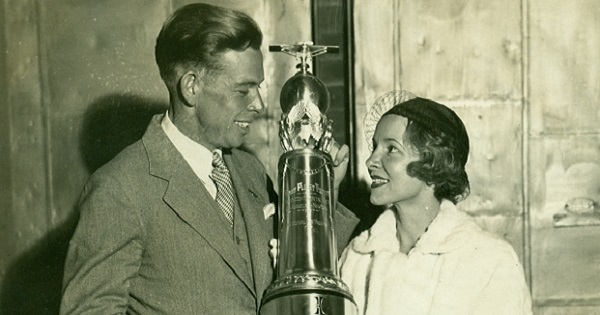
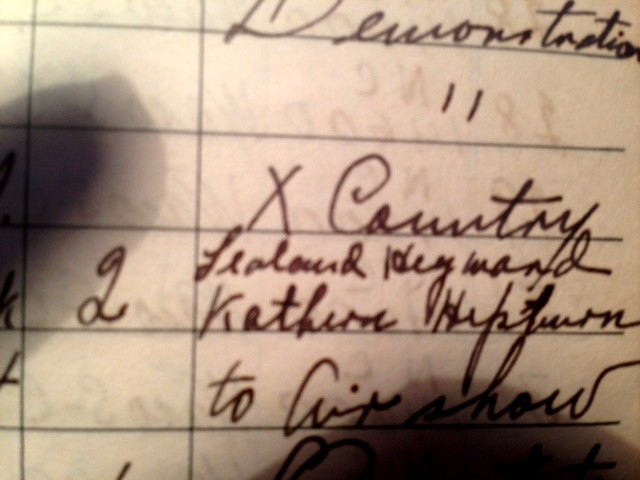
Chum: Her boyfriend, that theater producer, Leland Hayward–I taught him flying lessons, and she came along.

Me: Yeah. (Yeah)

And here it is folks, if you didn’t see at the top. The old history student has to whip out the proof. Have a nice weekend.

  IMG_0192

Gail Chumbley is the author of River of January. Available on Amazon.

The Meat Grinder

7804d740-1a8d-3515-a0cb-5ba757515e12

101 years ago today, Serb teenager, Gavrilo Princip shot and killed the heir to the Austro-Hungarian throne, on the heir’s fateful visit to Sarajevo. That one deadly act, carried out over a century ago, set into motion a series of events which ultimately resulted in the unimaginable bloodbath of World War One.

Last Wednesday while presenting my memoir, “River of January,” to a library group, an unexpected gasp came from a listener in the seats. My brain flew into immediate damage control “What I had said, (did I cuss?) Was the projector working behind me? Were my pants zipped? After only a heartbeat the cause dawned on me.

It was a 1928 snapshot of Mont Chumbley, the story’s central figure, beaming across the screen. He was uniformed in the garb of a Navy Seaman Recruit, proudly shouldering his rifle. He looks dignified in his pose, pleased at successfully becoming a part of the United States Navy—but his achievement had also left his family back on the Virginia farm in deep crisis.

Young Mont, “Chum” had required his father’s permission to join up, and the father had adamantly refused to go along with the idea. To modern ears, such as the listener Wednesday night, this obstruction seemed unpatriotic, a father ought to be proud; a military career today is considered noble and honorable. But not back in 1928.

The line that earned that unexpected gasp came after a direct quote from Chum. “Back then, in Norfolk there were signs in the parks saying, ‘Dogs And Sailors Keep Off The Grass’.”

We forget, but after the 1918 Armistice, America was truly sorry it had committed to war against Germany. The universal feeling was fighting in Europe had been a monumental mistake, and one that would never, ever be repeated. The country doggedly pursued isolation for twenty years until Japanese Zeros hit the Pacific fleet at Pearl Harbor in 1941. Between 1919 and 1941 military budgets were annually slashed, recruitment limited, and the military faced near elimination by a nation and Congress bent on going it alone.

The Treaty of Versailles that officially ended the war, along with its League of Nations was soundly defeated by a non cooperative US Senate. The Washington Naval Treaty of 1921 strictly limited the number of ships each maritime nation could possess, and the Kellogg-Briand Pact, an agreement between the US and France literally outlawed war. The public also grew convinced that American bankers and arms producers had only pushed for war to increase their profits. Companies like Dupont Chemical, and the banking House of Morgan were dubbed “Merchants of Death.”

Internationalism was dead, Fortress America was born.

That was the political climate surrounding Mont Chumbley’s ambition to join the Navy and learn to fly airplanes. Understandably his family fervently opposed this decision, and his father did all he could to block his son’s hopes for a military career. Mont’s aunt said it best, “The military is a refuge for scoundrels.”

And even after enlisting, young Mont learned his chances of getting into a cockpit were slim to none in light of draconian budget cuts inflicted on the Navy.

America’s enthusiasm for foreign involvement, the military, and war had fallen into fanatical disfavor. The meat grinder that had been World War One left our nation outraged and remorseful . . . America would never make that same mistake again.

We All Knew

th

One-eighth of the whole population were colored slaves, not distributed generally over the Union, but localized in the southern part of it. These slaves constituted a peculiar and powerful interest. All knew that this interest was somehow the cause of the war . . . .If we shall suppose that American slavery is one of those offenses which, in the providence of God, must needs come, but which, having continued through His appointed time, He now wills to remove, and that He gives to both North and South this terrible war as the woe due . . .Lincoln’s Second Inaugural, March 4, 1865

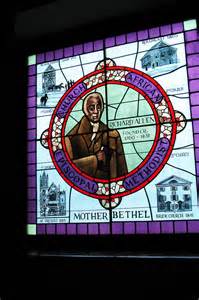
Richard Allen and Absalom Jones founded the African Methodist Episcopal Church in the early 19th Century. Both men, devout followers of the Methodist faith, often found personal worship disrupted by white parishioners, bent on limiting black presence and participation. Enduring decades of bullying by white clergy, these men and their followers established their own church in Philadelphia, “Mother Bethel.” At this site Allen and Jones, with their congregation witnessed the racial turbulence of the antebellum period, with the rise of Abolitionism, and finally culminating in bloody Civil War.

Richard Allen and his congregation were forced to draw away from the established Church because they longed for freedom of worship. And though this schism seems small today, the move toward religious independence indicated the real need for black equality in all spheres of life, but especially in this case of spirituality. “Mother Bethel,” and many more churches like it supplied the moral courage to risk all in the pursuit of public justice.

It was from African-American Churches, (all rooted in rejection by white congregations) that real advances began. Richard Allen and the AME is one example. But Dr. King provided the same succor for the next social-political push in the Civil Rights era of the 1950-1960’s. Faith and song propelled this hopeful movement forward, lead by blacks for blacks.Though a Lutheran, Rosa Parks was approached by the leaders of Dexter Avenue Baptist Church to ride that bus in Montgomery and not be moved.

The African-American church was the anchor feeding the spirit of justice.

But yesterday a serpent was welcomed (with love) in to this timeless sanctuary of solace. This lost soul, channeling the rage of hundreds of years of hate, sprayed deadly venom to try and kill the timeless promise of hope. The message registered–we know hate still runs riot among the fearful. The church is no safe place from the legacy of ignorance and racism in America.

President Lincoln grasped that truth–slavery presented the worst kind of sin, a sin of such magnitude that oceans couldn’t wash America clean. He states in his Second Inaugural that “we all somehow knew.” And we indeed do know that racism is the defect that turns us into monsters. The president implored Americans to accept that racial conflict is our nation’s Achilles Heel, and it won’t go away without courageous action.

We must deal with inequality on a national level, a state level, and each in our own hearts. White and Black. Folks, the strife will not go away on it’s own–it never has.

And, yeah, maybe Rachel Dolezal has identity issues, maybe she acted the fool in front of us all. But I would suggest that we could all make a little effort to generate some empathy for the guy next to us.

If you enjoyed this message, please share.

Gail Chumbley is a historian and author of River of January

That’s All

th

Colonel Clark used to bring his young son down to the dojo where my brothers took judo lessons. My grandfather had enrolled my older brother first, and then my two younger brothers when they were old enough. I sometimes came along to watch these lessons because, first of all, it was something to do on a boring school night, and I liked to look at the cute boys dressed in their gi (white gear).

My Grandpa Ray always sat with Colonel Clark, if the old gent happened to be present. That meant I sat with Colonel Clark, too, not fun for a twelve-year-old, boy-crazy girl. The two old men would talk and talk, seated next to one another, though their eyes remained on their boys training on the mats. They never seemed to look each other, but still seemed absorbed in their conversation.

My own attention span, something close to that of a hummingbird, only caught snippets of the quiet discussion. “MacArthur, Wainwright, and Bataan,” were among the many utterances exchanged by my Grandpa and the Colonel. And despite my commitment to shallow-minded teen angst, I sensed something grave, something momentous had happened in the back and forth of these two old men.

My brother later translated the mysterious conversation I unwillingly witnessed. Colonel Clark had been left on the Bataan Peninsula when General Douglas MacArthur was evacuated from the Philippines in 1942. Under the new command of General Jonathan Wainwright some 22,000 Americans surrendered to Japanese occupiers, among them young Clark. The Japanese forced this defeated army on a death march (along with their Filipino comrades) some sixty miles in the jungle. The men suffered from heat exhaustion, and dehydration, staggering on, hat-less and barefoot. When a captive stumbled, or fainted, the penalty meant an immediate beheading.

Colonel Clark had witnessed this nightmarish brutality, forced to suffer in ways words fail to recreate.

In defiance of considerable odds, Colonel Clark survived his ordeal. And that was the ordinary older man who spoke quietly with my Grandfather, watching a young son he should never, in reality, have sired.

I am a much better listener today, and recognize that valiant warriors everywhere are frequently disguised as harmless old men. Listening to these elderly gents has enriched my understanding of the past far more than I thought possible.

For example there was George, the high school janitor. For many years he pushed a mop down the halls where I taught American history. Sporting two hearing aids, this diminutive man wielded a mop that was wider that he was tall. All told, George looked like a gentle and harmless grandfather.

I’d often find George standing outside my classroom door listening to me blather on about the Second World War, as if I understood. Later I discovered that that mild mannered 80-year-old had once packed a M-1 Garand, shivering aboard one of those Higgins boats motoring toward Omaha Beach in 1944.

“So George, what do you remember most about D-Day?”

“It was awful early, and the water was awful cold.”

Then there was Roy. Smiling, white-haired Roy.

As a teenager he had gone straight from the Civilian Conservation Corps right into the US Army.

“What do you remember most about D-Day, Roy?”

“I lost everyone in my outfit. I was real scared. Later I was regrouped with survivors from other platoons. You see that was bad because I’m Mexican, and my first platoon got used to me, and stopped calling me Juan or Jose. I had to start all over with the new bunch. For days, as we moved inland, these new boys were giving me the business. One guy said, ‘Mexicans can’t shoot.’ I said that I could. So he said, ‘Ok Manuel. Show me you can shoot. See those birds on that tree branch up ahead? Shoot one of those birds.’ I lifted up my rifle and aimed at the branch and pulled the trigger.” Roy begins laughing.

“I missed the branch, the birds flew away, and twelve Germans came out of the grove with their hands up.”

Astounded, I couldn’t speak. Roy simply chuckled.

Colonel Clark, George, and Roy. They were just boys who found their lives defined in ways we civilians can never comprehend. They were scared, and hot, and cold, and hungry, and suffering, and ultimately lucky. They returned home.

That’s All.

Gail Chumbley is the author of River of January, and River of January: Figure Eight, a two-part memoir. Also available on Kindle.

Roxy’s Friend

Maria GambarelliThis lovely lady is Maria Gambarelli, prima ballerina. Miss Gambarelli was well known to New York audiences in the 1930’s for her dazzling performances at the Roxy Theater. In addition, she regularly appeared on Roxy Rothafel’s popular radio program, “Roxy’s Friends.” In 1932 the dancer organized a troupe of New York ballerinas for a grand tour of European cities, to promote America’s cultural image. Helen auditioned for Miss Gambarelli and won a part in the production.

Arriving in Paris the company, christened the “American Beauties,” opened at the exclusive “Le Ambassadeurs” dinner theater to favorable reviews. However, in a contract dispute with the William Morris Agency in New York, in association with the Lartique Agency in Paris, Miss Gambarelli abruptly quit. The eleven American ballerinas were left abandoned, facing an uncertain future on the continent.

For more of the story read River of January, available at www.river-of-january.com