Peer Review #2

Strutting through the broad, gilded doors, bearing the black and gold insignia of his building, the President acknowledged well wishers, reporters, and staff. Happy to be back in New York, he looked forward to his familiar apartment and comfortable bed. The President felt it a hardship to live in such an old structure in Washington, though the prestige made it tolerable.

He aimed directly toward the elevator, his closest aides and Secret Service agents in tow. The Chief Executive marched into the lift, with a triumphant gait, gracing photographers with a last thumbs up, as the golden doors silently sealed.

Soon enough, the elevator car slowed to a silent halt, the opening doors revealing an opulent penthouse. His entourage emptied first into the golden rooms, Secret Service staff sweeping for any dangers that might threaten the Commander in Chief. After the officers cleared the master bedroom, the President loosened his tie, slipped off his suit jacket and kicked off his designer shoes. Exhaling onto his grand bed, a sudden movement caught his eye.  

A tall man, of regal bearing stood by the window, surveying Midtown from on high. Attired in a blue uniform, trimmed with buff lapels and cuffs, the man’s hair looked powdery white, and was bound in a queue at the nape of his neck. 

Stunned, gasping at this extraordinary vision, the President froze, too astonished and frightened to speak.

“I’m very fond of New York,” the officer began. “During the War for Independence I remained in the vicinity waiting to reclaim it from British occupiers.” He glanced at the frightened man, now burrowing under his bedclothes. “As Chief Executive, I served both terms of office here in New York.”

The President could hear his heart pounding, and idly worried about his blood pressure.

“I, too, struggled with temptation,” the officer continued. In my youth I pined for the advantages of wealth that surrounded me.” The apparition glanced at the President. “Land, military rank, social standing, . . . these were the empty ambitions I embraced as valuable.”

The President slowly began to feel his heart rate slow, the adrenaline somewhat dissipating, and found the courage to speak. “Ho, . . . how did you get in here?” 

But the soldier did not reply, turning again toward the view of Manhattan. 

“Over time, particularly once the war commenced, I discovered my assumptions slowly crumbling. The sacrifices endured by the fine men in my command taught me that there were more important ideals than fleeting treasure,” the apparition sighed, emotion emphasizing his revelation. “You must realize,” the officer turned again toward the President, eyes blazing with conviction, “all a man truly possesses is reputation. In the end, that is all that matters.” 

Dread again filled the President, clutching tightly his golden comforter, finding no comfort. He wished the specter gone, praying with all his might that a staffer would hear and rescue him.

“You must understand,” the visitor continued, “I, too, struggled to master my avarice and envy. It was through a determined practice of self-restraint, a mastering of my baser desires, that I learned to be of service to more than myself.” The soldier paused a moment, studying the frightened man grasping his bedding. “Did you know that Article Two in the Constitution was written for me?” 

Hearing this, the President forgot his fear for a moment. 

“For you?” he managed to murmur. 

“When I relinquished my command after the war, and returned to my home in Virginia, Congress judged my character upright. In truth I was weary, lonely for my family, and yearning for a peaceful life,” the General smiled sadly. “However, when I gave up power I earned honor, trust—a good name—and contentment.”

“Why are you bothering me? You should leave,” the President moaned, wishing he had flown instead to Florida. But his visitor seemed not to hear. 

“When the Constitutional Convention set to work, only one day was devoted to defining the role of president. One day,” the visitor repeated. “You see, the delegates wanted no more of arbitrary rule, believing only those of good character would occupy the office.” The apparition looked directly at the President,”

“Please go,” the President whimpered. “I’ll call my men . . .”

The General interrupted, “they are not yours, Sir. And therein lies the problem, and the purpose of my visit.” The soldier frowned deeply. “These deputies work for the American people, as do you, sir. The presidency is a position of service and trust.” He paused. “We have all noted your general deficiency in this aspect.”

“We all?” gasped the President, concerned with his pumping heart.

The General approached the vast bed, the President shrinking deeper with each step. “The President is entrusted with formidable powers, that must not be corrupted. In this you have fallen short.”

“As I am remembered in the annals of America for quiet dignity and fidelity to country, you will only be recalled as a cynical moneychanger who profited from foreigners and plutocrats.”

A knock at the bedroom door startled the cocooned President, breaking the spell. His elaborate, golden bedroom was empty.

Gail Chumbley is the author of the two-part memoir, “River of January,” and “River of January: Figure Eight.” Both are available on Kindle or in hardcopy at http://www.river-of-january.com.

gailchumbley@gmail.com
 

I Want My GOP

This post originally appeared in early 2016. Cassandra award?

th

A divided national party . . . voices of extreme rhetoric . . . an ugly, contentious primary season. Does this spell doom for two-party system?

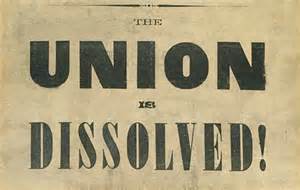
Sounds modern, doesn’t it? But the year was 1860, and the party in question was founded by Thomas Jefferson, and shaped in the image of Andrew Jackson: The antebellum Democratic Party.

On the eve of Civil War, the future of the Union appeared in fatal doubt. Political leaders in the Deep South: South Carolina, Georgia, Alabama, Mississippi, and Florida had all but washed their hands of the centrally powerful United States. Adding to the precarious atmosphere, a faction of Democrats in the North promoted a policy to permit slavery into the western territories under the principle of Popular Sovereignty, or direct vote. Others voices in the northern branch of the Democratic Party believed the Southern States should depart the Union in peace. And these pro-secession advocates became the most worrisome threat for Senate leader, Stephen A. Douglas of Illinois, the leading Democratic candidate for the presidency in 1860.

Douglas found himself in a hell of a spot. He fervently burned to lead his party to the White House and save his nation, dangerously poised on the verge of civil war. As the principal heir to Senate leadership, Douglas had spent over twenty years in Congress working to stave off Southern secession, taking over when Kentucky Senator, Henry Clay, the “Great Compromiser” died. Clay had also spent most of his earlier career drawing up one concession after another in a noble attempt to preserve the Union. Eventually the effort wore him out, and Senator Douglas pick up the cause.

As far as Douglas was concerned, slavery wasn’t a moral issue, merely a bump in the road. The issue could easily be decided by the good folks migrating west. Douglas believed if settlers didn’t want slavery, they would decline to establish laws necessary for supporting the “peculiar institution.” But the Senator was wrong—dead wrong. Slavery had, by 1860 become an issue impossible to fix. And it was this miscalculation, underestimating the power of the slave issue, that the Illinois Senator imploded both his party, and his career.

The new Republican Party had organized six years earlier in Wisconsin, founded on one central principle—slavery would not extend into the western territories, period. And this new party spread quickly. Composed of splinter groups, this now fully unified alliance insisted that free labor was an integral component to a flourishing free market economy. The presence of slavery in sprouting regions of the West would devalue free labor, and undermine future commercial growth.

Now, don’t get me wrong, these Republicans did not sing Kumbaya or braid their hair. These men did not believe in equality between the races—they were not abolitionists. Economic principles drove their political platform, (Emancipation came later with the transformation of President Lincoln through the caldron of war).

For Stephen Douglas the approaching 1860 election meant vindication for his support of popular sovereignty, and reward for his faithful political service. And Douglas was no political hack. He fully understood the solvency of the Union lay in the delicate art of sectional balance, and his ascendancy to the White House as a Democrat would go a long way to placate the Southern hotheads. But this Illinois Senator failed, once again, to fully comprehend the temper of the nation, or of his own party. The era of seeking middle ground had passed—America’s course had been set toward industrial modernity with no place for an antiquated, barbaric labor system.

Charleston, South Carolina, was selected as the site of the 1860 Democratic convention. Chaos immediately broke loose on the convention floor. While Southern Democrats demanded strict, precise language guaranteeing the extension of slavery into the territories, Northern Democrats and those from California and Oregon pushed for Douglas’ popular sovereignty. This tense deadlock forced the latter faction to walk out and reconvene in Baltimore where party business could function.

Southern Democrats moved on without Douglas or his faction. In a separate, Richmond, Virginia convention, Southern Democrats proceeded to nominate Kentuckian John C. Breckinridge.

Back in Baltimore, Senator Douglas indeed gained the Democratic nomination, preserving his precious principle of local voters determining the western migration of slavery. Meanwhile, the Democrats in Richmond took a step further, adding the absolute protection of slavery to their platform. Middle ground had vanished.

Though a long shot, a third faction of the Democratic Party broke ranks with both Douglas supporters, and the Richmond faction. Calling themselves the “Constitutional Union Party,” this coalition nominated John Bell of Tennessee.

So what can we make of this 1860 fiasco today, in 2016? If I could attempt a bit of divination I would suggest that the political party that can present the most united front will prevail in the general election. If current Republican candidates continue to employ such wide-ranging, and scorching tones to their rhetoric, and stubbornly defend the innocence of their loose talk, the party may run head long into oblivion, as did the Democrats of 1860. If the roaring factions, currently represented by each GOP aspirant goes too far, the fabric of unity will shred, crippling the Republican’s ability to field serious candidates in the future.

Looking at the past as prelude much is at stake for the unity of the GOP. In 1860 party divisions nearly destroyed the Democrats, propelling the nation into a bloody civil war. And though Republicans at that time elected our greatest Chief Executive, Abraham Lincoln, the Democrats suffered for decades, marginalized as the party of rebellion. And even the best lessons left by the past are still forgotten in the heat of passion, by those who know better. (The Democrats shattered their party unity once again a hundred years later, splintered by the Vietnam War.) This is truly a cautionary tale for today’s turbulent Republican Party.

Zealots do not compromise, and leading GOP candidates are spouting some pretty divisive vitriol. Southern Democrats self righteously rejected their national party, certain it no longer represented them, and ultimately silenced the party of Jefferson and Jackson for decades. The lesson is clear for today’s Republicans. By tolerating demagoguery, extremism, and reckless fear-mongering in their field of contenders, the RNC may indeed face a similar demise.

Though it is true that no party can be all things to all citizens, malignant splinter groups should not run away with the party.

The American public demands measured and thoughtful candidates—and both parties are expected to field candidates of merit and substance.

We deserve leaders worth following.

As Senator Stephen Douglas refused to recognize that the political skies were falling around him, and his party, the modern Republican Party must not.

Gail Chumbley is the author of River of January, and River of January: Figure Eight a two-part memoir. Available on Kindle

Peer Review #1

Marines manned numerous doorways along the wide hallway, as clusters of tourists wandered through colorful rooms. Upstairs the President listened to the public commotion with satisfaction, not for the house, not for the job, which, in truth, had become tiresome, but for the knowledge he could drop down and set all their bourgeois hearts aflutter. 

After a moment, he made his decision, slipping down an interior stair case, stepping into the Blue Room.

As his hands automatically fluffed his hair, the President sidled up beside a class of wiggly school children snapping cell phone pictures.

“And where are you from?,” the president teased with pleasure, anticipating an excited response. He half closed his eyes, and paused, waiting for the gratifying answer.

But he heard nothing.

Bemused, the President opened one eye, then the other. The chatty children paid him no mind, in fact were moving away, following their guide into the hallway.

“Wait,” he found himself calling. “It’s me, your President. I’m here.”

He repeated, “The President of the United States.”

But the children didn’t hear. He remained alone in the Blue Room, his hair acceptably coiffed.

No further tourists entered, though dozens drifted past the doorway. He didn’t understand and he thought very hard, seeking a rational explanation.

It was at that moment that he heard a voice, quite close, and quite annoyed. 

“Am I to understand you are a New Yorker?” 

The President wheeled around toward the sound. Before him, no more than an arm’s length away stood a mustachioed gentleman, wearing pinz nez spectacles, sporting a shiny top hat. The man’s eyes blazed behind the thick round lenses, and the astonished President detected a trickle of cold sweat trace down the back of his thick neck.

“I say, are you, or are you not, a New Yorker?” The stern man spoke in a nasally, patrician voice.

“Ahh. How did you get in here,” the President stammered. “Where is my secret service protection?”

“Supercilious pup,” the man in the top hat snapped. “They tell me that YOU are from New York, and are president! A common side show huckster, President.”

The President, though alarmed, replied reflexively, “I’m in real estate. I . . .made my fortune in New York real estate.” Only the muffled din of passing tourists kept the President from panic.

“Real Estate!” The man in spectacles scornfully shouted. “I’d say you are just another scoundrel from the wealthy criminal class. In New York, swindlers like you are a dime a dozen. I made a career of exposing rascals like you.” 

The man, attired in a three-piece suit, a watch fob draping his ample waist, bore a deep scowl. “And you found your way into this office of trust. Intolerable.”

Though bewildered, the President, unaccustomed to such personal insults, felt his pique rising. “I was elected President by the largest margin in American Hist . . .”

“Poppycock,” the specter interrupted. “It is my understanding the decision rested upon a mere tilt in the Electoral system, and that outsiders interfered to make certain of your victory.” 

The strange visitor moved closer. “I’d say that you are a compromised pawn of foreign meddlers, and give not one damn for the American people.”

At this point the President had heard enough, and attempted to move his legs. He wanted very much to escape the Blue Room, but his feet remained rooted. 

“I have important things to do, you need to go,” the President’s voice trembled, trying to sound more confident than he felt.

The apparition narrowed his intense eyes, and took another step toward the unnerved President. 

“I claim more authority to this revered House and Office than your mercenary greed could ever comprehend. You belong with Tweed, Plunkitt, Fisk, Conkling, and the rest of New York’s good-for-nothings. Dishonor has followed you to the Presidency, what, with your womanizing, graft, and unsavory business connections.” The fierce apparition fixed an intense, menacing gaze. “You do not belong here, nor your parade of lackeys and opportunists.

The buzz of foot traffic grew louder, and when the President again glanced toward his unwelcome visitor, he found him gone, the Blue Room empty.

Gail Chumbley is the author of the two-volume memoir, “River of January” and “River of January: Figure Eight,” both available on Kindle.

Hard copies are available at http://www.river-of-january.com


A Fine Day


Washington at the Second Continental Congress

An anxious boy, George Washington began life in the formal, orderly Virginia Tidewater. Born the first son of a second marriage, young Washington looked up to his older half brothers, blessed with solid social standing and a full inheritance. In particular, George held dear, his brother Lawrence, an English-educated captain in the British Navy.

Lawrence exemplified George’s ideal of the perfect English gentleman. The younger man suppressed, (poorly) an ardent hunger to be a gentleman, too.

Self-conscious, young George flailed around for a vocation. He first trained as a surveyor, platting out frontier tracts in service of his wealthy patron, Lord Thomas Fairfax. Through the Lord’s position, young Washington studied military science and joined the Virginia militia. Tall and strong, with a talent for numbers and tactics, Washington performed well in both pursuits.

Dispatched by the Royal Governor of Virginia into the wilds of the Ohio River Valley, Washington inadvertently ignited the French and Indian War. Engaging French forces near what is today Pittsburgh, the young militia officer was defeated on July 3, 1754.

Promised rank by a British General, Washington looked to realize his most fervent wish—to become a bonafide English officer and gentleman. However, on Washington’s return to the Ohio Valley, this general was killed in the Battle of the Monongahela. Washington never received his British rank.

Humiliated by the experience, Washington left the militia, embittered, and returned home.

Shortly after Britain’s final victory over the French, Washington inherited Mt Vernon with the death of his beloved Lawrence. As a planter, he sought a planter’s wife, marrying widow, Martha Dandridge Custis. With his grand house on the Potomac, and wealthy bride, Washington’s status in the Tidewater elevated considerably.

Still ambitious, Washington ran for office, serving first in the House of Burgesses, then as a delegate to the First Continental Congress in 1774. 

Under increasingly punitive British demands, Washington and many of his peers grew resentful of colonial treatment. By the time of the Second Continental Congress, Washington cast his public lot, by attending the proceedings in a uniform of buff and blue. Colonel Washington had become a rebel, available to command, if necessary, upon the field of battle.

It was during the Revolutionary War, particularly at the battle of Princeton, that Washington transformed, becoming something else, someone exceptional. As his ragtag troop of soldiers flushed redcoats out of the New Jersey town, he is said to have called out , “It is a fine day for a fox hunt, my boys.”

And in that moment George Washington discovered a cause better than any worldly possession could attain, a cause worth more than life.

Authentic majesty did not reside in Royal recognition or military rank. Rather, nobility lay in an ideal—that America could do something grand, and never before attempted—a government of the people. Washington grasped that outside trappings meant nothing, if unaccompanied by worthy ideals. 

It’s a pity that those who seem to know the price of everything understand the value of nothing. 

Gail Chumbley is the author of the two-part memoir, “River of January” and “River of January: Figure Eight.” Both titles are available on Kindle. Hard copies are available at http://www.river-of-january.com.

gailchumbley@gmail.com
Symmetry

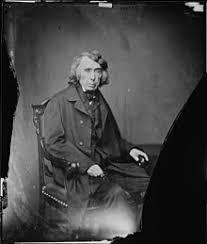
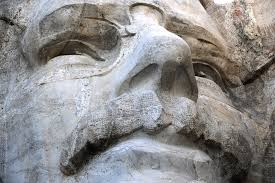
This reactionary-looking fellow is Marylander Roger Brooks Taney, an Andrew Jackson appointee to the Supreme Court. History remembers Justice Taney as the author of the Court’s most infamous ruling in Scott V Sandford (1857).  

Taney had frequently telegraphed his views on slavery and American citizenship, insisting that blacks had no rights white men were bound to respect. Even before his nomination to the bench, a free black had requested documents for overseas travel that Roger Taney, as then US Attorney General, instantly rejected. Taney conceded his legal views long before dawning judicial robes; blacks were not citizens, and never could be. Travel documents for this man of color were denied.

Another important element in this story concerns the Missouri Compromise of 1820. Settled eight years prior to the Jackson Administration, this legislation directed that with the exception of the new state itself, slavery would be forbidden above Missouri’s southern border. Most Americans hoped that this Missouri Compromise Line would endure forever, clearly delineating for posterity new slave states from free.

By the time the Scott case reached the Federal docket, violence and bloodshed had erupted west of Missouri, out on the Kansas prairie. Emigrants recently arrived from northern and southern states, were to vote upon the fate of slavery in the new state’s constitution. A volatile mix of invading, pro-slavery Missouri Ruffians attacked Free-State Jayhawkers near Lawrence, sparking deadly violence across the region. Unrepentant slaveholders demanded their 5th Amendment property rights (meaning slaves) were allowed any place slaveholders settled. At the same time, equally fervent opponents of slavery contended the “peculiar institution” would remain contained where it existed, never to pollute new territories, or America’s future.

Justice Taney took umbrage at these incessant attacks on slavery, and at those Northern rabble rousers who would not respect the law. When the Scott case entered deliberations it appears Taney intended to settle the question for all time, silencing forever those interfering, and self-righteous Yankees. When the Court issued its ruling in 1857, Justice Taney’s opinion rang out with authority, and finality.

  1. Despite Dred Scott residing in free territory for a time, he was still a slave.
  2. As a slave, Dred Scott was not a citizen and had no standing in court.

With those two main points established, Taney could have stopped, but the Chief Justice had some venom to add.

3) Congress had exceeded its authority in legislating the Missouri Compromise in 1820, rendering it unconstitutional. Slavery could not be restricted by boundary lines or by popular vote. Property was protected by law.

Believing he had settled the dispute, Justice Taney had, in fact, only stoked a more massive inferno.

Indeed war exploded within four years of Taney’s decision, blazing on for another bloody four years. In the aftermath, in an interesting turn of symmetry, the Fourteenth Amendment, ratified in 1868, reversed all of Taney’s arguments, provision by provision. 

  1. By virtue of birth in the United States, one was a citizen. 
  2. As a citizen a person was due all rights and immunities, with equal protection under the law. 

This amendment reads as if the Scott Decision acted as a template for reversal.

Fast forward to 2008. 

In a conscious effort to mirror the events of fellow Illinoisan, Abraham Lincoln’s inaugural, Barack Obama’s installation as chief executive deliberately followed the 1861 sequence. The Obamas rode the same train route, breakfasted on the same meal inauguration day, and when the moment came for the swearing in, President Obama selected the same Bible as touched by Abraham Lincoln’s right hand.

In a last twist of symmetry that Bible belonged to Justice Roger B Taney.

Gail Chumbley is the author of the two-part memoir, “River of January,” and “River of January: Figure Eight.” Both are available on Kindle. Hard copies can be ordered at http://www.river-of-january.com.

gailchumbley@gmail.com


Why We Remember

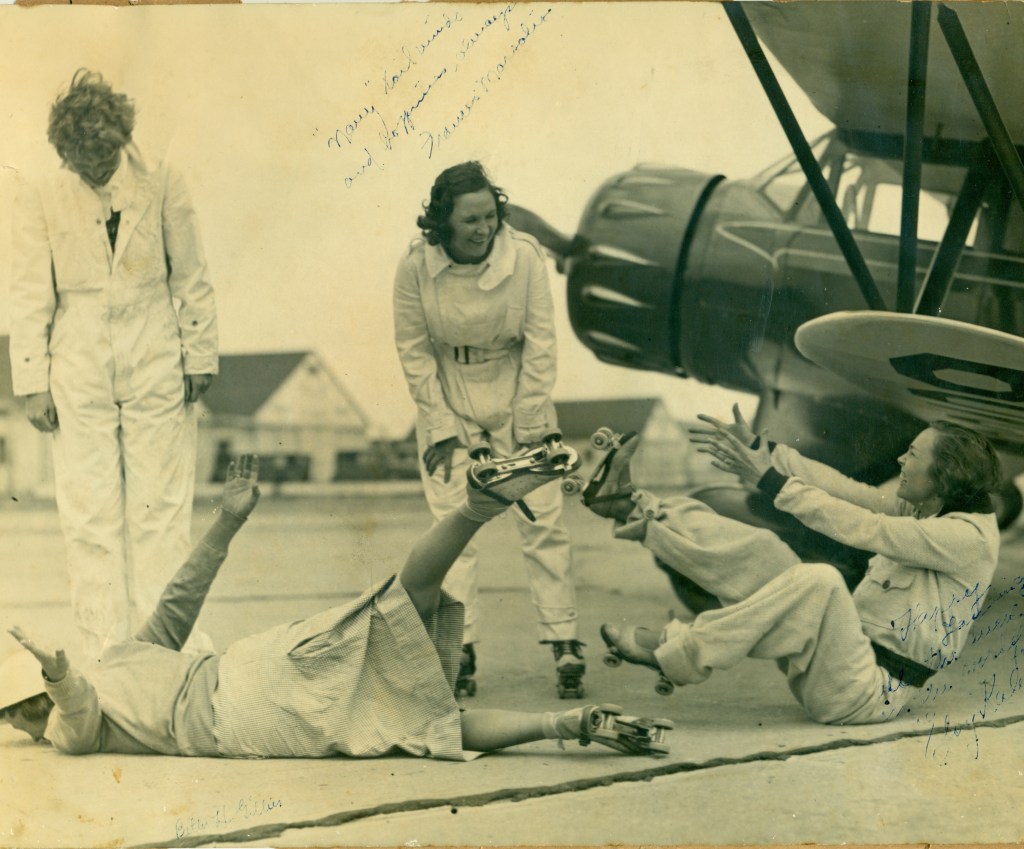
Roosevelt Field Aviators,1933: Elvey Kalep, sitting right, Betty Gillies, on her stomach, Frances Marsalis, standing center, Amelia Earhart, at left looking down. “The Ninety Nines.”

This week’s promotion of “River of January” turned out a glorious success. My central purpose in researching and writing this first installment was to honor what transpired in America before our time. I hope all of the Kindle readers who downloaded the memoir are stirred by this true account, and return for the sequel, “River of January: Figure Eight.”

Gail Chumbley is the author of “River of January” and “River of January: Figure Eight.” Both are available in hardcopy at http://www.river-of-january.com or on Kindle.

New York 1933

Excerpt from “River of January.”

    “You Chumbley?”  

     Chum glanced up from Ailor’s desk, where he was adding up airtime in his logbook. A well-dressed gentleman, clearly from the city, faced him. The caller had quietly stepped through the door, surprising the pilot, intent on his figures. 

     “You found him, sir,” Chum smiled warmly. 

     “My name’s Rosenbaum, Richard Rosenbaum, but I go by Ross. The man extended his hand, as Chum hopped up. “Say, I need a reliable passenger plane for hire, with a good pilot at the helm. Your name was given to me over at the AP office.”

     “Uh huh,” Chum answered casually, privately pleased at the referral. “Where exactly would you need me to fly, Mr. Ross?”  

     But Ross answered something else. “I have a chair on the stock exchange, but don’t hold that against me,” he volunteered—Chum gawked, and Ross laughed, “I know. You’re surprised I have the guts to state my occupation. We Wall Street types aren’t exactly popular with the public these days, are we?” 

     The flyer chuckled at the businessman’s blunt honesty. 

     “Well, I won’t crash the plane, if that’s what worries you. The market crashing is enough for now,” Chum joked back. 

     With the ice broken, Chum and Ross got down to business, discussing rates and various destinations. Sensing Ross could become a first-rate client, he offered, “Would you like to go up for a spin, Mr. Ross or Rosenbaum?”  

     The client laughed again. “Love to— love flying.”

     Twenty minutes later, the plane eased down, trundling to a gentle stop on the airstrip. As he released his safety straps the broker remarked, “Thanks for the test ride. You know, you’re quite the pilot—may I call you Mont?”  

     “Nooo, sir. My friends call me Chum,” the pilot answered. 

     “Well, Chum, I’d like you to plan on a pleasure trip next weekend. The boys and I need to get to Havre de Grace in Maryland. And I will stay in touch.”  

     The two men shook hands again, and Ross, whistling, walked over to his Chrysler Imperial, and motored away. 

     Promptly a week later, while jiggling his office key into the door, Chum heard Ailor’s phone ringing. He burst in, leaving the keys hanging in the lock, and seized the receiver. 

     “Hello, Chumbley here—hello?”  

     “Morning Chum,” flashed an urgent voice. “This is Richard Ross, and I am awfully glad I caught you at the office! We have a horse posted in the third race and need to get to Baltimore, fast.”  

     “Havre de Grace Race Track?”  

     “A horse in the third.”  

     “Wait, where are you calling from?” the young man asked. 

     “Newark. We’ll be waiting at the airfield for you to arrive.”  

     “Horse track, huh?  Roger that. I’ll gas up the Waco and be over soon.”  Jogging to the hangar Chum reflected, “This trip sounds like fun, especially if I make a couple of bucks.”  

     Taxiing down the runway, the flyer lifted off—his trip was just a short hop west—and Chum presently approached the New Jersey landing strip. From his windshield he could see three figures moving outside an office building near the tarmac. 

     “Must be Ross,” Chum mumbled. Touching down, the pilot slowed and turned the plane toward his passengers. But he noticed they were running toward the Waco. Ross was shouting something and waving his arms. 

     “We need to go, now, Chum!” the pilot finally heard above his roaring engine. Chuckling, as they clambered aboard, the flyer again turned and taxied down the same airstrip, quickly lifting off toward the southeast. His three passengers breathlessly discussed the upcoming race card. Thoroughly entertained by their excitement, Chum listened.

     “That number six will be tough to beat,” and “I paid a call to those stables and I wasn’t that impressed.”

     This flight wasn’t long either, but apparently too lengthy for the impatient stockbrokers. As Chum circled the county airfield, Ross reached up and patted his shoulder. “Not here, Chum. It’s too far from Havre de Grace. Land the plane at the track, put it down on the infield!”  

     Stunned, the pilot clarified, “At the horse track?”  

     “Yes sir! There’s no one better than you to pull off a landing like this one!”

     As he doubtfully turned his plane around, dangerous images passed through Chum’s mind—in particular, the incident in Elmira. He understood, as every pilot understood, that potential disaster rode along with him on every flight. 

     Chum worried:  What are the chances of cart-wheeling the plane? Can I regain lift if I come too close to the viewer stands? Will I be arrested?  

     Ross read Chum’s alarm and assured the pilot, “I trust you. The field is long enough for a good flyboy like you to manage. And we’ll pay for any mishap or damage.”

     “How ’bout my broken neck?” the pilot half-joked. 

     The broker snickered. 

     Chum shrugged, lowered the nose of his Waco, and touched down firmly, bouncing on the grass, and smoothing out as the plane slowed. By the end of the infield, the Waco stopped, facing the viewing stands. Safe. No snags. Leaning over the yoke, he inhaled deeply realizing he’d held his breath through the approach, the landing, and the braking. 

Gail Chumbley is the author of “River of January,” and “River of January: Figure Eight.” Available on Kindle and at http://www.river-of-january.com

Free is Good

From the advent of aviation to the stages of Vaudeville–spanning continents by air and sea, comes “River of January.” Enjoy this true, epic story.

“River of January,” part one of a two-part memoir is available, free on Kindle, from Sunday, March 31, through Tuesday April 2.

Click the link below.

River of Januaryhttps://www.amazon.com/River-January-Gail-Chumbley-ebook/dp/B00N1ZLWZI/ref=sr_1_2?keywords=river+of+January&qid=1553962925&s=digital-text&sr=1-2

Gail Chumbley is the author of “River of January” and “River of January: Figure Eight.” http://www.river-of-january.com

gailchumbley@gmail.com

He Wrote for the Ages

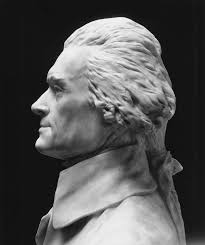
images.jpeg

For starters, I am not a fan of Thomas Jefferson. In fact, the more I know of this founding father, the less I like him. The Sage of Monticello routinely had young male slaves beaten for no better reason than custom, and lay the foundation for secession in 1798 with his Kentucky Resolution.

Thaddeus Kosciuszko, the Polish hero of the Revolutionary War, once offered to liquidate land holdings in the Northwest Territory to pay Jefferson to free some of his slaves, and Jefferson declined. Disillusioned, Kosciuszko condemned Jefferson as a fraud for once insisting “all men were created equal,” and not practicing that “truth.”

However, the reality remains that Jefferson did indeed, pen those words, and generations of Jeffersonian disciples have insisted those words are enough to maintain his venerated place in American history.

And I agree. His adulators are correct. Jefferson’s words are enough. His phrasing, painstakingly composed in 1776 has ignited the world on the ultimate quest to actualize Jefferson’s “unalienable” assertions. 

Abraham Lincoln took Jefferson’s sentiment to heart, and his devotion moved Lincoln to action. The foundation of the Republican Party rested partly upon removing artificial impediments restraining upward mobility, and Lincoln believed slavery such an obstacle, the most malignant bar to individual betterment. (Duh). In 1859 he stated in a speech, “We proposed to give all a chance; and we expected the weak to grow stronger, the ignorant, wiser; and all better.” And Lincoln made it his aim to realize that betterment, first with Emancipation, then the 13th Amendment.

There could be no better description for America than a people steadily discarding artificial barriers. Women, Native Americans, LGBTQ Americans, Latino Americans: all of us freed to reach our highest potential. Annoying bigotry places a drag on the process, but justice still manages to surge steadily on, inspired by the words of the Declaration of Independence–Jefferson’s words. 

In reality, Jefferson had meant to argue white wealthy Colonials were of equal standing to Great Britain’s landed aristocracy. Despite his original intent, the promise of those words have outlived that specific moment. 

Understandably, Thaddeus Kosciuszko gave up in the face of Jefferson’s outrageous duplicity. And this generation of fanatics desperately promote Jefferson’s original racism. But, kids, we have inherited an obligation to continue this journey, not only for ourselves but to light the way for our children’s children.

Gail Chumbley is the author of the World War Two-era memoir “River of January,” and “River of January: Figure Eight.” Both are available on Kindle, and hard copies at http://www.river-of-january.com

gailchumbley@gmail.com


One Thing Leads to Another


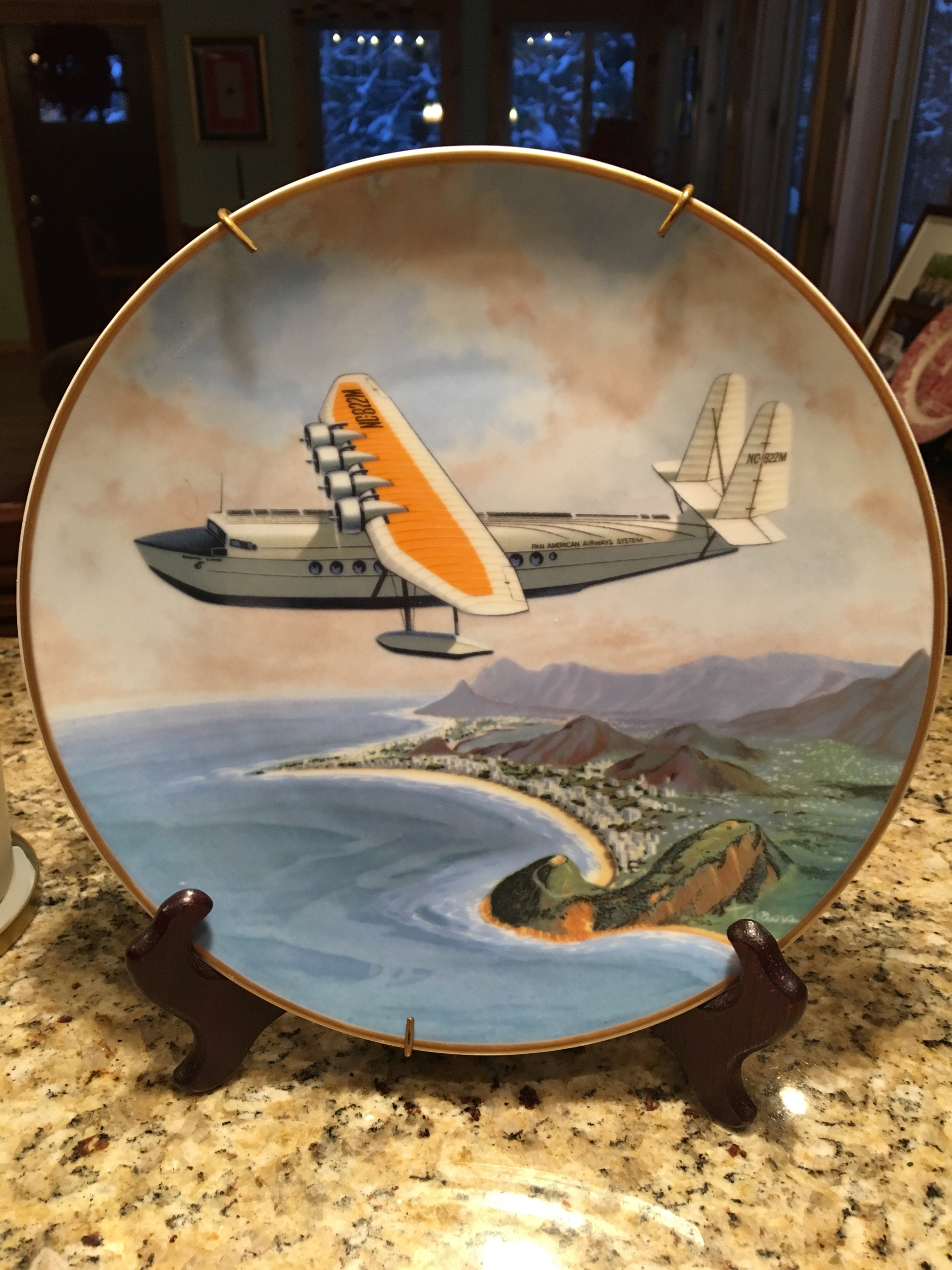
IMG_1500

PanAm Flying Boat 


As many of you . . . some of you. . . well, none of you know, Jeff Bezos is out to get me. So jealous, is old Jeff, that he monkeyed with my book pricing on Amazon, charging upward to $600 for my $15.99 book, “River of January.” But I showed him. I not only took that title down, but the second part of the memoir, “River of January: Figure Eight” as well. Let him agonize that defeat. This blow could bring the company to its knees. 

But, I am not without a trace of mercy. If one, or even two of you were inclined, both books can still be found on Kindle. If a reader’s taste runs toward nonfiction, with a yearning to relive an earlier era; a time of air races, world travel, Hollywood glamour, Vaudeville productions, Sonja Henie ice shows, and World War Two, I’ve got the story for you. Even Jeff understands blockbusters, like “River of January,”  cannot be  forever muzzled.

During this long overdue separation with Bezos, I’ve dabbled in another, new to me, format—writing plays. With my script writing partner, Ray Richmond, (yeah, we have written a script) we’ve committed to highlight historical figures who are important, but lesser known. Our first effort, still in progress, covers the life of Antebellum Senator, Henry Clay, and his herculean efforts to stave off Civil War. I’m not sure that writing plays is any easier than big girl chapter books, but I like the process better. And noble Henry Clay is an inspiring muse.

If anybody out there has wondered what became of Gail, and her endless accolades of Helen and Chum, I am quite well and still preaching the gospel of “River of January.”  

Without the experience of writing these two books, playwriting would never have touched my life. Please watch for more announcements on “Clay,” and if you think “River” and “Figure Eight” is a good reading fit follow the hyperlink.

Together we will shall ‘mean girl’ Jeff Bezos. 

For hard copy books, www.river-of-january.com

On Kindle https://www.amazon.com/s?k=river+of+january&ref=nb_sb_noss_2

Gail Chumbley is the author of the two-part memoir, River of January, and River of January: Figure Eight.

Photo credit, Mary Sederstrom Smith

gailchumbley@gmail.com