History and a Rollicking Romance

A nice review is a welcome gift for any writer. John Vogel of Preserve Old Broadway graciously published this piece today.

We were supposed to start our exploration of The Vagabond King today. It is a wonderful operetta that is based on the life of Francois Villon, a French poet who allegedly rallied the people of Paris to defend the city against the attack of the Duke of Burgundy. In saving the city, Villon also preserved the monarchy in France, in the person of Louis XI.

My plan has been interrupted by an interesting turn of events. I have just finished reading two books, River of January, Part One, and River of January, Figure Eight. If you love history and a rollicking good romance, you need to read these two books, written by Gail Olson Chumbley.

But well you may ask, how did I come to know about these books and its author?

Shortly after I started posting comments and music on this FB page, I noticed a new visitor to the page, Gail Olson Chumbley. I looked her up and found out that she was an award-winning teacher at Eagle High School, Toppenish, Washington before she retired. She met her second husband, Chad Chumbley, in 1994, and Chad regaled her with stories about his parents, Chum and Helen Chumbley. Eventually, Gail, the history teacher, became curious and dug through boxes of old correspondence and pictures and finally interviewed Chum before his death in 2006. What she found was even more impressive than Chad’s stories, because the lives of Montgomery (“Chum”) Chumbley and Helen Thompson Chumbley were intertwined with key events in American history from 1925 to 1955.

Not ever having written a book before, Gail started the arduous task of translating dead archives back into living human beings. This daunting task was made easier because of her two love affairs: she loved Chum and Helen and she loved their son, Chad. Her writing was a labor of love.

I promised I would read her books one day, but my schedule was busy and “one day” kept moving to the right. Gail ended my procrastination by mailing me both books; and at night before I went to sleep, I would read through 30 or 40 pages. Gail didn’t start to write until she wrote these two splendid books, but what comes through is a historian’s love for detail and context. Gail gives the reader both the overview of history (the big picture) and the personal details of the two people she follows. We follow both Chum and Helen separately until 1936, when they met in Rio de Janeiro and fell in love.

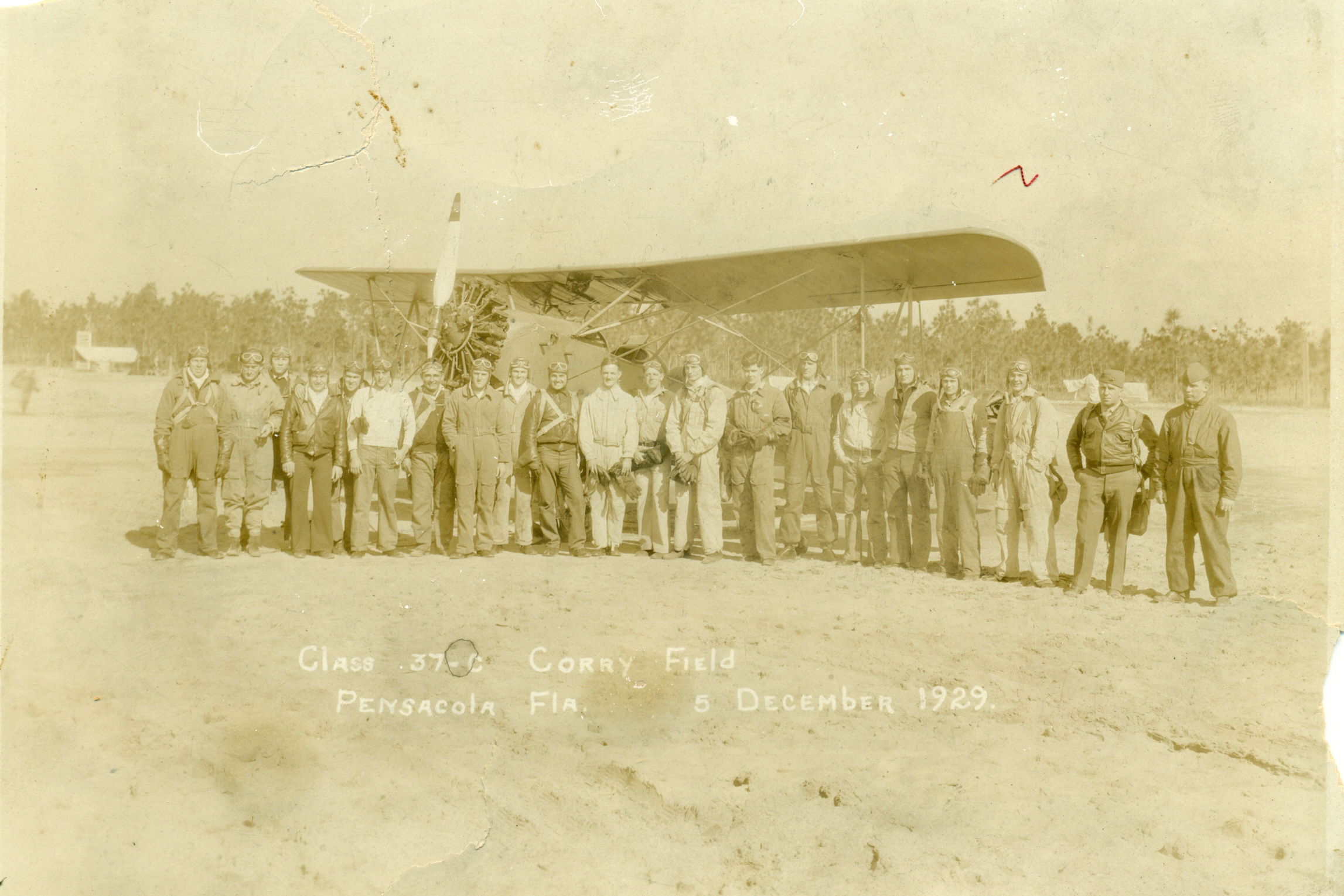
Chum enlisted in the Navy and eventually won a spot in Flight Training in Pensacola, FL. He stayed in the Naval Reserves, even after he left active duty, and began a career that revolved around Waco Aircraft, an early pioneer in aircraft design and manufacturing. Chum was one of the few early aviators who came after WWI but was ready to serve once WWII came into focus. He was one of a handful of pilots who started in planes made of wood and ended in the jet age.

Another pilot, who trained at the Army base at Brooks Field, Texas, was Alexis Klotz. Lex also was involved in delivering the mail, although Lex started on the West Coast. Lex ended his career with TWA and offered to show me around the cockpit of the new Constellation when they went into service. Flying the mail from west to east in the winter was hazardous, and many good but not great mail pilots went down in bad weather. In winter, forced landings almost always resulted in death.

When Chum and Lex flew airplanes, the cockpits were open (it got cold at higher altitudes), and the planes had little if any navigation or communication equipment. Many pilots learned the ground terrain, the railroad tracks and other identifying ground markers to guide them during their many hours in the air. Flying was more art than science.

One the other hand, as Gail explains to us, these pilots loved to fly and may have been more comfortable in the air than on the ground.

But that is only half of the story. The other half of the story involves Helen Thompson who, from an early age, was pushed by her mother, Bertha, into dance. Luckily, Helen learned to love to dance and to perform, in general. From ballet, Helen moved into vaudeville routines and eventually ice skating with skating stars like Sonja Henie. 

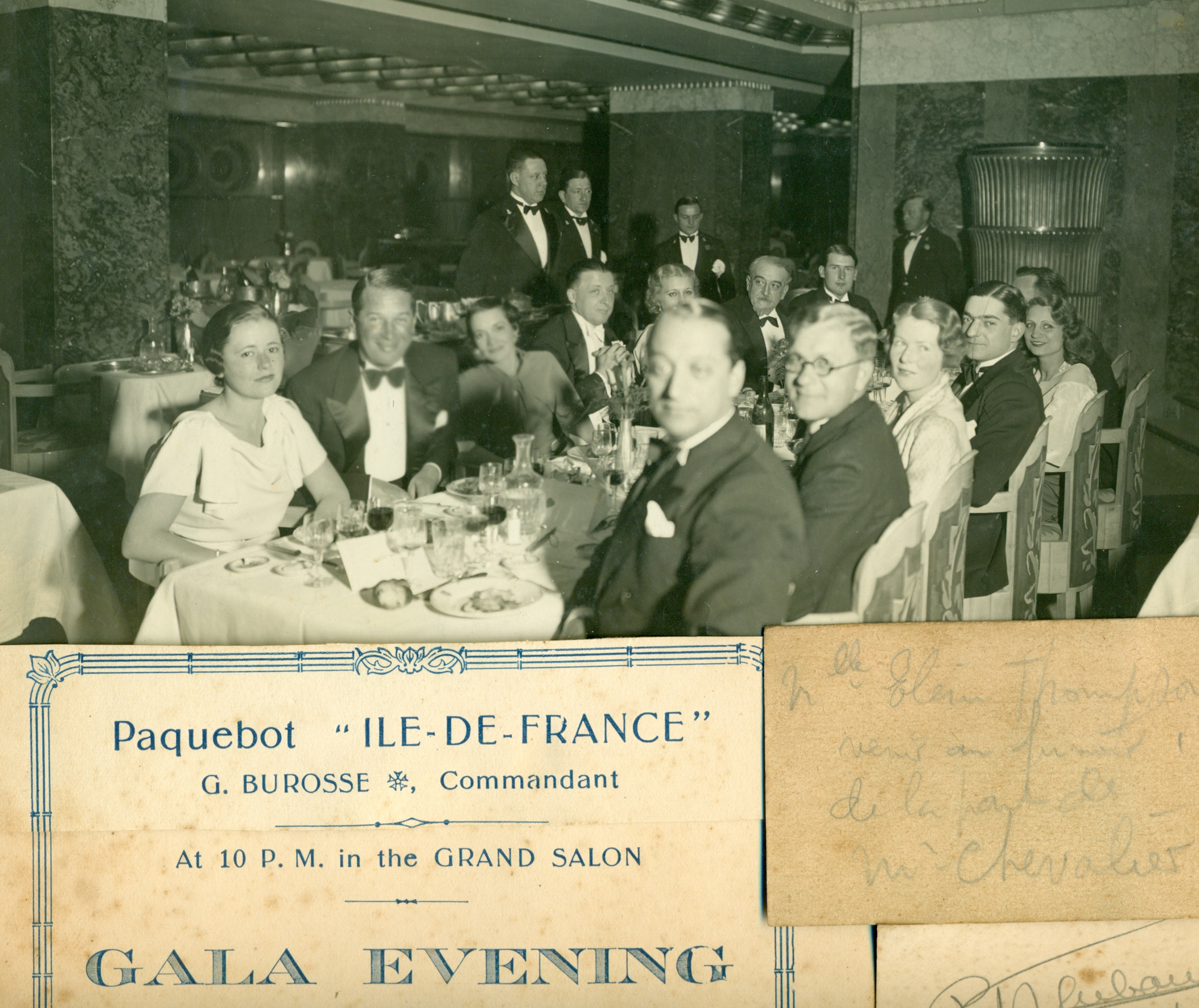
But Helen’s career is only part of her story. At each turn in her career, she met famous people and witnessed key events. Coming home from a European tour, Helen performed onboard at the Captain’s request, alongside another performer named Maurice Chevalier. What was more important was the fact that both performers sat at the Captain’s table. Helen dined with the former President of France, Edward Herriot, on his way to Washington DC to confer with FDR in the mid-1930’s.

It is this constant integration of the big picture of history (Chevalier jokingly asking Herriot if he could save the world from Hitler) with the details of Helen’s dance program that make the two books so charming and engaging. We are reading history from the bottom up, living through periods of time through the eyes of Chum and Helen. And it is a wonderful way to learn and was used successfully by Kenneth Roberts in his many books on the American revolution.

For all of you history buffs who like a good romance story, put away David McCullough for a bit and pick up River of January, Part One, and River of January, Figure Eight.

For more from John Vogel visit Preserve Old Broadway on Facebook.

Gail’s books are available at http://www.river-of-january.com, and on Kindle.

gailchumbley@gmail.com
That’s All

gailchumbley@gmail.com

th

Colonel Clark used to bring his young son down to the dojo where my brothers took judo lessons. Judo had been my grandfather’s idea and he faithfully chauffeured the boys, and I sometimes came along too.

My Grandpa Ray always sat with Colonel Clark, if the old gent happened to be present. That meant I sat with Colonel Clark, too. The two old men would talk and talk, seated next to one another, though their eyes remained fixed on their boys training on the mats. They never seemed to look each other, but remained absorbed in their conversation.

My own distracted attention span only caught snippets of the murmuring discussion. “MacArthur, Wainwright, and Bataan,”  came up in their exchanges And despite my youth, I understood something grave, something momentous lay behind the back and forth of these two men.

My brother filled in the substance of what I reluctantly overheard.

Colonel Clark had been left on the Bataan Peninsula when General Douglas MacArthur evacuated the Philippines in 1942. Under the new command of General Jonathan Wainwright some 22,000 Americans surrendered to Japanese invaders, and among them young Clark. The Japanese summarily ordered this defeated army to march some sixty miles through the jungle. And cruelty became the purpose of the Bataan Death March; heat exhaustion, dehydration, and starvation felled many of these exposed suffering Americans. When a captive stumbled, or fainted, the penalty was an immediate beheading. Young Clark witnessed Hell, and he clearly never separated himself from the ordeal, fused forever into his character.

And that that same ordinary old gent who chatted quietly with my grandfather, had a young son was a miracle. In light of his wartime captivity, Clark should never have survived.

The valiant are everywhere. 

For example there was George, the high school janitor.

For many years this little old fellow pushed a mop down the litter-strewn halls where I taught American history. Equipped with two hearing aids, this diminutive man pushed an immense dust mop, wider than he was tall.

To a passing eye George appeared nearly invisible. Just a friendly, gentle, and harmless grandfather.

As I pontificated about D-Day, Tarawa, and the Bulge to sleepy Juniors, a foot or so of mop often slid and stopped by the classroom door.  Silent, George hid as I blathered on about the Second World War. A short time later I learned this quiet 80-something had once handled a M-1 Garand, shivering aboard one of those heaving and crashing Higgins boats, churning  toward Omaha Beach. George had been in that first wave in June, 1944. 

Humbled to learn our little janitor was a living, breathing hero, I became the student. “So George, what do you remember most about that morning?” 

The old warrior rasped in a high, faded voice, “It was awful early, and the water was awful cold.”

So understated.

Another veteran crossed my path by the name of Roy Cortes. His son, our school Resource Officer brought Roy by to visit with my students. Another narrative of a remarkable life unfolded.

As a teenager he got a job with the Civilian Conservation Corps. After Pearl Harbor, Roy headed straight to the recruiting office, and into the US Army.

Roy, too, had ferried over from Southampton the afternoon of that bloody day. “What do you remember most about the invasion, Sir?” a student asked.

The affable elder smiled slightly, then a cloud passed over his expression. “I lost everyone in my outfit. I was real scared. Soon I had orders to regroup with other survivors. You see, that was bad because I’m Mexican-American, and my first platoon got used to me, and stopped calling me Juan or Jose. Now I had to start all over with the badgering.

For days, as we moved inland, with these fellas giving me the business. One fella said, ‘Mexicans can’t shoot.’ I said that I could. So he said, ‘Ok Manuel. Show me you can shoot. See those birds on that tree branch up ahead? Shoot one of those birds.’ I lifted up my rifle and aimed at the branch and pulled the trigger.” At that Roy again begins chuckling.

“I missed the branch, the birds all flew away, and twelve Germans came out of the grove with their hands up.”

Astounded, no one spoke. Then a huge wave of warm laughter filled the classroom. Roy simply smiled and shrugged.

Colonel Clark, George the Janitor, and Roy Cortes. They were just kids who’s lives became defined in ways we civilians can never fathom. They were scared, and hot, and cold, and hungry, and suffering, and ultimately lucky enough to come home.

They married, raised families, and move on with life.

That’s All.

Gail Chumbley is the author of “River of January,” and “River of January: Figure Eight,” a two-part memoir Also available on Kindle.

Panama 1932

Author Note: The following excerpt was drawn from extended interviews with veteran aviator Mont Chumbley (1909-2006), discussing his training in the interwar Navy. For the rest of the story read “River of January” available on Kindle.

Later, with his flight training securely behind him, Seaman Montgomery Chumbley received his first official orders. He and his class were assigned to Torpedo Squadron 3, located in Coco Solo, on the Atlantic coast of Panama. Chum joined his fellow novices as they shipped out southward aboard the USS Shawmont.

Watching from the deck as the Florida base vanished, the pilot silently rejoiced at this milestone. He also celebrated the fact that he didn’t have to return in disgrace to Virginia. That euphoric detail made the sky somehow bluer, the clouds somehow more feathered and graceful. The young man felt nearly giddy.

After two pleasant days at sea, the Shawmont cruised into the Naval Station at Guantanamo Bay in Cuba to refuel. Chum was enchanted by the beauty of the jungle and continued to marvel at the colorful sea life and assortment of exquisite birds circling the ship for handouts. The vast horizons he used to imagine, were becoming reality.

The Squadron’s final destination lay near Colon, Panama. Coco Solo was a vast, busy American naval installation, surprising the young pilot with its colossal size. The arrivals boarded a transport for delivery to their quarters, gawking out their bus windows in wonder at the enormity of the American base.

His awe continued after he and the boys were escorted to the adjacent submarine facility to tour that installation.

Returning to the field, the group sat through their initial military briefing, Chum, next to Win, listened as the instructor addressed the new aviators. The captain explained that a 1929 War Department directive assigned the US Navy the task of protecting the Atlantic zone of the Panama Canal from hostile threats.

“The Army’s Fort Gulick sits adjacent to us in Coco Solo, and shares our same mission,” he explained. “As some of you may already know, to the southwest, other military bases dot the entire 51 miles of the canal—all the way to where it meets the Pacific.

After the session, Chum remarked to his buddy, “I feel strangely noble defending the canal. It’s as though we all are part of a bigger picture, with America expanding into both oceans.”

“But what country would be nuts enough to attack us?” Win wondered.

War games made up much of Chum’s Panama duty. The flyers were the “red” team, attacking from the air, while the “blue” team lay in wait, aboard ships “guarding” the canal. The pilots executed their orders during these simulations, but off-duty they grumbled about the Navy’s outdated and seriously flawed maritime battle plans.

“I can’t believe they have us flying so near enemy ships!” Chum groused, crunching over a gravel path after morning exercises. Win paced alongside as they headed toward the base canteen.

“So near? What do you mean? How else could we release our torpedoes?” His friend asked as they ordered sodas at the commissary’s cafeteria.

“Think about it, Win. A torpedo aims more accurately if it detaches directly above the ocean’s surface. And it’s not the steep dive on approach that’s fatal—it’s pulling up after releasing the torpedo. That maneuver is potentially fatal. The belly of the plane is too close to enemy guns. Any surface ship could blow us to kingdom come.” He smacked his palms loudly for effect.

“But, Chum, hold on! There’s smoke laid down on the surface by the first two T3M’s. That smoke blankets us.”

“Yeah, if all goes as planned. If the smoke is laid down close enough to the water, if it doesn’t rise too fast, and if the wind doesn’t blow in too hard. That’s a lot of ifs. Think about it. We approach in low formation, drop our payload and bank, while dangerously showing our undersides to the enemy. We’d be lucky to keep our asses dry, Win. Makes me wonder what desk genius dreamed up this idea. It’s a suicide mission.”

The two flyers stared at their icy drinks. Perhaps Win could see his own plane exploding into the cold depths, just as Chum had already envisioned.

“Anyhow, the scuttlebutt says the brass is taking a second look at that line of attack,” Win disclosed. “The Navy wants to remodel the torpedo bombers into patrol biplanes, replacing the ordnance with fuel tanks. Can’t come fast enough for me—you’ve made me a believer,” his friend admitted.

Gail Chumbley is the author of “River of January,” and “River of January: Figure Eight.” Both are available at http://www.river-of-january.com or on Kindle.

gailchumbley@gmail.com

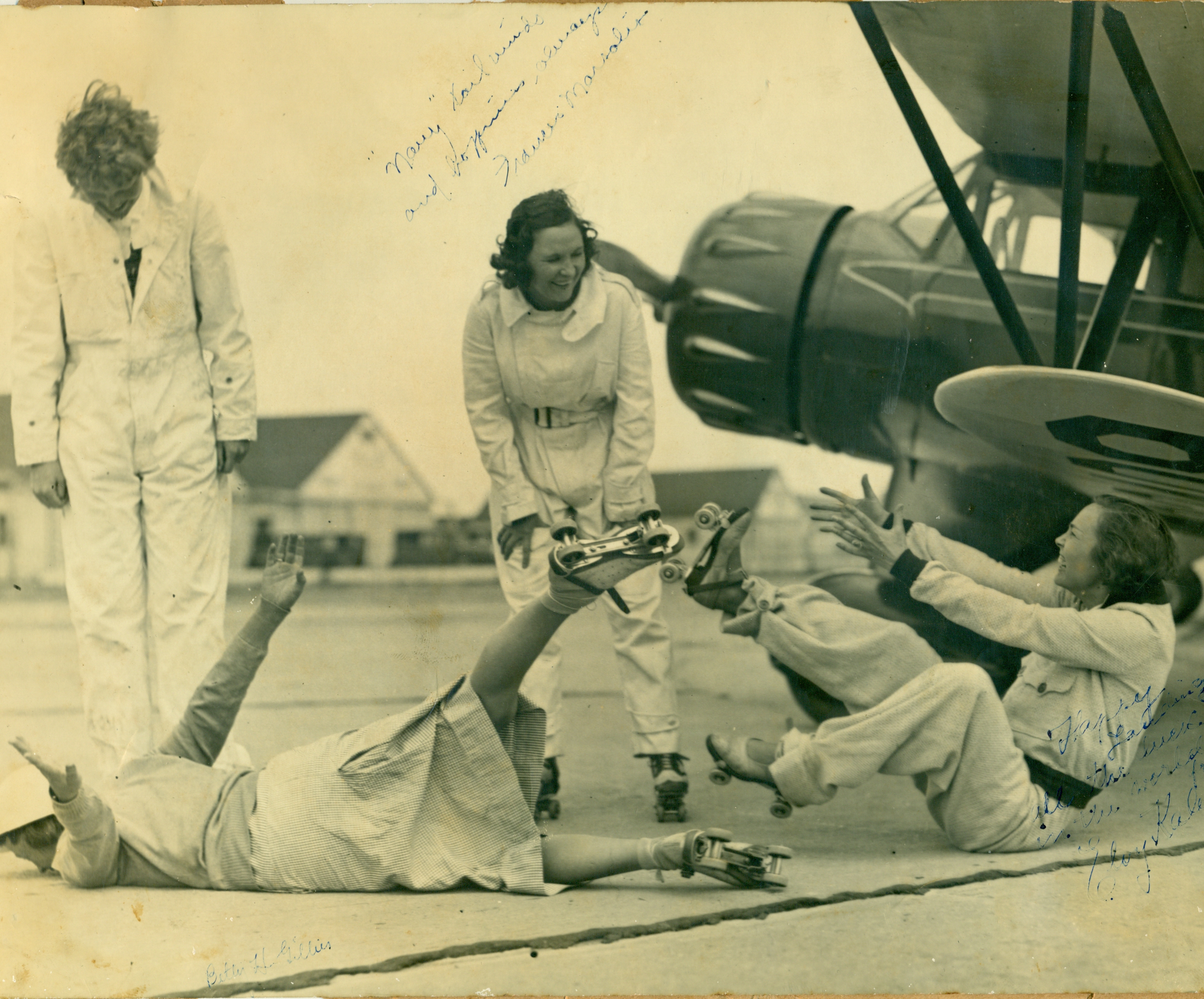
The Archive Story

amelia0001

Amelia Earhart (left)

Skip the ad, and click to full size.

Enjoy!

Video-The Family Archive

Gail Chumbley is the author of the two-part memoir “River of January,” and “River of January: Figure Eight.” www.river-of-january.com Both books are also available on Kindle.

Much to Celebrate and Mourn


The following is an excerpt from River of January: Figure Eight


For three anxious days reports trickled in from the Pacific, dispatches that were spotty, vague, and inconclusive. When details emerged of this first-ever clash in the sky, the United States Navy found much to celebrate and, tragically, as much to mourn.

The particulars surfaced days after the attack, presenting a clearer picture of the Battle of Midway. At a morning briefing, base personnel learned firsthand the events surrounding this aerial showdown. “The Imperial Japanese Navy,” began an officer Chum recognized as Lieutenant Commander Kirby, “in an attempt to eliminate US forces on Midway Island, launched multiple airborne assaults. The number of enemy aircraft carriers present in the attack has convinced the Department of War that the Japanese military intended to occupy the island in order to menace US installations farther west in Hawaii.” Kirby paused, somberly measuring his words. “The Empire of Japan has utterly failed in their effort.” The lieutenant commander smiled faintly. “Of the six Japanese carriers under Admiral Yamamoto’s command, four now sit at the bottom of the central Pacific.” 

For a moment, the gathering seemed to hold its collective breath, pondering the lieutenant commander’s words. When the full significance sank in, the men jumped to life, roaring in satisfied approval. After the shouting and fraternal backslapping, the crowd finally stood together in a rousing standing ovation. 

Kirby couldn’t help but grin at the enthusiastic response, but quickly quelled the celebration with a brief “As you were.” When everyone was seated again, he continued. “Ahem. Yes, this is good news, good news.” Glancing down at his notes and taking a deep breath, he said, “Gentlemen, this great triumph has come at a grim price for the navy. Fellas, we have lost the USS Yorktown. An enemy sub took the old girl down. She was too disabled from the Coral Sea campaign to maneuver away. Our losses so far are sobering—over three hundred casualties at latest count.” 

Kirby’s eyes scanned the crowd. “Among the dead, five squadrons of Devastator torpedo bombers from both the USS Enterprise and the USS Hornet. These bombers were utterly blown from the sky while executing attacks on Japanese vessels. The Department of the Navy verified the few who survived the shelling were slaughtered in the water by the enemy rather than rescued. Initial reports from Honolulu indicate that Wildcat fighters, assigned to protect these torpedo bombers, lost all contact, leaving the Devastators hopelessly exposed to Japanese ordnance. Boys, we lost them all, all of our torpedo bombers and pilots—but one, a pilot from Texas.” 

The room fell silent, as if there had been no good news at all, no victory in the Pacific. Kirby concluded the briefing with, “Their brave sacrifice made it possible for the rest to find and sink those Japanese carriers.”

Seated among his fellow pilots, Chum shook his head sadly, reminded of a conversation nearly fifteen years before, when he was just a boy—a Seaman, First Class. After a morning of training—of war games—he and a buddy were perched on stools at the base canteen in Panama. Flying his torpedo bomber yards from service vessels had left him unsettled, and he said to his friend, “We approach in low formation, drop our payload and bank, while dangerously showing our undersides to the enemy. We’d be lucky to keep our asses dry, Win. Makes me wonder what desk genius dreamed up this idea. It’s a suicide mission.”

“A suicide mission,” he repeated, in a hopeless whisper, coming out of his reverie.

“Permission to speak, sir,” came a voice from the rear of the hall.

Kirby responded, “Permission granted.”

“How does a sailor go about transferring to the Pacific, sir? With all due respect to our mission here in New York, I want to whip those Japs bad.” Murmurs of agreement swept across the room.

“Fill out the proper paperwork, son.” The lieutenant commander sounded weary. “Complete with your commanding officer’s signature.”

Gail Chumbley is the author of the two-part memoir, “River of January” and “River of January: Figure Eight.” Available at http://www.river-of-january.com or on Kindle

gailchumbley@gmail.com

One Thing Leads to Another


IMG_1500

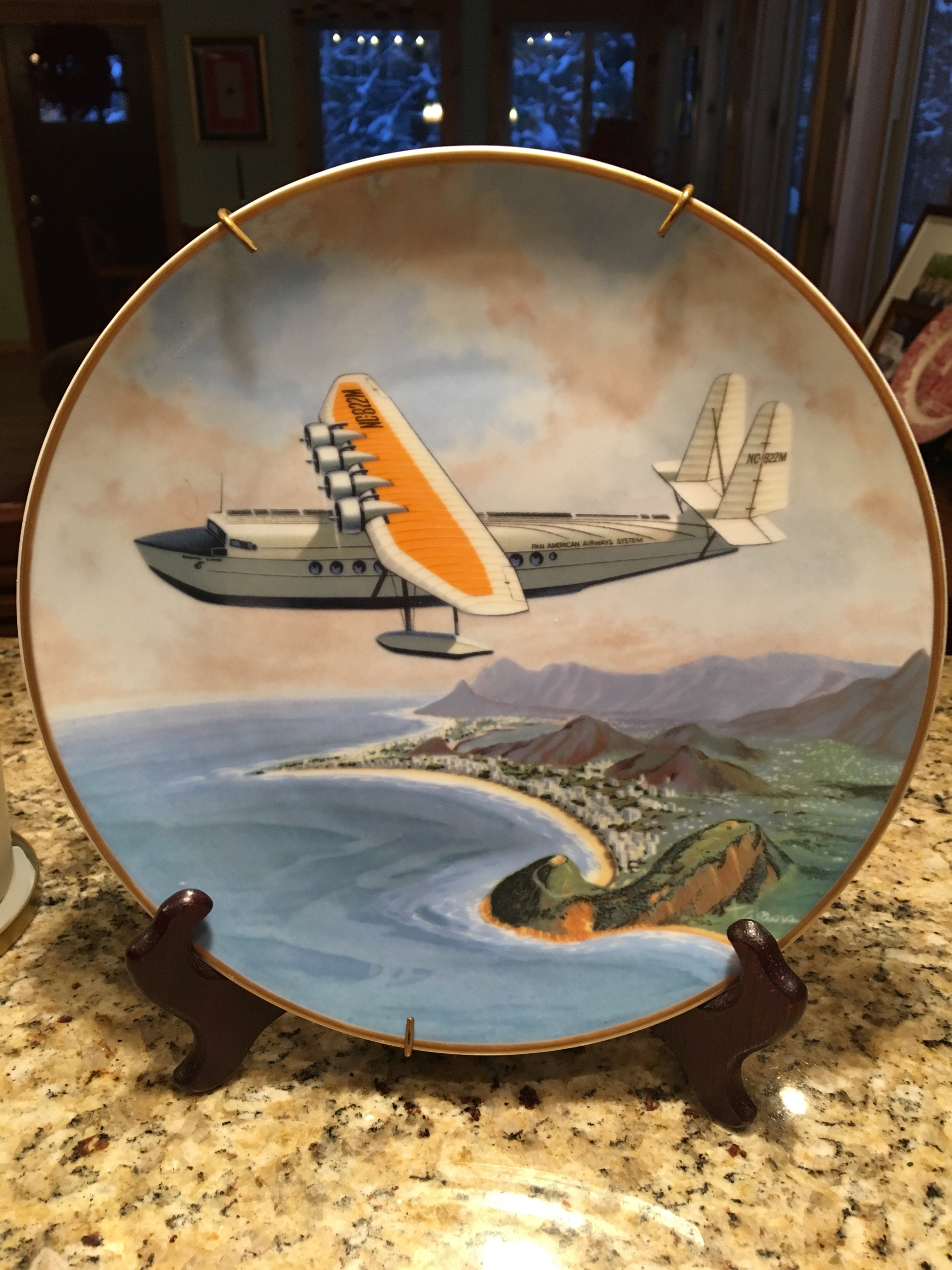
PanAm Flying Boat 


As many of you . . . some of you. . . well, none of you know, Jeff Bezos is out to get me. So jealous, is old Jeff, that he monkeyed with my book pricing on Amazon, charging upward to $600 for my $15.99 book, “River of January.” But I showed him. I not only took that title down, but the second part of the memoir, “River of January: Figure Eight” as well. Let him agonize that defeat. This blow could bring the company to its knees. 

But, I am not without a trace of mercy. If one, or even two of you were inclined, both books can still be found on Kindle. If a reader’s taste runs toward nonfiction, with a yearning to relive an earlier era; a time of air races, world travel, Hollywood glamour, Vaudeville productions, Sonja Henie ice shows, and World War Two, I’ve got the story for you. Even Jeff understands blockbusters, like “River of January,”  cannot be  forever muzzled.

During this long overdue separation with Bezos, I’ve dabbled in another, new to me, format—writing plays. With my script writing partner, Ray Richmond, (yeah, we have written a script) we’ve committed to highlight historical figures who are important, but lesser known. Our first effort, still in progress, covers the life of Antebellum Senator, Henry Clay, and his herculean efforts to stave off Civil War. I’m not sure that writing plays is any easier than big girl chapter books, but I like the process better. And noble Henry Clay is an inspiring muse.

If anybody out there has wondered what became of Gail, and her endless accolades of Helen and Chum, I am quite well and still preaching the gospel of “River of January.”  

Without the experience of writing these two books, playwriting would never have touched my life. Please watch for more announcements on “Clay,” and if you think “River” and “Figure Eight” is a good reading fit follow the hyperlink.

Together we will shall ‘mean girl’ Jeff Bezos. 

For hard copy books, www.river-of-january.com

On Kindle https://www.amazon.com/s?k=river+of+january&ref=nb_sb_noss_2

Gail Chumbley is the author of the two-part memoir, River of January, and River of January: Figure Eight.

Photo credit, Mary Sederstrom Smith

gailchumbley@gmail.com


99 Cents

The Kindle version of “River of January: Figure Eight” is on sale today for only 99 cents. Step right up and enjoy the flight.

Gail Chumbley is the author of the two-part memoir, “River of January” and “River of January: Figure Eight.” Both available at www.river-of-january.com.

$864.00?

cropped-rojcover102

Oh, Amazon, anarchy is thy name! Part 1 of my two-part memoir is listed on Amazon books for $15.99 plus shipping. But cyber guerilla’s have used copies priced from $40. to $864.00. Can I get a witness?

Dear readers, if you would like a copy of ROJ got to www.river-of-january.com. That’s where gravity still functions.  The book is available at a reasonable price. I’ll sign it if you wish.

Also book 2, River of January: Figure Eight is available on Kindle for .99 cents. The sale continues until February 2.

BTW, Amazon says the book price lists fine on their end.

Gail Chumbley is the author of the two-part memoir, River of January and River of January: Figure Eight

January in January

41MhW6BOdRL._SY400_


Beginning Sunday,  January 27th,  “River of January: Figure Eight,” Kindle edition, is on sale. Purchase “Figure 8” for .99 cents until February 3rd.

Gail Chumbley is the author of the two-part memoir, “River of January” and “River of January: Figure Eight.” Visit our webpage at www.river-of-january.com

A Seasoned Veteran

This is an excerpt from “River of January: Figure Eight.”

After waiting nineteen months for his transfer west, the actual trip raced by almost too rapidly. One morning he boarded a train in New York City, the next he soared over the Ko’olau Mountains of Oahu. This war waited for no one, and Chum’s new duties began at once.

Lesser damage from the 1941 assault on Pearl Harbor had been cleared away. The runways, taxiing strips, airfields, and hangars bore little evidence of the strafing and bombing that had rained down a year and a half earlier. Not gone from view, however, was the lifeless hulk of the once proud battleship USS Arizona. Broken in the harbor, she had been cut dead in her moorings. Nearby, her sister, the USS Oklahoma, listed unnaturally on her side—both vessels now sacrificed ruins lying prostrate on Battleship Row. The twin wreckage supplied all the reminders Chum needed of why he had come to the Pacific.

Billeted in junior officer housing at Makalapa, the pilot began each morning commuting past the somber remains in the harbor to attend briefings and equipment familiarization. Assigned to Air Transport Squadron Ten, Chum straightaway began logging air time aboard another giant seaplane—the Martin PBM-3 Mariner. Designed for heavy cargo and armaments, this aircraft was enforced with a deep hull. The lieutenant spent his flight time practicing raising the titan from the sea and maneuvering under the weight of heavy payloads.

Opening his orders on July fifth, the lieutenant—along with his newly attached co-pilot, Lieutenant Richard Forman, and seven crewmen—departed from the waters of Pearl Harbor for Johnston Island, 750 nautical miles deeper into the Pacific. On board, the Mariner carried a hefty cargo of medical supplies, military dispatch files, and bags of civilian mail. Lieutenant Chumbley covered his maiden flight in five hours and forty minutes—enough hours, under wartime conditions, to render him a seasoned veteran.

Gail Chumbley is the author of “River of January,” and “River of January: Figure Eight.” Both titles available at http://www.river-of-january.com and on Amazon and Kindle.
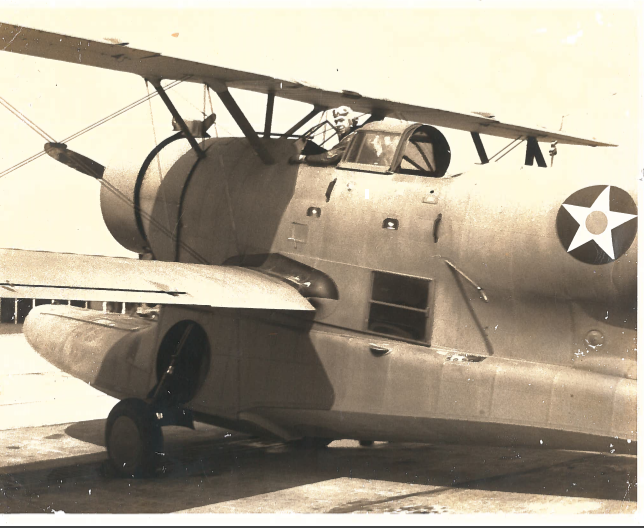
Catalina2