

Captain Eddie Rickenbacker & Chum Helen performs in NYC
“River of January: The Figure Eight,” is coming soon. Look for the release this Fall!
Captain Eddie Rickenbacker & Chum Helen performs in NYC
“River of January: The Figure Eight,” is coming soon. Look for the release this Fall!
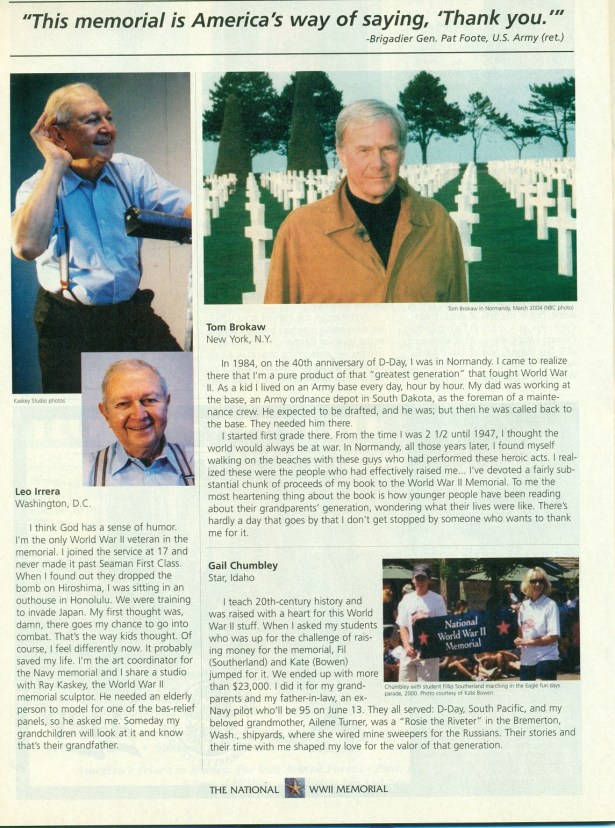
You know, that time the kids and I appeared in the Washington Post Sunday Magazine.
Gail Chumbley is the author of River of January, a memoir. Also available on Kindle.
Look for volume two, “River of January: The Figure Eight,” due out this Fall.
1939
Arms twined around skaters on each side, Helen balanced nervously in the shadows. In V-shape formation, costumed in tall Hussar caps, and military jackets resplendent with gold brocade, the line stood expectantly in the dark. She shivered from a combination of excitement and the frigid draft wafting from the ice. Her ears thudded, inundated by the echoing din from the impatient audience. Much louder than a theater, she absently noted.
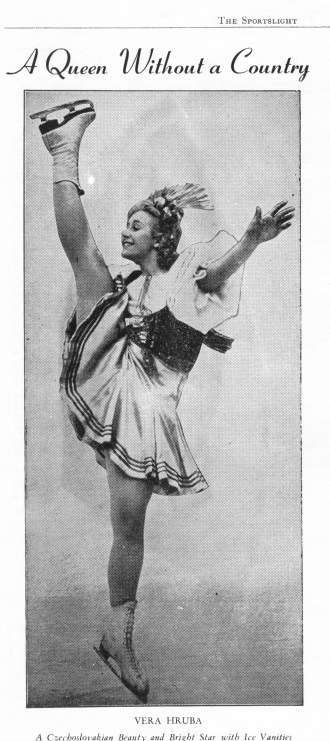
Positioned at the apex of the two wings stood Czech Olympian, Vera Hruba—one of three women headliners in the new production. When the last measures of an orchestral stringed overture faded to a close, the house lights darkened, and the arena fell silent for an expectant moment. With a commanding flourish, the opening bars of a military march surged to all corners of the house. Spotlights swept over the glittering skate-line, as Helen pushed off her left foot, in sync with the tempo. Following two more beats, Hruba burst from the crux of the V, and raced the circumference of the rink, spotlights holding tight to her revolutions. The audience roared in appreciation with waves of echoing applause. Helen’s first ice show had begun.
If rehearsals were any gauge, she already felt great confidence in the show’s success. The dance line often lingered along the rail, chatting, stretching—waiting for the director to call them onto the ice. “That’s ViVi-Anne Hulton, she’s Swedish,” Clara Wilkins leaned in whispering, both studying the soloist on the ice. “She’s been skating since she was ten,” Clara nodded, as Hulton executed a perfectly timed waltz jump. “Boy, that little Swedish meatball knows her footwork.” The girls standing nearby murmured in awed agreement.
Chestnut-haired Lois Dworshak sprinted past the attentive chorus line. Helen automatically glanced again at her well-informed friend and Clara didn’t disappoint. “She, Lois there, is a bit of a prodigy. She skated a little as a kid in Minnesota but, actually hasn’t skated professionally all that long. She’s good too, huh?”
“Jeepers, you can say that again,” Helen muttered.
“But, the real story in this cast is Vera Hruba.” This time, May Judels, head line-skater, spoke up from the other side of Eileen. Listening eyes shifted toward May. “Vera met Hitler, just like Sonja Henie did, at the Olympics in Berlin. She finished her freestyle routine, and came in pretty high, I think. Vera didn’t medal or anything, but still skated a pretty good program.
“So what happened?” asked another girl, Margo.
“Hitler says to her, ‘How would you like to skate for the swastika?’ And Vera, (she doesn’t much like Germans), told him she’d rather skate on a swastika!” Heads turned in unison, watching as Hruba completed a flying camel. “So,” May sighed, “to make a long story longer, Vera and her mother left Prague in ’37 as refugees, the Hun’s marched in, and Hitler made a public statement that Vera shouldn’t wear Czech costumes or skate to Czech folk songs. He said Czechoslovakia was gone, never rise again. Vera then responded, publicly rejecting the Fuehrer’s comments, saying she’d always be a Czech, and that Hitler could, in so many words, go fly a kite.”
“Their own little war . . . now that’s guts,” Helen’s eyes returned to center ice. “Makes Henie even more of an apple polisher.”
“A swastika polisher,” Margo corrected, as the director motioned the giggling chorus to center ice.
Gail Chumbley is the author of River of January, also available on Kindle. The second volume, The Figure Eight is due out in September 2016
Feeling Alone
New York
1943-44
“Put that thing down, Helen. You’re not listening!” Eileen reached over, and snatched the pencil from her hand. “Let’s go to the show.”
“Hmm? What? A movie? Well, I don’t know. I need to finish this . . . “
“How many letters have you written this week? Honestly, Helen, you can take some time to go to see a film.”
Helen leaned back and stretched; glancing around toward her mother who was busy feeding the baby wiggling in her highchair. “What do you think, B?”
“Go. Go. We’re fine here. I’ll finish this, give her a bath and put her down.”
She turned back to her sister. “Okay, Eileen. What did you have in mind? What’s playing at Loew’s?”
Eileen smiled satisfied, spreading out a newspaper over Helen’s stationary. “Let’s see . . . Journey into Fear? I suppose not. Oh, here, Sahara. Your pal Bogart stars in that one.”
“Aren’t they both war pictures? I don’t know. I need to think about something else, actually anything else, but the war.”
“Song of Bernadette? Jennifer Jones pulls off a couple of slick miracles. That one ring your chimes?”
“Aren’t there any musicals or comedies? I really could use a giggle or two.” Eileen sighed and hunkered down on her elbows, and the sisters scanned the theater section, side by side.
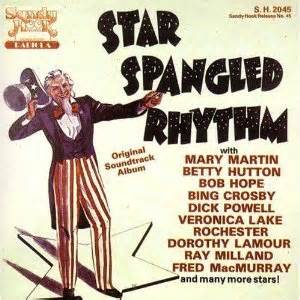
“Here—it’s your lucky day—we have two selections. Girl Crazy with Mickey Rooney, and Star Spangled Rhythm, starring Crosby, Hope, and Betty Hutton.” The older sister turned her face to Helen.
“I like Bing Crosby.”
“Then kiss your baby and grab your purse. In that order,” Eileen smiled, delighted that she convinced her sister to get out of the apartment.
They dashed into the movie house just as the overhead lights dimmed and the red satin curtains opened. A white light flickered and beamed from above the balcony, and the audience applauded. Distinct images filled the screen and the auditorium resounded in rich sound—a Disney cartoon flashed on the screen, “The Three Little Pigs.” Helen had to chuckle when a hand reached from the house of bricks, offering the huffing wolf a bottle of Listerine.
Quickly following, another clip opened in a solemn choral arrangement of Silent Night. Actress Bette Davis, seated before a Christmas tree, presented her children with war bonds as gifts. She kindly reminded them of the American fighting men, sacrificing their lives overseas while the family enjoyed the holiday in safety. Turning directly to the camera, Miss Davis encouraged those in the tiers to buy bonds as a way to win the war. Helen silently vowed to make a purchase in the morning.
United Newsreels boldly lettered the width of the screen, featuring a talon-bearing eagle, and a forceful marching tune. Hungry for actual footage of battlefronts, patrons waited eagerly for news updates. When the subtitle, War News from the Pacific projected, Helen nearly bolted from her seat, Eileen quickly grasping her sister’s arm—a gentle gesture telling her to stay. Reluctantly she viewed thick disarrayed hammocks of destroyed island palms, battle cruisers spinning turret guns toward exotic beaches, and endless rows of stretchers loading onto hospital ships. She felt slightly nauseous. Only her sister’s hand, and a reluctance to make a scene kept Helen seated. Finally, in what felt like forever an upbeat melody commenced and Star Spangled Rhythm splashed before her eyes. Relieved she literally exhaled her pent up anxiety.
“Holy mackerel sis! I thought I would have to tackle you to keep you in your seat.” The two girls hurried through the wet and chilly evening. “You know Chum is just fine, honey. We would be notified right away if anything had happened to him.”
“I’m awfully sorry Tommy. And I do appreciate you taking me out. But I need to get away from the war, not a firsthand eyeful of the Pacific front.” She frowned for a moment, then managed a grateful smile. “I did like the picture, though. Hope and Crosby were a good choice.”
“Good. Stop worrying. You’ll go gray.” The two continued down the sidewalk silently emitting small clouds of breath. Eileen spoke again, “You know we’ve had similar conversations before. Just like this. Walking home from somewhere.”
“I guess we have. But in those days you quizzed me about boys, passing flirtations. I’m honestly concerned about Chum . . . he is my husband. We have a baby.”
“Oh, I understand that, Helen. And I like Chum, too. Unlike Mother, I think you found yourself a good man. But do you ever wonder about the others? About Grant Garrett or Elie? I mean what they’re doing now.”
“Oh, well, yes. Sometimes. I think Grant is his third marriage, and still in Hollywood. He’s done some film work for Paramount, you know, adding jokes to dialog.” She smiled, remembering. “I don’t recall the movie but you could tell the jokes were Grant’s. Something like, ‘did you shoot the victim through anger—no, I shot him through the heart.’” She chuckled. “I think Grant is doing well, for Grant. As for Elie? I simply don’t know what became of him, and that bothers me. The last I heard he lived in Japan, and now the Japanese are fighting us. He might be back in Belgium, but the Germans have taken over. And considering how Hitler feels about Jews—yellow stars, camps, poor Elie has it coming at him either place.”
“Oh Helen. You’re right! That hadn’t occurred to me. Either place, he is in a mighty dangerous situation. Gosh, I hope he makes it through the war . . . if this war ever ends.”
“I worry, too. And I feel pretty guilty about how things ended with him. Not that I think lousing things up with Elie put him in danger. But we ended on bad terms, I had met Chum, and we were engaged. Still I hope he and his family are safe.”
Gail Chumbley is the author of River of January, and sequel, River of January; The Figure Eight..


A Christmas card from a weary GI to the students of Garfield School.
From France to Spokane Washington, 1944
Gail Chumbley is the author of River of January, a memoir. Available on Kindle.


Preaching in 1630, Massachusetts Bay Governor John Winthrop, declared the new Puritan settlement a godly utopia, “A City on a Hill.” Since that time Winthrop’s assurance of purpose and perfection has shaped the narrative that is American history. For over two centuries the United States pushed forward striving to make real those founding aspirations. Many Americans, either in groups or as individuals have fought the good fight to extend liberty for all: the most notable example being the abolition of slavery. Yet the path toward realizing the dream of heaven on earth has been many times interrupted with progress’s nemesis—armed warfare.
As Revolutionary War zeal subsided in the late 1700’s, a series of remote camp meetings sparked a movement called the Second Great Awakening. (Yes there was a First) The popularity of these rousing evangelical revivals lit an impassioned fire that called Americans, mostly Northerners to eradicate sin in the shiny new republic. Determined reformers such as Charles Grandison Finney, Frederick Douglass, and Elizabeth Cady Stanton labored tirelessly to rid America of her shortcomings; drunkenness, degrading of women, punitive treatment of the mentally ill, racial inequality . . . in order for the country live up to its charge as a “called nation.”
Despite the diversity of causes and legions of faithful supporters, slavery alone came to dwarf all other movements and to ultimately divide the country. Early instances of violence in the effort to end slavery offered a taste of the violence to come in the Civil War; Abolitionist-editor, Elijah Lovejoy was shot dead in the doorway of his newspaper office, while another anti-slavery editor, William Lloyd Garrison found himself tarred and feathered repeatedly by those who hated his militancy. Zealot John Brown hacked to death five pro-slavers in an episode known as “Bleeding Kansas.” In these instances, “the writing on the wall” had truly been composed in blood.
When hostilities began in April, 1861 the energy of a nation fixated on the course of each battle, fear and resolve ebbing and flowing with each outcome. The shape of America’s future waited in the balance. Finally, after four ghastly years of bloody fighting, Southern hopes of an agrarian, slave-ocracy died, and as President Lincoln so eloquently phrased it, America found “a new birth of freedom.”
Left unaddressed were those other reforms, forgotten in the war. The mentally ill remained behind bars, incarcerated alongside dangerous criminals. Women were legally considered wards of their husbands, with no more standing than dependent children. Countless young children toiled endlessly in textile mills and coal mines, exploited by owners, deprived of any chance for an education. And the legions of former slaves faced a new form of slavery, Jim Crow and sharecropping.
Reform again gathered momentum in the late 19th Century. Aiming once more for that ‘city’ aspiration, the Progressive movement took shape, carried on by a new generation of the faithful, imbued with a sense of social justice to confront the many wrongs left unaddressed from an earlier time, and new issues related to urban growth. Notables from this post bellum movement include; Jane Addams, one of the founders of American Social Work, writer Upton Sinclair and his shocking expose’ The Jungle a condemnation of the meat industry, and John Dewey who normalized public education with coherent curriculum’s and compulsory school attendance. Dewey believed, as had the founders of America, that the nation relied upon and deserved an educated electorate to safeguard the promise of America into the future.
This movement found a great deal of success in improving the country and the lives of its citizens. Building safety reform came on the heels of the Triangle Shirtwaist Fire in 1911. The Jungle brought about the establishment of the Food and Drug Administration, while political reforms included the secret ballot, limiting “Bossism,” and other forms of political corruption.
Then, in 1914 Europe went to war. By 1916 Progressive President, Woodrow Wilson committed America to join in, asking for a declaration against Germany, sending American soldiers into the trenches. And once again, when the guns silenced progressive reforms disappeared as if they had not existed. On the imaginary road to “Normalcy,” the wealthy and powerful misused the country as a personal piggy bank, plundering and cheating with no legal check.
After a decade long litany of economic abuses tanked the Stock Market in 1929, the nation once again turned toward progress, this time on an unparalleled scale. The advent of Franklin Roosevelt and his wife, Eleanor, to the White House marked a revitalization of reshaping America to benefit all Americans. The New Deal remembered for its alphabet agencies, aimed to recover the devastated economy and ward off future abuses that had nearly destroyed the well being of the Republic.
America’s entrance into World War Two bucked the pattern of a reactionary pushback. FDR remained at the helm, until Harry Truman took the reins of government, continuing the tradition of affirming change. GOP President Dwight David Eisenhower kept a moderate hand on the tiller, particularly in the realm of Civil Rights, enforcing the Brown V. Board of Education decision to desegregate public schools.
But with JFK’s murder, the wheels once again came off social progress. As much as LBJ tried to give America all he could; The Civil Rights Act of 1964, The Voting Rights Act of 1965, the Highways Beautification Act, Head Start, Medicaid, and many more pieces of his Great Society legislation, Vietnam eroded all the good.
That endless nightmare of a stalemate in Southeast Asia worked at cross purposes for bettering society. The daily body count, student protests, war atrocities, such as the My Lai massacre, or the shock of the TET Offensive in 1968 sapped America’s desire to do anything but find a way out of the jungle.
Promoting the general welfare came nearly to a complete halt by 1980. The advent of the Reagan Revolution, and subsequent downsizing of the federal government left the vulnerable largely on their own. School lunch programs were cut, the mentally ill let out on the streets of America, while the armament industry threw the nation into deep deficits.
On this Memorial weekend it might be good to consider the potential of America when at peace. Trapped today in an endless cycle of war, this nation struggles to find her soul, to embrace together the light of our national promise. Two military presidents, our first, General George Washington and our thirty fourth, General Dwight D. Eisenhower pleaded with America in their farewell remarks to avoid war as the worst use of our best abilities. Both men, forged in the adversity of difficult wars, recognized the wasteful distraction and deadly allure of war. Washington cautioned against “entangling alliances, and Eisenhower “the military-industrial complex.”
Ultimately, those who know war grasps what is truly lost. Every weapon produced in a munitions factory most certainly casts a wrench into the wheels of human progress. Winthrop meant his reference from the book of Matthew to inspire an example to the world. Forcing Americanism by the barrel of a gun is born to failure, achieving nothing lasting but resentment abroad, and stagnating injustice at home.
Gail Chumbley is the author of the memoir, River of January, also available on Kindle.
Worth a second look.

Colonel Clark used to bring his son down to the dojo where my brothers took judo lessons. My grandfather had registered my older brother first, and then my two younger brothers enrolled when they were old enough. I sometimes came along to watch these lessons because, first of all, it was something to do on a boring school night, and I liked to look at the cute boys dressed in their gi (white uniforms.) Grandpa Ray always sat with Colonel Clark, if the old gent happened to be seated in the chairs around the mats. That meant I sat with Colonel Clark, too–not fun for a twelve-year-old, boy crazy girl. The two old men would talk and talk, seated next to one another, though they kept their eyes on their boys competing out on the mats. They never seemed to look each other in the eye, but still seemed caught…
View original post 553 more words
Happy 134th Birthday to President Franklin Delano Roosevelt who, rather than exploit uncertainty in a time of crisis, reassured Depression-era Americans.
Read River of January by Gail Chumbley, a memoir. Also on Kindle

Colonel Clark used to bring his young son down to the dojo where my brothers took judo lessons. My grandfather had enrolled my older brother first, and then my two younger brothers when they were old enough. I sometimes came along to watch these lessons because, first of all, it was something to do on a boring school night, and I liked to look at the cute boys dressed in their gi (white gear).
My Grandpa Ray always sat with Colonel Clark, if the old gent happened to be present. That meant I sat with Colonel Clark, too, not fun for a twelve-year-old, boy-crazy girl. The two old men would talk and talk, seated next to one another, though their eyes remained on their boys training on the mats. They never seemed to look each other, but still seemed absorbed in their conversation.
My own attention span, something close to that of a hummingbird, only caught snippets of the quiet discussion. “MacArthur, Wainwright, and Bataan,” were among the many utterances exchanged by my Grandpa and the Colonel. And despite my commitment to shallow-minded teen angst, I sensed something grave, something momentous had happened in the back and forth of these two old men.
My brother later translated the mysterious conversation I unwillingly witnessed. Colonel Clark had been left on the Bataan Peninsula when General Douglas MacArthur was evacuated from the Philippines in 1942. Under the new command of General Jonathan Wainwright some 22,000 Americans surrendered to Japanese occupiers, among them young Clark. The Japanese forced this defeated army on a death march (along with their Filipino comrades) some sixty miles in the jungle. The men suffered from heat exhaustion, and dehydration, staggering on, hat-less and barefoot. When a captive stumbled, or fainted, the penalty meant an immediate beheading.
Colonel Clark had witnessed this nightmarish brutality, forced to suffer in ways words fail to recreate.
In defiance of considerable odds, Colonel Clark survived his ordeal. And that was the ordinary older man who spoke quietly with my Grandfather, watching a young son he should never, in reality, have sired.
I am a much better listener today, and recognize that valiant warriors everywhere are frequently disguised as harmless old men. Listening to these elderly gents has enriched my understanding of the past far more than I thought possible.
For example there was George, the high school janitor. For many years he pushed a mop down the halls where I taught American history. Sporting two hearing aids, this diminutive man wielded a mop that was wider that he was tall. All told, George looked like a gentle and harmless grandfather.
I’d often find George standing outside my classroom door listening to me blather on about the Second World War, as if I understood. Later I discovered that that mild mannered 80-year-old had once packed a M-1 Garand, shivering aboard one of those Higgins boats motoring toward Omaha Beach in 1944.
“So George, what do you remember most about D-Day?”
“It was awful early, and the water was awful cold.”
Then there was Roy. Smiling, white-haired Roy.
As a teenager he had gone straight from the Civilian Conservation Corps right into the US Army.
“What do you remember most about D-Day, Roy?”
“I lost everyone in my outfit. I was real scared. Later I was regrouped with survivors from other platoons. You see that was bad because I’m Mexican, and my first platoon got used to me, and stopped calling me Juan or Jose. I had to start all over with the new bunch. For days, as we moved inland, these new boys were giving me the business. One guy said, ‘Mexicans can’t shoot.’ I said that I could. So he said, ‘Ok Manuel. Show me you can shoot. See those birds on that tree branch up ahead? Shoot one of those birds.’ I lifted up my rifle and aimed at the branch and pulled the trigger.” Roy begins laughing.
“I missed the branch, the birds flew away, and twelve Germans came out of the grove with their hands up.”
Astounded, I couldn’t speak. Roy simply chuckled.
Colonel Clark, George, and Roy. They were just boys who found their lives defined in ways we civilians can never comprehend. They were scared, and hot, and cold, and hungry, and suffering, and ultimately lucky. They returned home.
That’s All.
Gail Chumbley is the author of River of January, and River of January: Figure Eight, a two-part memoir. Also available on Kindle.
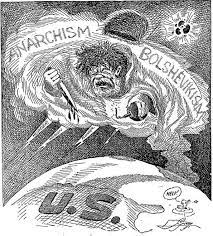
Foreign oppression has, more than once, moved American policy makers at home to react with oppression. From the French Revolution to today, overseas upheavals frighten those in power enough, to prompt the same repression at home.
For example:
Immediately after World War One, the US endured a period of destabilizing fear–America’s first Red Scare. The U.S., bitter over entering the Great War, grew intolerant of unorthodox political views and worked to silence dissent. Radicals, both homegrown and immigrants from Europe, felt the wrath of political crackdowns. Anarchists, such as emigres, Emma Goldman, and Alexander Berkman, found themselves on trial, then deported back to Russia, while a home grown Socialist, Eugene V. Debs ended up in prison. Scores of other political agitators were targeted by the Justice Department for printing radical views, and voicing public opposition.
Why the oppression?
The reaction began following the bloody 1917 Revolution in Russia. The murder of the last Romanov Tsar, with his family, paved the way for the world’s first Marxist-Leninist government, the USSR. Vladimir Ilyich Ulyanov, (Lenin) seized the reins of the Bolshevik Party, and abolished all political opposition, outlining the aims of this new workers utopia, to overturn Capitalism worldwide.
The response in the U.S. came quick and harsh. Labor organizers, the leftest union, The Wobblies, and any other radical group deemed un-American was quashed. The U.S. government viewed dissent as treason, and Congress shaped specific legislation to silence protest. First passed and signed into law came The Espionage Act, in 1917, shortly followed by the Sedition Act the next year. No public speech, publications, nor use of the U.S. Mail to criticize government policy would be tolerated. Period.
In two test cases, the Supreme Court upheld the constitutionality of both laws. The majority ruled in the first case that nonconformists and draft-resistors presented a “clear and present danger” to the US. In the second opinion the Court ruled much the same, but this time with an important dissent. Justice Oliver Wendell Holmes, wrote, ” . . . the ultimate good desired is better reached by the free trade in ideas . . .”
Still, non-conformists and dissidents endured government suppression.
The courts, the government, and public opinion merged to outlaw what they feared–an all-powerful, biased social/economic system, much like the restraint simultaneously underway in the Soviet Union.
This was not over.
After Hitler’s death in April, 1945, and the ending of WWII in Europe, Soviet leader, Joseph Stalin kept his Red Army in East Germany and Eastern Europe, nixing a promised democratic Polish government in favor of his puppet Communist regime in Warsaw. And that was just for starters. A frightening Cold War ensued between the Soviets and the West, that by 1963 witnessed the construction of an actual partition, aka, an Iron Curtain.
In America a political fever seethed, and Congress responded. Establishing HUAC, the House Un-American Activity Committee, to sniff out citizens who leaned to the left, ruining careers and lives in the process. This second Red Scare elevated the careers of Senator Joe McCarthy, and Congressman Richard Nixon.
This post originally intended to discuss the War on Terror. The objective to cast light on the American Taliban; those promoting God, Guns, and Gasoline. But now, with Russia up to its old tricks, all of us again, have a decision to make. Will Americans excuse Putin, grow complacent and emulate his corrupt oligarchy? That path is wide open, visited upon us via the former guy. He proudly rubbed shoulders with that murderer, and publicly praised Putin’s integrity.
But, at this very moment, another, clearer choice stands before the American public. President Zelensky has conducted a master class on the real cost of freedom. The Ukrainian people have lain down their lives to remind us we, are the original heirs of freedom.
In that spirit, this upheaval in the Ukraine is one we must emulate here at home. When Putin attacks Ukraine, he attacks us all. We are Americans, it’s time to take a stand for our liberty. This is not a drill.
Gail Chumbley is the author of “River of January,” and “River of January: Figure Eight.” Both titles are available on Kindle. Gail has authored two historic plays, “Clay,” concerning the life of Senator Henry Clay, and “Wolf By The Ears,” examining the foundation of American Slavery.
gailchumbley@gmail.com

 Gail Chumbley