That Kid in Class

101218-A-5917D-118-rev(2)
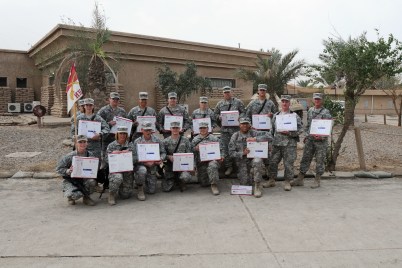
This piece comes from a former student, Second Lieutenant. Cyrus Cappo, USA, West Point Class of 2017.
It is your right to be outraged, or offended, or annoyed by the anthem protests going on around the country today. And in these days of unprecedented access to the megaphone of social media it is your privilege to voice that outrage to estranged family members and friends from high school and coworkers and anyone else you happen to be Facebook friends with.
“It shows disrespect to the troops!” you might say through gritted teeth while furiously pounding on keys, your heart rate steadily increasing to unsafe levels about men who play sports silently and peacefully protesting their race’s treatment as second-class citizens and a President who reserves more fury for them than actual white supremacists and anti-semites. It would be your right to take such a bold and well-thought out stance, maybe even adding that this “the snowflakes have gone too far, I can’t even be safe from the tyranny of this PC culture watching a football game!”
But maybe, you my hypothetical example, could consider that standing for a flag that means many different things to many people isn’t actually what it takes to support your troops. And shockingly, neither is decorating for the Fourth of July, or sporting neat little patriotic bumper stickers and t-shirts, or even shaking a soldier’s hand to thank him or her for their service.
Bear with me, because I know this is a bit of a stretch, but just maybe supporting the troops means voting for politicians who don’t support never-ending wars without any clear objective, and that actually increase the rate of radicalization and terrorism at the low low cost of over 7000 American lives and the even lower cost of millions of middle eastern civilian lives, while simultaneously destabilizing multiple countries that allow for organizations like ISIS to gain power and a dictator like Assad to gas his own populace. That would be something I could be convinced to be outraged about. Maybe you could donate some of your time and money to organizations that are trying to prevent 22 veterans a day from killing themselves due to PTSD and the complete glut of financial and medical support that veterans receive, or if you own a business, you could even go out of your way to hire a veteran so they don’t become homeless as a thanks for their years of service. Maybe you could write a letter to a soldier who is deployed in the name of protecting, um, something something freedom, or send him or her a care package to make a day that could be their last a little less bleak.
But yikes, that would be hard and inconvenient and require some introspection and research and pure, unadulterated thought, and who has time for that, am I right? Much easier to voice outrage about football players exercising their right to protest, and using their platform of privilege to try and make the country a little bit more equal for all of us. Thank you for your tremendous sacrifice of not watching football this weekend, our country is better for it. Don’t forget to put the flag up and plan your cookout for Veterans Day, I look forward to seeing you the next time you shake my hand to thank me for my service.
Feel free to do any proofreading, this was written in bed and out of total frustration haha, I’m glad you liked it.
Cheers,
Cyrus

September 1, 1939

A civilian pilot learns of war.

17881034_303

Los Angeles

1939

On a sunny morning at the first of September, Chum arrived in the town of Winslow, Arizona, bumping down the landing strip at the airfield. Taxiing off to the side of the field, he observed a crowd collecting close to the control tower. Curious, he rolled to a stop, switched off the Waco, and hopped down. “What’s cooking?” he asked no one in particular.

A boy in greasy dungarees and black high-tops chirped up excitedly. “The Germans invaded Poland, mister. And England and France have declared war!” The boy beamed proudly, satisfied with reporting such important news.

Astonished, Chum stared blankly at the kid—countless considerations flooding his thoughts. Poor Helen. She’s been worried about what would happen. She loved France. I’ll probably be hearing from the reserves. We’re not in yet, but it’s only a matter of time.

While various scenarios dominated his thoughts, Chum refueled his plane. He then carried on with his flight plan, eventually touching down in Albuquerque—his destination. With his Waco S Series plane tethered to the ground, the pilot beelined to the small airport office, anxious for any news. The day had grown hot, but Chum barely noticed. He needed water, but the news came first. Approaching a low, dark building, he heard a voice booming from a radio:

At dawn, with no provocation or declaration of hostilities, the German army has invaded Polish territory, ruthlessly violating the country’s national integrity. Intensive bombing attacks are at this moment raining death and destruction over the cities of Poznan, Wroclaw, and Danzig resulting in considerable casualties among innocent civilians . . .

“Hey, Coop,” Chum called, hailing the manager. “What’s all this about marching Germans?”

“Been waiting on you, Chum,” the man called Coop replied, turning down the news broadcast. “Got a cable here for you from Troy. And that breaking news is all too true, pal.” Coop gestured toward the radio with his thumb.

Mumbling thanks, Chum unsealed the telegram, tuning out the now-muted announcer. He read:

Finish Albuquerque demo. Then to Troy. Big meeting. Perry

“They want you back at the nest, I’d wager,” the manager said with a knowing expression.

“Yes. Yes they do. All hands on deck, as the saying goes.” Chum tried to smile.

“Jerry’s hit Poland hard,” Coop continued. “First their heavy bombers, then the tanks, then the army marching in. Poor Poles. They don’t stand a chance. Radio announcer called the attack blitzkrieg.”

The word didn’t click. “What’s a blitzkrieg?”

Coop replied in a dark voice, “Lightning war.”

Gail Chumbley is the author of the two-part memoir, “River of January,” and “River of January: Figure Eight.” Both books are available at http://www.river-of-january.com, and on Kindle.

gailchumbley@gmail.com

The American Gentry


Note: My students used to ask how the planter aristocracy persuaded poor whites to fight for their interests in the Civil War. I think the answer lies in the power and position that the underclass envied and hoped to attain.

Please permit me to reintroduce these four figures from America’s antebellum period.

Thomas Jefferson Best recognized as the author of the Declaration of Independence, the third president of the U.S., and the man behind the 1803 purchase of the Louisiana Territory.

Andrew Jackson The celebrated hero of the Battle of New Orleans, noted Indian fighter, and seventh president of the U.S.

John C. Calhoun Congressman, turned Senator from South Carolina, who served two separate administrations as Vice President.

Jefferson Davis, a former soldier in the Mexican War, one-time Secretary of War, and later President of the Confederate States of America.

These four men forged political careers prior to the Civil War that fully embraced the social norms of early America. To a man, all hailed from the Old South, where each man shaped distinguished reputations, built spacious mansions, entertained illustrious guests, all on the backs of slave labor.

Ironically if one asked these men’s occupation, not one would have mentioned politics. Instead, each would have replied, “I am a farmer.”

To modern ears that answer feels a bit misleading and absurd. However, in the early nineteenth century, exercising dominion over large tracts of land, and cultivating crops as far as the eye could see, was viewed the most noble and honorable of pursuits. But a gnawing truth lay behind the practiced manners and broad, fertile fields. A profound self deception had also taken root, sowing an overblown sense of racial superiority, and human oppression of nightmarish proportions.

That these “farmers” were all slave masters is the cruel truth–Lords of the Lash, who derived a living “wringing their bread from the sweat of other men’s faces,” (As Lincoln so eloquently phrased).

These four planters also minimized the brutal underpinnings which sustained each man’s fiefdom. Jefferson, Jackson, Calhoun, and Davis capably hijacked, and sheltered behind “republican virtues,” including freedom and the social contract to suit their own interests.No higher authority held any sway over these planters–they were marked as privileged.

The patriarch of this sophistry was Thomas Jefferson.

Esteemed as the “Sage of Monticello,” Jefferson brilliantly articulated a vision of America where all lived freely upon private land, untroubled by outside interests. Residing upon acres of personal liberty, this master managed his estate immune from any overreaching government. For Jefferson, he and his fellow planters were the “natural aristocrats,” of the new nation, meaning they held the only legitimate claim to power. Only the elite of the community, like Jefferson, knew what was best for all.

The Sedition Act, passed by Congress in 1798, moved Thomas Jefferson to show his true political colors. President John Adams had wanted to silence political critics of his administration, and jammed this dubious legislation through Congress. In reply Jefferson authored a protest titled the “Kentucky Resolution.” In his tract, submitted to the Kentucky Legislature, Jefferson introduced the concept of ‘nullifying’ Federal law. Specifically, when a majority of state delegates, assembled in special convention, renounced a Federal statute, the law was rendered null and void within that state.

For the first time, in one pivotal moment, Jefferson’s insidious principle found its way into the bloodstream of American politics.

Ironically Andrew Jackson didn’t care for the intellectual, and philosophical Jefferson. Still, despite temperamental differences, Jackson did share Jefferson’s world view of complete dominion over his land and “people.” A ferocious master, Jackson answered to no civil law, but his own. Dabbling in both horse and slave trading, Old Hickory frequentlyoften challenged any man who questioned his conduct or honor.

To his credit Jackson did not pretend to care about high brow thinking or civic virtue. His philosophy was simple; the master was never wrong.

Before Senator John C. Calhoun of South Carolina soured into a states’ right’s militant, his political outlook had been national in scope. With unusual candor a very young Congressman Calhoun self-consciously confessed that slavery was a “necessary evil,” vital to South Carolina’s prosperity. But his marriage to a wealthy Charleston cousin elevated his social status, which in turn, adjusted Calhoun’s thinking. Assuming the role of a gentleman, while cultivating a prominent political reputation, Calhoun also became a slave master. Much like Jefferson’s Monticello, or Jackson’s Hermitage, Calhoun’s plantation, Fort Hill, was an ever-expanding operation, endlessly renovated using teams of slaves who also tended his fields.

In 1829, as Jackson’s new Vice President, Calhoun quickly butted heads with America’s new President. Steadily embittered by Jackson’s arbitrary, monarchial style, and indifference to law, Calhoun resigned the vice presidency and returned to Fort Hill an angry man. His stance on slavery hardened as well, leaving him a vitriolic defender of the practice. Under increasing pressure from Northern abolitionist, Calhoun, picked up his pen and insisted that slavery was not evil after all, but a ‘positive good.’

When Congress passed a protective tariff for northern goods, this former Vice President organized a state convention to fully resist the new Federal law. Calling his defiance “nullification,” Calhoun put into action Jefferson’s “resolution” that refused obedience to Washington.

Fortunately this particular crisis was averted by cooler heads in Congress, delaying the curse of fraternal bloodshed for a later generation.

By 1860 nullification had bloomed into full secession. No longer would the planter class tolerate insults or challenges to their natural superiority and authority.

It came as no surprise when South Carolina became the first of the eleven states to secede from the Union. Delegates attending a state convention in Columbia did not wait for the final electoral results to reject the election of Abraham Lincoln. So enraged were these aristocrats that Lincoln’s name had not even appeared on the ballot in most southern states.

I’ve added Confederate President Jefferson Davis to this piece because of his later role in perpetuating the genteel myth of the South. After four years of bloody battle and countless bullets finally settled the issue of Federal authority, Davis, released from jail began a writing career. He first penned, The Rise and Fall of the Confederate Government, followed later by A Short History of the Confederate States of America. In both of these works, Davis invented a romantic world of gentlemen, belles, and contented slaves in the fields. The fantasy was bunk, but Davis, the onetime master of of Belvoir, and Brierfield, Mississippi, somehow got in the last word.

Davis’s fanciful yarn was only concocted as a charming fable to disguise a legacy of hubris, power, greed, hate, racial exploitation, and violence.

In answer to the question posed by my history students, poor whites defended the southern gentry because they wished to live just like them.

Gail Chumbey is the author of the two-part memoir,  “River of January,” and “River of January: Figure Eight,” available on Kindle.

gailchumbley@gmail.com
Thanks for Noticing

“River of January,” and “River of January:Figure Eight” have garnered some recognition. Find out why today. Click this link www.river-of-january.com, and order your own copies, personally signed by the author.

Award winning history instructor, Gail Chumbley is the author of the two-part memoir River of January and Figure Eight.

Saddle Shoes, Florida, & Rosalie Sorrels

Screen Shot 2017-06-17 at 4.24.53 PM

I never imagined a living legend would grace my home.

The weather had finally turned at the cabin; brief, chilly showers shifting into warm sunny intervals–golden debris blowing across the deck. I had given up clearing away leaves and pine needles, settling instead for mopping rainwater off of plastic chairs. In our cabin for less than a year, my husband and I had volunteered our small place to host a fund raiser for two local candidates running for county offices.

Guests began arriving in late afternoon, carting in plates of finger food and bags of chips. Visitors commandeered my little kitchen, quickly producing cheese & meat trays, while toasting garlic bread in the oven. Shuffling knives and serving spoons, I glanced up to an opening door to greet one of the arriving candidates. Her husband followed her bearing a big smile and carrying an old fashioned squeeze box—a melodeon. I sensed a forthcoming singalong.

I vaguely recognized the third visitor passing through the threshold. After introductions were made, the mystery cleared; the lady was legendary folk singer, Rosalie Sorrels. She had driven over with the candidate and her husband, as they were friends from the other side of the county. I had seen Sorrels before in concert, and honestly grew tongue-tied meeting her in person.

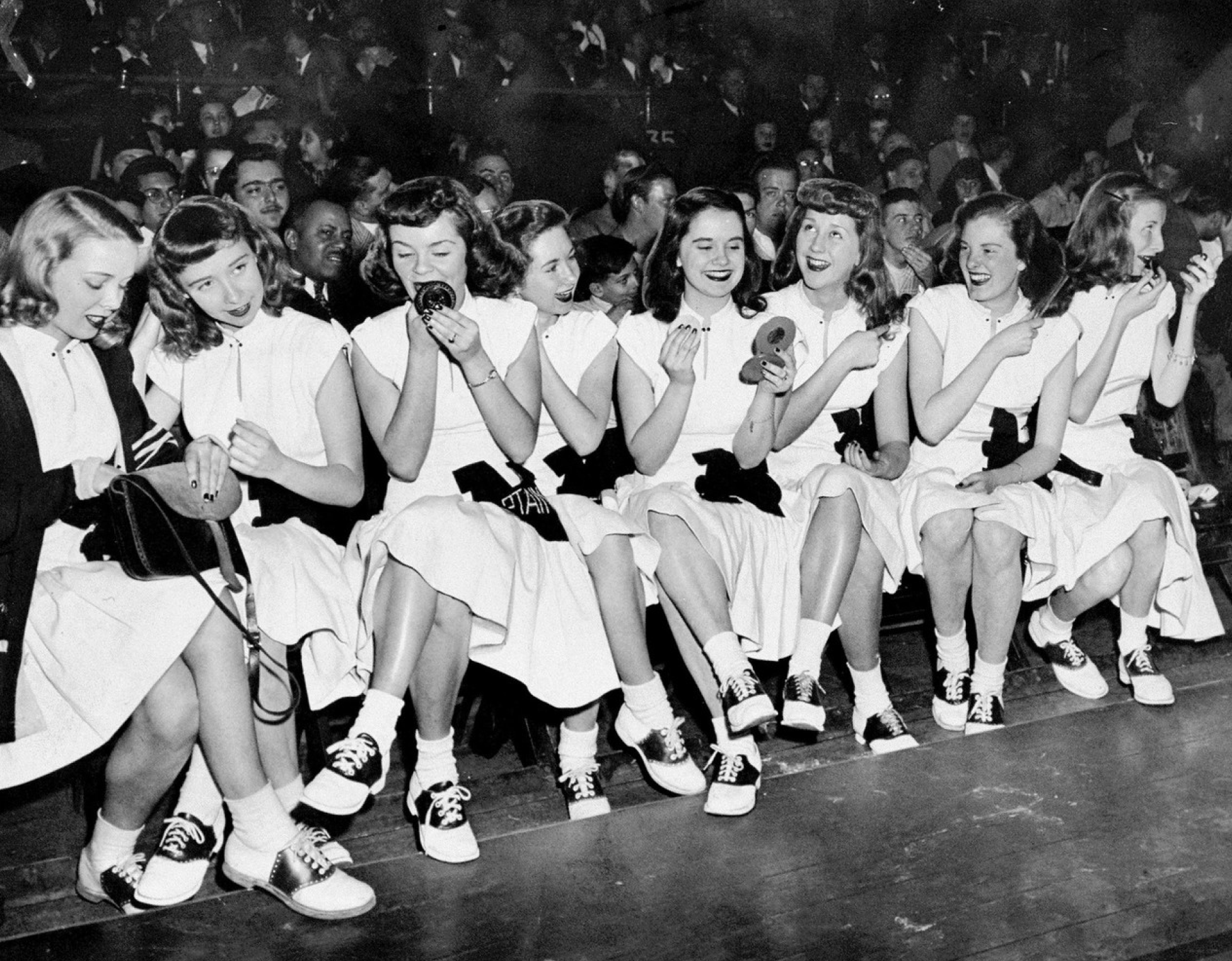
The room filled and the evening warmed–mellowed by good wine and friendly camaraderie. Ms Sorrels drifted around the room, chatting here and there, while perusing our limited artwork. She admired, in particular, a panel of over-sized Florida scenes, soon sharing tales of chauffeuring her children through the Sunshine State many years earlier. At one point, she and I shared a moment out on that leaf-strewn deck, agreeing that cutting down a tree, even as a safety measure, was still a shame. But the big conversation that memorable night centered on my footwear, a pair of vintage saddle shoes.

One woman told us that at her California high school everyone called these shoes Oxfords, and were acceptable only in white. Ms. Sorrels happily joined in with a story of her trusty black and white pair. Mine were coffee and cream, the same as I wore when I attended grade school. Odd, but in that moment we all seemed to channel our long ago girlhoods; guarded adult caution melting away in the banter. Animated with a gentle, expressive smile, Rosalie, too, swapped memories, chuckling along with the rest of us.

As dusk fell, and lamp light filled the house, our company began to depart. There were long drives ahead, and people needed to get going. My husband and I waved goodbye, pleased we had opened up our home for the event. And in the following days we shared with anyone who would listen that Rosalie Sorrels visited our cabin. If they didn’t recognize the name, they did after we were through singing her praises.

That was nearly ten years ago.

When it came across the news last week that Sorrels had passed away in Reno, my mind traveled back to that singular Fall evening. I recognized then, and I still believe, that the cosmos handed us a mighty gift in that visit, of a luminary who had once driven to Florida with her kids and, like the rest of us wore saddle shoes.

Gail Chumbley is a nationally recognized history instructor, and the author of the two-part memoir, River of January and River of January: Figure Eight. Also on Amazon.

Always On My Mind

fullsizeoutput_55c

Had a six-plus hour drive today; Salt Lake City to my mountain cabin in Idaho. Lengthy car-time, for this Indie writer, always results in exploring fresh ideas for book marketing. I don’t say much to my family, but promoting the two-part memoir, “River of January,” and “River of January: Figure Eight,” is never far from my thoughts, and I’m pretty sure this is true of fellow writers.

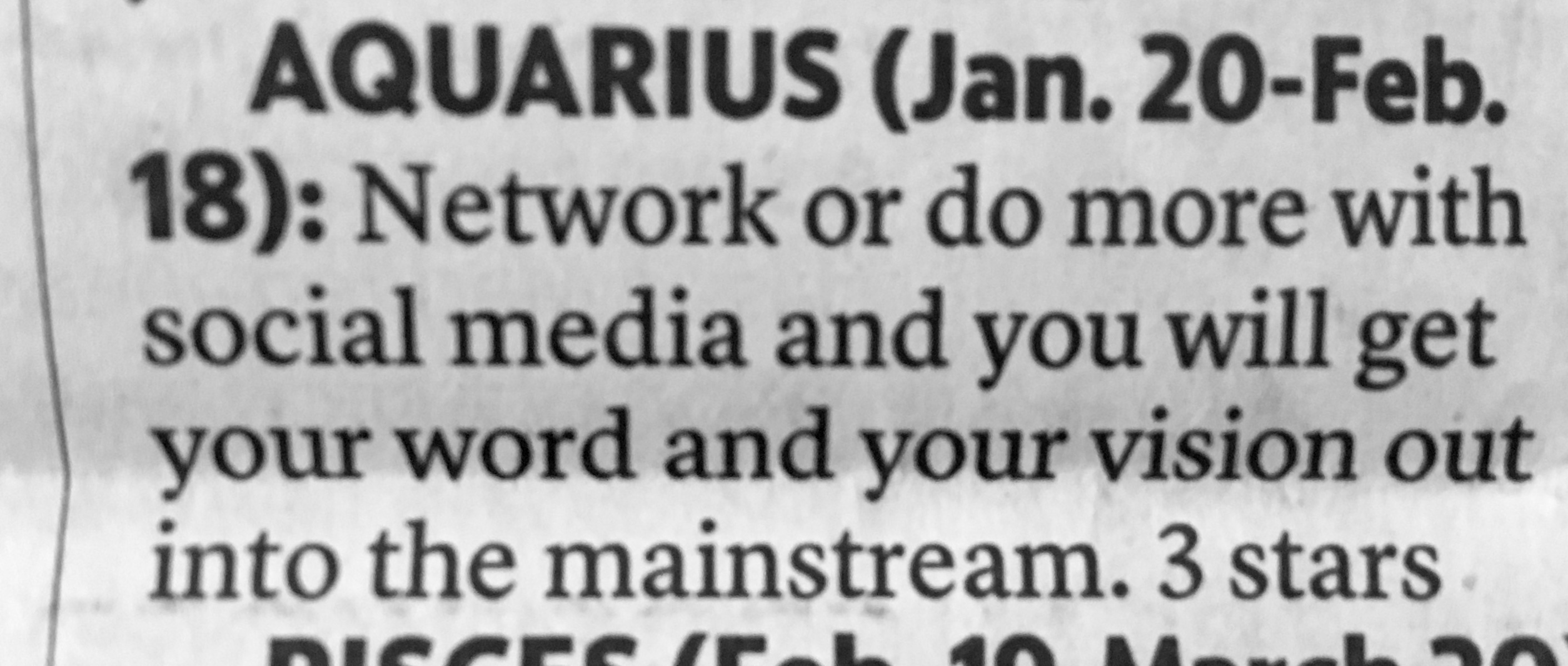
Finally made it home, chatted with the husband, did a little of this and that, then idly picked up today’s newspaper. Now, I’m not an avid follower of the mystic, but being an Aquarian, (there’s a song about us, you know) I sometimes do indulge. And, as you can see the cosmos told me to do this, so by damn, I am.

Dear reader, if you enjoy a true American story, set in the American Century, get River of January and River of January: Figure Eight. In the pages, you will experience adventure, travel, glamour, and romance. Aviation enthusiasts relive the thrills and peril of early flight, theater fanciers follow an aspiring dancer as she performs across international stages, and takes her chances in Hollywood.

Take it from the author–in peacetime and in war–this two-part memoir is richly entertaining.

http://www.river-of-january.com. Also available on Amazon.com

Gail Chumbley is an award winning instructor of American history and the author of the two-part memoir, “River of January.”


Tagwords

World War One, The Great Depression, Vaudeville, Golden Age of Aviation, Amelia Earhart, Golden Age of Hollywood, Rise of Fascism, Waco Aircraft, Professional Ice Skating, Sonja Henie, World War Two, Battle of the Atlantic, Pearl Harbor, War in the Pacific, Cold War, Sun Belt, America as a World Power.

Get the two-part Memoir, River of January and River of January: Figure Eight and connect these fascinating dots. Also available on Amazon.com

If you’ve enjoyed this adventure, leave a review on Amazon.com. Thanks, Gail.


New Birth of Freedom

th

We all know the story.

On a mild April night, President and Mary Lincoln attended the final performance of the popular comedy, “Our American Cousin,” at Ford’s Theater. Lincoln, by all accounts was in a light, blissful mood. A week earlier Confederate forces commanded by Robert E. Lee had surrendered at Appomattox Courthouse, Virginia, and except for some dust ups, the Civil War had ceased. We also know that John Wilkes Booth, and fellow conspirators plotted to kill, not only the President, but the whole order of presidential succession; Vice President Andrew Johnson, Secretary of State William Seward, etc . . . but only Booth followed through with that night’s violence.

Andrew Johnson took office in a whirlwind of shifting circumstances. In the year up to President Lincoln’s death a notable power struggle had taken shape between the President and Congress. America had never before endured a civil war, and the path to reunion had never been trod. As President, Lincoln believed the power to restore the Union lay in the executive branch—through presidential pardon. But an emerging faction in the Republican Party, called the Radicals saw the issue differently. These men operated from the premise that the Confederate States had indeed left the Union—committed political suicide at secession—and had to petition Congress for readmission. (Congress approves statehood). And this new president, Andrew Johnson, was determined to follow through with Lincoln’s policies.

Unfortunately, Johnson was by temperament, nothing like Abraham Lincoln. Where Lincoln had a capacity to understand the views of his opponents, and utilize humor and political savvy, Johnson could not. Of prickly character, Andrew Johnson entered the White House possessed by deeply-held rancor against both the South’s Planter Class, and newly freed blacks. This new Chief Executive intended to restore the Union through the use of pardons, then govern through his strict interpretation of the Constitution. Johnson had no use for Radical Republicans, nor their extreme pieces of legislation. Every bill passed through the House and Senate found a veto waiting at Johnson’s desk, including the 1866 Civil Rights Act, and the adoption of the Freedmen’s Bureau. Congress promptly overrode Johnson’s vetoes.

Reconstruction began with a vicious power struggle. And much of the tumult came from Andrew Johnson’s inability to grasp the transformation Civil War had brought to America. While the new president aimed to keep government limited, the Radicals and their supporters knew the bloody struggle had to mean something more—America had fundamentally changed. Nearly 700,000 dead, the emancipation of slavery, the murder of Father Abraham, and a “New birth of Freedom” had heralded an earthquake of change.

But Johnson was blind to this reality, seeing only an overreaching Congress, (Tenure of Office Act) and Constitutional amendments that had gone too far. And so it was a rigid and stubborn Andrew Johnson who eventually found himself impeached by a fed-up House of Representatives. Johnson holding on to his broken presidency by a single Senate vote.


There have been other eras in America’s past that fomented rapid changes. The Revolution to the Constitutional period, the First World War into American isolation, the Vietnam War stirring up protest and social change. All concluding with reactionary presidencies. No less occurred with the 2016 election of Donald Trump.

2008 to 2016 witnessed social change of a new order. Administered by America’s first African-American President, Barack Obama, liberty reached further, bringing about change where once-closeted American’s hid. Gay marriage became the law of the land, upheld by the Supreme Court in Obergefell V Hodges. The trans community found their champion in Bruce, now Caitlin Jenner. Health care became available to those caught in relentless poverty and preexisting conditions. Undocumented young people were transformed into “Dreamers.” And though he didn’t take the Right’s guns, President Obama did successfully direct the mission to nab Osama bin Laden, America’s most wanted man.

So when former students began sending horrified texts to me, their old history teacher on election night, 2016, I gave the only explanation history provided. The Obama years introduced change to America that reactionaries could not stomach. (And yes, racism is certainly a large part of the equation).

So now we deal with a Donald Trump presidency. But, Mr. Trump would be wise to acknowledge and accept what has transpired in the last eight years. The thing about expanding the ‘blessings of liberty,’ is no one is willing to give them back. When push comes to shove, the new president may find himself facing the fate of Andrew Johnson.

Gail Chumbley is the author of River of January and River of January: Figure Eight. Also on Amazon.

To Capture War

th

I came of age during the lengthy era of the Vietnam War.

This so called “police action” began quietly as a post-WWII policy challenging Communist expansion. Vietnam had been divided as had Germany, China, and Korea, leaving a divide of western leaning democracies pitted against Communist dominated systems. America’s commitment to the Vietnam conflict officially began in 1959, with US aid to the South, and officially ended with the Paris Peace Accords in 1973. Said another way, I was a preschooler when Ike dispatched advisers, and in my first year of college when Nixon ordered troops home.

Though almost moot today, opinions vary on why this war became so universally unpopular. One assessment claims the intense media coverage, particularly on American television, soured the public on the war, while others claim support declined when the draft expanded to middle class, college-bound sons. Not that it matters. In retrospect, whether soldiers were poor or affluent, the draft sent them hell in Southeast Asia.

The view that more affluent Americans across the country grew alienated, does hold some merit. the days, weeks, months, and years of guerrilla assaults, deadly fire fights in the jungle, and the daily tally of “body counts,”* drained public support for this sweltering nightmare.

I recall many evenings washing dishes from dinner, watching a little black and white Sony portable tv. The network didn’t seem to matter; Cronkite, Huntley-Brinkley, or Frank Reynolds, all showed the same harrowing footage. Sweating soldiers slogging through a blur of elephant grass, the wounded medevaced onto thundering Huey’s, then wrapping up with an updated casualty count.

The Vietnam War was not presented through paintings, photographs, or sanitized movie newsreels. Instead the American public, including this growing girl from Spokane, Washington, absorbed the unfolding drama as a grim reality program, years before that term was coined. And that little 10 inch window to the world told me, as young and unsophisticated as I was, that this war was awful. That war is altogether an awful ordeal.

Film crews exposed the jarring horror of  surgical personnel splattered with blood, fighting their own war to save lives. The desperate Marines being interviewed while under assault at a stone wall in the ancient Vietnamese capitol of Hue; the massacre at My Lai, all of it awful. Americans watched firsthand their native sons give what Lincoln called “the last full measure.”

So many years have passed, and this “little girl” is now officially a graying Grandmother. Yet, as I type, my  recollections of fifty years ago remains vivid. And I know that, at this very moment, young people in battle zones face the exact same hell as the lethal jungles of Vietnam. And current American commitments have dragged on far longer than my childhood.

Still, the human cost of war has not changed–not one bit. And though the the draft is inactive, and the American public distracted, the price of conflict remains the same for those young souls presently in harms way.

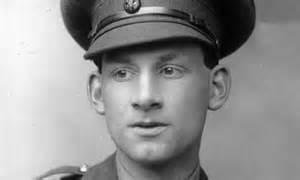
In the spirit of comforting the disturbed, and disturbing the comfortable, I would like to finish this piece by reprinting a poem by WWI soldier and poet, Siegfried Sassoon. With words alone, Sassoon captures the true degree of awful, using no film crew, photographer, or painter.

Dreamers

By Siegfried Sassoon

Soldiers are citizens of death’s grey land,
Drawing no dividend from time’s to-morrows.
In the great hour of destiny they stand,
Each with his feuds, and jealousies, and sorrows.
Soldiers are sworn to action; they must win
Some flaming, fatal climax with their lives.
Soldiers are dreamers; when the guns begin
They think of firelit homes, clean beds and wives.
I see them in foul dug-outs, gnawed by rats,
And in the ruined trenches, lashed with rain,
Dreaming of things they did with balls and bats,
And mocked by hopeless longing to regain
Bank-holidays, and picture shows, and spats,
And going to the office in the train.
 
*Covid 19 deaths are currently presented in the same visual manner. Grim statistics take a toll.
Gail Chumbley is the author of the two-part memoir, “River of January,” and “River of January: Figure Eight.” Both titles are available on Kindle.