The Working End of Tomorrow

815528365b25248630140a659ad44ffa


“A politician looks forward to the next election cycle, while a statesman looks forward to the next generation.” This admirable sentiment has been attributed to a number of speakers including Thomas Jefferson and the 19th Century Reverend James Freeman Clarke. But I heard the quote attached to President Gerald Ford. Whoever uttered these words has my full endorsement.

This morning began well. I awoke from a dream-filled sleep of taking roll, presenting lessons, and interacting with my students. They were all mixed up, hailing from a multitude of graduating classes, but still they were all my kids. I knew them well. In point of fact, most of my nights pass in a flowing narrative of teacher dreams, and I’ve gotten fairly used to this regular occurrence. The joke since retiring is, “I work so hard at night I should still be on the payroll.”

At any rate, after waking up, my mood remained jovial, still dialed in to happy. Tapping on my iPhone a picture appeared of a former student, now in a military uniform singing with three other soldiers. He and his brothers-in-arms were performing a rendition of the National Anthem at a public event. In another post a young lady, newly attending college revealed her fears about losing interest in reading for pleasure—a concern she happily resolved by opening a new book. Scrolling down the wall a bit, a wonderful family picture appeared of one of the kindest student’s I’ve had the pleasure to know. She posed before a Christmas tree with her three little boys, the youngest only two months old. Her husband’s caption clearly revealed his love for her and his boys. These posts are just, well, just so cool!

Not all teaching reminders and memories are as bright as those that I experienced this morning. Still, I wouldn’t have missed my time with these young people for a king’s ransom. Magic occurred in those classrooms; pure joy a guaranteed bi-product of the learning process.

I discovered over the years, that basic to the art of teaching and learning, is a faith in the future, a tangible something waiting ahead for every individual—a realized dream. All the hours of classroom preparation devoted to listening and thinking skills, observation, and problem-solving, were simply a training ground for young people to eventually find their place in the larger world.

While grappling with today’s incessant demands, it is far too easy to gloss over thoughts of the future. Caught up in the crowded moments that make up the present, many lose sight of the certainty of tomorrow. Teachers, however, are not permitted the luxury of settling in the moment. We must skip ahead of the “now,” planning and adjusting, then planning further. Intrinsic to our professional calling is the absolute assurance of a looming future, and we have to get our kids ready.

Perhaps stake holders could gain some perspective by casting aside trivial, momentary agendas—the noisy culture wars taking place across media battlegrounds, jousting in never ending finger pointing. Those distractions impede the progress available to our students, who are rapidly passing through the system. These kids are here today and gone tomorrow, quite literally.

When I assessed my students in class, I often envisioned them as adults, figuring out their individual niche. With that objective as my guide, I tried to design the best methods available to reach practical benchmarks. Even so, in the end, I had to let each class move on, a natural continuation forward to meet their futures, hopefully carrying my small contribution. An act of faith.

With our eyes vigilantly fixed on the countless tomorrows yet to come, would teachers be considered President Ford’s definition of statesmen? I’d like to think so.

Gail Chumbley is a retired educator and author of River of January. Also available on Kindle. Watch for “River of January: Figure Eight” this Fall.

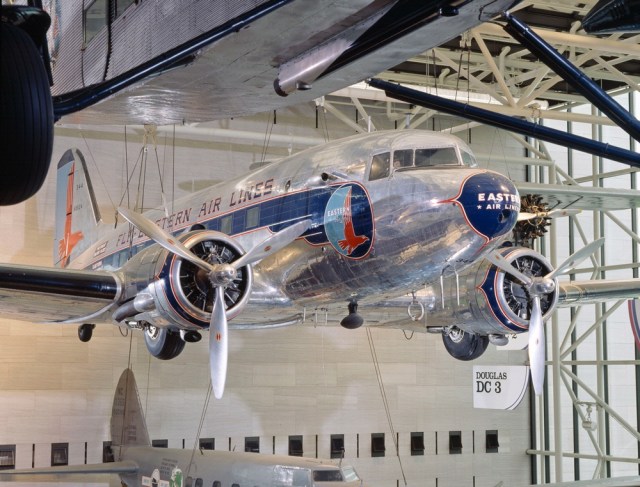
The Great Silver Fleet

The Silver Fleet in a Golden Age!

gail chumbley's avatarGail Chumbley

The Great Silver Fleet

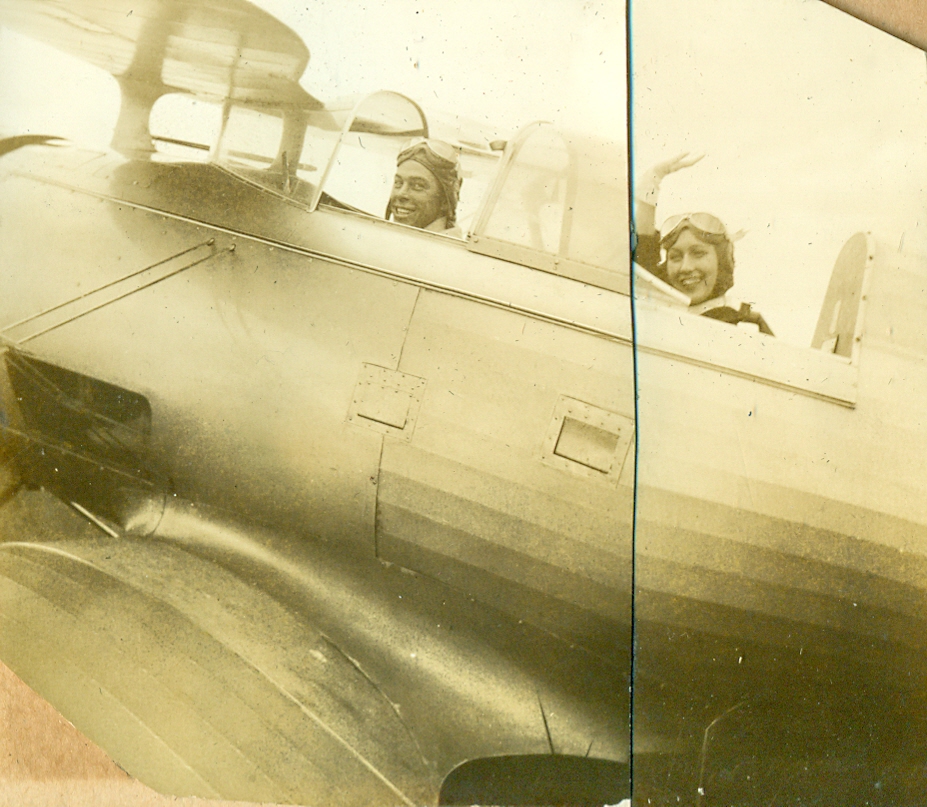
This photo is a DC3, part of Eastern Airlines “Great Silver Fleet” of passenger liners. The plane is on display in the Air and Space Museum at the Smithsonian. We had suspected that Chum had flown this aircraft, but weren’t quite certain. Finally, I had the chance to look over his logbooks and matched the tail number to this plane. Chum captained this particular aircraft in February, 1946, six months after the war ended. If you find yourself on the National Mall, you can duck into the Air and Space, where you’ll find this beauty still on exhibit.

View original post

Cocolalla

73115959-SLD-004-0017

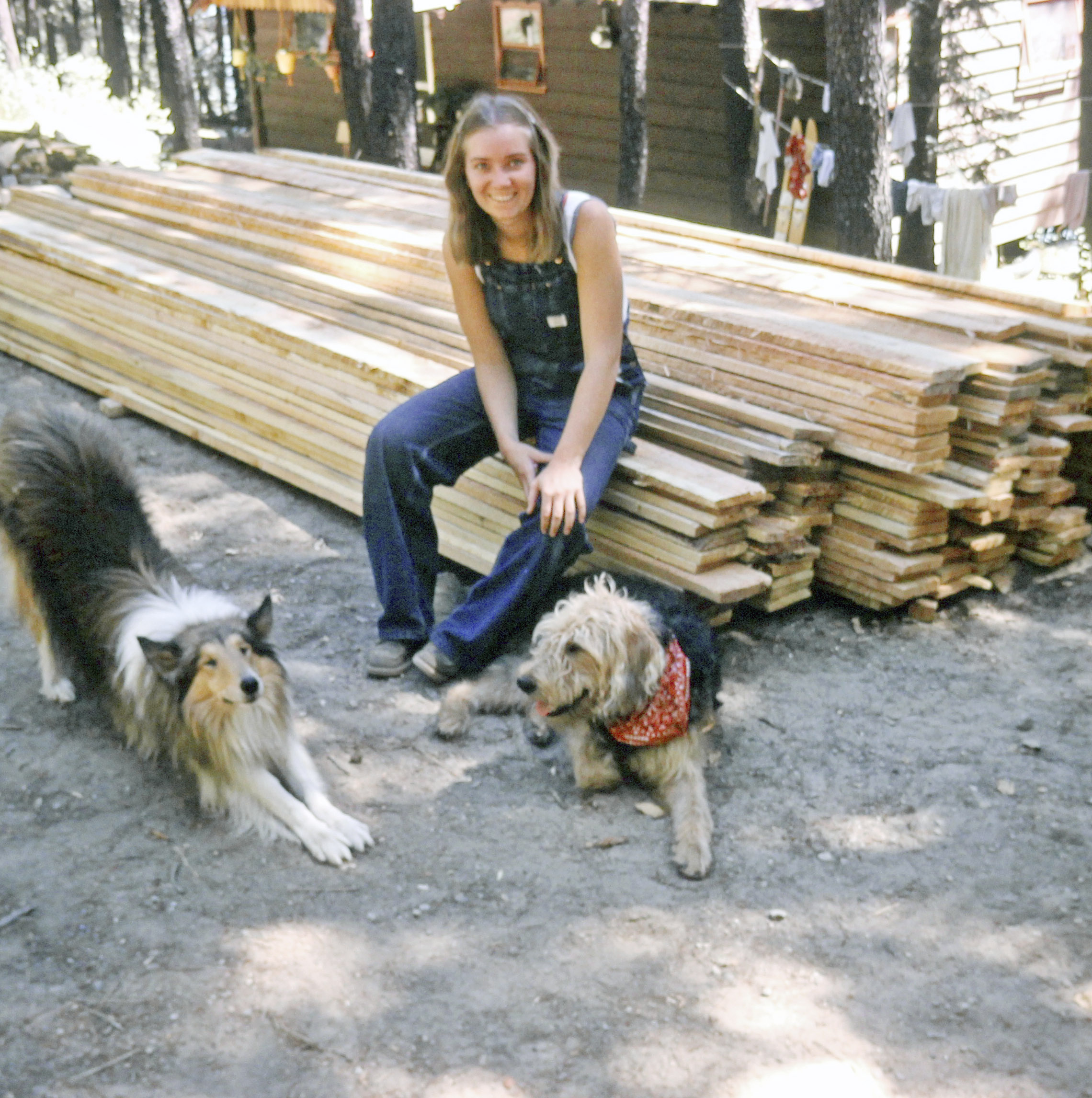
We had two cabins on a small lake in Northern Idaho.

Located between Lake Coeur de Alene, and the Pend Oreille, our little acre overlooked tiny Cocolalla, with large windows where we could watch the waves lap up on the beach. The original structure we astutely named the Little Cabin, later followed by the larger Big Cabin. This bigger cottage had been built with all the amenities of home; running water–hot and cold, a tub and toilet, a full kitchen, and electric heat.

Those early weekends in the Little Cabin hold many good memories. All of us crammed into that tiny wood box, the unfinished walls festooned with a lifetime of greeting cards, a big enameled wood stove, and a porcelain basin for washing dishes. Grandpa got his hands on a tall steel milk can and commandeered it for enough drinking water to get us through the weekend. As for entertainment, Grandma had an old radio that blasted the most impressive static, interspersed with Roy Orbison or Andy Williams fading in and out.

Once the Big Cabin was completed and my grandparents moved in, the smaller cabin was demoted to storage. It also housed a set of bunk beds, a fold-down couch, and one double bed; useful for my brothers who were just getting bigger. Now, in addition to greeting cards, the cabin stored every variety of water equipment. Fishing poles, life jackets, oars, and an outboard motor clamped to a metal barrel, with stacks of beach towels the size of blankets.

As I recall, a constant grit of sand coated the linoleum floor.

The property was my grandparents retirement dream, but a dream they happily shared with the rest of us. I knew, even then, that I was always welcome, always.

My grandpa was an early riser, a product of a lifetime as a mailman. He didn’t want to tiptoe around a little kid sleeping on his sofa at five in the  morning. At bedtime my grandmother and I made our way to the Little Cabin in the dark by flashlight. Under the covers of  the double bed, I would chafe my feet deep under the sheets to warm my toes. As we grew settled and peaceful she would begin to reminisce, talking to me for hours in that darkness. I learned of her life in those moments, warm in that cozy bed, listening to her voice, breathing the scent of the evergreen forest.

She told me of my biological grandfather, her first husband, who had left her bereft and penniless after my mother had been born. Despite the Depression, he liked to gamble away their money. My Grandma had to leave him and she struggled to find work as few jobs existed. Forced to farm out her daughter, my mother, in various homes, her the guilt still haunted her. Clearly it still broke Grandma’s heart that she was forced to separate from her little girl for months at a time. I could hear a wound that could never heal.

As the night grew deep, crickets and bullfrogs began to chorus. Flanked next to her, and pressed against some greeting cards, I prayed I wouldn’t spoil the magic by having to go potty. She kept, beneath the bed, a Chase and Sanborn coffee can that I hated to use. It felt cold and left rings on my little bottom. Still, considering options, the can was more appealing than a journey to the outhouse. Using that creepy outhouse in the daytime was bad enough, but at night unthinkable.

Finally poking her lightly, I would tell her. And she never hesitated. Showing no impatience at all, Grandma seemed to make my problem her own, reaching for the flashlight and finding that rusty can. She held the light on me so I could aim properly, then back into the warm bed. No recriminations.

She loved me.

I loved her.

Today my husband and I live in the woods. We don’t have a lake, but a river runs near and we can hear it on very quiet nights. I relax in my cozy bed in the darkness and listen to the crickets and bullfrogs, while breathing in a scent of pine. A sense of complete security, of love, of acceptance returns, synonymous with the love of my grandmother. She was home for me, and though gone these many years, my mountain cabin still echoes with her voice.

Gail Chumbley is the author of the two-part memoir “River of January,” and “River of January: Figure Eight.” Both are available at http://www.river-of-january.com and on Kindle.

gailchumbley@gmail.com

The New Old Oregon Trail

WesternUSMigrationRoutes

My intention in the classroom was to make my lessons in history pertinent to today. And it actually wasn’t that hard because geographic places don’t change location, just the cobwebs of time cloud the human story.

The high school where I worked sat on the north alternate of the Old Oregon Trail. In fact the highway down a couple blocks from the building was the asphalted remnant of the actual Trail. I would ask the kids to raise their feet still sitting in their desks, then stomp down, (bet the classroom below liked that) explaining they were sitting atop the Oregon Trail, the topic for the day.

I began this western migration unit by paying homage to those inhabitants of the west who never asked for conquest. Some effort was made in acknowledging the rich role played by native peoples who had once populated the far reaches of the American West. I described what a wagon contained, that most emigrants walked, and what supplies were necessary for success. We would talk hardships; accidents, disease and death, and speculated if our school might have ghosts like in the movie, Poltergeist.

I projected a map on the wall of other trails west—California, Mormon, Santa Fe, etc . . . I continued by explaining that the Panic of 1837, another of countless bank failures had forced people from their secure homes to face an unknown future, and pointed out western areas of settlement founded by those emigrants who survived the trek.

“Who in here was born in Idaho?” I would suddenly ask. A small number of hands would go up, and we’d chat about native Idahoans for a moment. “Out of state?” I followed up quickly after. This time the majority of students waved excitedly, anxious to tell of their own 21st Century emigration story. “Where is your family from? What brought you here?” And around the classroom we traveled with tales from Massachusetts, Florida, and Texas. “My dad lost his job when the economy crashed—or my mother was promoted. Lo and behold the ageless push and pull of human migration remarkably mirrored those of 1837.

“How did you travel to southern Idaho?” “I-15 to I-84,” says one kid. “I-84 over the Blue Mountains from Portland,” offers another. “Interstate 5, then over Donner Pass. It took us forever.” I refer back to the trails map of the old west, and we reexamine the freeways and highways of today. A moment of epiphany, as time is momentarily frozen.

That is the story of Southern Idaho. Populations come from all around our land-locked state, and “home” for most inhabitants does not mean Boise. And I have observed over the years that there are three major umbilical cords tying residents to places outside the region.

The first home, (and the group where I belong) lies up, in the Pacific Northwest. Somehow, over the years, the Oregon Trail shifted backward into reverse bringing many to the Gem State. Living and working in the Treasure Valley folks hail from Roseburg, Oregon, to Bellingham, Washington, and east to Spokane. (In that mix are sprinkled a few newcomers from Alaska as well.) Holiday flights for this group means PDX, SEA, GEG, but all taking off from BOI. This crowd conceptualizes home as a place with a chilly surf, dripping madrona trees, and plenty of slugs oozing through wet moss.

The next category is made up of Californians. This group has found a region and climate similar to what they left behind, sans the overpopulation and crime. These people are notoriously disliked in Idaho as opportunistic trespassers. Perceived as “carpetbaggers,” Californians are on record as selling their Orange County, or Marin County homes for bundles, then invading Idaho to reinvest. This crowd is vilified for running up the price of local real estate, leaving poor Idahoans further marginalized. I’m not so sure that these gloom and doom charges are valid, but as a historian I do find some humor in this generalization. I’ve read The Grapes of Wrath, and those destitute Okies received no warmer California welcome back  in the 1930’s.
Needless to say the glorious landscape of the Golden State is home for many transplanted Boiseans. I do recall the empty desks on Thanksgiving Wednesday for families driving over Donner Pass to see grandma in the warmer climes of the gentle southwest.

The last major group, makes up by far, the largest portion of Boiseans with roots outside the state. These are LDS residents who might have been born in Idaho, but more often than not, came into the world in Utah. This faction is formidable in size because the Wasatch Valley is the point of origin for their Mormon faith. For example even if a student was born in Boise, and graduated from high school along the Snake River basin, they will, more often than not, seek higher education in Utah. Those same young people usually marry and have their own children in the Beehive State, but may return to Idaho later to expand and raise their families. Home for the Mormon faithful is identical to those back in Utah. Life centers around their Ward, their Stake House, the Temple–all rich with historic traditions, rites, and the stress on community passed down from the earliest days of Deseret.

All of these visions of “home” remain powerful in my area. The idea of belonging stretches out of Boise in all directions, much like the wooden spokes on an old wagon wheel.

When a Boisean says “I’m going home,” it is very likely doesn’t mean a house in town.

The Sultan’s Tent

Ottoman_Empire_b

Words, when used with purpose can trigger a powerful array of emotions. There are words such as “ruthless,” “cruel,” “tyrannical,” and countless other passionate terms. “Empire,” has become one such pejorative in the early Twenty First century, particularly when hyphened after the name American.

Empires reach back to the earliest of civilizations: Greek, Roman, Byzantine, Mayan, Inca, British, and on. The terms listed above certainly applied to the tactics of oppression used commonly by those powers. Still there isn’t much discussion of the legacy of the Ottoman Empire, (14th to the early 20th Centuries).

We are living today in the fallout of that once powerful Turkish Empire, and the west, for the most part, has no idea of this historical backdrop. And this is no study of the Ottomans, by any means, but it is a look at the consequences of that powerful empire’s ruthless, cruel, and tyrannical reign.

By the turn of the Twentieth Century the Sultan’s realm was waning, the borderlands began breaking free from centuries of aggressive persecution. So unstable was the region by 1914, Turkey became a known as, “The Sick Man of Europe.” Siding with the Central Powers in World War One, (1914-1918) the once powerful kingdom gambled all, and ultimately lost their lands to treaty makers at Versailles. The western victors quickly assumed authority over the fallen empire, and promptly commenced to dissect the region, dividing up the spoils of war.

Before the Great War had ended devastation visited the various populations within the failing empire. Armenians had been slaughtered, Kurds, Yazidi’s, Christians, Jews, and Muslims began to emerge from under the now-eclipsed reach of Turkish authority. Western nations swooped in, and attempted to organized this unruly disgruntled mix of contending ethnic communities. Oblivious European leaders divided up much of the former Turkish empire, and Syria, for example, was born and handed over to the French. Mesopotamia ended up batted back and forth in heated debates between the two major Colonial  powers; Mosul ending up in the hands of France, and Baghdad into the hands of the Brits. At the same time uncooperative tribal strong arms jealously guarded their newly liberated territories from the presumptuous Europeans.

Enter the oil business.

Discovered by intrepid Western engineers, places formerly ruled by the Ottoman’s were found rich in petroleum reserves. A new, more urgent need for order rose because the financial stakes were, oh so much greater. The British charged into the unruly breach, and aided by the French (who also desired oil), contrived a new nation. Placing a puppet leader on the throne, the nation of Iraq was born. Muslims–Shia and Sunni, Kurds, Christians, Jews, etc…now found themselves suddenly under a new boss, a new flag, and lots of western oil engineers.

Now, due to short sighted foreign policy makers in Washington, no central government actually exists in this fabricated country of Iraq. The lid is off, and the artificial ties that supposedly held the nation together have utterly vanished. Mesopotamia had been a seething, unstable area before World War One, before Versailles, before Saddam Hussein, and before George W. Bush. Still, a thorough look back in time, without the blinders of oil profits clouding the issue, might have saved us all from the consequences of falling into the morass left by the Ottomans.

A bitter, contentious mess endures where the Turks once ruled. Now, today, the world looks to the American-Empire, which so unceremoniously blundered into this preexisting turmoil to restore stability to the chaos created long ago under the “Sultan’s Tent.”

My Rock, My Refuge, My Library

It wasn’t yet 10:00am, but parking spaces were filling up fast. The library would open soon.

Be-bopping up the sidewalk, dressed completely in black, ear buds stuffed under his knitted cap, came the happiest Goth in high-tops. A young mother followed behind, a stack of books awkwardly balanced under one arm, and a wiggly baby in the other. The time was 9:58.

Older folks, hipsters, Lexus drivers, the tattooed poor–all queued together for their morning stop at the public library. How remarkably American.

When the doors finally did slide open, this society of seekers disappeared inside, striding with purpose to stake their domain. A no-nonsense aura filled the air as each card holder claimed their chair, booth, or computer to commence their business.

If ever there existed a reflection of perfect democracy it is America’s neighborhood library.

Visits make a lot sense. The facility is clean, climate controlled and the interior is well lit for reading and research.

More, public libraries offer a multitude of services for the community. The unemployed  gets out of the house, and can search job openings on the internet, maybe check out a DVD or two at no cost. For the housing insecure, the interior offers sanctuary, a chance to safely close one’s eyes or relax and catch up on some reading. Mothers toting little ones make use of programs such as story-time, organized games and crafts, providing a diversion from hours at home.

My own elderly parents used to check out their book limit every two weeks. The librarian knew them well, suggested titles, and bagged up their books. They, too, waited in the parking lot. When those doors glided apart, canes in hand, they hobbled inside, joining the democratic wave claiming library privileges.

It was Benjamin Franklin who modeled this fixture in America’s beginnings. Franklin knew national longevity demanded literacy, and in that spirit he established the first lending library in Colonial Philadelphia. A true visionary, Dr. Franklin set the course for public good by founding these centers of learning. If he could see what I saw in that library parking lot, Franklin would rest a gratified patriot.

Next to public schools, a library card is the ultimate equalizer–from the richest to the poorest among us. No amount of status or money can elbow us out. My access is equal to yours.

To politicians fearful of books on the shelf, you strike a blow not only against the First Amendment, but to all the connecting tissue of American society. A misguided, self-righteous streak exposes a dark agenda which should give us all pause. Attacking libraries attacks us all. 

Gail Chumbley is the author of two books, “River of January,” and “River of January: Figure Eight.” Both titles available on Kindle. Chumbley has also authored two stage plays, “Clay,” and “Wolf By The Ears.”

gailchumbley@gmail.com

A New April

Image

Right now, in classrooms across America, and overseas, thousands 17-year-olds are preparing for the AP US History exam. They, and their instructors are obsessed with cause and effect, analyzing, and determining the impact of events on the course of America’s story.  Moreover, they are crazed beyond their usual teen-angst, buried deep in prep books, on-line quizzes, and flashcards. As a recovering AP teacher, myself, I can admit that I was as nuts as my students, my thin lank hair shot upward from constant fussing.

My hair fell out too, embedding in combs and brushes, as I speculated on essay prompts, that one ringer multiple choice question, and wracking my brains for review strategies. The only significance the month of April held was driving intensity, drilling kids on historic dates; Lexington and Concord, the firing on Fort Sumter, the surrender at Appomattox Courthouse, President Wilson’s Declaration of War in 1917, the battle of Okinawa, MLK’s murder, and the Oklahoma City bombing, That was what April meant in April.

To quote John Lennon, “and now my life has changed, in oh so many ways.”  Today April holds a whole new definition. My husband rises first in the morning, putters in the kitchen, fetches coffee, tends to the dog, and is back in bed, back to sleep. Big plans for my morning include writing this blog, making some calls related to book talks, a three mile walk through the Idaho mountains, then working on Figure Eight, the second installment of River of January. What a difference!  Nowadays, getting manic and crazy is optional. My hair has grown back in, standing up only in the morning, and the only brush with AP US History occurs in my dreams; the responsibility passed on into other capable hands.

This month, at least here in the high country, has been especially beautiful. We have already enjoyed a few 70 plus degree days, and the green is returning to the flora. Our sweet deer neighbors are no longer a mangy grey, emerging from the trees wearing a warm honey coat. With a little snow still on the peaks, the sky an ultra blue, and the pines deep green and rugged, I think sometimes this must be Eden.

My years as a possessed, percolating history instructor provided a gift of passionate purpose that enriched me more than depleted.  But, now . . . I wouldn’t trade this new phase of my life for all the historic dates in April.

Gail Chumbley is the author of River of January also available on Kindle.