The Golden Age of Aviation.

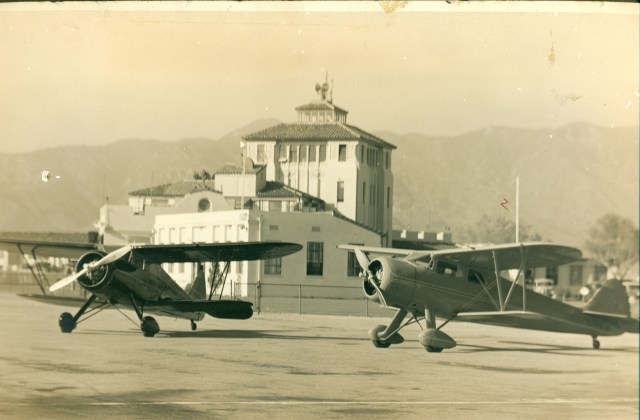
This shot was taken in Glendale California prior the night time air race Chum entered in 1933. His destination, Roosevelt Field via Albuquerque and Wichita. The competitors could only fly at night.
The Golden Age of Aviation.
This shot was taken in Glendale California prior the night time air race Chum entered in 1933. His destination, Roosevelt Field via Albuquerque and Wichita. The competitors could only fly at night.
Funny, but this blog still resonates a year later.
My son forwarded a Huffington Post story featuring the rejections endured by prominent authors. I know that he meant it as a kindness, that everybody struggles in the book business. Still, despite his good intentions, the story brought me down. The business end of publishing always leaves me with a chill.
Writing, though sometimes a struggle, has been an affirming experience for me, delving into a story of risk and adventure. I’ve been in the cockpit in an air race, suffered through butterflies waiting to go on stage in Paris, London, and Buenos Aires. Now that the story is with the editor, I have to face the next battle–getting noticed by a publisher. That arena is about money, markets, and deal-making. And though I understand there are other options for getting River of January out there, those alternative routes are just as mystifying.
For any of us trying to get…
View original post 67 more words

My intention in the classroom was to make my lessons in history pertinent to today. And it actually wasn’t that hard because geographic places don’t change location, just the cobwebs of time cloud the human story.
The high school where I worked sat on the north alternate of the Old Oregon Trail. In fact the highway down a couple blocks from the building was the asphalted remnant of the actual Trail. I would ask the kids to raise their feet still sitting in their desks, then stomp down, (bet the classroom below liked that) explaining they were sitting atop the Oregon Trail, the topic for the day.
I began this western migration unit by paying homage to those inhabitants of the west who never asked for conquest. Some effort was made in acknowledging the rich role played by native peoples who had once populated the far reaches of the American West. I described what a wagon contained, that most emigrants walked, and what supplies were necessary for success. We would talk hardships; accidents, disease and death, and speculated if our school might have ghosts like in the movie, Poltergeist.
I projected a map on the wall of other trails west—California, Mormon, Santa Fe, etc . . . I continued by explaining that the Panic of 1837, another of countless bank failures had forced people from their secure homes to face an unknown future, and pointed out western areas of settlement founded by those emigrants who survived the trek.
“Who in here was born in Idaho?” I would suddenly ask. A small number of hands would go up, and we’d chat about native Idahoans for a moment. “Out of state?” I followed up quickly after. This time the majority of students waved excitedly, anxious to tell of their own 21st Century emigration story. “Where is your family from? What brought you here?” And around the classroom we traveled with tales from Massachusetts, Florida, and Texas. “My dad lost his job when the economy crashed—or my mother was promoted. Lo and behold the ageless push and pull of human migration remarkably mirrored those of 1837.
“How did you travel to southern Idaho?” “I-15 to I-84,” says one kid. “I-84 over the Blue Mountains from Portland,” offers another. “Interstate 5, then over Donner Pass. It took us forever.” I refer back to the trails map of the old west, and we reexamine the freeways and highways of today. A moment of epiphany, as time is momentarily frozen.
That is the story of Southern Idaho. Populations come from all around our land-locked state, and “home” for most inhabitants does not mean Boise. And I have observed over the years that there are three major umbilical cords tying residents to places outside the region.
The first home, (and the group where I belong) lies up, in the Pacific Northwest. Somehow, over the years, the Oregon Trail shifted backward into reverse bringing many to the Gem State. Living and working in the Treasure Valley folks hail from Roseburg, Oregon, to Bellingham, Washington, and east to Spokane. (In that mix are sprinkled a few newcomers from Alaska as well.) Holiday flights for this group means PDX, SEA, GEG, but all taking off from BOI. This crowd conceptualizes home as a place with a chilly surf, dripping madrona trees, and plenty of slugs oozing through wet moss.
The next category is made up of Californians. This group has found a region and climate similar to what they left behind, sans the overpopulation and crime. These people are notoriously disliked in Idaho as opportunistic trespassers. Perceived as “carpetbaggers,” Californians are on record as selling their Orange County, or Marin County homes for bundles, then invading Idaho to reinvest. This crowd is vilified for running up the price of local real estate, leaving poor Idahoans further marginalized. I’m not so sure that these gloom and doom charges are valid, but as a historian I do find some humor in this generalization. I’ve read The Grapes of Wrath, and those destitute Okies received no warmer California welcome back in the 1930’s.
Needless to say the glorious landscape of the Golden State is home for many transplanted Boiseans. I do recall the empty desks on Thanksgiving Wednesday for families driving over Donner Pass to see grandma in the warmer climes of the gentle southwest.
The last major group, makes up by far, the largest portion of Boiseans with roots outside the state. These are LDS residents who might have been born in Idaho, but more often than not, came into the world in Utah. This faction is formidable in size because the Wasatch Valley is the point of origin for their Mormon faith. For example even if a student was born in Boise, and graduated from high school along the Snake River basin, they will, more often than not, seek higher education in Utah. Those same young people usually marry and have their own children in the Beehive State, but may return to Idaho later to expand and raise their families. Home for the Mormon faithful is identical to those back in Utah. Life centers around their Ward, their Stake House, the Temple–all rich with historic traditions, rites, and the stress on community passed down from the earliest days of Deseret.
All of these visions of “home” remain powerful in my area. The idea of belonging stretches out of Boise in all directions, much like the wooden spokes on an old wagon wheel.
When a Boisean says “I’m going home,” it is very likely doesn’t mean a house in town.

The runaway stole from the house while the father slept. He had a long walk to the train station, praying the old man wouldn’t bother to track him. Reaching town about daylight, Mont pulled open a peeling wood door, while his eyes scanned the depot. An empty waiting room greeted him, save one boy sitting low on a far bench. Mont stared closer and recognized him as a friend from school.
“Marshall” he gasped, smiling as he approached his friend. The schoolmate startled at the sound of his name, and Mont understood.
“Sorry Marsh, I’m worried about being dragged back too.”
“Hey, Mont. Where you off to?” he asked warily.
“Going to sea, Marsh, going east” was his response.
Marshall replied, “I’m going the other way, headed west, get hired by a coal company in Jenkinjones, West Virginia. I’m gonna make some real money.”
Sitting down next to his pal, Mont suddenly began to rethink his own plans. “West, Marsh?” The lure of the sea tugged hard, but having a friend along, not going it alone felt more comforting. “Jenkinjones, huh? Never heard of the place.” The two boys sat silently, cautiously glancing at the station door each time it opened. “Think they might hire me?” Mont finally asked. His friend smiled in response. And the two boys bought tickets for a west bound train headed toward the distant mountains. Destination: the Pocahontas Fuel Company.
Stepping onto the rail platform Mont and his companion silently and soberly blinked at the foreign landscape. The sky appeared decidedly grey, dead. All the erstwhile green foliage sealed in powdery black. Deep gouging and scarring disrupted the terrain. Marshall hailed a defeated looking passerby asking for directions to the coal company office. Without a word in reply the dilapidated man simply gestured up a hill to a large grey wooden building crisscrossed with weathered wooden stairs.
“Sure they’ll take us on?” Mont, with a sudden case of nerves wondered.
“I, I think so. Back home some older fellas said these companies want kids. We can work in spaces grown men can’t reach,” his high voice trembled as well, exposing his fear.
Mont promptly found that the reports were all too true. Not only were boys’ ideal workers, they proved much easier to bully and underpay. On his first day deep in a tunnel of darkness Mont faced his first test.
Standing on a narrow crevice, a veteran miner worked busting up coke with his pick ax. “Webster, hey, over here!” hollered the foreman from the inky dark. As the miner twisted around, the butt of the handle struck Mont hard behind his left temple. The boy’s head exploded in pain as Webster raged profanities in his throbbing ear. Kneeling in the dark, huffing sooty air the boy questioned why he had come to this place. His ear bled for days after.
Mont’s body ached, his fingers bled, painfully stiff and blistered–his knuckles grated raw. Black caked around each nostril, his facial pores embedded with coal dust. Digging around his small suitcase late one night, Mont caught his reflection in the bag’s tiny mirror. “Oh!” he gasped at his reflection, “I look like the rest of them!” In the morning, frightened and distraught, the boy hunted down his only friend. “I don’t like this place. Marsh, they look right through us. The company doesn’t care who comes out or vanishes in those shafts.” Tears sprouted suddenly in his friend’s eyes, Marshall’s wordless answer.
The company used every means to undermine demanding, tiresome union labor. The boy couldn’t help but hear men in the tunnels grumble about the strong arm tactics management used. Pocahontas hired informers, framed labor leaders and evaded safety improvements. Another strategy was importing cheap immigrant workers. The desperate from Europe toiled for less and accepted the dangers without complaint.
“Damn scabs” muttered a burly old timer. “Bosses trying to undo us . . . bring in Dagos, Pollock’s and other riff raff getting our jobs.” “They’re dumb, too” groused another grimy worker. “You tell ‘em something and they just stare.” The boy listened, sympathizing with the outrage, despite how much he hated the coal mines.
Mont studied one new miner, an import from Poland as he made his way into the blackness. Only in the country a couple of weeks, the foreigner headed into the tunnel carrying a short steel girder over his shoulder to use as structure support deeper in. Overhead, a raw electric wire was strung the length of the tunnel that powered coal carts carrying coke to the surface. The Virginia teen watched with interest as that girder just kissed the unprotected power line, knocking the hapless victim flat onto his backside. Mont quietly chuckled, he couldn’t stop himself. Then all the humor vanished, all the bigotry evaporated when the immigrant, attempting to regain some dignity, stood and brandishing the steel beam, deliberately attacked the line and instantly electrocuted himself. Miners rushed from all directions and crowded around the dead man, mouth slack and eyes glazed, sightless.
In a moment of clarity Mont understood that there were worse places to live than in Pulaski and made up his mind to go back to Virginia.
To Read More Buy River of January Today

This is my second fall since retirement from the classroom, and though I am content with my decision to leave, I am feeling a little nostalgic.
From the portal of my computer I have watched teacher friends psych themselves up for their annual migration back to school. Pristine, empty classroom pics are gleefully posted online, arranged with care for the students to arrive. Posters are tacked up on the green cinder block walls, desks neatly arranged, and books organized on shelves. (By the way, the day before the kids came was the only time of the year that my room looked that orderly).
Believe me, the night before classes start feels electric. No “60 Minutes,” or “Sunday Night Football” can dampen the anticipation for the following morning–we are restless horses pushed into the gate. For the one and only time of the year, I actually would iron my clothes, set up the coffee on a timer, and review my plans for the morning. If I slept at all, it was only for a couple of crazy dream-filled hours. This was big stuff, life was starting over again, the possibilities seemed limitless.
I cannot speak for other departments, but mine was terrific. We all authentically liked and respected one another. And even better we laughed a lot. I think that is the part of starting up the new year that I miss the most. I weathered more seminars, speakers, and other “professional development” drudgery than I like to recall, but nothing ever restored my spirits quicker than a good laugh with my colleagues.
As I reminisce about school, I’m reminded that members of my department didn’t approach their teaching duties at all the same way, but still effectively reached their students.
One colleague tried so hard to seem stern and exacting, really wanted to be seen as a disciplined guy. He demanded punctuality, meted out consequences according to the student handbook, but it was no use. The kids saw through his pretense, and many went out of their way to express their amusement with his charade. Kids waited for him at his door to harass him with shoulder bumps, jokes, razzing. They loved him and knew he felt likewise.
Another teacher was a completely different character. Meticulous to a fault, his classroom and teacher desk always in perfect order, his lesson plans exact and centered on the desktop. In the front of the room lay needed supplies, seating charts, sharpened pencils . . .the whole deal. And though it sounds like he ran a regimented show, his kids too, adored him, thriving in a well-planned and secure environment. Though they didn’t bounce him around, he wasn’t the type, the kids hollered greetings down the hall, waving excitedly to get his attention.
Then there was the guy next door. His style was just as different as any two sets of fingerprints. My neighbor maintained a strong boundary between himself and his students. His magic came through with his classroom instruction. Walking past his door revealed students busily delving into the subject matter through the medium of cardboard, music, duct tape and research for presentations. This teacher presided over a carefully managed laboratory, empowering students with his experiential style. Those kids learned self management.
I know that those outside education have a hard time understanding why we do it. We make so little, are so pushed around–by politicians, administrative dictates, and from parents rescuing their kids from one thing or another. In the end I believe we teach because we are determined optimists. We believe deeply in the rightness of our calling. We know that we can quietly do more good for our country than any other occupation. We model knowledge, compassion, fairness, enthusiasm, humor, and hope for the future.
We teach ourselves. Happy New Year.
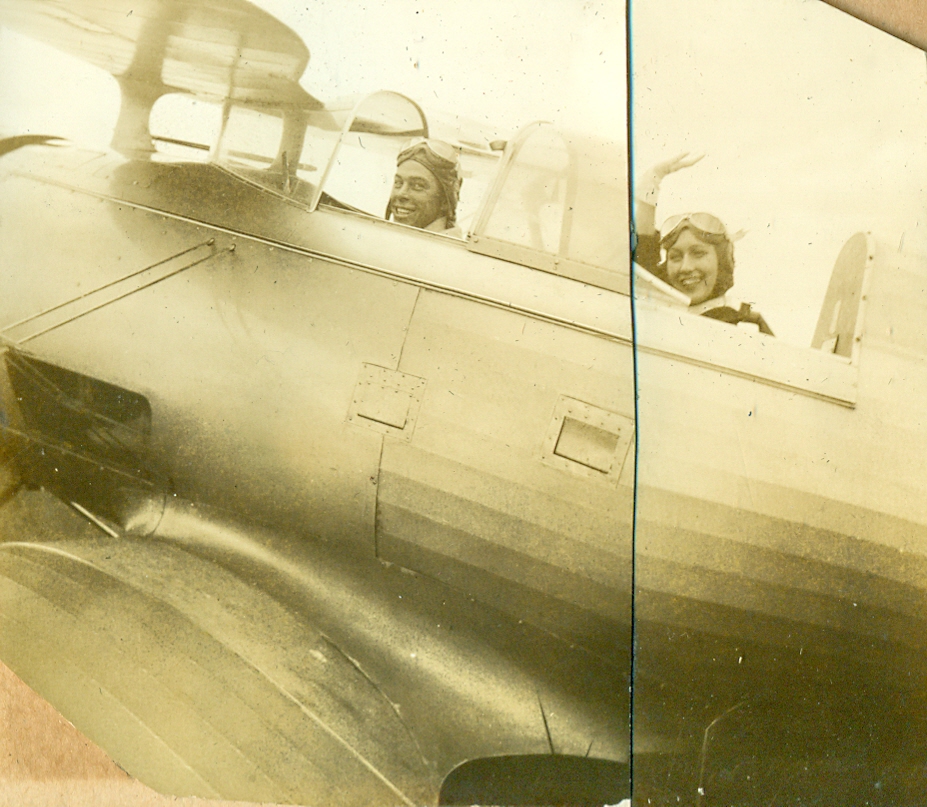 This snapshot taken in Rio, though cute is misleading. The vertical line is the giveaway clue here. The couple took turns snapping each others picture in the single cockpit. Helen followed up with her own editing using real scissors and paste. By the way, this is what joy looks like.
For the rest of the story buy River of January, by Gail Chumbley

Words, when used with purpose can trigger a powerful array of emotions. There are words such as “ruthless,” “cruel,” “tyrannical,” and countless other passionate terms. “Empire,” has become one such pejorative in the early Twenty First century, particularly when hyphened after the name American.
Empires reach back to the earliest of civilizations: Greek, Roman, Byzantine, Mayan, Inca, British, and on. The terms listed above certainly applied to the tactics of oppression used commonly by those powers. Still there isn’t much discussion of the legacy of the Ottoman Empire, (14th to the early 20th Centuries).
We are living today in the fallout of that once powerful Turkish Empire, and the west, for the most part, has no idea of this historical backdrop. And this is no study of the Ottomans, by any means, but it is a look at the consequences of that powerful empire’s ruthless, cruel, and tyrannical reign.
By the turn of the Twentieth Century the Sultan’s realm was waning, the borderlands began breaking free from centuries of aggressive persecution. So unstable was the region by 1914, Turkey became a known as, “The Sick Man of Europe.” Siding with the Central Powers in World War One, (1914-1918) the once powerful kingdom gambled all, and ultimately lost their lands to treaty makers at Versailles. The western victors quickly assumed authority over the fallen empire, and promptly commenced to dissect the region, dividing up the spoils of war.
Before the Great War had ended devastation visited the various populations within the failing empire. Armenians had been slaughtered, Kurds, Yazidi’s, Christians, Jews, and Muslims began to emerge from under the now-eclipsed reach of Turkish authority. Western nations swooped in, and attempted to organized this unruly disgruntled mix of contending ethnic communities. Oblivious European leaders divided up much of the former Turkish empire, and Syria, for example, was born and handed over to the French. Mesopotamia ended up batted back and forth in heated debates between the two major Colonial powers; Mosul ending up in the hands of France, and Baghdad into the hands of the Brits. At the same time uncooperative tribal strong arms jealously guarded their newly liberated territories from the presumptuous Europeans.
Enter the oil business.
Discovered by intrepid Western engineers, places formerly ruled by the Ottoman’s were found rich in petroleum reserves. A new, more urgent need for order rose because the financial stakes were, oh so much greater. The British charged into the unruly breach, and aided by the French (who also desired oil), contrived a new nation. Placing a puppet leader on the throne, the nation of Iraq was born. Muslims–Shia and Sunni, Kurds, Christians, Jews, etc…now found themselves suddenly under a new boss, a new flag, and lots of western oil engineers.
Now, due to short sighted foreign policy makers in Washington, no central government actually exists in this fabricated country of Iraq. The lid is off, and the artificial ties that supposedly held the nation together have utterly vanished. Mesopotamia had been a seething, unstable area before World War One, before Versailles, before Saddam Hussein, and before George W. Bush. Still, a thorough look back in time, without the blinders of oil profits clouding the issue, might have saved us all from the consequences of falling into the morass left by the Ottomans.
A bitter, contentious mess endures where the Turks once ruled. Now, today, the world looks to the American-Empire, which so unceremoniously blundered into this preexisting turmoil to restore stability to the chaos created long ago under the “Sultan’s Tent.”
A life can be measured in a variety of ways. Most customary are calendar years, but except for birthdays, Driver’s Licenses, Voting, Social Security, and Medicare that approach is hardly an increment that shapes all people. Haphazard events, personal, national, or global can chisel changes as permanent, and indelible as any wrinkle or gray hair.
In River of January my central characters celebrated long lives filled with extraordinary adventures. Montgomery “Chum” Chumbley came of age in an uncertain world of rural isolation. His was a harsh environment of feast or famine, drought or flood, butchering livestock for food, and cruel, sweaty labor. His life offered narrow and limited opportunities–still trapped in the unchanging mold of the 19th Century.
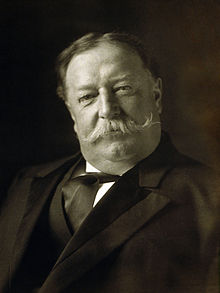
William Howard Taft presided over the White House the year Chum was born. There were no niceties like electricity or indoor plumbing in his world. In fact the White House itself had barely installed electricity, running water, or a shelter for automobiles. Yet, by the time of Chum’s death in 2006, George W. Bush had ordered spying satellites and drones over Iraq, and NASA’s Space Shuttle program was headed into retirement. The last years of his life, Chum used a computer to keep up with his friends, and along with his television, he was current on world affairs.
Taft to Bush, seventeen presidents. He lived seventeen presidents. I’ve only lived through eleven. My parents thirteen so far, and my own kids, five.
How old are you in president years?
I’ve written two separate blogs today. Didn’t like either of them. So I’ll let Helen show us her stuff again.
Helen is in the second scene of this clip. She is the harem girl without the veil. The sheik is played by Bela Lugosi, the original Dracula. Bogart was in this film somewhere, too. It’s the only footage of Helen at eighteen that I can find.

Ken Burns has done it again–hit another historical piece of film over the wall. I’ve enjoyed Burns work for decades, beginning with “The Civil War,” through “Baseball,” to “Jazz.” He has consistently combined solid historical research with the subtle beauty of an artist. But in his new “Mark Twain” biography I made a discovery I once believed impossible. I watched the film without any historical analysis or comment.
For the first time since publishing “River of January,” I watched simply from a writer’s perspective. In the film, scholars discussed how Clemens didn’t find his unique American voice until well after “The Innocence Abroad,” and “The Prince and the Pauper” were published. Twain’s masterpiece, “Huckleberry Finn,” came after years of hesitation until that singular voice could no longer be kept tethered. The author reached deeply from his childhood–a bigoted world of ignorance, poor grammar, and slang with a twang. He defaulted to what he knew best, his inner core and colorful life.
That resonated with me in my own struggle for voice. I have come to realize that a personal truth has to come off the page to remain in the manuscript. If the story line, or flow of dialog doesn’t resonate, it has to go. There must be a truth to tell. The obstruction of a badly worded sentence, or contrived idea hangs uneasily in my psyche. I have to write what I know to be authentic. It’s a weird dynamic too, and takes concentration to pull off. I put myself in the scene–whether it’s a cockpit, or a dressing room. From that bit of time travel I can survey the setting, describing it both physically and emotionally. I understand the importance of familiarity.
In another tidbit from the documentary, Ken Burns examined Clemens daily writing regimen.
At his home in Hartford (I’ve been there, it’s so cool) Twain worked in an upstairs room, away from everyone, committing his tales to paper. Each evening Clemens gathered his family and friends to listen to his day’s bounty. I found that intriguing–not as a historian, but as a writer. (Twain had many notables among his friends, President Ulysses Grant for one.)
Samuel Clemens made writing his day-job, and used his household as an audience. Something I find I am unable to follow. However, my ears were carefully adhering to that writing schedule revelation, contemplating his patterns.
I too, need quiet and solitude, but don’t produce the same way. My engine needs to rev up before any writing session. I think and think and think (like Winne the Pooh) then inspired fire up the old laptop. The historic record can spark my thought processes, and the Chumbley archives also can prompt a productive writing session. All in all, a “fits and starts” style best describes my method. Both “River of January” and the new one “Figure Eight,” have come to life through my haphazard style.
Mark Twain can stand alone as a historic figure, apart from his brilliance as a man of letters. He belonged to a political group known as the “Anti Imperialist League,” opposing unrestrained immigration, especially from China and the Philippines. He disapproved of John D. Rockefeller and other greedy Robber Barons, making no friends among the elite. All that I all ready know, and taught for years. The astounding thing is I watched the program hearing only the literary journey of an American lion.

