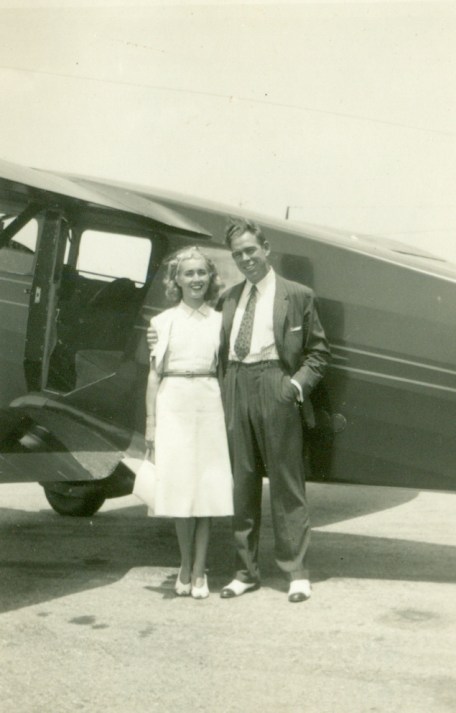
Chum & Helen, 1936
River of January: Figure Eight Comes to Salt Lake City.
Join us Saturday, December 17th, 7pm, at Weller Book Works, Trolley Square.
LOCATION
602 S 700 E
Salt Lake City, UT 84102
Chum & Helen, 1936
River of January: Figure Eight Comes to Salt Lake City.
Join us Saturday, December 17th, 7pm, at Weller Book Works, Trolley Square.
LOCATION
602 S 700 E
Salt Lake City, UT 84102
A Reprint from 2016
Please join us next Wednesday, December 7, 2016 at the Boise Public Library for the release of the long awaited sequel to “River of January,” “River of January: Figure Eight.”
Adjusting to marriage, with fears of a fast approaching war, Chum and Helen look to their future with uncertainty.
Boise Public Library, 715 South Capitol Blvd.
3rd Floor, 7PM
Both volumes make for wonderful yuletide gifts.
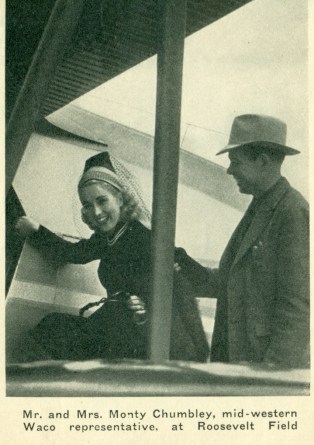
New York, 1936, honeymoon-bound.
Free Shipping on both River of January books through November 30th.


Telephone 208-462-2816
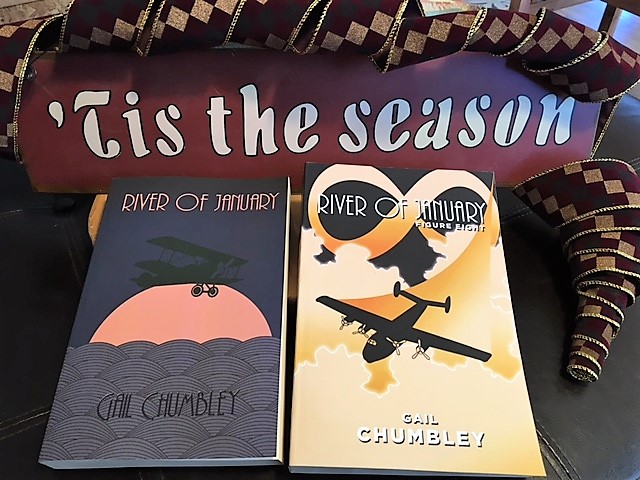
Free Shipping until November 30th, for one or both volumes–“River of January,” and “River of January: Figure Eight,” available now until the end of the month for $18.00 each. Call 208-462-2816 to place your order for one or both books with free shipping. (accepting all major credit cards–leave a message if busy)
Return again, in this true story, to an America of another era. Fly through moonlit nights, bask in the ovation of enthusiastic audiences. Soar through enemy skies in the South Pacific, and glide over glistening ice in New York’s newest and most popular theater.
“River of January” winner of the Idaho Author’s Award, 2016.

Gail Chumbley is the author of River of January, and River of January: Figure Eight.

Feel like this?
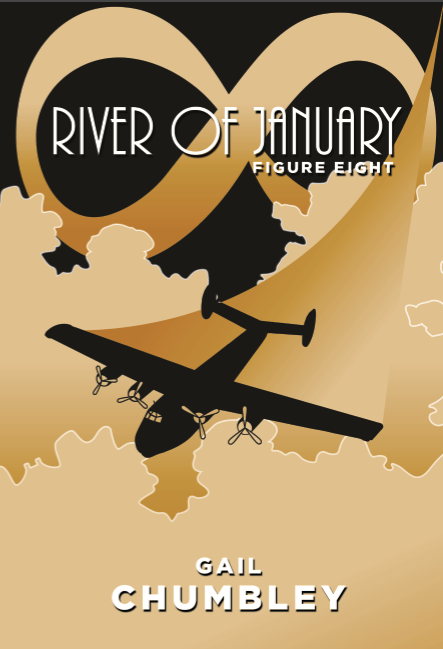
Cheer up, and read the rest of this marvelous story!
River of January: Figure Eight goes on sale after midnight, Halloween night! www.river-of-january.com.
Also available on Amazon.com

“River of January: Figure Eight” is ready on November 1st! Ordering begins after midnight, on All Hallows Eve.
Go to www.river-of-january.com or to Amazon.com. If you haven’t read the first installment, “River of January,” go to our webpage at www.river-of-january.com or to Amazon.com
Also available on Kindle.
This giveaway is postponed due to flawed data. As soon as we sort it out, the giveaway offer will resume.
Stay tuned!!.
Gail Chumbley is the author of River of January and River of January: Figure Eight, due out soon.
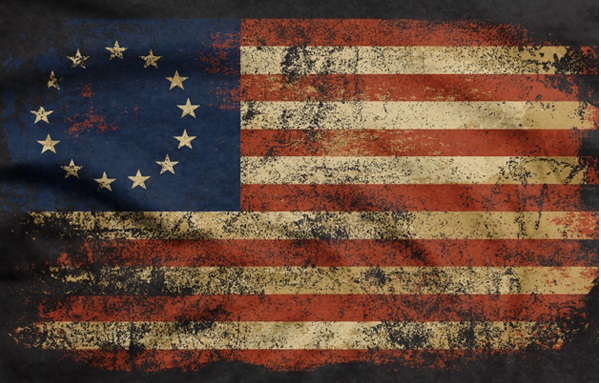
I cannot recall the words I used to soothe my juniors on that horrible day. However, the soul-deep pain remains remarkably sharp in my emotional memory.
Vaguely I can see my son, a senior at the same high school, enter my classroom to check on his mom, the American History teacher. Seeing his face, I wanted to go to pieces.
It was later, in the local newspaper, that I discovered not only the words I shared with my students but the transforming pain they endured watching their country attacked.
(For the writer’s privacy I’ve deleted their identity)

Gail Chumbley is the author of the two-part memoir, “River of January,” and “River of January: Figure Eight,” both available on Kindle. Chumbley has also composed two history plays: Clay on the life of Henry Clay and Wolf By The Ears a study in racism.
gailchumbley@gmail.com

Each school year, by spring break, my history classes had completed their study of the Kennedy years, 1961-1963. We discussed the glamor, the space program, civil rights, his charisma and humor with the press, and most importantly, JFK’s intense struggle with Soviet leader, Nikita Khrushchev.
In a provocative challenge to America, Khrushchev had ordered the building of the Berlin Wall, and construction of nuclear missile sites in Cuba. This second and more dangerous challenge prompted the 1962 Missile Crisis.
We probed further into the delicate diplomacy that, after 13 days settled that perilous moment peacefully.
For years I closed the unit joking, “aren’t you glad Andrew Jackson wasn’t president?” That line always drew a good laugh.
But really high stakes foreign crises is no longer funny. Not in today’s political climate.
America’s seventh president was a mercurial character. He loved blindly and hated passionately. If convinced his honor had been besmirched, the man dueled—sometimes with pistols, sometimes with knives. It all depended upon his mood.
The provocation behind most of these confrontations touched upon Jackson’s wife, Rachel, who had a complicated past.
A murderer, the author of the Trail of Tears, a plantation and slave holder–Jackson was deadly dangerous.
No financial wizard, he went on to destroy the Second Bank of the United States, the central financial institution of the young country. Old Hickory then deposited the government’s money into pet banks, local private, unregulated concerns across the country. Mismanaged, these banks collapsed, propelling America into one the longest, deepest depressions in American history.
Jackson ignored the Court, and he used the military for his own political gain.
The power King Andrew exercised rivaled the Almighty’s.
So the joke regarding the Cuban Missile Crisis of 1962 resonated with high school juniors. JFK’s skillful restraint in that perilous moment would certainly have resolved differently in the hands of the hotheaded, autocratic, Andrew Jackson.
Again, the joke is no longer funny.
Now America is saddled with an impulsive autocrat whose hunger for authority tramples our time honored liberties. He is attacking our communities, and arresting neighbors for his political gain. Moreover, this petty Napoleon shows little understanding of America’s legal tradition–basic high school history,, or civics. Then there are the ill-advised tariffs playing hell with the economy. Like Andrew Jackson, this current “president” carries himself as another absolute monarch.
The pertinent question this tale raises is this; what could this current, petty president, with little impulse control do in the turmoil of a similar crisis?
Tonight, June 21, 2025 we now know. This cannot end well.
Gail Chumbley is the author of the two-part memoir, “River of January,” and “River of January: Figure Eight.” Chumbley is also the author of three plays set in American history, and co-authored a screenplay based upon her books.
gailchumbley@gmail.com
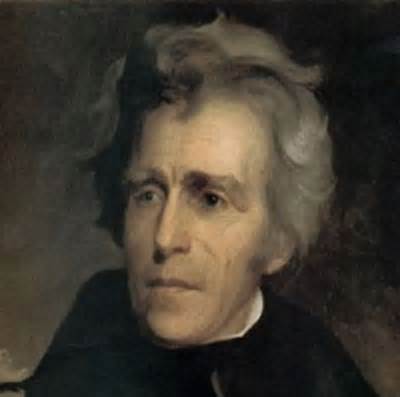
President Andrew Jackson has stopped spinning in his grave. Finally. He hated paper money with all the fiber in his being, and now thankfully for him, no longer tacitly endorses its use. Jackson was a sound money man and believed gold the only genuine medium of exchange . . . weigh-able, bite-able gold; good ole “cash on the barrel-head.” In fact, the President believed so passionately in the principle of gold bullion that he banned any use of paper money for any transaction whatsoever. This same policy, in the end, torpedoed the US economy and triggered the Panic of 1837.
That financial disaster held on for over five chilly years.
But the day has arrived, America has finally heard Jackson’s cries of anguish from the great beyond, and removed his likeness from that raggedy heresy of ersatz value. Still, one has to wonder. What would General Jackson make of runaway slave, Harriet Tubman taking his place on legal tender?
Ms. Tubman, as a woman, and as a slave, lived invisibly in Jackson’s world. The only notice a planter like Jackson would have made was Tubman’s incorrigible practice of stealing another master’s property. For a man of deep passions, of violent loves and hates, her offense would have pissed this president off, and sent him into a dangerous rage. In his world of master and slave, her offenses allowed no mercy, no reprieve.
As for Tubman? She understood a truth that Jackson could never, ever have comprehended—that justice was a force that bore no designation to color, gender, or appraised value. A mighty truth reigned far above the limited aspirations of General Andrew Jackson, killer of banks, Natives, and the hopes of the hundreds he held in bondage.
Tubman’s idea of honorable behavior had nothing to do with white men firing pistols on dueling grounds, and that white social conventions which condemned her to servitude were wholesome and noble. The human condition, as Tubman understood the meaning, held a deeper significance, an importance that required a profounder appreciation. The world of plantations, race hatred, whip wielding overseers, and economic injustice held no real sway, and certainly possessed no honor.
Jackson’s opinions truly hued in only black and white, and that outlook wasn’t limited to skin color. Abstract ideas like ‘humanity’ didn’t resonate in his mind, too ethereal for a man who loved gold coins. Banks were bad, women were ornaments, Indians were fair game, and blacks were slaves. That simple. Of course at the same time, this limited world view gave a figure with Tubman’s vision the edge. If a man of Jackson’s time and station caught a glimpse inside the real thoughts of his “family” members living over in the slave quarters, his mind would have been blown.
So it is with some satisfaction that Harriet Tubman replaces Andrew Jackson on the twenty-dollar bill. But not only because she’s a woman, nor only because she’s black. The star she followed may have literally sparkled in the northern sky, but every footstep she trod signified progress on the road to realizing the immeasurable value in us all.
Gail Chumbley is the author of the memoir River of January
 Gail Chumbley