A Dreamer

You may say I’m a dreamer, but I’m not the only one, I hope someday you’ll join us, and the world will live as one.

John Lennon

A professor of History and Government, President Woodrow Wilson fervently believed America could fulfill its promise as the world’s beacon of democracy, a “City Upon a Hill.” After WWI, this President aimed to reform old monarchial Europe, and lead the world to a new, enlightened destiny. But perhaps his ambitions were too lofty to be realized in a cynical world of power and greed.

Participants convened at the Bourbon Palace of Versailles on June 28th, 1919 to design a new future for . . . really the entire world. Wilson attended in person, which for an American President was a first. He posed, all smiles with the French president, Georges Clemenceau, the English Prime Minister, David Lloyd George, and Italy’s, Vittorio Orlando.

Considering the devastation from the recent war, these leaders had their work cut out for them.

After the Armistice had been signed the previous year, Wilson prepared for his journey by completing a new framework to rebuild a better world. Titled the Fourteen Point Plan, the President outlined a path to enduring peace. The intent was clear: Freedom for all. Free trade, self-government, transparency in treaties, a reduction in weaponry, and most importantly, an international peace-keeping body, The League of Nations. This proposed League had been crafted to resolve international conflicts through open diplomacy. For Wilson, mechanized warfare had proven pointless, so much so, that modern warfare had become a zero sum game.

Naturally many attendees were self-appointed representatives from oppressed ethnic groups around the globe. All had gathered to endorse the American President’s call for free governments, freely chosen.

The Chinese, for example, lobbied for colonial possessions formally held by Germany be returned. China was ignored. Young Ho Chi Minh, a student in Paris, attempted to see President Wilson to discuss the liberation of his home, French Indochina, (Vietnam). But Ho never got trough the gilt doors of Versailles.

The multitudes under British colonial rule, clamored for freedom, as well. Egyptian, East Indian, and Muslim peoples embraced Wilson’s vision of self determination. Zionists, Palestinians, even the Sinn Fein in Ireland looked for release from British subjugation.

Returning home to the White House, the President received a cable that his deputy remaining at Versailles, a Colonel Edward House, had agreed, in Wilson’s absence, to drop the League provision. Wilson flipped his wig and back he sailed, to resurrect his League as a non-negotiable part of the final agreement.

And though the League of Nations was indeed established, the US never joined. After all the horse-trading with his counterparts in Paris, Wilson could not convinced Republican Senators to ratify his treaty. Stunned, the President took his crusade to the American people, via a whistle stop tour. Exhausted by exertion and poor health, Wilson finally collapsed, followed quickly by a massive stroke.

Without the United States participation the League invariably failed. And a broken Woodrow Wilson died shortly after leaving office.

Perhaps President Wilson was foolish to think old world autocrats would give up any power and authority to colonial possessions. Clemenceau and others had viewed him as hopelessly naive. And maybe Wilson’s critics were correct. The man had a stubborn, self-righteous streak, that ultimately was his undoing.

Open government, free elections, and international commitment to fair play. Was Wilson merely a dreamer?

Gail Chumbley is the author of the two-part memoir, “River of January,” and “River of January: Figure Eight.” Both titles are available on Kindle.

gailchumbley@gmail.com


Masterpiece

Russia and the US didn’t have much contact in the 19th Century. A rumor had once circulated insisting presidential candidate, John Quincy Adams had procured American virgins for the Russian Czar when a young diplomat in Moscow. Not true, but there it is.

Still, the political tyranny of Russia has been widely understood in America as early as the 19th Century. When Abraham Lincoln condemned racism and intolerance stateside, he remarked that Russia’s oppression was, at least, less hypocritical than practiced in the United States. Lincoln’s Secretary of State, William Henry Seward later had his moment with the Czar when he negotiated the purchase of Alaska from Russia. Seward’s Ice Box, 1867 newspapers scoffed.

Some sixty years later, during World War One, revolutionaries deposed the Czar, and the last Romanov abdicated his throne. Bolsheviks arrested the former Czar, eventually shooting him, and the rest of the royal family in July, 1918. That same year President Wilson dispatched American forces to Archangel, to aid the White Russians to defeat Vladimir Lenin’s Bolsheviks, and stabilize democracy. The Whites failed, surrendering all of the vast Russian landmass into the hands of the Communists.

In the newly founded USSR, Premier Vladimir Lenin established the Comintern, the Communist International, publicly pronouncing the Soviet aim of exporting Communism worldwide, prompting in America our first domestic Red Scare.

In the following years, economic depression shrouded the globe, only dispelled by the horror of World War Two. Josef Stalin, Lenin’s cruel, and ruthless successor, struck a nonaggression pact with equally ruthless Adolf Hitler, dividing Poland as a buffer to buy time for both dictators. It comes as no surprise that neither trusted the other, and in 1941, Hitler launched Operation Barbarossa, invading the Soviet Union, bringing an abrupt, bloody end to that alliance.

After Pearl Harbor, the the Russians found themselves, by default, allied to Britain and the United States. Stalin trusted Washington about as much as he had Hitler, and in return Washington didn’t trust Stalin. Both Churchill and FDR remembered the Russians had cut and run during WWI, and the recent treaty with Hitler. Still, the two leaders went out of their way to appease their new Soviet ally.

In the last months of the European war, Stalin signaled his intentions to dominate by billeting the Red Army throughout Eastern Europe. Western allies acquiesced to Stalin’s aggression, and allowed Red forces to enter Berlin first, where the Communists didn’t leave until 1989.

A second Red Scare hit America much harder than the first. Stalin’s operatives managed to purloin atomic and hydrogen bomb intelligence, successfully delivering them to Soviet physicists to replicate. During the Kennedy Administration, the Berlin Wall sprouted up nearly overnight, and the entire Soviet Sphere of Influence made for an intense, dangerous Cold War. Conflict burned hot in America, the government attempting to flush out possible subversives, and ruining the lives of many innocent citizens. Julius and Ethel Rosenberg were executed for espionage, and Joe McCarthy accused the State Department and Army of harboring Communists. Soviet satellite Sputnik orbited the globe in 1957, the U2 spy plane crashed inside the Soviet Union in 1960, while at school we practiced ‘duck and cover’ drills. Proxy wars increased American foreign aid and deployed US forces to our allies across the free world, from Greece to Vietnam. 

Some of America’s greatest Cold Warriors included President Eisenhower, JFK, Richard Nixon, and Ronald Reagan. President Reagan, in particular, while speaking in Berlin, demanded the Soviets “tear down this wall.” These Chief Executives understood that any agreements with the Kremlin required stringent verification before any closure. America’s Soviet rivals were seasoned operatives, and were, in no way, friends of the west.

So where does this story leave us? Clearly the Kremlin has not changed. Spy networks, election hackers, and embedded operatives are perpetual threats. Maria Butina, the little Red darling of the NRA, and the GOP is an example of Russia’s recent relentless efforts. So, when an American President smiles and pays court to Vladimir Putin something serious is amiss.  

Update: At a Conway South Carolina campaign stop on February 10, 2024, Trump remarked concerning NATO, “”If we don’t pay and we’re attacked by Russia, will you protect us? No, I would not protect you. In fact, I would encourage them to do whatever the hell they want.”

The Russian government is patient, and that patience has appeared to pay off. Putin’s masterpiece? He elevated a Russian asset to the White House, and convinced GOP voters to look the other way. 

At this writing the entire Republican Party still remains steadfast to their Russian operative as he remains the presidential frontrunner for nomination.

Gail Chumbley is a history educator, and the author of the two-part memoir, “River of January,” and “River of January: Figure Eight,” Both available on Kindle. Chumbley has also penned three stage plays, “Clay,” “Wolf By The Ears, and “Peer Review.” In addition, Gail has co-written “Dancing on Air” a film script centered on a true 20th Century tale of Depression and War.

gailchumbley@gmail.com

The Arrogance of Now

Each year I prepared for two major wars, the finale if you will, of second semester US History. With a combined sense of dread and anticipation, I led the kids through the causes, and progression of the Civil War (with 10th graders), and WWII (with my Juniors). 

A lifetime of study in these eras, especially Antebellum America, tells an anxious story, as two passionate belief systems came to blows. Sophomores learned that our nation, a democracy born in such promise, plunged into the abyss over America’s original sin, slavery.

Meanwhile, for Juniors, the failures of the uneasy peace that followed WWI shaped a broader corrosion. The world after 1919 disintegrated into deadly factions, underscored by exaggerated entitlement, racial hate, and lust for revenge.

Much like America’s 19th Century plunge into the breach, the 20th Century also debased human life, sliding into scapegoating, unthinkable cruelty, and massacre. This record is hard to face, let alone study. 

Real monsters masqueraded as heads of state; Stalin, Hitler, Mussolini, and the War Lords of Japan. All, to varying degrees, convinced regular people that the “worth” of others was suspect, and targeting civilians an acceptable strategy. Yet, as awful as both conflicts were, it’s hard not to stare, and to hopefully recognize the signs when hate again emerges as a justification for horror.

The heresy of exceptionalism, normalizing violence on the vulnerable, and extremism, unleashed evil on the world. Andersonville Prison, Fort Pillow Massacre, the Rape of Nanking, Bataan, the Warsaw Ghetto, and death camps. More than one a student wondered aloud, how could that happen?

In increments.

These signs are clear again. Those same pre-conditions have resurfaced, right now, here in our communities, states, and nation. 

A white nationalist parade in Charlotte that kills one, where there were “good people on both sides.” Normalized daily murders of people of color, and incendiary rhetoric that ends with an attack on the US Capitol, killing five. All offenses excused and minimized by a once great political party, that has forsaken its moral underpinnings. 

The only difference between the Proud Boys and the Brown Shirts is the Brown Shirts didn’t wear Carhartt and flannel.

This endless playlist has looped over repeatedly, cursed by the “blind arrogance of now.” But dear reader, now is then, and deluded people do not change with time. The descent into barbarity is more predictable than exceptional. 

When reasonable folks are manipulated by the chorus of the Big Lie, the era doesn’t matter. Society inevitably falls into depravity.   

Gail Chumbley is a career history educator, and author of the two-part memoir “River of January,” and “River of January: Figure Eight.” Both titles on Kindle.

gailchumbley@gmail.com

A Burst of Joy

He looked an awful lot like Andrew Jackson. A long, craggy, narrow face, a shock of white brushy hair, and an irascible temperament. That was my paternal grandfather, Kurtz Olson. Despite his throwback, no-nonsense, narrow persona I found him endlessly interesting and somehow quite endearing. 

The youngest of seven children to Swedish immigrants Peter and Matilda Olson, Kurtz was born in Wing River, Minnesota in 1905. Though I don’t know much about his early Minnesota upbringing, I do know that he had a mercurial temperament, no attention span, and restless feet. Grandpa frequently uprooted his family, first moving house to house, then state to state, reaching the Pacific coast.

During the worst of the Depression years Grandpa worked as a welder, and scrap metal dealer. My dad like to remind us that with so many people jobless, Kurtz had lots of work repairing and parting out junked automobiles. One of my favorite snapshots from his early years is Grandpa and another man posing with axle grease below their noses. The two were making sport of Hitler, who in the 1930’s was still viewed as an object of jest. Grandpa Kurtz is smirking, knowing he’s naughty, and thoroughly enjoying himself. 

During the Second World War, he and my grandmother moved the family to Tacoma, Washington. With the “Arsenal of Democracy” in full swing, Kurtz had plenty of metal work on the coast. After 1945, he again uprooted and moved his family to Spokane, Washington, where cheap hydro power had opened plenty of post-war employment. 

Still, Minnesota remained the holy land. Always impulsive, Grandpa would hop in his truck and make sudden pilgrimages home, blowing straight through Montana and North Dakota, usually 24 hours or so to reach the open arms of his Minnesota family.

For Kurtz it was as if traveling from Paris to Versailles, but a hell of lot further. 

Unlike my immediate family, where I was the only girl, Kurtz lived in a decidedly female home. My aunt and grandmother typically sat for hours at the kitchen table, reading the Enquirer and movie magazines while talking shit about nearly everyone else in the family. Poor old Grandpa. Those two women tied that poor man into knots, riling him up with nonsense and fantom outrage.

It wasn’t that my Grandfather was unkind by nature, but he was easy to wind up, perceiving the world in black and white, dictated by those two judges presiding at the kitchen table.

Fortunately, despite those women bad-mouthing me, my brothers and the rest of the extended family he liked me. And I liked him.

In a fleeting, incomplete memory I see him waiting under street lights at the Spokane Greyhound bus depot. We all must have been meeting a relative from Minnesota or Seattle. In a burst of joy I remember shouting “Grandpa,” as I sprinted to him, where he scooped me up into a hug. Another vivid moment I recall was his truck pulling up in front of our house, and Kurtz coming to the door wearing nothing but that smirk, and bright red long johns, with laced Red Wing boots. What a character.

Speaking in a NorthAmerican Scandinavian cadence (yah, you betcha) made some of his comments worth remembering.

“First they call it yam, and then they called it yelly, now they call it pree-serfse.”

And Kurtz always had a dog. There had been Corky, Powder and Puff, Samantha, and Cindy among many others. Samantha was an especially smart Border Collie. After finding herself thrown on the floor of Grandpa’s truck one too many times, she figured out how to brace herself on the dashboard. He would roar up to yellow traffic lights, then stand on the brakes to avoid a red light. My god it was perpetual. My guess is he needed a new clutch about every three months, casualties of his Mr Magoo style of driving. At any rate, Samantha his wise co-pilot learned to watch the traffic lights and prepare for impact. 

Pulling up to his house on some forgotten errand I saw my grandpa splitting wood in the backyard. Across the fence, next door, a neighbor dog set up a ruckus barking my way. I called out, “You be quiet over there,” to which my grandfather observed, “He doessent underschand you. It’s a Cherman Shepard.” Then he laughed, and so did I.

My children didn’t know Kurtz. And for that I’m sorry. They missed a true original. I suppose that is my job, and the job of all of us Boomers to share these kind of stories. We bridge the years between that Depression-era, World War Two generation to our Millennial children and our grandkids. They won’t know if we don’t tell the story. And since it’s December, I’ll sign off with this Kurtz Olson Christmas anecdote.

On Christmas Eve in about 1936-37, my grandpa packed up the family for an evening service at the Lutheran Church. Being good Swedes they had placed traditional candles balanced on the boughs of their live Christmas tree. Somehow in the bustle they left some candles lit. By the time they returned the house was gone replaced by a fully engulfed fire lighting up the night.

They lost everything. In an ironic twist my grandfather the welder somehow overlooked the flames of his yule-tree. That incident remained an inflection point in Olson family lore.

Now he’s long gone, as is my dad and other family members. But through the written word he remains as vivid as his humor, his voice, and his presence in my memory.

Merry Christmas. 

Gail Chumbley is the author of the two-part memoir, “River of January,” and “River of January: Figure Eight” three plays on history topics, and a screenplay based on her books.

The Almost Cable Guy

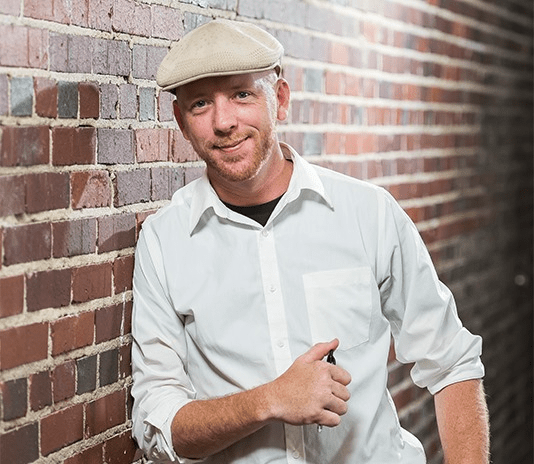
Some of you may know that we signed a film option a while back with Falls Park Entertainment in South Carolina. Brett Kanea, the executive producer, read our script, “Dancing On Air,” then my two books that inspired “Dancing.” Brett found it original and exciting and anticipated producing a successful film. Unexpectedly dear Brett died before any filming began. As you can see he from this pic, he was too young to leave us, and our hearts go out to his family and loved ones. 
The morning he first called to discuss the property I thought he was the cable guy expected later that morning. We laughed about that snafu for months after. 
Though our future in film is unclear, Brett’s warmth, humor, and confidence lingers on. 
Godspeed Brett, the almost cable guy.

Gail Chumbley is the author of the two-part memoir, “River of January,” and “River of January: Figure Eight.” Both are available on Kindle.

gailchumbley@gmail.com


That’s All

gailchumbley@gmail.com

th

Colonel Clark used to bring his young son down to the dojo where my brothers took judo lessons. Judo had been my grandfather’s idea and he faithfully chauffeured the boys, and I sometimes came along too.

My Grandpa Ray always sat with Colonel Clark, if the old gent happened to be present. That meant I sat with Colonel Clark, too. The two old men would talk and talk, seated next to one another, though their eyes remained fixed on their boys training on the mats. They never seemed to look each other, but remained absorbed in their conversation.

My own distracted attention span only caught snippets of the murmuring discussion. “MacArthur, Wainwright, and Bataan,”  came up in their exchanges And despite my youth, I understood something grave, something momentous lay behind the back and forth of these two men.

My brother filled in the substance of what I reluctantly overheard.

Colonel Clark had been left on the Bataan Peninsula when General Douglas MacArthur evacuated the Philippines in 1942. Under the new command of General Jonathan Wainwright some 22,000 Americans surrendered to Japanese invaders, and among them young Clark. The Japanese summarily ordered this defeated army to march some sixty miles through the jungle. And cruelty became the purpose of the Bataan Death March; heat exhaustion, dehydration, and starvation felled many of these exposed suffering Americans. When a captive stumbled, or fainted, the penalty was an immediate beheading. Young Clark witnessed Hell, and he clearly never separated himself from the ordeal, fused forever into his character.

And that that same ordinary old gent who chatted quietly with my grandfather, had a young son was a miracle. In light of his wartime captivity, Clark should never have survived.

The valiant are everywhere. 

For example there was George, the high school janitor.

For many years this little old fellow pushed a mop down the litter-strewn halls where I taught American history. Equipped with two hearing aids, this diminutive man pushed an immense dust mop, wider than he was tall.

To a passing eye George appeared nearly invisible. Just a friendly, gentle, and harmless grandfather.

As I pontificated about D-Day, Tarawa, and the Bulge to sleepy Juniors, a foot or so of mop often slid and stopped by the classroom door.  Silent, George hid as I blathered on about the Second World War. A short time later I learned this quiet 80-something had once handled a M-1 Garand, shivering aboard one of those heaving and crashing Higgins boats, churning  toward Omaha Beach. George had been in that first wave in June, 1944. 

Humbled to learn our little janitor was a living, breathing hero, I became the student. “So George, what do you remember most about that morning?” 

The old warrior rasped in a high, faded voice, “It was awful early, and the water was awful cold.”

So understated.

Another veteran crossed my path by the name of Roy Cortes. His son, our school Resource Officer brought Roy by to visit with my students. Another narrative of a remarkable life unfolded.

As a teenager he got a job with the Civilian Conservation Corps. After Pearl Harbor, Roy headed straight to the recruiting office, and into the US Army.

Roy, too, had ferried over from Southampton the afternoon of that bloody day. “What do you remember most about the invasion, Sir?” a student asked.

The affable elder smiled slightly, then a cloud passed over his expression. “I lost everyone in my outfit. I was real scared. Soon I had orders to regroup with other survivors. You see, that was bad because I’m Mexican-American, and my first platoon got used to me, and stopped calling me Juan or Jose. Now I had to start all over with the badgering.

For days, as we moved inland, with these fellas giving me the business. One fella said, ‘Mexicans can’t shoot.’ I said that I could. So he said, ‘Ok Manuel. Show me you can shoot. See those birds on that tree branch up ahead? Shoot one of those birds.’ I lifted up my rifle and aimed at the branch and pulled the trigger.” At that Roy again begins chuckling.

“I missed the branch, the birds all flew away, and twelve Germans came out of the grove with their hands up.”

Astounded, no one spoke. Then a huge wave of warm laughter filled the classroom. Roy simply smiled and shrugged.

Colonel Clark, George the Janitor, and Roy Cortes. They were just kids who’s lives became defined in ways we civilians can never fathom. They were scared, and hot, and cold, and hungry, and suffering, and ultimately lucky enough to come home.

They married, raised families, and move on with life.

That’s All.

Gail Chumbley is the author of “River of January,” and “River of January: Figure Eight,” a two-part memoir Also available on Kindle.

Hampton Roads, 1928

This excerpt comes from River of January, the first volume of the two-volume memoir available on Kindle, and at http://www.river-of-january.com

Two weeks later, a nervous and sleep-deprived Mont Chumbley reported for flight elimination exercises. He joined 125 other candidates; smartly lined up on a long dock, facing the gray, choppy seas of Hampton Roads. From this windy spot would-be pilots underwent demanding instruction in ten-hour heats on various flight maneuvers. Day one: morning-takeoff, afternoon-landings. Day Two: mornings- turns, including the figure-eight, afternoon-climbing and descending turns—all in Curtiss NC4 seaplanes. Their instructors rated them at each step, either passing or failing, with no second chances. The pool of candidates became smaller with each roll call.

Feeling the pressure, the young sailor took special pains to follow protocol. Climbing around on wet pontoons fixed to the underside, Chum examined the biplane as it bobbed on the rolling water. He talked himself through each required procedure, so he wouldn’t overlook any step.

“Oil leaks? Negative,” Chum recited as he performed his pre-flight inspection. “Rudder locks off? Affirmative.”

He continued crawling around the aircraft until he was sure his check was thorough. After the meticulous exterior inspection, he settled into the cockpit.

“Controls? Check. Stick?” He jockeyed the stick left to right then up to down, “Check.” “Ailerons? He wagged the panels, “Check. Gauges?” He examined the calibrations closely. “Check.”

Concluding the pre-flight list, the student-pilot ignited the motor as another crewman propped the biplane’s propulsion blades, quickly, hopping back to the dock.

Chum, still repeating all he was taught, lifted the plane from the rollicking waves and then leveled the wings using the needle ball as he reached altitude. Momentarily surprised with the ease of his lift, Chum relaxed, in control of the little trainer.

“This isn’t that complicated!” the astonished young man marveled. The thrum of the engine seemed calming, and he could practically feel the buoyant pontoons below the fuselage.

“Flying makes sense,” he reflected. “Pull the stick this way, up, reverse the stick that way, down.”

A sense of wonder filled the young man. As if born to fly he intuitively grasped the mechanics. “Flight requires gravity, logic, instinct, and sound equipment.”

The Curtiss biplane read Chum’s mind, rising on a line, descending on an angle, turning on an invisible anchor point. The little aircraft did what he desired.

Of the 126 flight hopefuls, only nineteen succeeded— including Mont Chumbley. The washouts returned to Norfolk to ship out to sea, to labor on the hellacious coal burning tugboats or other maritime duties. Chum gratefully headed for warmer climates—flight training with his class, 37C, in Pensacola, Florida.

Thinking of Commander Seymour Chum had to smile, “Radio school would probably have been too difficult.”

Gail Chumbley is the author of “River of January,” and “River of January: Figure Eight.” Hard copies are available at http://www.river-of-january.com, and on Kindle.

gailchumbley@gmail.com

The Archive Story

amelia0001

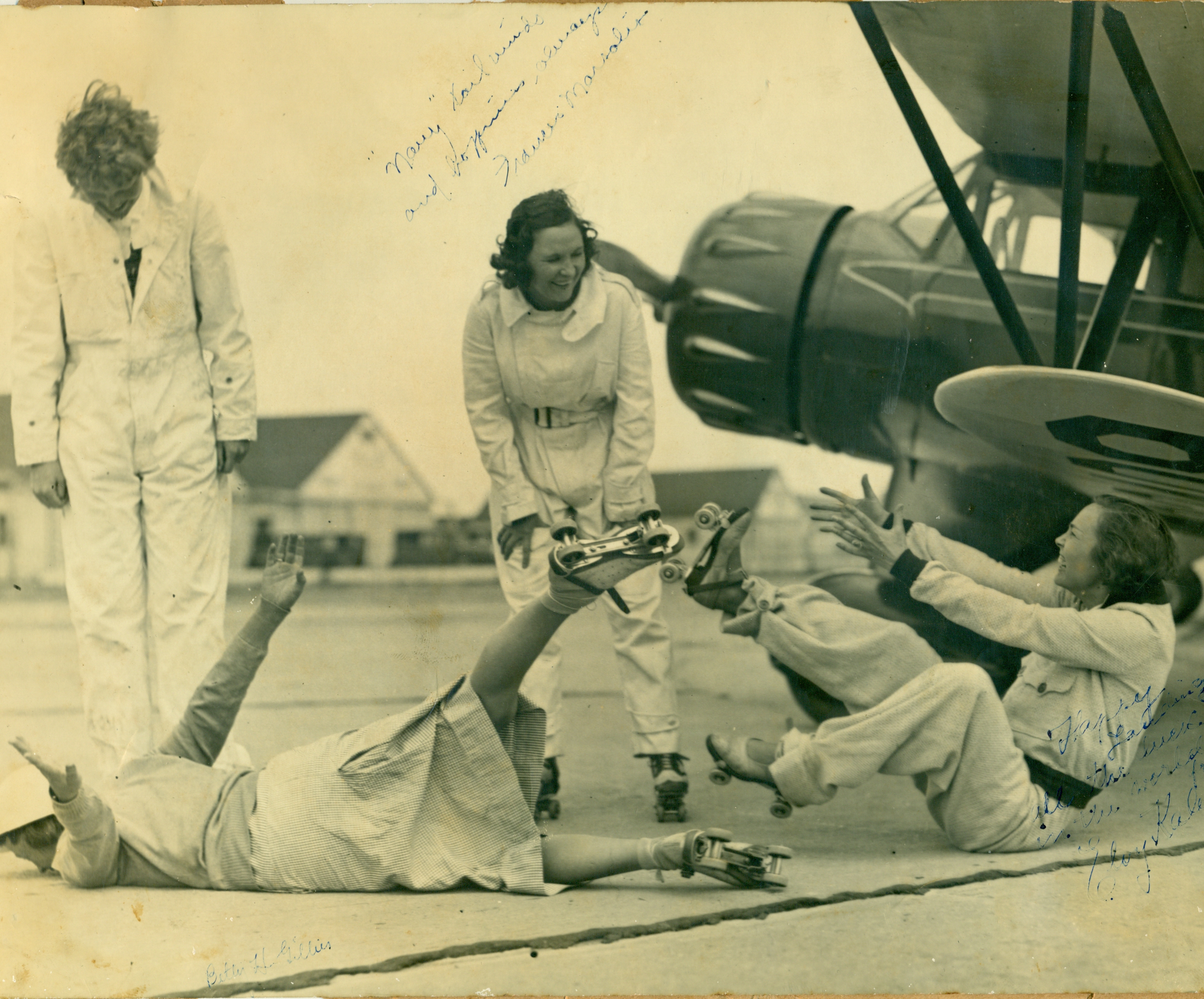
Amelia Earhart (left)

Skip the ad, and click to full size.

Enjoy!

Video-The Family Archive

Gail Chumbley is the author of the two-part memoir “River of January,” and “River of January: Figure Eight.” www.river-of-january.com Both books are also available on Kindle.

Los Angeles 1940

The supper club was cavernous. The Cocoanut Grove’s maître d’ cordially welcomed the couple and directed them through a tropical arbor of tall potted palms, sheltered under an enormous Bedouin striped tent. Moorish archways separated a dimly lit lounge from the contrasting bustling dining area and its polished dance floor. From a raised stage, a full orchestra engaged the swaying crowd with a smooth rendition of “South of the Border (Down Mexico Way).” Those not dancing strolled among the tables—greeting friends, laughing, and sipping their cock- tails. Intrepid photographers, dodging harried waiters and pretty cigarette girls, snapped photos of the diners.

Helen shimmered, gowned in flowing black silk, easily melding into her chic surroundings. Chum found himself, once again, bowled over by her beauty. “You take the cake, Helen,” he said, as he pulled out a chair for her. She gave him a puzzled glance as she sat down. “What I mean is,” he clarified, “how does a girl pick beach sand out of her ears in the afternoon and transform into a dreamboat by eight?”

She smiled. “It’s all in the face powder—covers up sand, salt, sunburn, bird droppings . . . the works. You know, Chum, with all this flattery, I think you ought to stick around more . . . maybe reconsider this employment idea.”

Chum disagreed by a shake of his head. “Helen, there are two things in this world I love. One is escorting you to nightspots like this one. And two—”

“Flying,” she finished.

“Right-o. And now that we have cleared up that little matter, would you like to dance with your husband? You see, dancing with you is the other benefit I get from nightclubbing. And I promise I will flatter you more. That’s one of the reasons I married you.”

Chum circled the table and drew back her chair. The bandleader gently snapped his fingers in a leisurely four count, the orchestra striking up “Moonlight Serenade” on the downbeat. A rich trombone solo beckoned the couple toward the floor, quickly accompanied by a melodic blend of clarinets and saxophones.

Chum clasped Helen around the waist, holding her close, her left hand in his right.

“Now this is a box step, honey,” Helen murmured. “Just do what I showed you and keep your eyes up. Don’t look at your feet. Feel the rhythm,” she coached.

“I’ll give it my best.” His eyebrows cinched together as he concentrated. After a few steps he grumbled, “I’d like to see you fly an airplane.”

When dinner ended, Helen leaned closer to Chum, and they quietly spun idyllic visions of their future. Out of the corner of her eye, Helen noticed a well-dressed gentleman making his way toward their table. She sat up.

“Chum?” inquired a tall, dark-haired, opened-faced man.

“Russell!” exclaimed a genuinely pleased and surprised Mont Chumbley. He hopped up, stretching out his right hand. “What do you say, Russell? What brings you to Los Angeles?”

Chum’s words rushed in his surprise. “Helen, this is Russell Thaw, an old friend from my air rac- ing days. Russ, this is my wife, Helen.”

Politely shaking his hand, her mind worked to place his familiar name. Thaw . . . Thaw. Why do I know that name?

“Please join us, Russell.” Chum gestured to an empty chair. “Would you like a drink?”

“Sure, but just for a moment, buddy. I don’t want to intrude on your evening.” Thaw smiled sheepishly toward Helen. “What is it you’re doing with yourself, Chum? Last I heard you were working for Lindbergh at TWA.”

“Quit,” he declared, chuckling. “Teeny Weenie Airlines wasn’t for me.”

Thaw smiled at his friend’s candid reply. But his expression quickly shifted, growing seri- ous. “You need to get back to New York, Chum. The sooner the better. Eastern Airlines is hiring. They’ve got a lock on airmail routes from the government, and Captain Eddie’s hurting for pi- lots. You would do well for yourself. That is, if you want to live back in New York.”

Chum’s relaxed expression sharpened at once. He sat up straighter. He took a long look at Helen, trying to read her expression. Turning back toward Thaw, he replied, “I heard something about that. So Rickenbacker’s honestly hiring? I’d heard he had his choice of pilots.”

“Eastern is still throwing out their nets, and you two”—his gesture included Helen—“should get going and visit the Eastern office. See, time matters. Once you make that seniority list, you’re vested—you are in. The clock is vital, here. Take my advice, Chum—it’s time to get on board, literally.”

Chum sat still for a moment, rolling his cigar in his fingers. He remembered the twelve-hour seniority difference that sent him to San Francisco when he worked at TWA. “You going to ap- ply, Russ? You sound like a pitchman for the company.”

“Naw.” Thaw laughed. I just came from New York, and it is the talk all over Long Island. I fly Harry and the rest of the family around now. We’re heading back day after tomorrow. It’s a good job for me.”

The old friends talked over drinks. Thaw caught Chum up on his life, and the two remi- nisced about long-gone days at Roosevelt Field. Their visitor finally looked apologetically to- ward Helen as he stood up to leave. “Sorry to have interrupted your evening, but it was lovely meeting you. Chum’s a lucky fellow.”

“No, no,” she assured him. “It was my pleasure. I’ve come to realize that my husband has made some awfully nice friends along his way.”

Chum smiled, pleased with her compliment. He stood and shook his friend’s hand in farewell. “Thanks, Russell. First, for coming over to say hello, and secondly, for the job advice. Tell Harry hello.”

“Sure will. It was swell seeing you again, Chum. Helen.” Thaw nodded her way.

The couple watched Thaw as he disappeared into the crowd, swirling around the dance floor. Chum spoke first. “Well, what do you make of that?”

“Make of which that? Running into Russell Thaw or the Eastern Airlines news? And honey, who is Captain Eddie? I’m a little in the dark.”

“Eddie is Eddie Rickenbacker. He’s a pilot and he bought Eastern Airlines a couple years ago.”

“Oh, right. I know who he is. The World War One ace. And I also know who Russell Thaw is,” Helen announced coolly.

“Okay, Helen.” Chum folded his hands, amused. “I’m listening. What’s the dope?”

“Well, it’s legendary. The rumors made the rounds backstage of almost every theater I played in New York.” She moved closer, lowering her voice. “Your friend’s mother”—Helen gestured the direction Thaw left—“was a dancer named Evelyn Nesbitt. And she was quite a no- torious girl—carried a real checkered reputation.”

Chum, surprised, leaned in to hear her better as the orchestra struck up new number. Helen continued. “So this Evelyn met and married a wealthy New Yorker, Harry Thaw.” Chum auto- matically glanced around looking for Russell, intrigued.

“Unknown to Thaw, though everyone else in New York knew, Evelyn had had this torrid af- fair with the architect who designed Madison Square Garden.”

“Jiminy Crickets! Russell’s mother, you say?”

“Uh-huh. True story, cross my heart,” she declared. “So, Thaw Senior finds out his wife’s not-so-secret past of catting around, and shoots the architect, dead as a doornail. Later, at his murder trial, the jury acquitted Thaw of murder,” Helen finished, looking at her husband.

“Holy mackerel, I’d never heard any of that before. Poor Russell. I sure can’t blame him for wanting to keep that story quiet. Wonder if the Guggenheims know?”

“The Guggenheims? You mean the New York Guggenheims? You’ve lost me, Chum, how do they figure?”

“Harry Guggenheim is the guy Russell flew out here. He’s the family’s private pilot.”

“Are you trying to tell me that you know Harry Guggenheim?” Helen sat back, astounded.

“He flies too, honeybunch.” Chum patted her arm. “Harry was another regular out at the field.”

Helen paused for a moment, then asked, “Do you know President Roosevelt?” She was only half teasing.

Chum threw back his head and laughed out loud. “He is a navy man—that much is true. But he likes boats. FDR doesn’t fly airplanes, as far as I know.”

“That’s a relief.” Helen smiled. “Don’t know what Eleanor and I would talk about.”

The couple then fell into a contemplative silence, busily weighing the evening’s tidings. Af- ter a few moments, Chum dispelled the mood. “Ready to head home?”

“Sure, honey. I’m ready,” she replied, reaching for her bag.

Chum rolled down the windows in the Chrysler, the night breeze flowing smoothly inside the car. It was a quiet drive. He eased the sedan into their parking spot and hopped out, circling the car to open Helen’s door.

At their apartment, Helen could no longer contain herself. “Did your friend convince you? Are you going to try and work for Eastern? Are we going home?”

Chum sighed. His shoulders slumped slightly, understanding what she was truly asking. “I’m going to place a call to New York in the morning.”

Gail Chumbley is the author of “River of January,” and “River of January: Figure Eight.” Both books are available on Kindle, and in hard copy at http://www.river-of-january.com

gailchumbley@gmail.com

Quebec City 1939

The following is an excerpt from “River of January: Figure Eight, available at http://www.river-of-january.com and on Kindle.

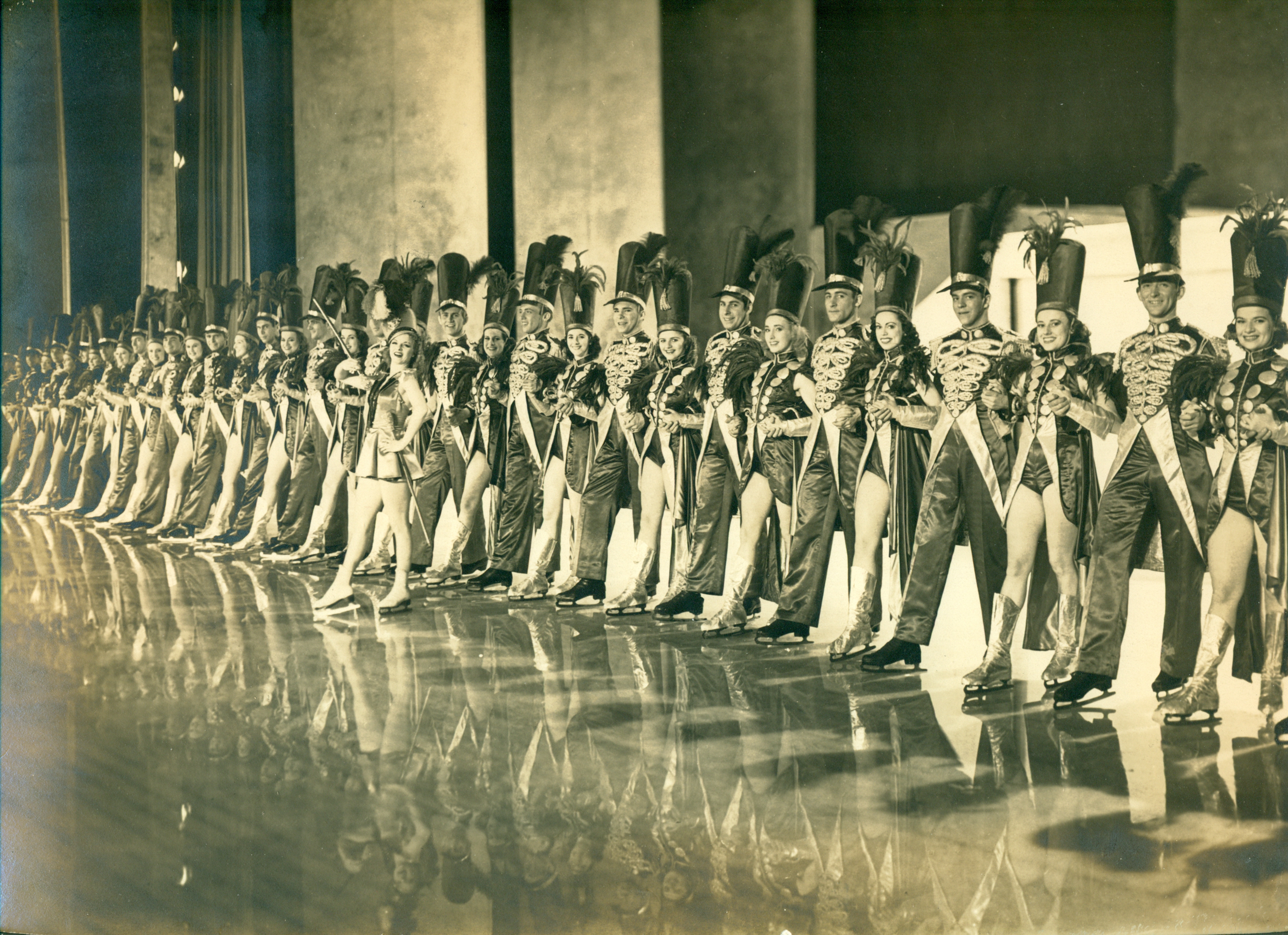
Costumed in tall Hussar caps and military jackets resplendent with gold brocade, the skaters stood expectantly in their V-shape formation in the shadows. Helen, arms twined around the skaters beside her, shivered from a combination of excitement and the frigid draft wafting from the ice. Her ears thudded, inundated by the echoing din from the impatient audience. Much louder than a theater, she thought.

Vera Hruba—a Czech Olympian who was one of the three women headliners in the new production—was positioned at the apex of the V. When the last measures of the orchestra’s overture faded to a close, the house lights darkened and the expectant spectators fell silent. With a commanding flourish, the opening bars of a military march surged to all corners of the house. Spotlights swept over the glittering skate line as Helen pushed off with her left foot, in sync with the tempo. Following two more beats, Hruba burst from the crux of the and raced the circumference of the rink, spotlights holding tight to her revolutions. The audience roared their appreciation in waves of echoing applause. Helen’s first ice show had begun.

If rehearsals were any gauge, Helen was confident the show would be a success. The chorus line often lingered along the rail, chatting and stretching, as they waited for the director to call them onto the ice. “That’s Vivi-Anne Hulten. She’s Swedish,” Clara Wilkins whispered, leaning in, as she and Helen studied the soloist on the ice. “She’s been skating since she was ten,” Clara added, as Hulten executed a perfectly timed waltz jump. “Boy, that little Swedish meatball knows her footwork.” The girls standing nearby murmured in awed agreement.

Chestnut-haired Lois Dworshak sprinted past the attentive chorus line. Helen glanced again at her well-informed friend and Clara didn’t disappoint. “She, Lois there, is a bit of a prodigy. She skated a little as a kid in Minnesota, but hasn’t actually skated professionally all that long. She’s good too, huh?”

“Jeepers, you can say that again,” Helen muttered.

“But the real story in this cast is Vera Hruba.” This time, it was May Judels, the head line skater standing next to Eileen, who spoke up. All eyes shifted toward May. “Vera met Hitler, just like Sonja Henie did, at the Olympics in Berlin. She finished her freestyle routine and came in pretty high, I think. Vera didn’t medal or anything, but still skated a pretty good program.”

“So what happened?” asked another girl, Margo.

“Hitler says to her, ‘How would you like to skate for the swastika?’ And Vera—she doesn’t much like Germans—told him she’d rather skate on a swastika!” Heads turned in unison, watching as Vera completed a flying camel. “So”—May sighed—“to make a long story longer, Vera and her mother left Prague in ’37 as refugees. Then the Huns marched in, and Hitler made a public statement that Vera shouldn’t wear Czech costumes or skate to Czech folk songs. He said Czechoslovakia was gone, never to rise again. Vera responded, saying she’d always be a Czech and that Hitler could, in so many words, go fly a kite.”

“Their own little war . . . now that’s guts,” Helen said, her eyes returning to center ice. “Makes Henie seem like even more of an apple polisher.”

“A swastika polisher,” Margo corrected, as the director motioned the giggling chorus to center ice.

Gail Chumbley is the author of “River of January,” and “River of January: Figure Eight.” Available at http://www.river-of-january.com and on Kindle.