The Almost Cable Guy

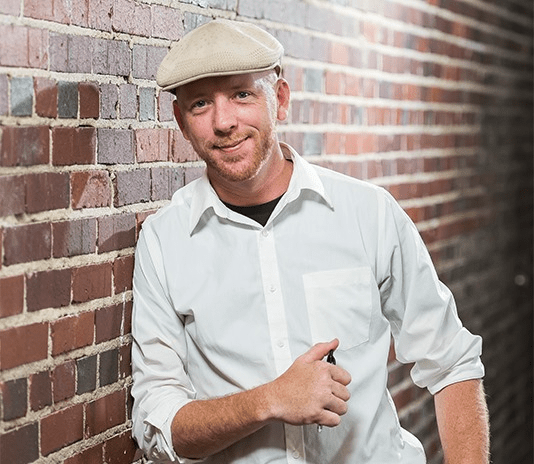
Some of you may know that we signed a film option a while back with Falls Park Entertainment in South Carolina. Brett Kanea, the executive producer, read our script, “Dancing On Air,” then my two books that inspired “Dancing.” Brett found it original and exciting and anticipated producing a successful film. Unexpectedly dear Brett died before any filming began. As you can see he from this pic, he was too young to leave us, and our hearts go out to his family and loved ones. 
The morning he first called to discuss the property I thought he was the cable guy expected later that morning. We laughed about that snafu for months after. 
Though our future in film is unclear, Brett’s warmth, humor, and confidence lingers on. 
Godspeed Brett, the almost cable guy.

Gail Chumbley is the author of the two-part memoir, “River of January,” and “River of January: Figure Eight.” Both are available on Kindle.

gailchumbley@gmail.com


History and a Rollicking Romance

A nice review is a welcome gift for any writer. John Vogel of Preserve Old Broadway graciously published this piece today.

We were supposed to start our exploration of The Vagabond King today. It is a wonderful operetta that is based on the life of Francois Villon, a French poet who allegedly rallied the people of Paris to defend the city against the attack of the Duke of Burgundy. In saving the city, Villon also preserved the monarchy in France, in the person of Louis XI.

My plan has been interrupted by an interesting turn of events. I have just finished reading two books, River of January, Part One, and River of January, Figure Eight. If you love history and a rollicking good romance, you need to read these two books, written by Gail Olson Chumbley.

But well you may ask, how did I come to know about these books and its author?

Shortly after I started posting comments and music on this FB page, I noticed a new visitor to the page, Gail Olson Chumbley. I looked her up and found out that she was an award-winning teacher at Eagle High School, Toppenish, Washington before she retired. She met her second husband, Chad Chumbley, in 1994, and Chad regaled her with stories about his parents, Chum and Helen Chumbley. Eventually, Gail, the history teacher, became curious and dug through boxes of old correspondence and pictures and finally interviewed Chum before his death in 2006. What she found was even more impressive than Chad’s stories, because the lives of Montgomery (“Chum”) Chumbley and Helen Thompson Chumbley were intertwined with key events in American history from 1925 to 1955.

Not ever having written a book before, Gail started the arduous task of translating dead archives back into living human beings. This daunting task was made easier because of her two love affairs: she loved Chum and Helen and she loved their son, Chad. Her writing was a labor of love.

I promised I would read her books one day, but my schedule was busy and “one day” kept moving to the right. Gail ended my procrastination by mailing me both books; and at night before I went to sleep, I would read through 30 or 40 pages. Gail didn’t start to write until she wrote these two splendid books, but what comes through is a historian’s love for detail and context. Gail gives the reader both the overview of history (the big picture) and the personal details of the two people she follows. We follow both Chum and Helen separately until 1936, when they met in Rio de Janeiro and fell in love.

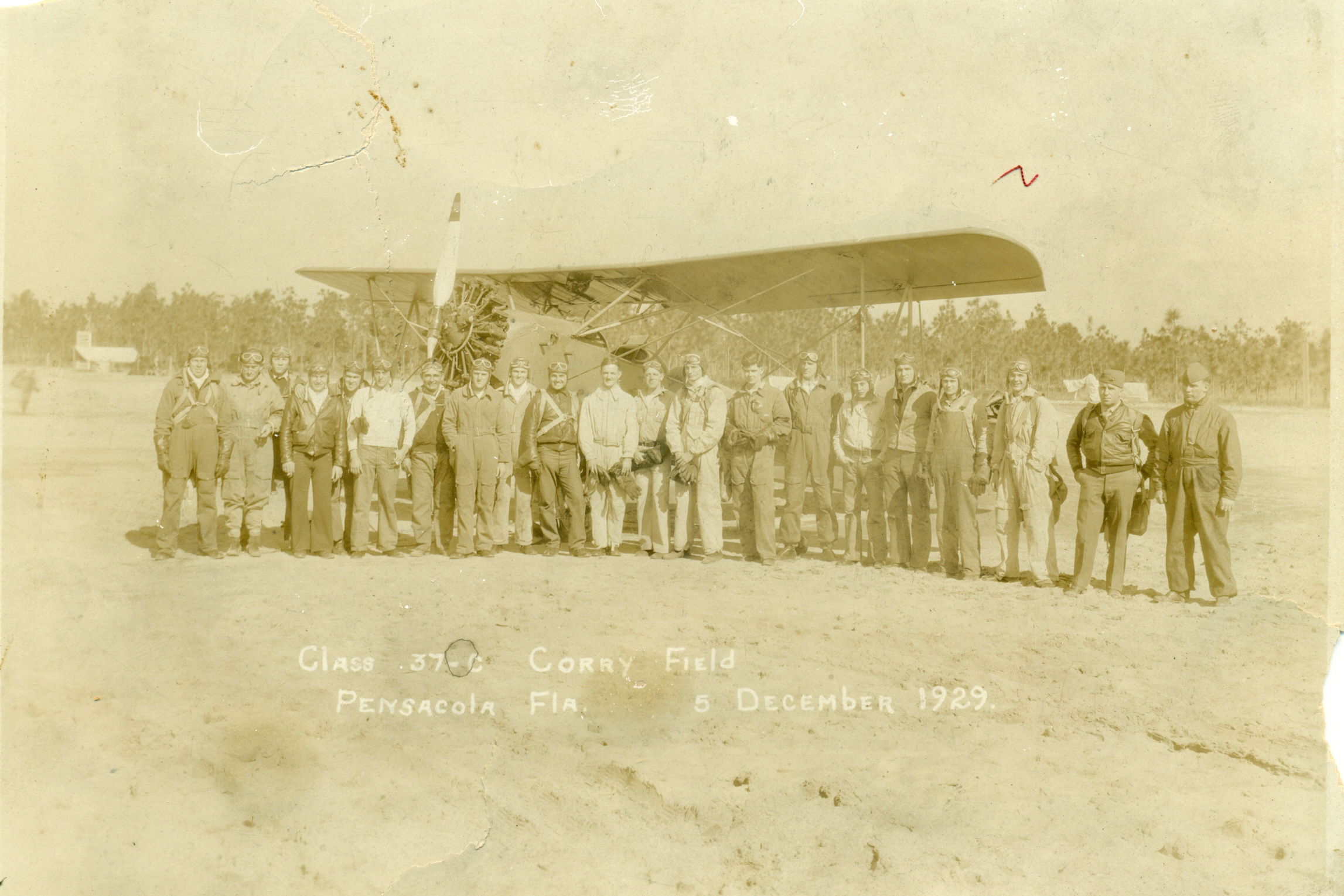
Chum enlisted in the Navy and eventually won a spot in Flight Training in Pensacola, FL. He stayed in the Naval Reserves, even after he left active duty, and began a career that revolved around Waco Aircraft, an early pioneer in aircraft design and manufacturing. Chum was one of the few early aviators who came after WWI but was ready to serve once WWII came into focus. He was one of a handful of pilots who started in planes made of wood and ended in the jet age.

Another pilot, who trained at the Army base at Brooks Field, Texas, was Alexis Klotz. Lex also was involved in delivering the mail, although Lex started on the West Coast. Lex ended his career with TWA and offered to show me around the cockpit of the new Constellation when they went into service. Flying the mail from west to east in the winter was hazardous, and many good but not great mail pilots went down in bad weather. In winter, forced landings almost always resulted in death.

When Chum and Lex flew airplanes, the cockpits were open (it got cold at higher altitudes), and the planes had little if any navigation or communication equipment. Many pilots learned the ground terrain, the railroad tracks and other identifying ground markers to guide them during their many hours in the air. Flying was more art than science.

One the other hand, as Gail explains to us, these pilots loved to fly and may have been more comfortable in the air than on the ground.

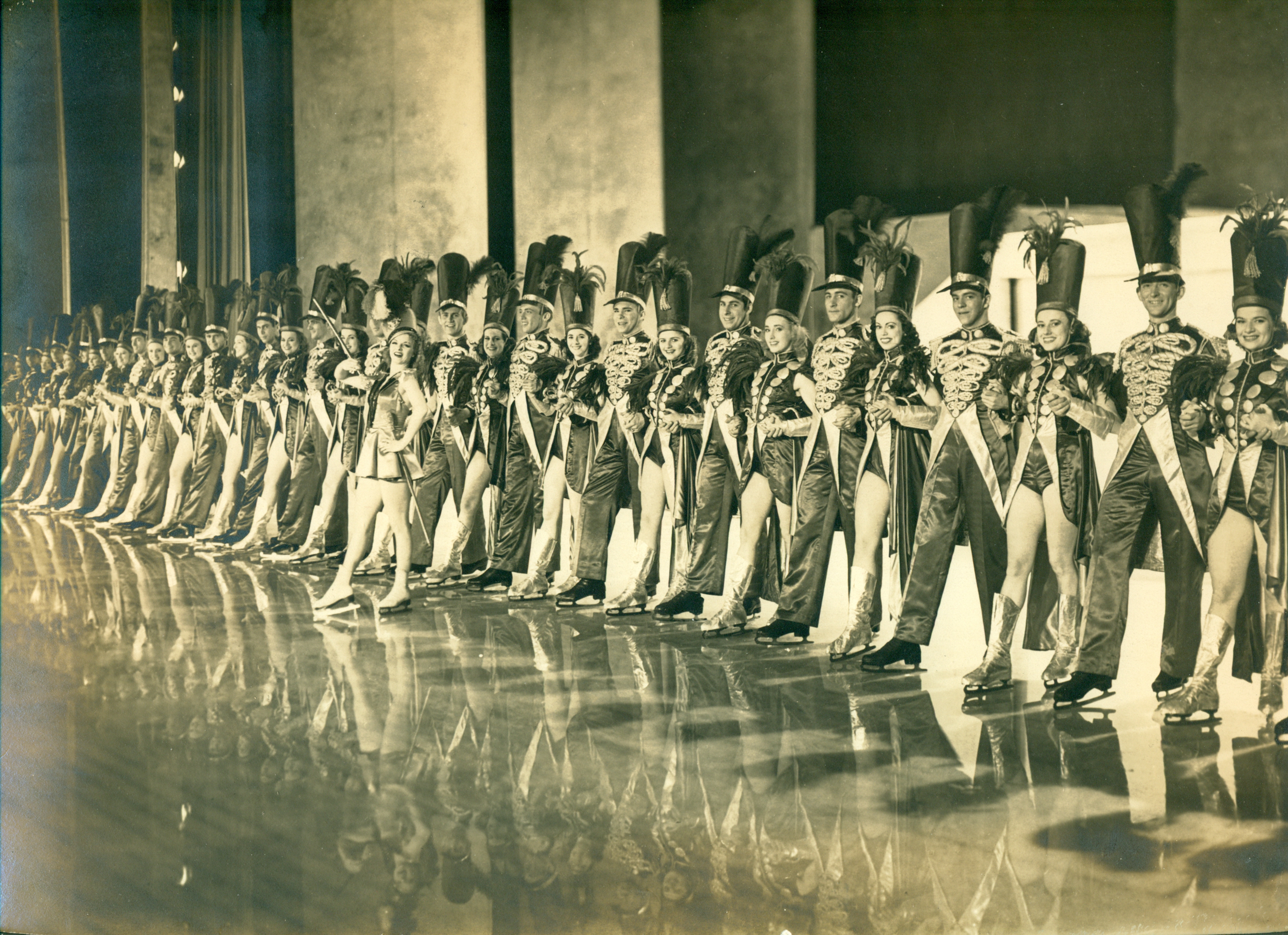
But that is only half of the story. The other half of the story involves Helen Thompson who, from an early age, was pushed by her mother, Bertha, into dance. Luckily, Helen learned to love to dance and to perform, in general. From ballet, Helen moved into vaudeville routines and eventually ice skating with skating stars like Sonja Henie. 

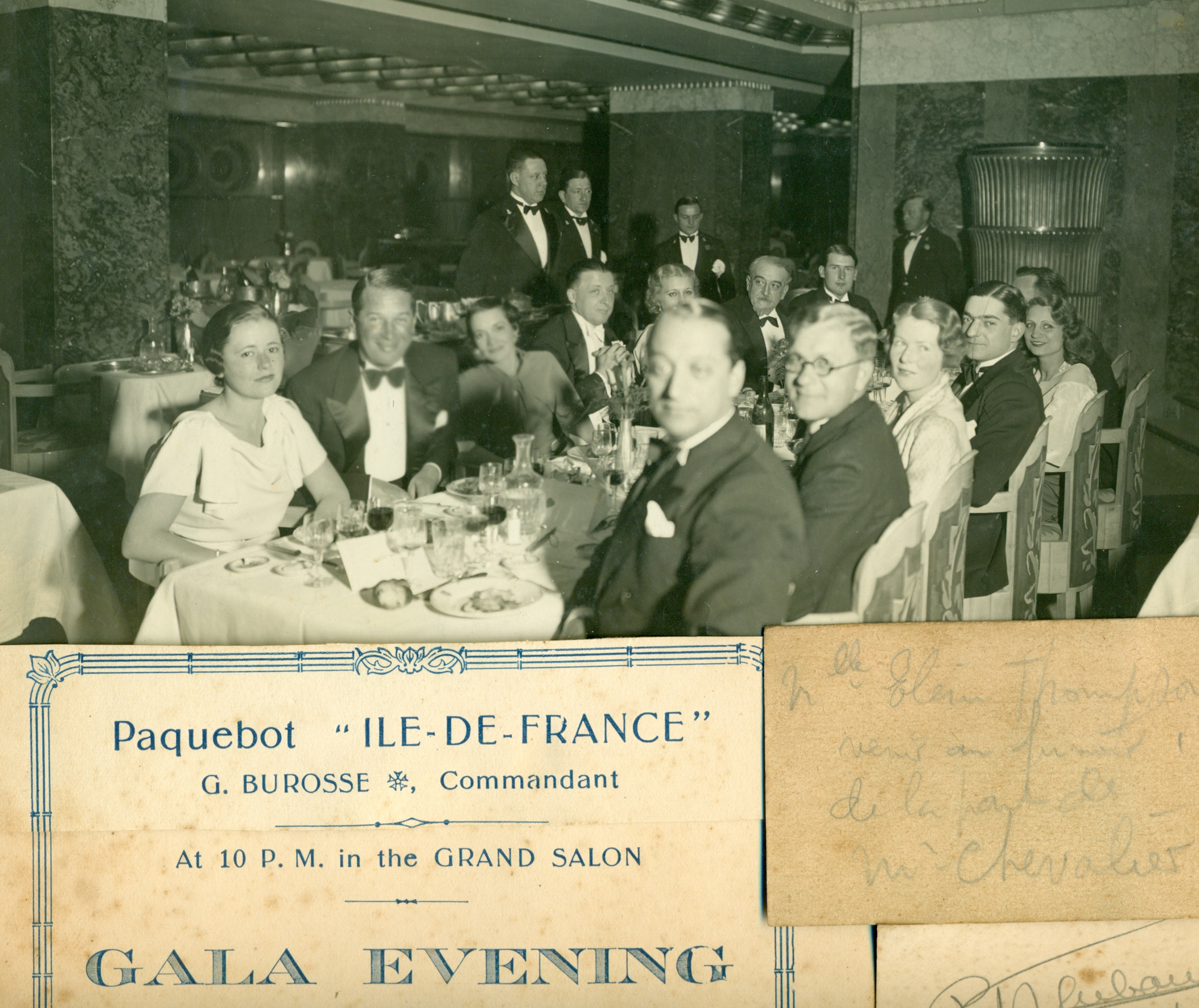
But Helen’s career is only part of her story. At each turn in her career, she met famous people and witnessed key events. Coming home from a European tour, Helen performed onboard at the Captain’s request, alongside another performer named Maurice Chevalier. What was more important was the fact that both performers sat at the Captain’s table. Helen dined with the former President of France, Edward Herriot, on his way to Washington DC to confer with FDR in the mid-1930’s.

It is this constant integration of the big picture of history (Chevalier jokingly asking Herriot if he could save the world from Hitler) with the details of Helen’s dance program that make the two books so charming and engaging. We are reading history from the bottom up, living through periods of time through the eyes of Chum and Helen. And it is a wonderful way to learn and was used successfully by Kenneth Roberts in his many books on the American revolution.

For all of you history buffs who like a good romance story, put away David McCullough for a bit and pick up River of January, Part One, and River of January, Figure Eight.

For more from John Vogel visit Preserve Old Broadway on Facebook.

Gail’s books are available at http://www.river-of-january.com, and on Kindle.

gailchumbley@gmail.com

That’s All

gailchumbley@gmail.com

th

Colonel Clark used to bring his young son down to the dojo where my brothers took judo lessons. Judo had been my grandfather’s idea and he faithfully chauffeured the boys, and I sometimes came along too.

My Grandpa Ray always sat with Colonel Clark, if the old gent happened to be present. That meant I sat with Colonel Clark, too. The two old men would talk and talk, seated next to one another, though their eyes remained fixed on their boys training on the mats. They never seemed to look each other, but remained absorbed in their conversation.

My own distracted attention span only caught snippets of the murmuring discussion. “MacArthur, Wainwright, and Bataan,”  came up in their exchanges And despite my youth, I understood something grave, something momentous lay behind the back and forth of these two men.

My brother filled in the substance of what I reluctantly overheard.

Colonel Clark had been left on the Bataan Peninsula when General Douglas MacArthur evacuated the Philippines in 1942. Under the new command of General Jonathan Wainwright some 22,000 Americans surrendered to Japanese invaders, and among them young Clark. The Japanese summarily ordered this defeated army to march some sixty miles through the jungle. And cruelty became the purpose of the Bataan Death March; heat exhaustion, dehydration, and starvation felled many of these exposed suffering Americans. When a captive stumbled, or fainted, the penalty was an immediate beheading. Young Clark witnessed Hell, and he clearly never separated himself from the ordeal, fused forever into his character.

And that that same ordinary old gent who chatted quietly with my grandfather, had a young son was a miracle. In light of his wartime captivity, Clark should never have survived.

The valiant are everywhere. 

For example there was George, the high school janitor.

For many years this little old fellow pushed a mop down the litter-strewn halls where I taught American history. Equipped with two hearing aids, this diminutive man pushed an immense dust mop, wider than he was tall.

To a passing eye George appeared nearly invisible. Just a friendly, gentle, and harmless grandfather.

As I pontificated about D-Day, Tarawa, and the Bulge to sleepy Juniors, a foot or so of mop often slid and stopped by the classroom door.  Silent, George hid as I blathered on about the Second World War. A short time later I learned this quiet 80-something had once handled a M-1 Garand, shivering aboard one of those heaving and crashing Higgins boats, churning  toward Omaha Beach. George had been in that first wave in June, 1944. 

Humbled to learn our little janitor was a living, breathing hero, I became the student. “So George, what do you remember most about that morning?” 

The old warrior rasped in a high, faded voice, “It was awful early, and the water was awful cold.”

So understated.

Another veteran crossed my path by the name of Roy Cortes. His son, our school Resource Officer brought Roy by to visit with my students. Another narrative of a remarkable life unfolded.

As a teenager he got a job with the Civilian Conservation Corps. After Pearl Harbor, Roy headed straight to the recruiting office, and into the US Army.

Roy, too, had ferried over from Southampton the afternoon of that bloody day. “What do you remember most about the invasion, Sir?” a student asked.

The affable elder smiled slightly, then a cloud passed over his expression. “I lost everyone in my outfit. I was real scared. Soon I had orders to regroup with other survivors. You see, that was bad because I’m Mexican-American, and my first platoon got used to me, and stopped calling me Juan or Jose. Now I had to start all over with the badgering.

For days, as we moved inland, with these fellas giving me the business. One fella said, ‘Mexicans can’t shoot.’ I said that I could. So he said, ‘Ok Manuel. Show me you can shoot. See those birds on that tree branch up ahead? Shoot one of those birds.’ I lifted up my rifle and aimed at the branch and pulled the trigger.” At that Roy again begins chuckling.

“I missed the branch, the birds all flew away, and twelve Germans came out of the grove with their hands up.”

Astounded, no one spoke. Then a huge wave of warm laughter filled the classroom. Roy simply smiled and shrugged.

Colonel Clark, George the Janitor, and Roy Cortes. They were just kids who’s lives became defined in ways we civilians can never fathom. They were scared, and hot, and cold, and hungry, and suffering, and ultimately lucky enough to come home.

They married, raised families, and move on with life.

That’s All.

Gail Chumbley is the author of “River of January,” and “River of January: Figure Eight,” a two-part memoir Also available on Kindle.

Panama 1932

Author Note: The following excerpt was drawn from extended interviews with veteran aviator Mont Chumbley (1909-2006), discussing his training in the interwar Navy. For the rest of the story read “River of January” available on Kindle.

Later, with his flight training securely behind him, Seaman Montgomery Chumbley received his first official orders. He and his class were assigned to Torpedo Squadron 3, located in Coco Solo, on the Atlantic coast of Panama. Chum joined his fellow novices as they shipped out southward aboard the USS Shawmont.

Watching from the deck as the Florida base vanished, the pilot silently rejoiced at this milestone. He also celebrated the fact that he didn’t have to return in disgrace to Virginia. That euphoric detail made the sky somehow bluer, the clouds somehow more feathered and graceful. The young man felt nearly giddy.

After two pleasant days at sea, the Shawmont cruised into the Naval Station at Guantanamo Bay in Cuba to refuel. Chum was enchanted by the beauty of the jungle and continued to marvel at the colorful sea life and assortment of exquisite birds circling the ship for handouts. The vast horizons he used to imagine, were becoming reality.

The Squadron’s final destination lay near Colon, Panama. Coco Solo was a vast, busy American naval installation, surprising the young pilot with its colossal size. The arrivals boarded a transport for delivery to their quarters, gawking out their bus windows in wonder at the enormity of the American base.

His awe continued after he and the boys were escorted to the adjacent submarine facility to tour that installation.

Returning to the field, the group sat through their initial military briefing, Chum, next to Win, listened as the instructor addressed the new aviators. The captain explained that a 1929 War Department directive assigned the US Navy the task of protecting the Atlantic zone of the Panama Canal from hostile threats.

“The Army’s Fort Gulick sits adjacent to us in Coco Solo, and shares our same mission,” he explained. “As some of you may already know, to the southwest, other military bases dot the entire 51 miles of the canal—all the way to where it meets the Pacific.

After the session, Chum remarked to his buddy, “I feel strangely noble defending the canal. It’s as though we all are part of a bigger picture, with America expanding into both oceans.”

“But what country would be nuts enough to attack us?” Win wondered.

War games made up much of Chum’s Panama duty. The flyers were the “red” team, attacking from the air, while the “blue” team lay in wait, aboard ships “guarding” the canal. The pilots executed their orders during these simulations, but off-duty they grumbled about the Navy’s outdated and seriously flawed maritime battle plans.

“I can’t believe they have us flying so near enemy ships!” Chum groused, crunching over a gravel path after morning exercises. Win paced alongside as they headed toward the base canteen.

“So near? What do you mean? How else could we release our torpedoes?” His friend asked as they ordered sodas at the commissary’s cafeteria.

“Think about it, Win. A torpedo aims more accurately if it detaches directly above the ocean’s surface. And it’s not the steep dive on approach that’s fatal—it’s pulling up after releasing the torpedo. That maneuver is potentially fatal. The belly of the plane is too close to enemy guns. Any surface ship could blow us to kingdom come.” He smacked his palms loudly for effect.

“But, Chum, hold on! There’s smoke laid down on the surface by the first two T3M’s. That smoke blankets us.”

“Yeah, if all goes as planned. If the smoke is laid down close enough to the water, if it doesn’t rise too fast, and if the wind doesn’t blow in too hard. That’s a lot of ifs. Think about it. We approach in low formation, drop our payload and bank, while dangerously showing our undersides to the enemy. We’d be lucky to keep our asses dry, Win. Makes me wonder what desk genius dreamed up this idea. It’s a suicide mission.”

The two flyers stared at their icy drinks. Perhaps Win could see his own plane exploding into the cold depths, just as Chum had already envisioned.

“Anyhow, the scuttlebutt says the brass is taking a second look at that line of attack,” Win disclosed. “The Navy wants to remodel the torpedo bombers into patrol biplanes, replacing the ordnance with fuel tanks. Can’t come fast enough for me—you’ve made me a believer,” his friend admitted.

Gail Chumbley is the author of “River of January,” and “River of January: Figure Eight.” Both are available at http://www.river-of-january.com or on Kindle.

gailchumbley@gmail.com

The Archive Story

amelia0001

Amelia Earhart (left)

Skip the ad, and click to full size.

Enjoy!

Video-The Family Archive

Gail Chumbley is the author of the two-part memoir “River of January,” and “River of January: Figure Eight.” www.river-of-january.com Both books are also available on Kindle.

Los Angeles 1940

The supper club was cavernous. The Cocoanut Grove’s maître d’ cordially welcomed the couple and directed them through a tropical arbor of tall potted palms, sheltered under an enormous Bedouin striped tent. Moorish archways separated a dimly lit lounge from the contrasting bustling dining area and its polished dance floor. From a raised stage, a full orchestra engaged the swaying crowd with a smooth rendition of “South of the Border (Down Mexico Way).” Those not dancing strolled among the tables—greeting friends, laughing, and sipping their cock- tails. Intrepid photographers, dodging harried waiters and pretty cigarette girls, snapped photos of the diners.

Helen shimmered, gowned in flowing black silk, easily melding into her chic surroundings. Chum found himself, once again, bowled over by her beauty. “You take the cake, Helen,” he said, as he pulled out a chair for her. She gave him a puzzled glance as she sat down. “What I mean is,” he clarified, “how does a girl pick beach sand out of her ears in the afternoon and transform into a dreamboat by eight?”

She smiled. “It’s all in the face powder—covers up sand, salt, sunburn, bird droppings . . . the works. You know, Chum, with all this flattery, I think you ought to stick around more . . . maybe reconsider this employment idea.”

Chum disagreed by a shake of his head. “Helen, there are two things in this world I love. One is escorting you to nightspots like this one. And two—”

“Flying,” she finished.

“Right-o. And now that we have cleared up that little matter, would you like to dance with your husband? You see, dancing with you is the other benefit I get from nightclubbing. And I promise I will flatter you more. That’s one of the reasons I married you.”

Chum circled the table and drew back her chair. The bandleader gently snapped his fingers in a leisurely four count, the orchestra striking up “Moonlight Serenade” on the downbeat. A rich trombone solo beckoned the couple toward the floor, quickly accompanied by a melodic blend of clarinets and saxophones.

Chum clasped Helen around the waist, holding her close, her left hand in his right.

“Now this is a box step, honey,” Helen murmured. “Just do what I showed you and keep your eyes up. Don’t look at your feet. Feel the rhythm,” she coached.

“I’ll give it my best.” His eyebrows cinched together as he concentrated. After a few steps he grumbled, “I’d like to see you fly an airplane.”

When dinner ended, Helen leaned closer to Chum, and they quietly spun idyllic visions of their future. Out of the corner of her eye, Helen noticed a well-dressed gentleman making his way toward their table. She sat up.

“Chum?” inquired a tall, dark-haired, opened-faced man.

“Russell!” exclaimed a genuinely pleased and surprised Mont Chumbley. He hopped up, stretching out his right hand. “What do you say, Russell? What brings you to Los Angeles?”

Chum’s words rushed in his surprise. “Helen, this is Russell Thaw, an old friend from my air rac- ing days. Russ, this is my wife, Helen.”

Politely shaking his hand, her mind worked to place his familiar name. Thaw . . . Thaw. Why do I know that name?

“Please join us, Russell.” Chum gestured to an empty chair. “Would you like a drink?”

“Sure, but just for a moment, buddy. I don’t want to intrude on your evening.” Thaw smiled sheepishly toward Helen. “What is it you’re doing with yourself, Chum? Last I heard you were working for Lindbergh at TWA.”

“Quit,” he declared, chuckling. “Teeny Weenie Airlines wasn’t for me.”

Thaw smiled at his friend’s candid reply. But his expression quickly shifted, growing seri- ous. “You need to get back to New York, Chum. The sooner the better. Eastern Airlines is hiring. They’ve got a lock on airmail routes from the government, and Captain Eddie’s hurting for pi- lots. You would do well for yourself. That is, if you want to live back in New York.”

Chum’s relaxed expression sharpened at once. He sat up straighter. He took a long look at Helen, trying to read her expression. Turning back toward Thaw, he replied, “I heard something about that. So Rickenbacker’s honestly hiring? I’d heard he had his choice of pilots.”

“Eastern is still throwing out their nets, and you two”—his gesture included Helen—“should get going and visit the Eastern office. See, time matters. Once you make that seniority list, you’re vested—you are in. The clock is vital, here. Take my advice, Chum—it’s time to get on board, literally.”

Chum sat still for a moment, rolling his cigar in his fingers. He remembered the twelve-hour seniority difference that sent him to San Francisco when he worked at TWA. “You going to ap- ply, Russ? You sound like a pitchman for the company.”

“Naw.” Thaw laughed. I just came from New York, and it is the talk all over Long Island. I fly Harry and the rest of the family around now. We’re heading back day after tomorrow. It’s a good job for me.”

The old friends talked over drinks. Thaw caught Chum up on his life, and the two remi- nisced about long-gone days at Roosevelt Field. Their visitor finally looked apologetically to- ward Helen as he stood up to leave. “Sorry to have interrupted your evening, but it was lovely meeting you. Chum’s a lucky fellow.”

“No, no,” she assured him. “It was my pleasure. I’ve come to realize that my husband has made some awfully nice friends along his way.”

Chum smiled, pleased with her compliment. He stood and shook his friend’s hand in farewell. “Thanks, Russell. First, for coming over to say hello, and secondly, for the job advice. Tell Harry hello.”

“Sure will. It was swell seeing you again, Chum. Helen.” Thaw nodded her way.

The couple watched Thaw as he disappeared into the crowd, swirling around the dance floor. Chum spoke first. “Well, what do you make of that?”

“Make of which that? Running into Russell Thaw or the Eastern Airlines news? And honey, who is Captain Eddie? I’m a little in the dark.”

“Eddie is Eddie Rickenbacker. He’s a pilot and he bought Eastern Airlines a couple years ago.”

“Oh, right. I know who he is. The World War One ace. And I also know who Russell Thaw is,” Helen announced coolly.

“Okay, Helen.” Chum folded his hands, amused. “I’m listening. What’s the dope?”

“Well, it’s legendary. The rumors made the rounds backstage of almost every theater I played in New York.” She moved closer, lowering her voice. “Your friend’s mother”—Helen gestured the direction Thaw left—“was a dancer named Evelyn Nesbitt. And she was quite a no- torious girl—carried a real checkered reputation.”

Chum, surprised, leaned in to hear her better as the orchestra struck up new number. Helen continued. “So this Evelyn met and married a wealthy New Yorker, Harry Thaw.” Chum auto- matically glanced around looking for Russell, intrigued.

“Unknown to Thaw, though everyone else in New York knew, Evelyn had had this torrid af- fair with the architect who designed Madison Square Garden.”

“Jiminy Crickets! Russell’s mother, you say?”

“Uh-huh. True story, cross my heart,” she declared. “So, Thaw Senior finds out his wife’s not-so-secret past of catting around, and shoots the architect, dead as a doornail. Later, at his murder trial, the jury acquitted Thaw of murder,” Helen finished, looking at her husband.

“Holy mackerel, I’d never heard any of that before. Poor Russell. I sure can’t blame him for wanting to keep that story quiet. Wonder if the Guggenheims know?”

“The Guggenheims? You mean the New York Guggenheims? You’ve lost me, Chum, how do they figure?”

“Harry Guggenheim is the guy Russell flew out here. He’s the family’s private pilot.”

“Are you trying to tell me that you know Harry Guggenheim?” Helen sat back, astounded.

“He flies too, honeybunch.” Chum patted her arm. “Harry was another regular out at the field.”

Helen paused for a moment, then asked, “Do you know President Roosevelt?” She was only half teasing.

Chum threw back his head and laughed out loud. “He is a navy man—that much is true. But he likes boats. FDR doesn’t fly airplanes, as far as I know.”

“That’s a relief.” Helen smiled. “Don’t know what Eleanor and I would talk about.”

The couple then fell into a contemplative silence, busily weighing the evening’s tidings. Af- ter a few moments, Chum dispelled the mood. “Ready to head home?”

“Sure, honey. I’m ready,” she replied, reaching for her bag.

Chum rolled down the windows in the Chrysler, the night breeze flowing smoothly inside the car. It was a quiet drive. He eased the sedan into their parking spot and hopped out, circling the car to open Helen’s door.

At their apartment, Helen could no longer contain herself. “Did your friend convince you? Are you going to try and work for Eastern? Are we going home?”

Chum sighed. His shoulders slumped slightly, understanding what she was truly asking. “I’m going to place a call to New York in the morning.”

Gail Chumbley is the author of “River of January,” and “River of January: Figure Eight.” Both books are available on Kindle, and in hard copy at http://www.river-of-january.com

gailchumbley@gmail.com
Much to Celebrate and Mourn


The following is an excerpt from River of January: Figure Eight


For three anxious days reports trickled in from the Pacific, dispatches that were spotty, vague, and inconclusive. When details emerged of this first-ever clash in the sky, the United States Navy found much to celebrate and, tragically, as much to mourn.

The particulars surfaced days after the attack, presenting a clearer picture of the Battle of Midway. At a morning briefing, base personnel learned firsthand the events surrounding this aerial showdown. “The Imperial Japanese Navy,” began an officer Chum recognized as Lieutenant Commander Kirby, “in an attempt to eliminate US forces on Midway Island, launched multiple airborne assaults. The number of enemy aircraft carriers present in the attack has convinced the Department of War that the Japanese military intended to occupy the island in order to menace US installations farther west in Hawaii.” Kirby paused, somberly measuring his words. “The Empire of Japan has utterly failed in their effort.” The lieutenant commander smiled faintly. “Of the six Japanese carriers under Admiral Yamamoto’s command, four now sit at the bottom of the central Pacific.” 

For a moment, the gathering seemed to hold its collective breath, pondering the lieutenant commander’s words. When the full significance sank in, the men jumped to life, roaring in satisfied approval. After the shouting and fraternal backslapping, the crowd finally stood together in a rousing standing ovation. 

Kirby couldn’t help but grin at the enthusiastic response, but quickly quelled the celebration with a brief “As you were.” When everyone was seated again, he continued. “Ahem. Yes, this is good news, good news.” Glancing down at his notes and taking a deep breath, he said, “Gentlemen, this great triumph has come at a grim price for the navy. Fellas, we have lost the USS Yorktown. An enemy sub took the old girl down. She was too disabled from the Coral Sea campaign to maneuver away. Our losses so far are sobering—over three hundred casualties at latest count.” 

Kirby’s eyes scanned the crowd. “Among the dead, five squadrons of Devastator torpedo bombers from both the USS Enterprise and the USS Hornet. These bombers were utterly blown from the sky while executing attacks on Japanese vessels. The Department of the Navy verified the few who survived the shelling were slaughtered in the water by the enemy rather than rescued. Initial reports from Honolulu indicate that Wildcat fighters, assigned to protect these torpedo bombers, lost all contact, leaving the Devastators hopelessly exposed to Japanese ordnance. Boys, we lost them all, all of our torpedo bombers and pilots—but one, a pilot from Texas.” 

The room fell silent, as if there had been no good news at all, no victory in the Pacific. Kirby concluded the briefing with, “Their brave sacrifice made it possible for the rest to find and sink those Japanese carriers.”

Seated among his fellow pilots, Chum shook his head sadly, reminded of a conversation nearly fifteen years before, when he was just a boy—a Seaman, First Class. After a morning of training—of war games—he and a buddy were perched on stools at the base canteen in Panama. Flying his torpedo bomber yards from service vessels had left him unsettled, and he said to his friend, “We approach in low formation, drop our payload and bank, while dangerously showing our undersides to the enemy. We’d be lucky to keep our asses dry, Win. Makes me wonder what desk genius dreamed up this idea. It’s a suicide mission.”

“A suicide mission,” he repeated, in a hopeless whisper, coming out of his reverie.

“Permission to speak, sir,” came a voice from the rear of the hall.

Kirby responded, “Permission granted.”

“How does a sailor go about transferring to the Pacific, sir? With all due respect to our mission here in New York, I want to whip those Japs bad.” Murmurs of agreement swept across the room.

“Fill out the proper paperwork, son.” The lieutenant commander sounded weary. “Complete with your commanding officer’s signature.”

Gail Chumbley is the author of the two-part memoir, “River of January” and “River of January: Figure Eight.” Available at http://www.river-of-january.com or on Kindle

gailchumbley@gmail.com

Quebec City 1939

The following is an excerpt from “River of January: Figure Eight, available at http://www.river-of-january.com and on Kindle.

Costumed in tall Hussar caps and military jackets resplendent with gold brocade, the skaters stood expectantly in their V-shape formation in the shadows. Helen, arms twined around the skaters beside her, shivered from a combination of excitement and the frigid draft wafting from the ice. Her ears thudded, inundated by the echoing din from the impatient audience. Much louder than a theater, she thought.

Vera Hruba—a Czech Olympian who was one of the three women headliners in the new production—was positioned at the apex of the V. When the last measures of the orchestra’s overture faded to a close, the house lights darkened and the expectant spectators fell silent. With a commanding flourish, the opening bars of a military march surged to all corners of the house. Spotlights swept over the glittering skate line as Helen pushed off with her left foot, in sync with the tempo. Following two more beats, Hruba burst from the crux of the and raced the circumference of the rink, spotlights holding tight to her revolutions. The audience roared their appreciation in waves of echoing applause. Helen’s first ice show had begun.

If rehearsals were any gauge, Helen was confident the show would be a success. The chorus line often lingered along the rail, chatting and stretching, as they waited for the director to call them onto the ice. “That’s Vivi-Anne Hulten. She’s Swedish,” Clara Wilkins whispered, leaning in, as she and Helen studied the soloist on the ice. “She’s been skating since she was ten,” Clara added, as Hulten executed a perfectly timed waltz jump. “Boy, that little Swedish meatball knows her footwork.” The girls standing nearby murmured in awed agreement.

Chestnut-haired Lois Dworshak sprinted past the attentive chorus line. Helen glanced again at her well-informed friend and Clara didn’t disappoint. “She, Lois there, is a bit of a prodigy. She skated a little as a kid in Minnesota, but hasn’t actually skated professionally all that long. She’s good too, huh?”

“Jeepers, you can say that again,” Helen muttered.

“But the real story in this cast is Vera Hruba.” This time, it was May Judels, the head line skater standing next to Eileen, who spoke up. All eyes shifted toward May. “Vera met Hitler, just like Sonja Henie did, at the Olympics in Berlin. She finished her freestyle routine and came in pretty high, I think. Vera didn’t medal or anything, but still skated a pretty good program.”

“So what happened?” asked another girl, Margo.

“Hitler says to her, ‘How would you like to skate for the swastika?’ And Vera—she doesn’t much like Germans—told him she’d rather skate on a swastika!” Heads turned in unison, watching as Vera completed a flying camel. “So”—May sighed—“to make a long story longer, Vera and her mother left Prague in ’37 as refugees. Then the Huns marched in, and Hitler made a public statement that Vera shouldn’t wear Czech costumes or skate to Czech folk songs. He said Czechoslovakia was gone, never to rise again. Vera responded, saying she’d always be a Czech and that Hitler could, in so many words, go fly a kite.”

“Their own little war . . . now that’s guts,” Helen said, her eyes returning to center ice. “Makes Henie seem like even more of an apple polisher.”

“A swastika polisher,” Margo corrected, as the director motioned the giggling chorus to center ice.

Gail Chumbley is the author of “River of January,” and “River of January: Figure Eight.” Available at http://www.river-of-january.com and on Kindle.

Peer Review #2

Strutting through the broad, gilded doors, bearing the black and gold insignia of his building, the President acknowledged well wishers, reporters, and staff. Happy to be back in New York, he looked forward to his familiar apartment and comfortable bed. The President felt it a hardship to live in such an old structure in Washington, though the prestige made it tolerable.

He aimed directly toward the elevator, his closest aides and Secret Service agents in tow. The Chief Executive marched into the lift, with a triumphant gait, gracing photographers with a last thumbs up, as the golden doors silently sealed.

Soon enough, the elevator car slowed to a silent halt, the opening doors revealing an opulent penthouse. His entourage emptied first into the golden rooms, Secret Service staff sweeping for any dangers that might threaten the Commander in Chief. After the officers cleared the master bedroom, the President loosened his tie, slipped off his suit jacket and kicked off his designer shoes. Exhaling onto his grand bed, a sudden movement caught his eye.  

A tall man, of regal bearing stood by the window, surveying Midtown from on high. Attired in a blue uniform, trimmed with buff lapels and cuffs, the man’s hair looked powdery white, and was bound in a queue at the nape of his neck. 

Stunned, gasping at this extraordinary vision, the President froze, too astonished and frightened to speak.

“I’m very fond of New York,” the officer began. “During the War for Independence I remained in the vicinity waiting to reclaim it from British occupiers.” He glanced at the frightened man, now burrowing under his bedclothes. “As Chief Executive, I served both terms of office here in New York.”

The President could hear his heart pounding, and idly worried about his blood pressure.

“I, too, struggled with temptation,” the officer continued. In my youth I pined for the advantages of wealth that surrounded me.” The apparition glanced at the President. “Land, military rank, social standing, . . . these were the empty ambitions I embraced as valuable.”

The President slowly began to feel his heart rate slow, the adrenaline somewhat dissipating, and found the courage to speak. “Ho, . . . how did you get in here?” 

But the soldier did not reply, turning again toward the view of Manhattan. 

“Over time, particularly once the war commenced, I discovered my assumptions slowly crumbling. The sacrifices endured by the fine men in my command taught me that there were more important ideals than fleeting treasure,” the apparition sighed, emotion emphasizing his revelation. “You must realize,” the officer turned again toward the President, eyes blazing with conviction, “all a man truly possesses is reputation. In the end, that is all that matters.” 

Dread again filled the President, clutching tightly his golden comforter, finding no comfort. He wished the specter gone, praying with all his might that a staffer would hear and rescue him.

“You must understand,” the visitor continued, “I, too, struggled to master my avarice and envy. It was through a determined practice of self-restraint, a mastering of my baser desires, that I learned to be of service to more than myself.” The soldier paused a moment, studying the frightened man grasping his bedding. “Did you know that Article Two in the Constitution was written for me?” 

Hearing this, the President forgot his fear for a moment. 

“For you?” he managed to murmur. 

“When I relinquished my command after the war, and returned to my home in Virginia, Congress judged my character upright. In truth I was weary, lonely for my family, and yearning for a peaceful life,” the General smiled sadly. “However, when I gave up power I earned honor, trust—a good name—and contentment.”

“Why are you bothering me? You should leave,” the President moaned, wishing he had flown instead to Florida. But his visitor seemed not to hear. 

“When the Constitutional Convention set to work, only one day was devoted to defining the role of president. One day,” the visitor repeated. “You see, the delegates wanted no more of arbitrary rule, believing only those of good character would occupy the office.” The apparition looked directly at the President,”

“Please go,” the President whimpered. “I’ll call my men . . .”

The General interrupted, “they are not yours, Sir. And therein lies the problem, and the purpose of my visit.” The soldier frowned deeply. “These deputies work for the American people, as do you, sir. The presidency is a position of service and trust.” He paused. “We have all noted your general deficiency in this aspect.”

“We all?” gasped the President, concerned with his pumping heart.

The General approached the vast bed, the President shrinking deeper with each step. “The President is entrusted with formidable powers, that must not be corrupted. In this you have fallen short.”

“As I am remembered in the annals of America for quiet dignity and fidelity to country, you will only be recalled as a cynical moneychanger who profited from foreigners and plutocrats.”

A knock at the bedroom door startled the cocooned President, breaking the spell. His elaborate, golden bedroom was empty.

Gail Chumbley is the author of the two-part memoir, “River of January,” and “River of January: Figure Eight.” Both are available on Kindle or in hardcopy at http://www.river-of-january.com.

gailchumbley@gmail.com


I Want My GOP

This post originally appeared in early 2016. Cassandra award?

th

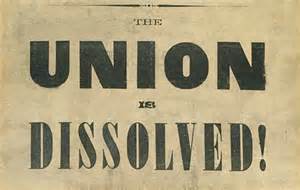
A divided national party . . . voices of extreme rhetoric . . . an ugly, contentious primary season. Does this spell doom for two-party system?

Sounds modern, doesn’t it? But the year was 1860, and the party in question was founded by Thomas Jefferson, and shaped in the image of Andrew Jackson: The antebellum Democratic Party.

On the eve of Civil War, the future of the Union appeared in fatal doubt. Political leaders in the Deep South: South Carolina, Georgia, Alabama, Mississippi, and Florida had all but washed their hands of the centrally powerful United States. Adding to the precarious atmosphere, a faction of Democrats in the North promoted a policy to permit slavery into the western territories under the principle of Popular Sovereignty, or direct vote. Others voices in the northern branch of the Democratic Party believed the Southern States should depart the Union in peace. And these pro-secession advocates became the most worrisome threat for Senate leader, Stephen A. Douglas of Illinois, the leading Democratic candidate for the presidency in 1860.

Douglas found himself in a hell of a spot. He fervently burned to lead his party to the White House and save his nation, dangerously poised on the verge of civil war. As the principal heir to Senate leadership, Douglas had spent over twenty years in Congress working to stave off Southern secession, taking over when Kentucky Senator, Henry Clay, the “Great Compromiser” died. Clay had also spent most of his earlier career drawing up one concession after another in a noble attempt to preserve the Union. Eventually the effort wore him out, and Senator Douglas pick up the cause.

As far as Douglas was concerned, slavery wasn’t a moral issue, merely a bump in the road. The issue could easily be decided by the good folks migrating west. Douglas believed if settlers didn’t want slavery, they would decline to establish laws necessary for supporting the “peculiar institution.” But the Senator was wrong—dead wrong. Slavery had, by 1860 become an issue impossible to fix. And it was this miscalculation, underestimating the power of the slave issue, that the Illinois Senator imploded both his party, and his career.

The new Republican Party had organized six years earlier in Wisconsin, founded on one central principle—slavery would not extend into the western territories, period. And this new party spread quickly. Composed of splinter groups, this now fully unified alliance insisted that free labor was an integral component to a flourishing free market economy. The presence of slavery in sprouting regions of the West would devalue free labor, and undermine future commercial growth.

Now, don’t get me wrong, these Republicans did not sing Kumbaya or braid their hair. These men did not believe in equality between the races—they were not abolitionists. Economic principles drove their political platform, (Emancipation came later with the transformation of President Lincoln through the caldron of war).

For Stephen Douglas the approaching 1860 election meant vindication for his support of popular sovereignty, and reward for his faithful political service. And Douglas was no political hack. He fully understood the solvency of the Union lay in the delicate art of sectional balance, and his ascendancy to the White House as a Democrat would go a long way to placate the Southern hotheads. But this Illinois Senator failed, once again, to fully comprehend the temper of the nation, or of his own party. The era of seeking middle ground had passed—America’s course had been set toward industrial modernity with no place for an antiquated, barbaric labor system.

Charleston, South Carolina, was selected as the site of the 1860 Democratic convention. Chaos immediately broke loose on the convention floor. While Southern Democrats demanded strict, precise language guaranteeing the extension of slavery into the territories, Northern Democrats and those from California and Oregon pushed for Douglas’ popular sovereignty. This tense deadlock forced the latter faction to walk out and reconvene in Baltimore where party business could function.

Southern Democrats moved on without Douglas or his faction. In a separate, Richmond, Virginia convention, Southern Democrats proceeded to nominate Kentuckian John C. Breckinridge.

Back in Baltimore, Senator Douglas indeed gained the Democratic nomination, preserving his precious principle of local voters determining the western migration of slavery. Meanwhile, the Democrats in Richmond took a step further, adding the absolute protection of slavery to their platform. Middle ground had vanished.

Though a long shot, a third faction of the Democratic Party broke ranks with both Douglas supporters, and the Richmond faction. Calling themselves the “Constitutional Union Party,” this coalition nominated John Bell of Tennessee.

So what can we make of this 1860 fiasco today, in 2016? If I could attempt a bit of divination I would suggest that the political party that can present the most united front will prevail in the general election. If current Republican candidates continue to employ such wide-ranging, and scorching tones to their rhetoric, and stubbornly defend the innocence of their loose talk, the party may run head long into oblivion, as did the Democrats of 1860. If the roaring factions, currently represented by each GOP aspirant goes too far, the fabric of unity will shred, crippling the Republican’s ability to field serious candidates in the future.

Looking at the past as prelude much is at stake for the unity of the GOP. In 1860 party divisions nearly destroyed the Democrats, propelling the nation into a bloody civil war. And though Republicans at that time elected our greatest Chief Executive, Abraham Lincoln, the Democrats suffered for decades, marginalized as the party of rebellion. And even the best lessons left by the past are still forgotten in the heat of passion, by those who know better. (The Democrats shattered their party unity once again a hundred years later, splintered by the Vietnam War.) This is truly a cautionary tale for today’s turbulent Republican Party.

Zealots do not compromise, and leading GOP candidates are spouting some pretty divisive vitriol. Southern Democrats self righteously rejected their national party, certain it no longer represented them, and ultimately silenced the party of Jefferson and Jackson for decades. The lesson is clear for today’s Republicans. By tolerating demagoguery, extremism, and reckless fear-mongering in their field of contenders, the RNC may indeed face a similar demise.

Though it is true that no party can be all things to all citizens, malignant splinter groups should not run away with the party.

The American public demands measured and thoughtful candidates—and both parties are expected to field candidates of merit and substance.

We deserve leaders worth following.

As Senator Stephen Douglas refused to recognize that the political skies were falling around him, and his party, the modern Republican Party must not.

Gail Chumbley is the author of River of January, and River of January: Figure Eight a two-part memoir. Available on Kindle