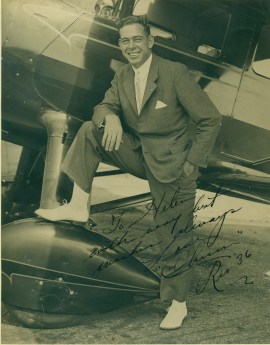
A Seasoned Veteran

This is an excerpt from “River of January: Figure Eight.”

After waiting nineteen months for his transfer west, the actual trip raced by almost too rapidly. One morning he boarded a train in New York City, the next he soared over the Ko’olau Mountains of Oahu. This war waited for no one, and Chum’s new duties began at once.

Lesser damage from the 1941 assault on Pearl Harbor had been cleared away. The runways, taxiing strips, airfields, and hangars bore little evidence of the strafing and bombing that had rained down a year and a half earlier. Not gone from view, however, was the lifeless hulk of the once proud battleship USS Arizona. Broken in the harbor, she had been cut dead in her moorings. Nearby, her sister, the USS Oklahoma, listed unnaturally on her side—both vessels now sacrificed ruins lying prostrate on Battleship Row. The twin wreckage supplied all the reminders Chum needed of why he had come to the Pacific.

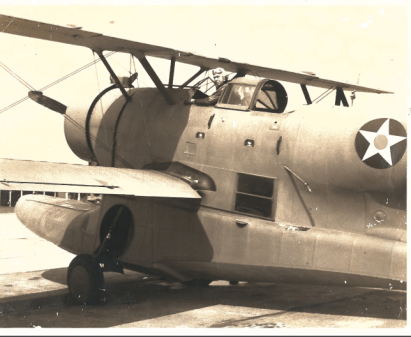
Billeted in junior officer housing at Makalapa, the pilot began each morning commuting past the somber remains in the harbor to attend briefings and equipment familiarization. Assigned to Air Transport Squadron Ten, Chum straightaway began logging air time aboard another giant seaplane—the Martin PBM-3 Mariner. Designed for heavy cargo and armaments, this aircraft was enforced with a deep hull. The lieutenant spent his flight time practicing raising the titan from the sea and maneuvering under the weight of heavy payloads.

Opening his orders on July fifth, the lieutenant—along with his newly attached co-pilot, Lieutenant Richard Forman, and seven crewmen—departed from the waters of Pearl Harbor for Johnston Island, 750 nautical miles deeper into the Pacific. On board, the Mariner carried a hefty cargo of medical supplies, military dispatch files, and bags of civilian mail. Lieutenant Chumbley covered his maiden flight in five hours and forty minutes—enough hours, under wartime conditions, to render him a seasoned veteran.

Gail Chumbley is the author of “River of January,” and “River of January: Figure Eight.” Both titles available at http://www.river-of-january.com and on Amazon and Kindle.
Catalina2


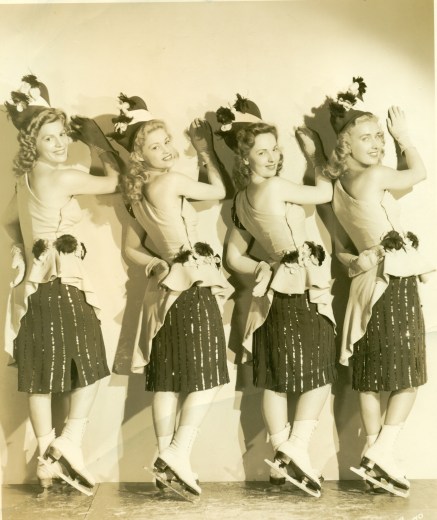
Holiday On Ice

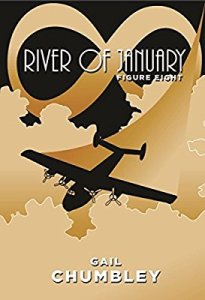
I am proud to announce that River of January: Figure Eight is now on Kindle. If you loved the first volume, River of January, this is a chance to discover the rest of the story.

4Skaters0001


We are in talks to see both books on the big screen. Stay tuned for news on that exciting front.

Now both books are on Kindle. If the spirit of the holiday moves you, give us a short review.

Gail Chumbley is the author of River of January, and River of January: Figure Eight.


Beware Of Darkness

we-the-people

Vote, but don’t vote in fear. Ignore the thugs who intend to intimidate.

If alarm guides your trip to the polls, clarify what frightens you. Whether it’s authoritarianism, climate change, or even attacks on our democracy, pull yourself together and vote with thoughtful purpose.

The former president thrives on doubt, lies and chaos.

While the GOP points to crime, and minorities as a threat, understand this distraction provides cover for greed and incompetence. This crowd is motivated by power, not service to country.

Many high officials have been indicted for conspiring to hack the 2016 Presidential election. This is not theory, it is fact. Of those thirty-five, four convicted conspirators “flipped” and were cooperating with Federal Prosecutors to shorten their sentences. These scoundrels rescinded their agreements and the previous Attorney General supported that effort. At the end almost all were granted a presidential pardon.

That is a concern.

Russia, under Cold Warrior and former KGB operative, Vladimir Putin, has unleashed powerful ‘oligarchs’ to perpetrate cyber sabotage against the United States. Never forget that. This is treason-providing aid and comfort to America’s enemies. At this writing the GOP have declared if they retake Congress they will give Ukraine to Russia.

To silence his critics, Putin has quite publicly dispatched hit squads of assassins, at home in Russia, and abroad. For example, executioners brazenly used military grade nerve agents to silence opponents. Though the Russian leader has denied authorizing any such thing, the former president willfully refuses to accept that, all too, obvious fact.

That is a grave concern.

Friendship extended from that White House to other totalitarian regimes similar to Putin’s. Kim Jong Un, North Korea’s butcher of  not only family members, but masses of his own people, Rodrigo Deterte of the Philippines, who has pursued extralegal measures to kill “criminals,” and Tayyip Erdogan of Turkey who demanded Trump deport a  Turkish journalist, critical of the strong arm regime in Ankara.

The previous president’s family still maintains business ties with the Saudi Prince, MBS, despite the grisly murder of a Washington Post journalist by Saudi assassins.

That is a concern.

Then came January 6th, that violent crescendo of the Trump years. This party is a plague.

Fear is a powerful and toxic impulse to rush the polls on Election Day. However, we must all understand what we fear. Do we focus on the bedlam promoted by that defeated administration, or do we ignore the noise and pinpoint the real threat?

Vote like a boss.

Gail Chumbley is the author of the two-part memoir, “River of January” and “River of January: Figure Eight.” Both books are available on Kindle. Chumbley has also penned two historical plays, “Clay” concerning the life of Kentucky Senator Henry Clay, and “Wolf By The Ears,” and exploration of racism and slavery in America.

gailchumbley@gmail.com

Happy Tidings


Image41MhW6BOdRL._SY400_

An extraordinary event has come our way. River of January, then River of January:Figure Eight are to become feature films. We have signed an option agreement with Falls Park Entertainment of Greenville, South Carolina to bring Helen & Chum’s story to the silver screen. Pinch me, I must be dreaming.

Books are available at http://www.river-of-january.com, and at Amazon.com

History of an Era

airclip0001

October, 1933

By luck or accident the review below popped up on the internet. It’s nearly a year old, and a bit of a nice surprise. Thank you Connie Daugherty wherever you are.

Recommended Reading: River Of January

Posted By: idahosrind

by CONNIE DAUGHERTY

River of January by Gail Chumbley; 2014

Mont “Chum” Chumbley is a pilot. He’s a natural, and he lives to fly. Helen Thompson is a dancer. She’s a natural, and she lives to dance. They come from different worlds and have nothing in common. Yet they are very much alike and destined to be together.

In her 2014 award-winning biography, River of January, Gail Chumbley follows the lives of her husband’s parents from 1927 through 1936. Using their letters, shared stories, and interviews, along with her own storytelling skills, Chumbly has created an informative and entertaining book that reads more like a novel than a biography. It details the struggles of not only the individual characters, but of the world through the Great Depression and events leading to WWII.

River of January includes historical details of the entertainment business from the decline of vaudeville to the emergence of talkies (motion pictures with sound). As well, the book reveals how developments in aviation also moved quickly in the 1930s. Chumbly adeptly follows those drastic historical changes.

Having both come from humble beginnings, Helena and Chum each choose career paths eventually lead them to their first meeting.

At 18, Chum joins the Navy with the hopes of becoming a pilot. He works his way through the military bureaucracy, getting assignments everywhere, it seems, other than at flight school. His lack of education holds him back, but he’s determined to fly.

He has something to prove to his family, to himself. So, when an opportunity presents itself Chum accepts it.

“A nervous and sleep-deprived Mont Chumbley reported for flight elimination exercises.” Everyone expects him to wash out; after all, he has failed the entrance exams more than once. But Chum knows all he needs is a chance to prove himself.

Meanwhile, Helen has her own struggles. While confident and self-assured on stage, off stage she is a pawn of her controlling mother’s insecurities and personal dreams. The only way Helen seems able to escape—while keeping her mother at least somewhat satisfied—is to accept jobs that take her away from her New York home. She finds herself traveling with dance troops throughout Europe.

This need to escape home and family in order to discover and develop their true potential is one thing Helen and Chum have in common, though the way they deal with it is very different.

Eventually, the stock market crash throws the whole world into economic turmoil, which leads to political turmoil, and Helen and Chum are caught up in it all as the entertainment business and the technology of aviation transform.

Chum finds himself, restless and bored, with a job in West Palm Beach, Fla. He jumps at an opportunity to demonstrate Waco Aircraft Company’s new fighter plane for the Brazilian government down in Brazil.

Meanwhile, Helen is back in New York as 1934 slides into 1935, working in a three–person act under her mother’s watchful and domineering presence. Helen, too, is getting restless and ready for change. “She also knew her time had come to move on from their partnership. She hoped her mother would see it the same way.”

Helen flees New York on a ship to Brazil and lands a gig dancing in a club regularly frequented by Americans. “Three young men seated near the dance floor caught her eye, clearly American by their dress and relaxed posture.” One of those young men is Chum, and he catches her attention immediately.

“This new girl, this sparking, compelling blonde on the stage, radiated a magnetism that surprised him.” In a moment, as their eyes meet, the pilot and the dancer connect. And although they try to be together as much as possible, they each have careers and obligations that take them in different directions.

Eventually, Chum proposes, and Helen accepts. They plan to live in Rio de Janerio, but it isn’t that simple.

Between Helen’s mother, who disapproves of their union, and the war, the young couple’s letter transcripts reveal their struggle against seemingly unmovable objects to continue their love and establish a life together.

In 2016, Chumbley published River of January: Figure Eight, picking up where the award-winning River of January dramatically left off. In the sequel, she tells the story of their continued courtship, marriage, and struggle to keep their love intact, despite the challenges of WWII and the unrelenting interference of Helen’s mother. It is the realism of the story—the struggles and successes, the bad times and the good, as well as the author’s narrative—that keeps readers enthralled and turning pages. These two books are more than a family biography. In telling the story of these two intriguing and imperfect people, Chumbley has captured and preserved the history of an era.

Chumbley is a retired history teacher. In 2005, she received the Outstanding Teacher of American History from National Daughters of the American Revolution in Washington DC. A native of the Pacific Northwest, the author was born and raised in Spokane, Wash., and earned a history degree from Western Washington University in Bellingham, Wash. Chumbley and her husband currently live near Boise, Idaho. She received the 2016 Idaho Author’s Award for Memoirs and Biography for River of January.

https://idahoseniorindependent.com/recommended-reading-river-january/

Gail Chumbley is the author of the two-part memoir River of January and River of January: Figure Eight. Available at http://www.river-of-january.com, and on Kindle.

gailchumbley@gmail.com

Everybody’s Dad

IMG_0822

September, 1974.

When my dad said we were getting up at 5am, he wasn’t kidding. His morning schedule demanded we jump out of bed and climb into the truck, the back flanked with high wood racks. Two or three chainsaws are stored in the truck bed, along with cans of gasoline, rusty chains, a yard stick, chalk, and a cooler. This equipment is secured under a green canvas tarp that effuses an oily, pine scent from previous visits to the woods. 

Dad takes the wheel of his 1968 white Chevy pickup, my friend, Mary sits in the passenger seat. I wedge in the middle, straddling the stick shift, attempting to sip coffee as we motor our way out of town. The dawn is chilly and new, the traffic quite light.

Getting up that early on a Saturday renders us among the very few who had places to go. 

Eventually, clearing out the cobwebs of sleep from my brain, the morning feels electric. We were heading to the woods! Somewhere north of Spokane,  my father had discovered a secret tract of fallen timber the previous spring. My dad had a sharp eye for suitable firewood, especially if the trees were already down and dry, insuring a superior burn.

After an hour or so, the Chevy turns onto a dirt road, bumping along deep into the forest. The terrain is steep, and he assures us we are close to his remembered destination. The coffee is long gone, and we need to stop soon and wander into the trees for relief.

His truck rumbles to a halt on a lone logging trace. We’re out of the cab at once stretching our legs, breathing in the morning warmth. He has already dropped the tailgate and is tending to the gas and oil in his Stihl chainsaw. We help haul out the rest of the equipment, and donning leather gloves follow him to the downed trees, lying right where he scouted them, above the road.

I go first, chalking the cut-length with the yard stick, measuring out the entire tree. His chainsaw roars to life and my dad follows me, slicing tree rounds to fit the wood stove. Mary is rolling the sections to the flat, and righting each round for further splitting with an axe.

The day has grown quite hot. We toss our flannel shirts into the cab, drink some water from a canteen, and go back to it.

By 11:00am the trees are no more. Where logs had rested for a season, only skiffs of sawdust remain, the firewood secured in the truck-bed. It’s now that Dad lifts the lid of the cooler and we dine on bologna sandwiches and warm Shasta cola. Somehow the white bread tastes surprisingly good, though only lunchmeat and butter. We had worked up powerful appetites. 

My father relaxes now that the job is complete, and we rest on the tailgate. The three of us chitchat and laugh, sweating and smelling of pinesap. 

That he loves the woods is clear by his smile and satisfaction. And there, on the back of that truck we socialize–two teenaged girls and our genial guide, resting our backs against neatly even, stacked rows of wood.

July, 2018

My father is in the hospital. The ravages of Parkinson’s Disease, chronic blood clots and advanced age has faded his once vibrant presence. We don’t know how much time he has left, as he grows weaker by the hour. And perhaps this isn’t the best way to inform friends and acquaintances of his failing condition. Still, we can choose to remember him, as I have, during his halcyon days when he was everybody’s dad.  

June, 2019

Dad would have celebrated his 87th birthday on June 15th, but didn’t survive his illness. He has been sorely missed this last year since his passing.

To forget his generous character would be a second sort of death, so I will keep him alive in my writing, and my grandchildren will learn all about him. In that way my Dad’s spirit will carry on through their lives.

Happy Fathers’ Day.

Gail Chumbley is the author of the two-part memoir “River of January,” and “River of January: Figure Eight.” Both books are available at http://www.river-of-january.com and on Kindle.

gailchumbley@gmail.com

Go Get ‘Um

5825241068ff3.image

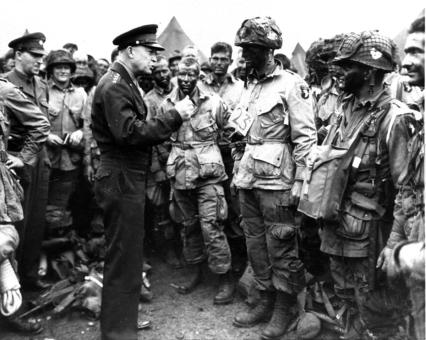
The date was June 5, 1944, and General Dwight D Eisenhower had made the decision to begin the Allied invasion of France the next morning. Christened “Operation Overlord” the massive campaign required disruption inland from the Normandy coast to insure a solid beach-head. The task fell to soldiers of the US 82nd Airborne, the US 101st Airborne,  and members of the 6th British Airborne. The mission was to impair the Wehrmacht’s ability to move their Panzer units toward the five invasion points.

General Eisenhower met informally with soldiers of the 101st, chatting and encouraging, to build morale. He must have felt an enormous responsibility sending these young Americans on such a hazardous and vital mission. While he mingled with the men, Ike suddenly wondered, “Is anybody here from Kansas?” A voice replied from the crowd, “I’m from Kansas, sir.” Ike looked the boy in the eye and responded, “Go get ‘um, Kansas.”

That story always leaves me teary. I don’t cry in movies, poetry doesn’t move me, and books have to be awfully emotional to elicit a sob out of me. But that moment of raw, honest regard, with so much at stake, hits me in the heart.

Washington at Trenton, Grant at the Wilderness, Doughboys in the Argonne, GI’s at the Bulge, Marines at Hue: the devotion to duty chokes me up. Every time.

But today Americans seem somehow lessened, cheapened. There are no Eisenhowers, or Washingtons, or Lincoln’s to describe what we represent. The institutions that inspired countless young people to lay down their lives are now attacked by an ersatz strongman from within. How could this happen? How can citizens of good conscience condone this very real threat? Where is our collective honest regard for our past, present , and future?

Makes me want to cry.

Gail Chumbley is the author of the two-part memoir, “River of January” and “River of January: Figure Eight.” Both are available on Amazon.com

Mistinguett

Sun Valley Idaho is especially beautiful in the fall. We had driven to the resort through steep, intimidating mountain passes, to finally descend among groves of whispering Aspen trees. We had traveled over for a book presentation on “River of January,” the first volume of my two-part memoir at the local Library. We had arrived with hours to spare.

With tons of time to kill we walked the boarded walkways of Blaine County’s most famous community. My eyes were peeled for a glance of the the rich and famous; perhaps Arnold, maybe Bruce, or Demi, or even Tom and Rita. They pop up once in a while to relax in the natural beauty, away from the rat race.

Wandering, we chanced across a dress shop, and I slipped inside the glass door, leaving my husband sitting on a bench outside. The clothes were beautiful; plaids in silky fabric, and fashionable shoes among displays of accessories. The owner was on her phone, behind the counter, speaking to what sounded like a potential customer.

And she was clearly French.

I continued to browse the merchandise, but was more taken with the French lady. I had a good reason.

She soon closed her call, then addressed me. “May I help you?,” the lovely woman trilled.

“Well, maybe.” I replied. “I’m a writer. In fact, I’m here to discuss my new memoir at the library. By any chance have you heard of Mistinguett?”

The shop owner stopped, and looked into my eyes. “Oo La La!” she gasped. “She is a legend.” I smiled, my day made.

Mistinguett was a French music hall entertainer, born late in the 19th Century. At one time this singer-dancer was the highest paid entertainer in Europe, best remembered for her torch song, Mon Homme. Americans might recognize the tune better as My Man, a hit, first for Ziegfeld headliner, Fannie Brice, and later Barbra Streisand.

A fun fact about Mistinguett is she had her legs insured for 50 Francs during her prime. Another fun fact is she discovered Maurice Chevalier, pulling him from the chorus, and making him a star.

The best news about Mistinguett concerns Helen Thompson. Just a girl, this American dancer who’s life story appears in “River of January,” toured with the “Oo la la” French legend from 1932-33.

Enjoy this film clip of the iconic entertainer, dated 1936, and look for Helen in the cast photos of Viola Paris, the Mistinguett variety show from three years earlier.

Error
This video doesn’t exist

missgroup0001

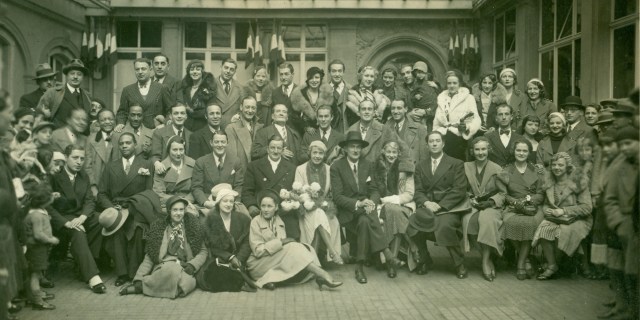
Mistinguett sits in front holding flowers. Helen Thompson is in the top row center right–the blonde wearing the fur-collared coat.

Peacock0001

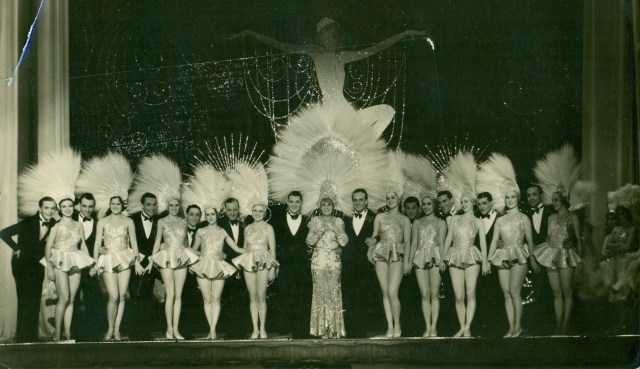
Here Mistinguett is wearing a giant head dress, and Helen is second girl to the right.

Gail Chumbley is the author of the memoir “River of January,” and “River of January: Figure Eight.” Also available on Amazon.com

Mont Chumbley: Night Flyer

chumrio2


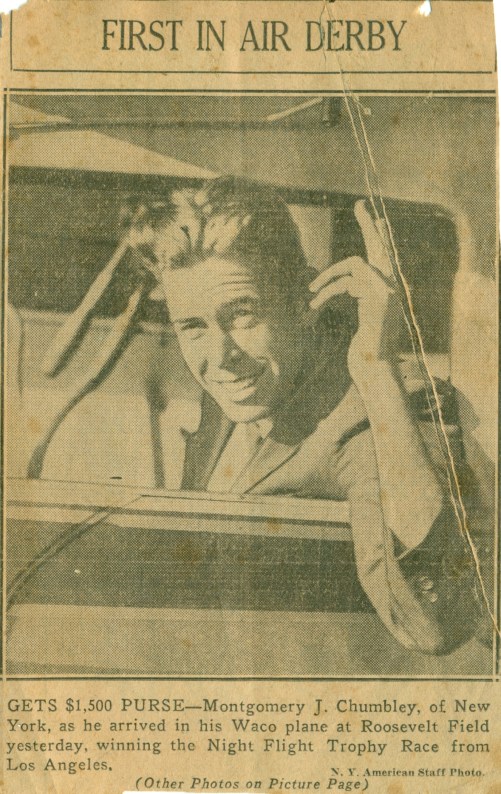
Sure he was far behind, Mont Chumbley pushed his Waco Cabin C through the night sky. Fresh from the Navy, the young aviator found himself wondering why in the world he’d agreed to enter this “Darkness Derby” competition in the first place.

Called “Chum” by his friends at Roosevelt Field, the pilot had begun a civilian career out of a Western Aircraft Company (Waco) hangar near Mineola, Long Island. Transporting press photographers and reporters to breaking news locations, plus teaching flight to the rich and famous, including Jaqueline Cochrane and Kathryn Hepburn, he found his niche. A 1933 flight to a horse track in Maryland set Chum’s course for the night race he now anxiously questioned.


Richard Ross, a financier who held a seat on the New York Stock Exchange, was the horse fancier who hired Chum. Ross needed a quick hop to Harve De Grace Track outside Baltimore, Maryland for a horse he had going on the afternoon card. Extremely impressed by the young pilot’s skill, (Chum landed his Waco in the track’s infield) Ross soon offered to pay for modifications to Chum’s Waco if the flyer would agree to enter the transcontinental Darkness Derby. Considering $1,500 in prize money that could really help him out, the young aviator agreed to enter.

Chum set off on September 29th, heading west, flying cross-country to his final destination—Glendale California’s Grand Central Terminal, the starting point for the air race.

Seeded second in a slate of seven planes, positions rated by horsepower and speed, Chum lifted into the growing dusk on October 1, 1933. Guided by a compass and tracking a full moon, the determined young pilot found conditions perfect, the clear night air permitting his Waco a smooth passage.

Before takeoff, Chum studied his competitors, becoming familiar with the pilots and aircraft he had to beat. Merle Nelson of Los Angeles flew a Stinson Cabin powered by a 200 hp Lycoming engine, and looked tough. Frank Bowman of El Paso, Texas in his 90 hp Lycoming engine Monocoupe appeared to be a contender as well. His own Waco Cabin purred with a 210 hp Continental engine, and Chum knew he could open it up to over 130 miles an hour, if necessary.

The moon as his guide, the Mojave Desert illuminated below, the little Waco pushed onward. Setting the aircraft down in Albuquerque, the pilot dutifully checked in with the ground judges, and then hurried to re-fuel. Making small talk with the teenager servicing his plane, Chum was told someone else had already landed and gone. Panic stricken, he cut the conversation short, and returned to the air as fast as he could. It was now that he pushed that plane full bore, resolved to catch up and beat any opponent.

At 9:37am, Mont Chumbley taxied onto the ground in Wichita, completing the first leg of the race in 12 hours and 17 minutes. There had been no other plane, at least not in this race. The kid in Albuquerque had been wrong. Four hours later Nelson arrived, and three other planes still in contention lagged far behind. Following a bit of rest at the field, then carefully inspecting the soundness of his equipment, the derby leader once again rolled down the runway, lifting off into the eastern sky.

Following another quick stop in Indianapolis to check in and fuel his Waco, the pilot learned he still held on to the lead. Satisfied, he returned to the darkness, fairly certain of a pending victory. However, that assurance evaporated when layers of cloud-cover compounded with darkness convinced the pilot that he had become utterly lost. Pushing on, buffeted about by worsening conditions, Chum began to worry he was squandering valuable time. Wracking his brains for deliverance, his aviator eyes suddenly spotted a break in the thick swirling mist. Not hesitating a moment, the Waco slipped through the hole that fortune had sent his way.

Underneath, clearly defined in the infinite blackness beamed a tiny, dim light. One. Chum decided to take his chances and try to figure out where he was. The landing didn’t go well. In swells of bumps, the Virginia farm boy realized his wheels were pounding on furrows of newly cleared fields. Drawing closer to that isolated light, Chum made out the side of a house, with an extended porch. Someone had to be inside.


He rapped on the weathered door, and waited. Sounds of scraping and thumping grew louder until the door opened revealing an equally weathered farmer, and his disheveled wife holding a candle. Chum smiled through the entryway, and in a friendly voice explained his dilemma. The farmer stared a moment, measuring the stranger’s sincerity, then decided to let him in.

As the wife poked the coals in the wood stove, and reached for the coffee pot, the farmer spread out maps on the table. Chum soon learned he had landed in western Pennsylvania, and wasn’t too far off course. Profoundly relieved, the young man stuffed cake in his mouth, downed a cup of coffee, and in a rush of heart-felt thanks again bumped over the dark fields back into the sky.
airclip0001

The darkness soon transformed to early morning, and Chum wondered again where his fellow competitors were located. He knew he hadn’t lost too much time with his unexpected stop, but still fretted, uncertain about the status of the other flyers. Worried about the constant cloud cover that didn’t want to clear, he decided, as a last resort, he’d head out over the Atlantic, look for another break, and duck through. But once again luck smiled, and in the perfect light of morning, a providential clearing appeared and Chum took advantage.

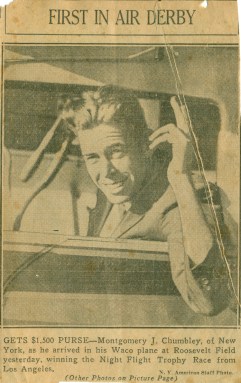
On October 4, 1933 Montgomery Chumbley landed on Roosevelt Field #2, seeming the winner of the 2006 miles long Darkness Derby. However, judges and spectators rushed the plane, arms waving, and clipboards flashing to warn him he’d landed on the wrong strip! Shutting down his plane would have meant disqualification. Without a pause, Chum quickly taxied to Field #1, then turned off his engine, and in 24 hours, 12 minutes (two added for the last minute taxi) won the transcontinental air race.


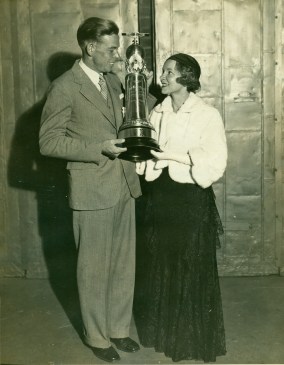
The competition had been set as a preliminary event leading to Roosevelt Field’s National Air Pageant. The widely lauded landing launched the festivities planned for the rest of the week, including an exhibition by German stunt pilot, Ernst Udet. Mrs. Eleanor Roosevelt chaired the pageant, with proceeds earmarked for her charities, and Warner Brothers shared by premiering their newest film “Night Flight,” starring Helen Hayes and Clark Gable. On the evening of October 5, in a theater filled with flyers, Miss Hayes presented Chum with a trophy and his winnings, before screening the film. (Merle Nelson received $750 for second place, and Bowman $500 for coming in third.)


As for Chum in the days and weeks after the race? He became a minor New York celebrity, with aspiring students and eager press lining up for his flying services. In 1934 Waco hired him sending him to Rio de Janeiro to sell equipment to the Brazilian, and Argentine air ministries. By the time the Night Flight winner returned to the States in 1936, Mont Chumbley was the most prolific overseas salesman Waco employed.
helenhayes0001


Gail Chumbley is the author of “River of January,” a memoir. Look for “River of January: Figure Eight” out in November, 2016. Visit “River’s: home page at http://www.river-of-january.com.