This giveaway is postponed due to flawed data. As soon as we sort it out, the giveaway offer will resume.
Stay tuned!!.
Gail Chumbley is the author of River of January and River of January: Figure Eight, due out soon.
This giveaway is postponed due to flawed data. As soon as we sort it out, the giveaway offer will resume.
Stay tuned!!.
Gail Chumbley is the author of River of January and River of January: Figure Eight, due out soon.

My friends, book two, “River of January: Figure Eight,” is on it’s way. The book will officially launch November 1st, with public presentations in Idaho and Washington.
Catch “Figure Eight”in the following locations . . .
November 2, 2016: The McCall Library in McCall, Idaho, 218 E Park St, McCall, ID · (208) 634-5522 at 7pm
November 3, 2016: Aunties Book Store, 402 W. Main Ave. Spokane, WA 99201. (509)838-0206, 7pm
November 13, 2016: Garden Valley Library, 85 Old Crouch Rd. Garden Valley, ID 83622 (208)462-3317, 3:30pm
November 15, 2016: Eagle Public Library, 100 N Stierman Way, Eagle, Idaho 8361 (208) 939-6814, 7pm
Get ready to complete the saga of Helen and Chum in “River of January: Figure Eight.”
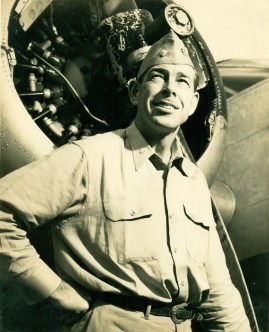
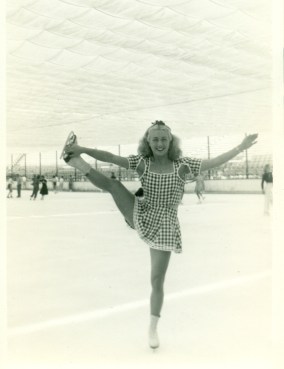
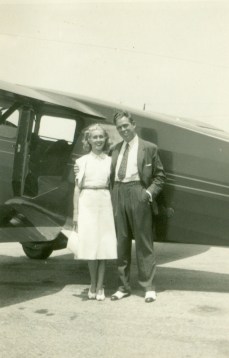
Gail Chumbley is the author of the two volume, “River of January,” and “River of January: Figure Eight,” out in November.
Volume one is available at www.river-of-january.com and on Kindle
Ladies and gentleman! Today, October 2, 2016 I proudly present the cover art for book two of River of January.
Please welcome River of January: Figure Eight, available for purchase one month from today, November 2, 2016.

Huge thanks go out to the talented Brooke Rousseau, and her brilliant mother, Yvonne at Point Rider Publishing.
Perorders available at gailchumbley@gmail.com.
To catch up with book one, River of January is available at www.river-of-january.com or at Amazon.com. Also found on Kindle.
Author Gail Chumbley can be found at gailchumbley@gmail.com or at http://www.river-of-january.com
Eighty-three years ago.
 Glendale, California
 Wichita
 New York
Gail Chumbley is the author of River of January, a memoir. Also available on Kindle.
Watch for River of January: Figure Eight in November.

South Atlantic
1936
Aside from the never-ending Elie issue, the voyage itself passed pleasantly. Helen and Lila scrambled out of their beds each morning ready for fun. They hurried to breakfast in the dining room, joining the other young people on the ship. And depending on their moods, Helen and her cohorts played shuffleboard, ping-pong, or other games on deck. After meals she strolled with Lila around the upper level, and the girls always found time to take in the afternoon sun.
Helen enjoyed the scenic two-week voyage, which included additional ports of call along the way, for passengers and mail. Helen noticed that each time they docked, The Southern Cross steered into harbors increasingly clogged with more ocean-going traffic. Recife, in particular was congested enough the ship had to sit off shore until its scheduled arrival time. Anxious for Rio, Helen asked a crew member why the ship had to sit and wait.
“Must keep to the timetable, Miss. The cost of coming into port early can be as high as $500 a day.”
After another stop in Vitorio, the ship downshifted to a veritable crawl. She could feel the air thicken, heavy and muggy, in the motionless heat. Sweltering, the two American girls grew impatient with the slower pace and filled their time packing then repacking their trunks.
The last night on board, Helen took her time washing and setting her hair. She had painted her nails and toes a bright red, and had gone to bed early; 8:00 PM. Lila did the same. The day before, during lunch, an elderly lady from Connecticut had described the beauty of approaching Rio by sea.
“There is no panorama more exquisite than entering Guanabara Bay at sunrise,” the matron declared, her eyes bright with enthusiasm.
Their curiosity piqued, the girls thanked their luncheon partner, and agreed to greet the dawn as it lighted their nearly mythical destination.
The deck appeared empty, dark, and still just before 4:30 AM. The girls had stumbled out of their beds, pulled on their robes, and stepped out into the cool air. As Helen’s eyes adjusted, she could identify other early risers, also clad in their robes. Clustering at the railing, the onlookers were absolutely overwhelmed with the panorama that gradually unveiled before them.
Helen gazed as the sun, rising from behind her, shadowed an elongated silhouette of the ship on the quiet water. Sugar Loaf Mountain presented slowly, from the summit down, exposed by the rising light, cobalt and gold reflecting on the calm, glassy bay. The relatively dry morning air and growing excitement over their imminent departure from the ship left both girls exhilarated.
“Lila, this was a keen idea!”
“Sure was. Glad I thought of it,” Lila replied, laughing.
*
Helen’s intuition alerted her that something wasn’t quite right. Standing behind Lila, in the customs queue, she watched as a short, balding official approached them from the head of the line. He tapped both girls on the shoulder, gesturing for them to step off to the side.
Innocently, she and her friend complied, dragging their trunks and pulling smaller bags with them. The official then returned to the front of the passageway without a word. The two girls looked at each other, puzzled at the strange request. There seemed to be no special reason they were targeted, and no one who bothered to provide them with an explanation.
The Club Copacabana manager, Mr. Max Koserin arrived to the docks to personally pick up his American dancers around 10:00 AM. He smiled at his new employees, whom he noticed at once. His expression shifted dramatically, however, when he realized they were standing alone, outside of the customs queue, with their baggage at their feet.
“Good Morning, ladies. I presume that you are Miss Thompson and Miss Hart?” Koserin asked.
Helen spoke first. “Yes. I’m Helen, and this is Lila. Thank goodness you’re here, Mr. Koserin. That man at the front pulled us out of line without telling us why. We don’t understand what’s going on.”
“Please try not to worry,” their new boss assured, looking them both in the eye. “I will get to the bottom of this unfortunate misunderstanding.”
Koserin walked to the customs officer and began what quickly escalated into a heated exchange. Helen felt her hope for a quick resolution fade.
“This gentleman has informed me that the city of Rio has recently passed an ordinance requiring all foreign acts coming into the city to deposit a bond with the police,” the club manager explained when he returned.
“We have to…?” Lila began to cry out.
“No, no, my dear, that is my job,” Koserin soothed the frightened dancer.
Mr. Koserin explained that the sum required for their bond totaled the entire eight-week salary for both girls, paid in advance. Strangely, Helen again became calm when the manager didn’t blink at the so-called “news.” In fact he showed no surprise at all. She guessed he expected the snag.
Still, he turned to the girls and cautioned, “Please do not worry, I will be back.”
Lila opened her mouth to speak, but Koserin raised his hand, continuing, “It will take most of the day to generate that sum of money. Stay together and please don’t be alarmed.”
Koserin smiled serenely and then departed.
Again watching the little bald bureaucrat, she noticed that he barely glanced at the passports of travelers he was processing. She quickly understood that the two of them were victims of petty corruption. No actual protocols existed for performers or any other workers to enter the country. She recalled her trips to the police station and consulate in New York, now wondering why she had bothered.
As the day dragged on, Helen grew more certain that their new boss’ presence wasn’t just limited to a warm welcome and a lift to their hotel. She believed that Koserin had rescued other new acts delayed the same way. And though she trusted that he would return with their affidavits, it didn’t help that both girls were stranded in the heat and humidity. No one offered them a chair, a drink of water, shade, or any help. The two Americans just stood miserably under the Rio sun.
When Lila meekly asked, the chief steward refused to permit them to go to their compartment to wait out of the heat.
Wiping her forehead with a handkerchief from her purse, Helen sighed. It had been hours, and there was no sign of Mr. Koserin with their ransom. Her eyes, automatically raked the docks searching for their boss, then toward the departing passengers. It was at that moment Helen locked eyes with the bullish little customs agent.
“That official over there, do you see him? Helen whispered to Lila.
“The man who pulled us out of line?” Lila asked.
“Yes, him.” He keeps leering at me. It’s been getting worse the last hour or so.”
“Disgusting!” Lila scoffed.
“I wonder how often that little twit gets away with his scheme,” Helen quipped. Both girls shuddered, glancing again toward the toad-like bureaucrat.
Time ground on and they watched as a queue of new passengers began boarding from the dock below.
Observing the foot traffic Helen realized, “Lila, I think we have another problem. This ship is scheduled to leave for Buenos Aires at five o’clock.” Swallowing her panic she added, “And we’re going too, if this problem isn’t resolved.”
Out of the corner of her eye she caught the official again, grinning suggestively. Tears traced down Lila’s pink, burning cheeks.
Turning away, glancing automatically toward the dock, Helen gasped as a throng of newspapermen and photographers swarmed up the passageway. “Someone’s tipped a Rio newspaper. We’re news, now.”
Reporters crowded around their trunks, shouting in Portuguese, vying for a story or photo of the two trapped American starlets.
Lila, wet-eyed, stared ahead, not acknowledging the cameras or chaos. Helen, feeling protective of her new friend, held up one hand, blocking the mob, while placing her other arm around her distressed friend. Beginning to lose her own composure, she glanced again from her wristwatch to the dock, as Mr. Koserin suddenly appeared. He had finally returned. Striding with authority up the passageway, carrying papers above his head, Koserin presented two affidavits of money placed with the local magistrates.
“I have never been so happy to see someone in my life!” Helen laughed, now equally as teary eyed. Truly, for both girls, Koserin was a sight for sore eyes. The manager glared coldly as the disappointed official shrugged, accepting the documents—releasing the Americans to enter the city.
After the all-day ordeal the two demoralized girls descended the passageway with their benefactor. Helen asked Koserin for only one kindness, “Could we please have a drink of water?”
Gail Chumbley is the author of “River of January,” and “River of January: Figure Eight,” a memoir. Hard copies are available at http://www.river-of-january.com, and also on Kindle
Questions or comments? Contact Gail at gailchumbley@gmail.com

Chum returned to uniform by August 1941. Luckily he had worked for Eastern Air Lines exactly one year, vesting his employment, ensuring a job when he returned from the war. But that raises an interesting question, what war? There was no American war. Six more months transpired until the Japanese attack on Pearl Harbor. The answer to this intriguing question reads something like this; President Roosevelt instituted the preparations he could–Cash and Carry,The Destroyer Deal, quickly followed by the Lend Lease Act in 1941. America’s first peacetime draft had already been activated the year before, in 1940. Everybody knew what was coming, except for the bulk of the American population. They found out the hard way, later, across the Pacific, on a mild Hawaiian Sabbath.
Gail Chumbley is the author of the memoir, River of January, and the forthcoming sequel, River of January: The Figure Eight.
River of January is also available on Kindle.

Found this gem on the back cover of a 1948 playbill. The program was “Hats Off to Ice,” a Sonja Henie icetravaganza at Rockefeller Center’s Center Theatre. Time to consider new Christmas tree decorations.
Gail Chumbley is the author of River of January, a memoir. Also available on Kindle.
Look for the sequel, “River of January: The Figure Eight,” coming soon.



In River of January and the sequel, The Figure Eight, (in progress) Mont Chumbley repeatedly insists the number 13 is lucky for him. In that spirit “Chum” left the US Navy on June 13, 1933, his 24th birthday, to pursue a career in civilian aviation. Today would be the pilot’s 107th birthday. For more of his fascinating story read River of January, available in hard copy and on Kindle.
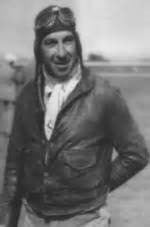
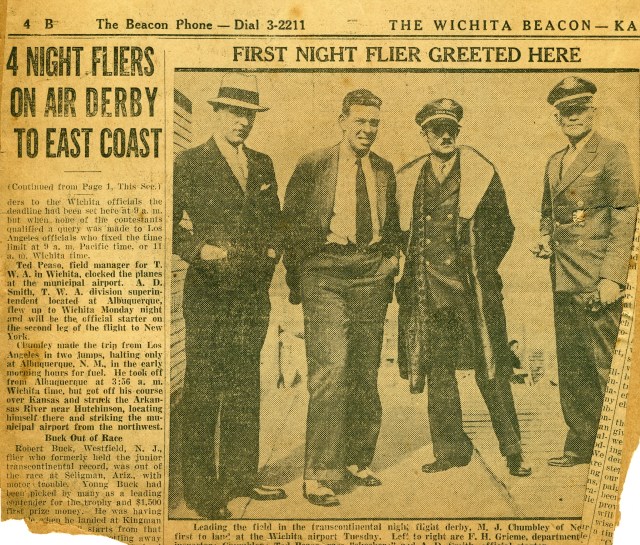
Only six years had passed from Lindbergh’s Atlantic flight, when Chum won the cross-country Darkness Derby in October of 1933. Public wonder and oodles of press coverage followed aviators across the country, and around the world. Pilots were viewed as rustic pioneers risking the unforgiving rules of gravity. Hustling for every penny, Mont Chumbley used his rare talent for more than business, offering lessons during the week, and moonlighting weekends entertaining an aviation-crazy public.
County fairs proved a reliable source of pocket money, and he beat the bushes to find well attended events. In good weather he could charge $5 dollars for three passes over local fairgrounds; enough for gas, dinner and a little left over for his time.
It was on today, May 16, back in 1933 that Chum flew his Waco biplane to a fair in Binghamton, New York. He traveled north from New York looking for a little fun, and maybe a few extra bucks. He hit gold that day when he met up with famed parachute jumper, Spud Manning. Now Spud was a young guy, too, and much like Chum, had to make his luck to survive in Depression-era America. So what this enterprising gent challenged, was jumping from airplanes.
With Chum soaring at 15,000 feet, Manning, harnessed in his chute, clutched a bag of flour to his chest. In his fall Manning released the contents to trace his descent. The 25 year old’s shtick was to risk death by falling until the last possible moment, somewhere around 1000 feet, to pull his ripcord. He succeeded to scare the hell out of patrons and they paid him to do it again.
Presumably Spud carried out his jump the same way on that May 16th in Binghamton New York. Leaping for profits, Spuds and Chum performed the stunt as long as it paid. Spuds leaped into the sky, likely accumulating a dusty, white face as the flour plumed up from his arms. Rolling on the ground, grappling with his chute, he jumped to his feet delighting the dazzled crowds.
That May 16th must have left hundreds of Binghamton fair goers in awe. Clear blue weather, excited customers, viewing their landscape from the Waco in three memorable passes; all capped off by the heart stopping jumps of Spud Manning.
Sadly, Chum’s afternoon associate had less than four months to live. Spud was killed that September when, as a passenger on experimental aircraft, he crashed into Lake Michigan. His body and two others washed up on shore ending a massive search over the water.
Chum clearly understood death accompanied each flight, but he loved flying more than dwelling on his fears. Presumably Spud Manning too, resigned himself to the possible price of repeated defiance to the forces of gravity.
Somehow the miracle of the sky rendered the hazards irrelevant.
Gail Chumbley is author of memoir River of January
 Gail Chumbley