Beyond The Symbols

Patriotic symbols, music, and the Pledge of Allegiance recited at a solemn ceremony can be deeply moving. A simple presentation of the flag at a formal function can be awe-inspiring. The lone, austere notes of Taps played at a military funeral elevates a moment into sacred reverence.

The sounds and symbols of American devotion are powerful.

Still, as commanding as recitations, patriotic colors, and America the Beautiful can feel, deeper symbols in our shared history can reveal so much more.

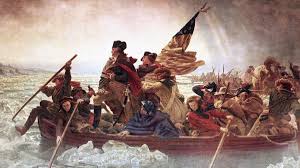
In his book, Washington’s Crossing, historian David Hackett Fischer introduces his volume with a discussion of Emmanuel Leutze’s famous painting of the same name. Fischer guides the reader through elements in the painting, noting passengers figure by figure as they frantically navigate the frozen Delaware River on that long ago Christmas night. 

Why is this particular work especially moving? Because at that juncture, December 25, 1776, the Revolutionary War looked to be flaming out after barely a start. Defeat had dogged Washington’s Continentals after being chased off of Long Island, and driven out of New York City the previous summer. As Washington planned his surprise Christmas attack, victorious Redcoats had settled into winter camp in New York City.

Humiliated, Washington knew he had to strike hard and he had to win.

Viewing his situation with the “clarity of desperation” the General ordered an assault on Hessian (German mercenary) held Trenton, New Jersey. The Continental army would have to use the element of surprise fighting against a better armed and better fed opponent. Risky to the extreme, Washington knew we, meaning America, for all time, was dependent upon his actions that night.

As for the painting, the artist depicts freezing soldiers huddled in a boat with more watercraft in the backdrop. From the starboard side, (to the right of General Washington) sits an oars-man, distinctly Black, putting his back into his strokes, ploughing through dangerous ice floes. Behind him, facing forward at the bow, is another swarthy figure, perhaps a Native American. He is desperately kicking ice with his left boot while handling a sharpened pole to break open a passage through the impossible crust. To the foreground an immigrant (a Scot by the look of his hat) studies the river’s surface closely as he pulls forward to port, while another behind him, in fisherman gear, studies the treacherous water. Others are made up of rustics, one at the tiller, along with a wounded passenger.

General Washington centers the painting as he is the central figure of the drama. Behind the General is Major James Monroe, and another rugged frontiersman by the looks of his garb. Both men are grasping a 13-star (Betsy Ross) flag, in a grip that elicits an attitude of determination and desperation, with perhaps a bit of warmth. Below both flag bearers sits a WOMAN, yes, a woman pulling her oar with an analytic eye upon the clotting water.

Black, Native, white, immigrant, the highborn, the humble, men and women, yesterday, today, and the future: all of our American lives balanced on the gamble played that night in 1776.

The point I believe Leutze is trying to convey is that we all don’t have to be the same. No one has to agree on the details of our beliefs to ride on that boat. The truth is Americans all have and had different realities and ambitions: differing views of liberty. Still, all onboard had to carefully respect each other’s space and not overturn that fragile vessel, Liberty, for we must stay afloat and row in the same direction. It is in all our interests to do so.

And that metaphor of America, that boat, tested our resolve on one of the nation’s most critical nights. Inspiration doesn’t come any better than from Leutze’s allegorical Washington’s Crossing.

Gail Chumbley is the author of the two-part memoir, River of January, and River of January: Figure Eight. Chumbley has also penned two stage plays, Clay, and Wolf By The Ears, concerning the life of Senator Henry Clay, and an in-depth examination of the beginnings of American slavery. Gail is currently working on another piece, Peer Review, best described as Dickens A Christmas Carol meets presidential history.
A Rendezvous

One central  philosophy guided my years of American history instruction. The story had to feel personal to each student, after all it is their country. For the unit on World War Two, I aimed to act as a bridge between my grandparents generation to the kids seated before me. While growing up, my grandparents played a large part in shaping my world view, as the old folks often shared their life experiences. Each had a unique tale on how they committed to fight totalitarianism abroad in the 1940’s, and defend democracy at home. 

All the following accounts involved inconvenience, sacrifice, and interruptions to family life. At that singular moment all they knew was to serve their country, and defeat foreign tyranny. 

A new dark age lay in America’s defeat.

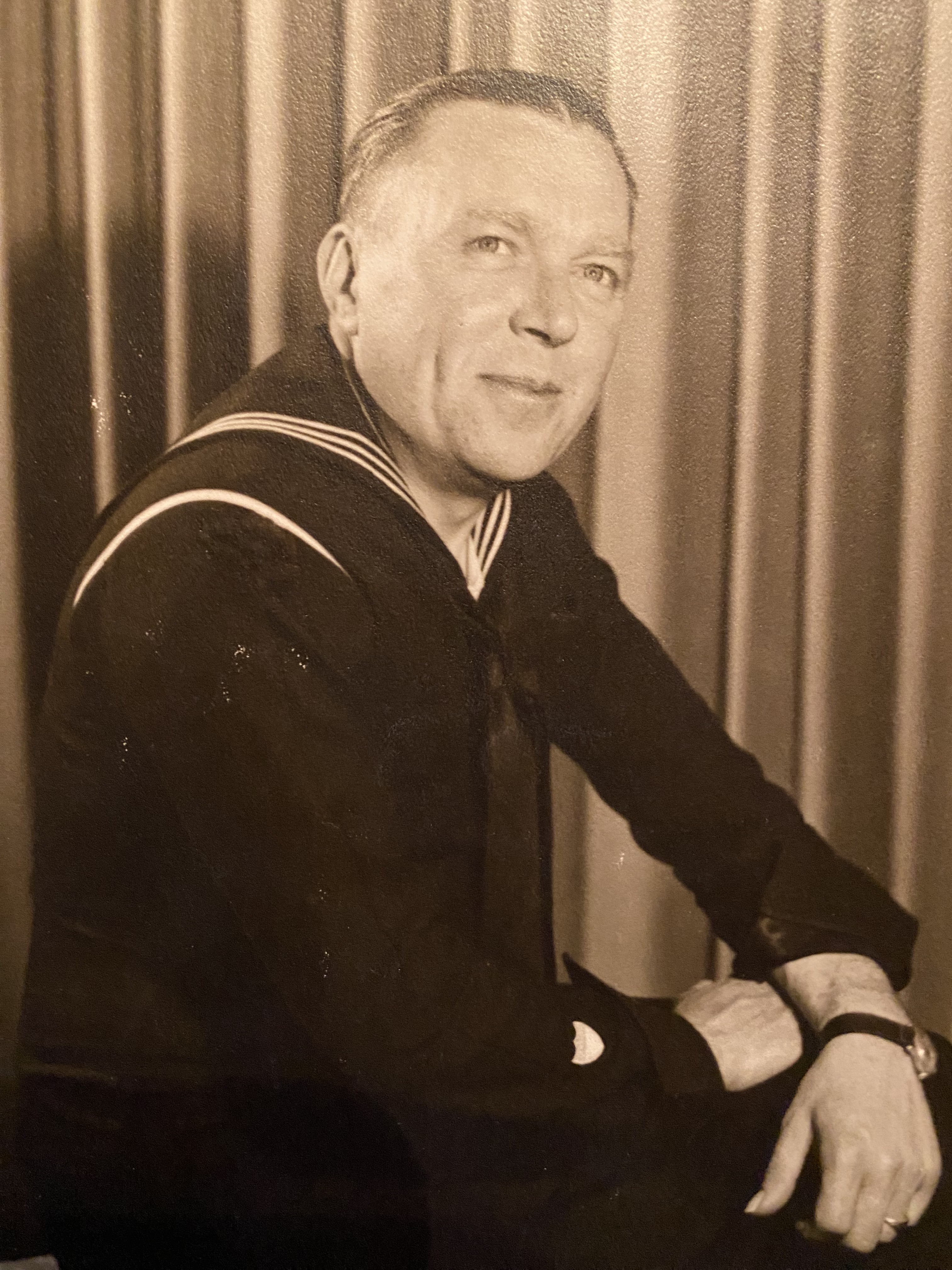
This is Ray Turner, born in 1905 in Hammond, Illinois. This young man migrated west, joining family members in Northern Idaho. Ray soon found his way to Spokane, Washington, where he found work as a postal carrier. Stopping for lunch along his mail route he met a waitress in a downtown cafe, Ailene Peterson, a single mother of one, and after a while they fell in love. Marrying in the fall of 1941, the newly weds, while on a Sunday drive caught a breaking news bulletin on the car radio that the Japanese had attack on Pearl Harbor in Hawaii. Ray turned his automobile around, motored back to Spokane, and joined the Coast Guard the next morning. Stationed out of Willapa Bay in Tokeland, Washington, Ray and the crew of the USS Manzanita patrolled the extensive, rugged Pacific coastline of Washington and Oregon monitoring for Japanese vessels. And it was aboard the Manzanita that Ray remained until August,1945 when he mustered out of the service and returned to Spokane. After a life of grandkids, holidays, and fun on his lake property, he retired from the US Postal Service, passing away in 1974.

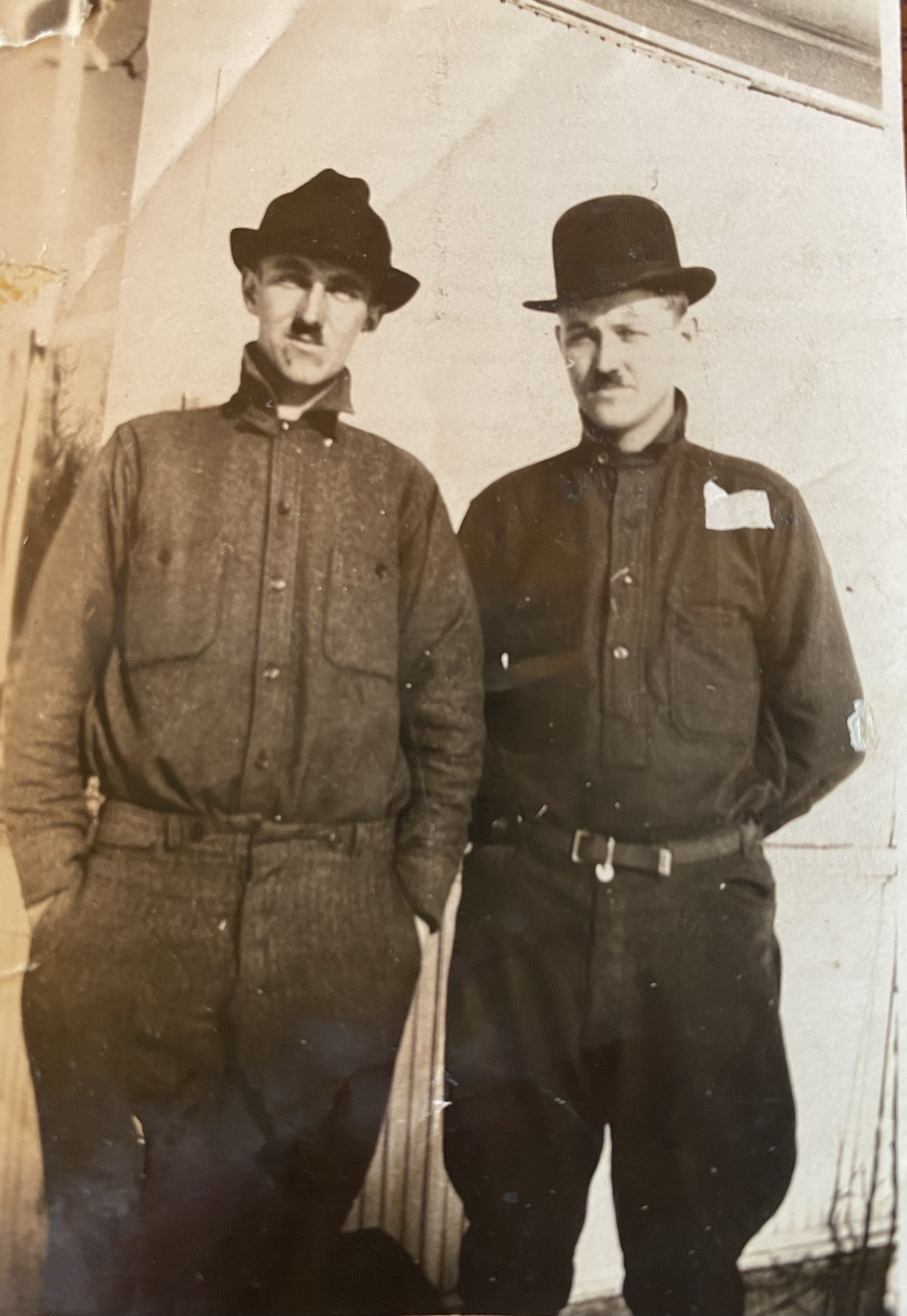
Kurtz Olson hailed from Wing River, Minnesota, born on a frigid day in January, 1905. Kurtz, as the youngest of seven children took up welding as a young man, and made a fair living during the difficult Depression years. This photo, take in the 1930’s, (Kurtz on the left) indicates that Hitler was considered harmless and laughable. That certainly changed in 1939, and after the Pearl Harbor attack brought America into the war, Kurtz packed up his wife and family and traveled west to Tacoma, Washington in search of war work. Kurtz spent his days dismantling scrap metal in a welding yard preparing the steel for conversion to ships, planes, tanks, and other war materiel. After the war Kurtz moved his family to Spokane, where he welded, owned a series of mutts, cut firewood with his son, and grandson’s. Kurtz passed on in 1989. 

IMG_0791

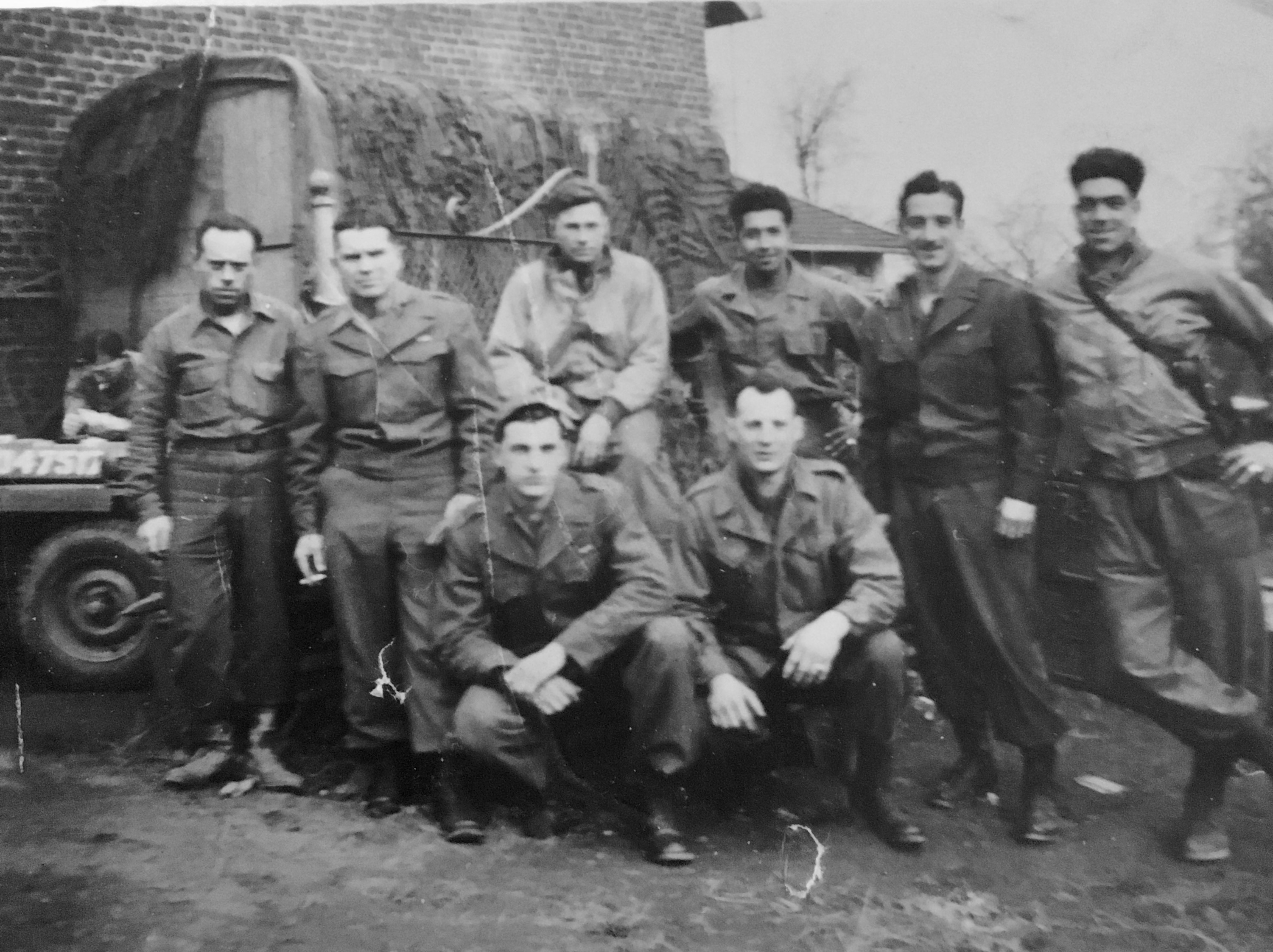
This GI is Joe Tucker, this snapshot taken somewhere in France around 1944. Born in Craig County, Oklahoma in 1907, Joe found himself back in uniform at the ripe old age of 37, much older than the 18 and 19 year-olds in his outfit. Joe had actually been in the army until 1939, receiving his first discharge before the war. Making his way to the Pacific Northwest he too, settled in Spokane where he met and married a widow with three children. His daughter from his first marriage lived in the city, as well, and he wanted to remain near her. Working for the Northern Pacific Railroad, with his new, larger family, Joe joined the Washington National Guard for the extra pay guard duty brought in. After Pearl Harbor the US Government nationalized the Washington Guard, and off he went to war. After training stateside, then stationed in the south of England, Joe found himself on Normandy Beach on June 7, 1944, D+1. Surviving those first days he and his fellow Guardsmen suffered through the Battle of the Bulge, finally winding their way to Germany. On one particular night, Joe stood guard duty somewhere in Germany. He heard his sergeant grouse was the soldier on duty asleep? The reply was no, it’s Tucker, and he’s awake alright. (Joe liked telling that story). Eventually Joe shipped home to reunite with his family in 1945.

From her waitressing job, Ailene Peterson, turned Ailene Turner followed her new husband Ray to the Washington coast. Traveling with her young daughter Ailene looked for war work as well. Born in 1914, in Clinton, Minnesota, Ailene had married quite young, desperate to leave her father’s stump farm in North Dakota. Husband #1, Joe Tucker had failed her, and with her young daughter in tow, sought refuge with family members in Spokane. It was in Bremerton, Washington that she found employment wiring mine sweepers for America’s Russian allies, (she said they were very rude). In later life, Ailene proudly mentioned that her work never had to be redone. She always wired it right the first time. In an operators cab of a crane, Ailene noticed the girls below waving their arms and jumping about. Shutting down the motor she heard them yell that the Japanese had surrendered, and the war was over. Ailene scrambled down from her seat, and joined the victory celebration. She, too, along with Ray returned to Spokane until her death in 1990.

Besides being my grandparent’s, and generously sharing their remarkable stories with me, what else did these people share in common? They put aside their personal lives to step up in defiance of fascism and authoritarianism. They knew that service to America, to our democracy, was their first duty.

Retelling my grandparent’s war-time sacrifices to my history students added a vividness to the coursework that encouraged the kids to do the same with their elders. That, once again is how I bridged the war years to now, making it personal for students. 

President Roosevelt had characterized that moment as America’s “Rendezvous with Destiny,” and those people rose masterfully to the challenge. And despite all the hostility to democracy today, we cannot surrender to those forces, and betray our forebears who stood up to defend our way of life.

Perhaps now is our “Rendezvous with Destiny,” and this time all we have to do is vote for the Democrat over the wannabe dictator.

Once again, a new dark age lay in America’s defeat. 

Gail Chumbley is the author of the two-part memoir, “River of January,” and “River of January: Figure Eight.” Both are available on Kindle. Chumbley has also penned two history stage plays, “Clay,” and “Wolf By The Ears.” She is the co-author of “Dancing On Air,” and feature length screenplay, and is working on “Peer Review,” for the stage, a series of short plays where DJT meets real presidents from the past.

gailchumbley@gmail.com

Atomic Toothpaste

The recent news concerning Republican reluctance to fund Ukraine’s defense against Vladimir Putin is a stunning turn of policy. More disconcerting is that reluctance has come from the party of once hardline cold warriors, the GOP. When asked, Margery Taylor Greene remarked, “Under Republicans, not another penny will go to Ukraine,” and “President Volodymyr Zelenskyy, who is Jewish, has a “Nazi army.”

WWII ended in Europe in May, 1945. Almost at once America shifted from Hitler’s defeat, to curtailing the Soviet Union. Figures like General George Patton insisted the Communist threat required serious attention. General, turned President, Dwight Eisenhower had no love for Stalin, nor his ultimate successor, Nikita Khrushchev. 

During the war Soviet operatives in the United States had collected sensitive intelligence regarding the A-Bomb, and later the Hydrogen Bomb. Though the United States had allied with Stalin during the war, he trusted no one, least of all the Americans.

Thus began the second Red Scare. (Yes, there was a first.) 

Senator Joe McCarthy of Wisconsin made his name in Washington as a fearless Commie fighter. Senator McCarthy (along with counsel Roy Cohn) accused the US Army of harboring Communists until his alcohol driven antics destroyed his career. 

Another Republican hardliner, Richard Nixon of California, joined the House UnAmerican Activities Committee (HUAC) exposing other suspected Liberals. Nixon gained national exposure sniffing out academics, artists and federal employees. This California representative sent Alger Hiss, a left leaning aide of FDR’s to jail. The Hollywood Ten were a subpoenaed to testify before the Committee regarding their political activities. Many had their careers and lives ruined as most ended up on a black list of actors and writers.

Russian aggression solidified the backdrop of my childhood, as well. The Cuban Missile Crisis in 1962 (I remember studying my saddle shoes in a crouched position) through the fall of the Soviet Union in 1991. Those were turbulent years of the Iron Curtain, the Berlin Airlift, and later the Soviet shooting down of the KAL Flight 007 over the northern Pacific. 

In 1991 the world celebrated the collapse of the Soviet regime hoping it would usher in a new era of amity, and peace. Republican Presidents Reagan and George HW Bush are credited with the downfall of Communist Russia.

The conflict unfortunately, had not ended.

The dangerous arms race that had pitted the United States and the Soviet Union still remained. Over the years of escalation has challenged our very existence. As stockpiles of nuclear arms increase in numbers and size the world is as vulnerable as ever. The atomic toothpaste is out of the tube. New terms have developed during the modern era, such as Mutually Assured Destruction, Nuclear Winter, Brinkmanship, and the chilling advent of the Doomsday Clock, all characterizing the uncertainty that still exists. 

And even now the arms race continues to intensify across the globe. 

A quick glance at the America’s arsenal looks to be somewhere around 4,000 warheads and bombs. In Russia the estimate is nearly 6,000. And remember these radioactive weapons are either stored or deployed, and that would be a catastrophe. The one-upmanship is clearly ongoing.

The stockpile is no longer limited to Russia and America. China, the UK, France, India, Pakistan, and North Korea all have or will have completed weapons of their own.

Proxy wars flamed up after World War Two, with large conflicts in Korea and Vietnam. Battling the Russians permeated American culture. Examples of this phenomena include bomb shelters, Dr Strangelove, duck and cover, James Bond films, and even Boris and Natasha. And there were spies, on both sides, the CIA’s Aldrich Ames, and Robert Hanssen of the FBI come to mind.

In my dad’s time the Korean War witnessed over 30,000 American deaths, and in Vietnam 58,000. Some of the best of my generation and before, stood up for America in freezing winters and insufferable jungles. The majority came home with physical and psychological disorders to serve us. We are obligated to remember and honor that sacrifice.   

So understand the rest of us who lived through these perilous years. Watching clips of an American president cozying up to a Russian strongman in Helsinki, and pronounced that autocrat did not hack our elections, based on Putin’s denial, or when he invited a group of Russian operatives into the Oval Office to show off, is jarring to say the least, a real gob smack.

So the warm fuzzies Republican President Trump extended to the Russian President are shocking betrayal. First, in Langley, he whined to CIA operatives in a speech regarding, what else, himself. Later the old boy absconded with a library of national security documents and refused to relinquish them to the National Archives. 

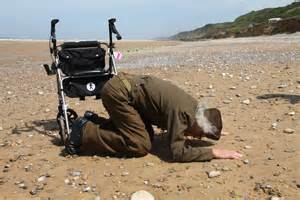
The greatest and most egregious failure of the GOP is kneeling to an immoral Trump, as he kneels to serial murderer Putin. Richard Nixon remarked, “The Cold War isn’t thawing; it is burning with a deadly heat. Communism isn’t sleeping; it is, as always, plotting, scheming, working, fighting.”

The Republicans have forgotten what they stand for, and have become the betrayers.

Gail Chumbley is the author of a two-part memoir “River of January,” and “River of January: Figure Eight.” Chumbley has also penned two stage plays, “Clay” regarding the life of Statesman Henry Clay, and “Wolf By The Ears,” regarding slavery and racism.

Anyway Anyhow Anywhere

The deal is, coming out victorious World War Two, the certainty of America’s omnipotence shaped foreign policy. The US armed forces proved they could expertly parachute behind enemy lines, storm contested beaches, and plant the flag of American freedom at the close of every engagement. US pride meant we only mobilized decent men, and armed them with top notch war materiel, and enough Hershey Bars to treat the world. 

Those lessons of the 1940’s mislead later military planners. The assumption that Americans could do no wrong, and intervening into other nations, an imperative. However, what worked in one moment wasn’t necessarily viable later. America’s entrance had saved the world, but that particular episode ended in September, 1945, and the US moved forward looking backward.

Five years later the Korean conflict exploded, and after three years of fighting, ended where it began, the 38th parallel. That stalemate ought to have signaled a reassessment of America’s role abroad, but the Sergeant Stryker school of war had engrained itself too deeply into foreign poIicy.

I am a child of the Vietnam era. In my head the kaleidoscope of Lucy’s eyes plays, and televised images of soldiers knee deep in rice paddies, flicker in black and white. Protesting students with raised fists, black armbands affixed, occupying college offices, all to the soundtrack of kick ass rock and roll. In fact, the most enduring feature of the Sixties, for this boomer, is that pulsating electric guitar played by the hands of masters.

From 1959 to 1975 Washington dispatched advisers, munitions, and finally by ’65 ground forces to Vietnam. The French had failed to hold their Indochinese possession against the Communists, as they had failed against the Germans in 1940. America would bail them out once again.

But our intervention was premised on dated strategies. Vietnam was not a stand and fight war.

What Vietnam taught policy makers, (for a millisecond) is that patience is a most powerful foe. The NVA and Vietcong played the waiting game with grit and timeless certainty. 

the Our nation was not the first on the scene in Saigon, but certainly the last western power. As for Afghanistan, the dynamic remains. Leaving 10 years ago, or 10 days ago, the outcome would have been the same. The post-911 Middle Eastern conflicts were truly good for the people of those nations, but not for the United States.

Just check with the Brits and Russians. They left too.

Gail Chumbley is the author of the two-part memoir, “River of January,” and “River of January: Figure Eight.” Both titles are available on Kindle.

gailchumbley@gmail.com

The Bloody Shirt

Principled soldiers of conscience, the victorious army knew they had served well, defending the Constitution to the last full measure.

May of 1865 witnessed Washington’s Grand Review of the Union Army. Smartly uniformed soldiers filed past crowds, in a river of Union blue. The guns had silenced a mere month earlier at Appomattox, Virginia; the Republic preserved.

A brilliant sun glinted off polished bayonets, and the parade route decorated with miles of silk banners, tattered company colors and patriotic bunting. Rejoicing greeted the passing soldiers in shouts and fluttering handkerchiefs. Flower petals rained down in a fragrant carpet of gratitude. 

The bloody war finally, truly, had ended. 

One year later, near Springfield, Illinois, a group of veterans established a fraternal association, the Grand Army of the Republic. The idea caught fire nationally as other veterans founded their own local chapters; a place men could remember, share, and grieve for lost friends. Soon these war horses got busy extending their service to those they had defended.

First, survivors lent aid to disabled fellow veterans, assistance to widows and their dependents, and orphan homes. Soon preserving battle sites added to the group’s outreach. Before long members began seeking electoral office to further serve the nation.

A story has it General Benjamin Butler, now a Congressman, grew extremely agitated while speechifying, and produced a torn, and bloody shirt he claimed came from the battlefield. Soon the practice of “waving the bloody shirt,” invoking war credentials, became customary for candidates. The saying “vote the way you shot,” launched the careers of numerous politicians. 

Presidents from Ulysses Grant, (1868-1876) through William McKinley (1896-1901) had faced the rebels on the battlefield.*

War memorials and monuments mushroomed, funded with GAR donations. Reunions, benevolent societies, veterans homes, and hospitals kept local chapters busy. In fact, much of GAR efforts were eventually assumed by the Federal Government, particularly pensions for those who had served.

Over time survivors of the Civil War dwindled in number. However, the organization soldiered on until 1956 when it finally faded. Loosely related, though more a coincidence, our last five star general was serving as president when the GAR closed its doors. President Dwight David Eisenhower, who kept a farm in Gettysburg, happened to occupy the White House.

This brotherhood, this Grand Army of the Republic, rose to defend our democracy in the mid-19th Century. This model of valor, and sacrifice shaped the character of the military for years to come. 

But one truth is quite clear, no officer ever advocated for a coup, and there was not one sucker or loser in their ranks.

In 2021 we can do no less.

*Chester Arthur served in the New York Militia, Grover Cleveland did not serve.

Gail Chumbley is a history educator, author and playwright. Her two-part memoir, “River of January,” and “River of January: Figure Eight,” are both available on Kindle.

gailchumbley@gmail.com

Gratuitous Harms

“The earth is the mother of all people, and all people should have equal rights upon it.” Chief Joseph of the Nez Perce

Hopefully a majority of Americans agree that the time has come to change administrations in Washington. Joe Biden and Kamala Harris will usher in a presidency of competence and dignity. Howard University, where Harris did her undergraduate work, is proud of her selection as Joe Biden’s running mate, and Howard alumni are bursting with pride. This ticket is honestly historic.

Still . . .

I am troubled by the trumpeting of Senator Harris’ connection to Howard University as positive while other historic figures are dismissed for living their lives within the constraints of their time. Please don’t misunderstand. A number of “dead white guys,” from the past have it coming, committing gratuitous harms beyond the scope of humanity and justice. Slavery was and is such an abomination, but not America’s only sin. 

That is where General Oliver Otis Howard comes in. A Civil War general, a recipient of the Congressional Medal of Honor, and one-time president and namesake of Howard University.   

Born and bred in Maine, Oliver Otis Howard opposed slavery as did many Americans north of the Mason-Dixon Line. A West Point graduate, Howard entered the Civil War commanding a volunteer unit from his home state— leading his men from the First Bull Run, to Antietam, to Gettysburg, and on to Sherman’s March Through Georgia.

His work with aiding newly emancipated blacks after the war brought attention to Howard’s concern for civil rights, leading to Howard’s appointment as Commissioner of the Freedman’s Bureau, and later President of Howard University, a traditionally black institution.

However . . .

By 1874 this same General, O.O. Howard returned to the regular Army, where he was sent out West as the Commander of the Department of the Columbia. That was where General Howard who, in 1877, set out to vanquish the Nez Perce in what is today Central Idaho. 

The General doggedly pursued Chief Joseph and his 250 followers through what is now western Montana. Joseph succeeded in evading Howard and his forces for nearly eleven hundred miles, where the Nez Perce were finally stopped within 40 miles of freedom across the Canadian border. Exhausted, the Nez Perce were forced onto the reservation in Idaho. 

Following the Nez Perce episode Howard set out to apprehend the Bannock and Piute nations further south.

Why was this actively Christian man and abolitionist kind to newly freed blacks, and a killer of Natives? The answer is simple-Indians had land to confiscate, and freedmen had nothing. 

It is perilous to celebrate or reject historic figures outright for one facet of their lives. Not one of us can pass scrutiny based on the moment of our worst actions. While General Howard showed admirable humanity with one underclass of Americans, that behavior did not transfer to another.

Gail Chumbley is the author of the two-part memoir “River of January,” and “River of January: Figure Eight.” Both titles are available on Kindle.

gailchumbley@gmail.com

That’s All

gailchumbley@gmail.com

th

Colonel Clark used to bring his young son down to the dojo where my brothers took judo lessons. Judo had been my grandfather’s idea and he faithfully chauffeured the boys, and I sometimes came along too.

My Grandpa Ray always sat with Colonel Clark, if the old gent happened to be present. That meant I sat with Colonel Clark, too. The two old men would talk and talk, seated next to one another, though their eyes remained fixed on their boys training on the mats. They never seemed to look each other, but remained absorbed in their conversation.

My own distracted attention span only caught snippets of the murmuring discussion. “MacArthur, Wainwright, and Bataan,”  came up in their exchanges And despite my youth, I understood something grave, something momentous lay behind the back and forth of these two men.

My brother filled in the substance of what I reluctantly overheard.

Colonel Clark had been left on the Bataan Peninsula when General Douglas MacArthur evacuated the Philippines in 1942. Under the new command of General Jonathan Wainwright some 22,000 Americans surrendered to Japanese invaders, and among them young Clark. The Japanese summarily ordered this defeated army to march some sixty miles through the jungle. And cruelty became the purpose of the Bataan Death March; heat exhaustion, dehydration, and starvation felled many of these exposed suffering Americans. When a captive stumbled, or fainted, the penalty was an immediate beheading. Young Clark witnessed Hell, and he clearly never separated himself from the ordeal, fused forever into his character.

And that that same ordinary old gent who chatted quietly with my grandfather, had a young son was a miracle. In light of his wartime captivity, Clark should never have survived.

The valiant are everywhere. 

For example there was George, the high school janitor.

For many years this little old fellow pushed a mop down the litter-strewn halls where I taught American history. Equipped with two hearing aids, this diminutive man pushed an immense dust mop, wider than he was tall.

To a passing eye George appeared nearly invisible. Just a friendly, gentle, and harmless grandfather.

As I pontificated about D-Day, Tarawa, and the Bulge to sleepy Juniors, a foot or so of mop often slid and stopped by the classroom door.  Silent, George hid as I blathered on about the Second World War. A short time later I learned this quiet 80-something had once handled a M-1 Garand, shivering aboard one of those heaving and crashing Higgins boats, churning  toward Omaha Beach. George had been in that first wave in June, 1944. 

Humbled to learn our little janitor was a living, breathing hero, I became the student. “So George, what do you remember most about that morning?” 

The old warrior rasped in a high, faded voice, “It was awful early, and the water was awful cold.”

So understated.

Another veteran crossed my path by the name of Roy Cortes. His son, our school Resource Officer brought Roy by to visit with my students. Another narrative of a remarkable life unfolded.

As a teenager he got a job with the Civilian Conservation Corps. After Pearl Harbor, Roy headed straight to the recruiting office, and into the US Army.

Roy, too, had ferried over from Southampton the afternoon of that bloody day. “What do you remember most about the invasion, Sir?” a student asked.

The affable elder smiled slightly, then a cloud passed over his expression. “I lost everyone in my outfit. I was real scared. Soon I had orders to regroup with other survivors. You see, that was bad because I’m Mexican-American, and my first platoon got used to me, and stopped calling me Juan or Jose. Now I had to start all over with the badgering.

For days, as we moved inland, with these fellas giving me the business. One fella said, ‘Mexicans can’t shoot.’ I said that I could. So he said, ‘Ok Manuel. Show me you can shoot. See those birds on that tree branch up ahead? Shoot one of those birds.’ I lifted up my rifle and aimed at the branch and pulled the trigger.” At that Roy again begins chuckling.

“I missed the branch, the birds all flew away, and twelve Germans came out of the grove with their hands up.”

Astounded, no one spoke. Then a huge wave of warm laughter filled the classroom. Roy simply smiled and shrugged.

Colonel Clark, George the Janitor, and Roy Cortes. They were just kids who’s lives became defined in ways we civilians can never fathom. They were scared, and hot, and cold, and hungry, and suffering, and ultimately lucky enough to come home.

They married, raised families, and move on with life.

That’s All.

Gail Chumbley is the author of “River of January,” and “River of January: Figure Eight,” a two-part memoir Also available on Kindle.

Mixed Emotions

This is a reprint of an earlier post.

th

It’s been uncomfortable to watch the media coverage from Louisiana about the removal of General Robert E Lee’s statue in New Orleans. As a life-long student of the Civil War the idea of removing reminders of our nation’s past somehow feels misguided. At the same time, with a strong background in African American history, I fully grasp the righteous indignation of having to see that relic where I live and work. Robert E. Lee’s prominence as the Confederate commander, and the South’s aim to make war rather than risk Yankee abolitionism places the General right in the crosshairs of modern sensibilities. Still, appropriating the past to wage modern political warfare feels equally amiss.

Robert Edward Lee was a consummate gentlemen, a Virginia Cavalier of the highest order. So reserved and deliberate in his career was Lee, that he is one of the few cadets who graduated West Point without a single demerit. Married to a descendent of George and Martha Washington, Mary Anna Randolph Custis, Lee added stature to his already esteemed pedigree. (The Lee-Custis Mansion, “Arlington House” is situated at the top of Arlington National Cemetery. And yes, this General was a slave holder, however he appears to have found the institution distasteful).

When hostilities opened in April of 1861, the War Department tapped Lee first to lead Union forces, so prized were his leadership qualities. But the General declined, stating he could never fire a gun in anger against his fellow countryman, meaning Virginians.

On the battlefield Lee was tough to whip, but he also wasn’t perfect, despite his army’s thinking him so. Eventually, after four years of bloody fighting, low on fighting men and supplies–facing insurmountable odds against General Grant, the Confederate Commander surrendered at Appomattox Courthouse, Virginia.

Meeting Lee face-to-face for the first time to negotiate surrender terms, Ulysses Grant became a little star-struck himself in the presence of the General, blurting out something about seeing Lee once during the Mexican War.

After speaking with General Grant, in a letter addressed to his surrendering troops Lee instructed, By the terms of the agreement Officers and men can return to their homes. . .

But Robert E. Lee’s story doesn’t end there.

Despite outraged Northern cries to arrest and jail all Confederate leaders, no one had the nerve to apprehend Lee. And that’s saying a lot considering the hysteria following Lincoln’s assassination, and assassin John Wilkes Booth’s Southern roots. The former general remained a free man, taking an administrative position at Washington College, now Washington and Lee University, in Lexington, Virginia. It was in Lexington that exhausted Lee died in 1870, and was  buried.

Robert E. Lee led by example, consciously moving on with his life after the surrender at Appomattox. He had performed his duty, as he saw it, and when it was no longer feasible, acquiesced. He was a man of honor. And from what I have learned regarding General Lee, he would have no problem with the removal of a statue he never wanted. Moreover, I don’t believe he would have any patience with the vulgar extremists usurping his name and reputation for their hateful agenda.

This current controversy isn’t about Robert E Lee at all. It’s about America in 2017.

Gail Chumbley is the author of the two part memoir, River of January and River of January: Figure Eight. Also available on Amazon.

That Kid in Class

101218-A-5917D-118-rev(2)
This piece comes from a former student, Second Lieutenant. Cyrus Cappo, USA, West Point Class of 2017.
It is your right to be outraged, or offended, or annoyed by the anthem protests going on around the country today. And in these days of unprecedented access to the megaphone of social media it is your privilege to voice that outrage to estranged family members and friends from high school and coworkers and anyone else you happen to be Facebook friends with.
“It shows disrespect to the troops!” you might say through gritted teeth while furiously pounding on keys, your heart rate steadily increasing to unsafe levels about men who play sports silently and peacefully protesting their race’s treatment as second-class citizens and a President who reserves more fury for them than actual white supremacists and anti-semites. It would be your right to take such a bold and well-thought out stance, maybe even adding that this “the snowflakes have gone too far, I can’t even be safe from the tyranny of this PC culture watching a football game!”
But maybe, you my hypothetical example, could consider that standing for a flag that means many different things to many people isn’t actually what it takes to support your troops. And shockingly, neither is decorating for the Fourth of July, or sporting neat little patriotic bumper stickers and t-shirts, or even shaking a soldier’s hand to thank him or her for their service.
Bear with me, because I know this is a bit of a stretch, but just maybe supporting the troops means voting for politicians who don’t support never-ending wars without any clear objective, and that actually increase the rate of radicalization and terrorism at the low low cost of over 7000 American lives and the even lower cost of millions of middle eastern civilian lives, while simultaneously destabilizing multiple countries that allow for organizations like ISIS to gain power and a dictator like Assad to gas his own populace. That would be something I could be convinced to be outraged about. Maybe you could donate some of your time and money to organizations that are trying to prevent 22 veterans a day from killing themselves due to PTSD and the complete glut of financial and medical support that veterans receive, or if you own a business, you could even go out of your way to hire a veteran so they don’t become homeless as a thanks for their years of service. Maybe you could write a letter to a soldier who is deployed in the name of protecting, um, something something freedom, or send him or her a care package to make a day that could be their last a little less bleak.
But yikes, that would be hard and inconvenient and require some introspection and research and pure, unadulterated thought, and who has time for that, am I right? Much easier to voice outrage about football players exercising their right to protest, and using their platform of privilege to try and make the country a little bit more equal for all of us. Thank you for your tremendous sacrifice of not watching football this weekend, our country is better for it. Don’t forget to put the flag up and plan your cookout for Veterans Day, I look forward to seeing you the next time you shake my hand to thank me for my service.
Feel free to do any proofreading, this was written in bed and out of total frustration haha, I’m glad you liked it.
Cheers,
Cyrus

Fighting Joe

IMG_0791

His name was Joseph Andrew Tucker, and he was my grandpa–my mom’s biological father. We didn’t see him very often growing up, as he had remarried and devoted himself to his new wife’s family. I can’t say that I ever felt particularly close to this grandparent, though he was always kind to me.

Looking back, I came to realize that I did respect him. There seemed to be an aura of purpose and certainty around Grandpa Joe, along with a perpetual cloud of cherry tobacco, curling from his pipe. Yet, other than that youthful impression, I honestly knew very little about Joe.

The following is what I’ve pieced together since his death.

Joe Tucker arrived in Spokane, Washington in 1937. He came west from Arkansas following his five-year-old daughter, (as his ex-wife had settled in the Pacific Northwest). Joe found work with the Great Northern Railroad, because Spokane was, and still is, bisected with busy, screeching rail lines. At about the same time he found work, Joe met and married a local widow, a woman named Velma, who brought three children of her own into the marriage.

In and out of the US Army since initially enlisting in 1929; he was discharged after a second hitch in 1938. However, following the Pearl Harbor attack, and America’s entry into World War Two, Joe realized he’d surely be called back for active duty. Not anxious to leave his young daughter, or his new family, he requested a deferment of some kind, due to his previous service, and current domestic responsibilities. He was promptly denied. And, once again, Joe found himself in uniform.

Part of the XIX Corps, Joe Tucker and his new outfit underwent infantry training in support of an armored division. (When he departed Spokane, his new wife, Velma, switched on a kitchen radio, and didn’t turn it off for the next four years).

After six months at Camp Polk, Louisiana, the entire Corps shipped out for England as part of the buildup for the D-Day invasion. Joe and his company was stationed in the south of England, in Wiltshire, adjacent to Southampton, the primary staging area for Operation Overlord. In a letter to Velma on eve of the June invasion he cautioned her that Your’e going to see a lot of frightening news, but really, it’s not as bad as they say.

On June 6th, the first Allied wave crossed the English Channel, securing a beachhead in Normandy in exchange for thousands of American soldiers. Days later, Joe’s infantry unit, and accompanying tanks, rolled onto those same blood-soaked beaches; members of the XIX Corps bracing for their own European crusade.

For the next five months the XIX slugged their way from Castilly, to St. Lo, battling their way through the storied Siegfried Line, crossing the Meuse River in Holland. However, by mid-December, the slog to Germany came to a violent halt with an unexpected push-back in the Ardennes Forest, later called “The Battle of the Bulge.” During the darkest days of this German counter offensive, Joe and his buddies switched to defensive warfare, retreating back into Belgium.

My grandfather’s utter surprise at this sudden German attack is evidenced by an optimistic Christmas card he mailed to my mother’s elementary school in early December, 1944.

IMG_0793

IMG_0794

Late one night, Joe found himself on guard duty in the worst of the stalemate. His Sergeant voiced concern that my grandfather might have fallen asleep at his post. “Go check on Tucker, make sure he’s awake,” the Sarge ordered one of Joe’s buddies. But the fellow soldier came to his friend’s defense. “Sir, you can bet Tucker’s eyes are open.” And they were, Joe heard the whole exchange from his post.

fullsizeoutput_524

Joe Tucker, second from left.

When Hitler’s last gamble failed in early 1945, the XIX Corps turned toward the east, battling their way into the Rhineland. Near Katzenfurt, Germany, an exhausted Joe Tucker, stumbled across an abandoned American tank left by a roadside. Weary, he crawled inside the hatch, falling asleep almost at once. Waking hours later, uncertain of where he was, or the time, Joe bolted awake to the sound of men shouting. He realized at once that the language was German, and that some kind of patrol was approaching his armored sanctuary. Alert, Joe sat up and seized the 50 calibre machine gun mounted on the tank. He opened up on the German patrol, saving his, and probably other GI lives. For this action, Tucker was awarded the Bronze Star.

German resistance began to noticeably give way the deeper into Germany the XIX Corps marched. Reaching the Elbe River, in Southern Germany, the Army encountered the Red Army for the first time. When the German surrender came, and the war officially ended,  Joe Tucker received his orders to head home.

Finally back in Spokane by September, 1945, Sergeant Joseph Tucker was formally discharged. His wife, Velma switched off that kitchen radio. Her Joe had come home.

Once again, my grandfather resumed his job as a switchman at the Great Northern Railroad. And despite his earlier reluctance to activate in 1942, Joe Tucker volunteered for duty with the Washington National Guard.

In the years following the war, Grandpa became an active member of the Spokane Democratic Party. Influenced by his deep Arkansas roots, Joe carried New Deal sensibilities to Eastern Washington politics. His tireless work canvassing neighborhoods for local, state, and national candidates, eventually earned notice across the Cascades, in Olympia, and from gubernatorial candidate Albert Rosellini in Seattle.

By the late 1950’s, Joe Tucker’s modest home on Boone Avenue became the center of vital party planning. Velma later remarked on one occasion when Governor Rosellini, Senators Henry Jackson, and Warren Magnusson all conferred among her couch pillows and crocheted afghans consulting with my grandfather on major strategy. Joe was an esteemed asset, working city precincts with the same determination that carried him from Normandy to Germany. And the party counted him a senior operative.

All Joe wanted was a level playing field–that those with power and money would have to follow the rules everyone else did. The powerful could not exploit those who lacked position and privilege. He saw firsthand the power that every day American’s brought to enormous obstacles–he fought along side them in Europe. Joe believed that the rest of us were as worthy as the richest people in the country. His wartime experiences reinforced the curse of tyranny, and the absence of democracy.

You see, Joe Tucker was a foot soldier, nothing more, nothing less. In war, he committed himself to serve his country–an enlisted guy who lugged a rifle for the rest of us. In peace he poured that same devotion to his family, his job, and his wider community. There was work to do for America in all three spheres, and my grandfather never shirked away from doing his bit.

Have a safe and thoughtful Veterans Day.

Gail Chumbley is the author of the two-part memoir, River of January and River of January: Figure Eight. http://www.river-of-january.com. Also available on Kindle.

gailchumbley@gmail.com