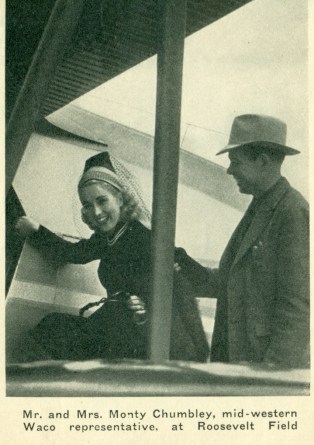
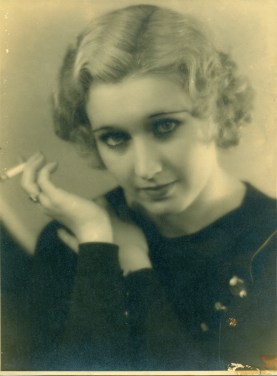
New York, 1936, honeymoon-bound.
Free Shipping on both River of January books through November 30th.


Telephone 208-462-2816
New York, 1936, honeymoon-bound.
Free Shipping on both River of January books through November 30th.
Telephone 208-462-2816

River of January: Figure Eight arrives November 1, 2016!
And if that wasn’t enough, there’s more news!
Ladies and gentleman! Today, October 2, 2016 I proudly present the cover art for book two of River of January.
Please welcome River of January: Figure Eight, available for purchase one month from today, November 2, 2016.
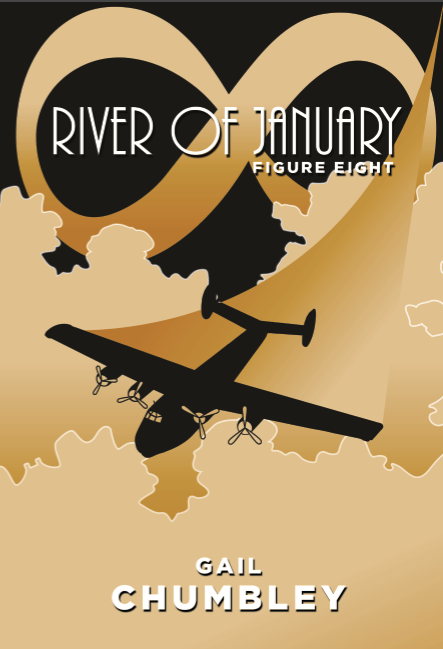
Huge thanks go out to the talented Brooke Rousseau, and her brilliant mother, Yvonne at Point Rider Publishing.
Perorders available at gailchumbley@gmail.com.
To catch up with book one, River of January is available at www.river-of-january.com or at Amazon.com. Also found on Kindle.
Author Gail Chumbley can be found at gailchumbley@gmail.com or at http://www.river-of-january.com
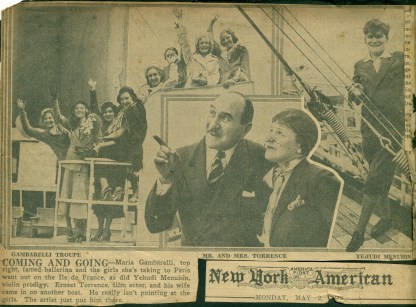
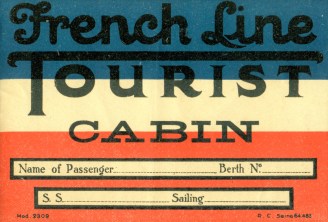
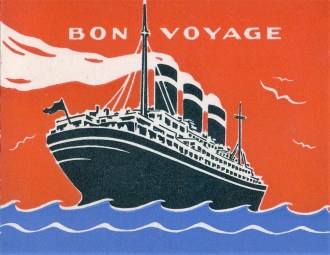
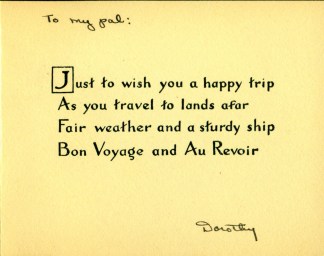
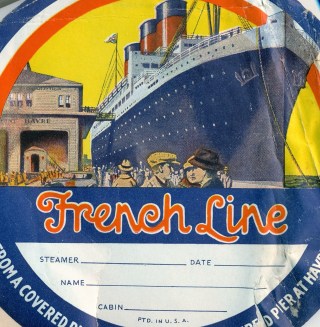

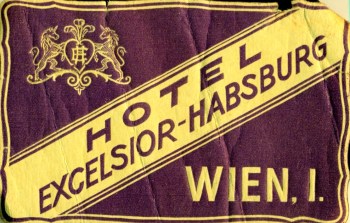
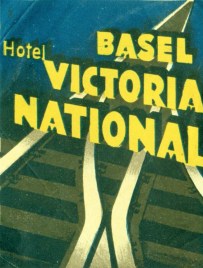
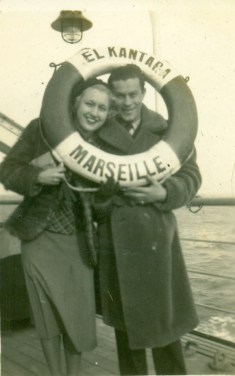


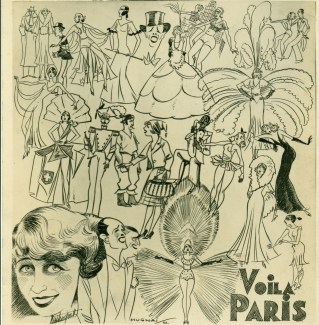
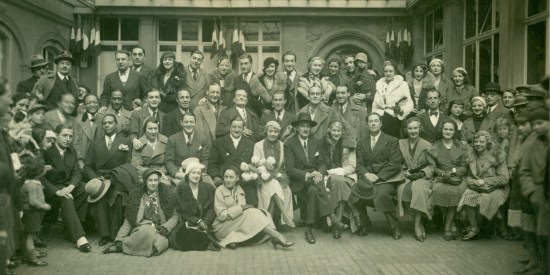
Read River of January for the story behind the pictures.
Gail Chumbley is the author of River of January, a memoir, also available on Kindle. Watch for the sequel, “River of January: Figure Eight” out in November.
South Atlantic
1936
Aside from the never-ending Elie issue, the voyage itself passed pleasantly. Helen and Lila scrambled out of their beds each morning ready for fun. They hurried to breakfast in the dining room, joining the other young people on the ship. And depending on their moods, Helen and her cohorts played shuffleboard, ping-pong, or other games on deck. After meals she strolled with Lila around the upper level, and the girls always found time to take in the afternoon sun.
Helen enjoyed the scenic two-week voyage, which included additional ports of call along the way, for passengers and mail. Helen noticed that each time they docked, The Southern Cross steered into harbors increasingly clogged with more ocean-going traffic. Recife, in particular was congested enough the ship had to sit off shore until its scheduled arrival time. Anxious for Rio, Helen asked a crew member why the ship had to sit and wait.
“Must keep to the timetable, Miss. The cost of coming into port early can be as high as $500 a day.”
After another stop in Vitorio, the ship downshifted to a veritable crawl. She could feel the air thicken, heavy and muggy, in the motionless heat. Sweltering, the two American girls grew impatient with the slower pace and filled their time packing then repacking their trunks.
The last night on board, Helen took her time washing and setting her hair. She had painted her nails and toes a bright red, and had gone to bed early; 8:00 PM. Lila did the same. The day before, during lunch, an elderly lady from Connecticut had described the beauty of approaching Rio by sea.
“There is no panorama more exquisite than entering Guanabara Bay at sunrise,” the matron declared, her eyes bright with enthusiasm.
Their curiosity piqued, the girls thanked their luncheon partner, and agreed to greet the dawn as it lighted their nearly mythical destination.
The deck appeared empty, dark, and still just before 4:30 AM. The girls had stumbled out of their beds, pulled on their robes, and stepped out into the cool air. As Helen’s eyes adjusted, she could identify other early risers, also clad in their robes. Clustering at the railing, the onlookers were absolutely overwhelmed with the panorama that gradually unveiled before them.
Helen gazed as the sun, rising from behind her, shadowed an elongated silhouette of the ship on the quiet water. Sugar Loaf Mountain presented slowly, from the summit down, exposed by the rising light, cobalt and gold reflecting on the calm, glassy bay. The relatively dry morning air and growing excitement over their imminent departure from the ship left both girls exhilarated.
“Lila, this was a keen idea!”
“Sure was. Glad I thought of it,” Lila replied, laughing.
*
Helen’s intuition alerted her that something wasn’t quite right. Standing behind Lila, in the customs queue, she watched as a short, balding official approached them from the head of the line. He tapped both girls on the shoulder, gesturing for them to step off to the side.
Innocently, she and her friend complied, dragging their trunks and pulling smaller bags with them. The official then returned to the front of the passageway without a word. The two girls looked at each other, puzzled at the strange request. There seemed to be no special reason they were targeted, and no one who bothered to provide them with an explanation.
The Club Copacabana manager, Mr. Max Koserin arrived to the docks to personally pick up his American dancers around 10:00 AM. He smiled at his new employees, whom he noticed at once. His expression shifted dramatically, however, when he realized they were standing alone, outside of the customs queue, with their baggage at their feet.
“Good Morning, ladies. I presume that you are Miss Thompson and Miss Hart?” Koserin asked.
Helen spoke first. “Yes. I’m Helen, and this is Lila. Thank goodness you’re here, Mr. Koserin. That man at the front pulled us out of line without telling us why. We don’t understand what’s going on.”
“Please try not to worry,” their new boss assured, looking them both in the eye. “I will get to the bottom of this unfortunate misunderstanding.”
Koserin walked to the customs officer and began what quickly escalated into a heated exchange. Helen felt her hope for a quick resolution fade.
“This gentleman has informed me that the city of Rio has recently passed an ordinance requiring all foreign acts coming into the city to deposit a bond with the police,” the club manager explained when he returned.
“We have to…?” Lila began to cry out.
“No, no, my dear, that is my job,” Koserin soothed the frightened dancer.
Mr. Koserin explained that the sum required for their bond totaled the entire eight-week salary for both girls, paid in advance. Strangely, Helen again became calm when the manager didn’t blink at the so-called “news.” In fact he showed no surprise at all. She guessed he expected the snag.
Still, he turned to the girls and cautioned, “Please do not worry, I will be back.”
Lila opened her mouth to speak, but Koserin raised his hand, continuing, “It will take most of the day to generate that sum of money. Stay together and please don’t be alarmed.”
Koserin smiled serenely and then departed.
Again watching the little bald bureaucrat, she noticed that he barely glanced at the passports of travelers he was processing. She quickly understood that the two of them were victims of petty corruption. No actual protocols existed for performers or any other workers to enter the country. She recalled her trips to the police station and consulate in New York, now wondering why she had bothered.
As the day dragged on, Helen grew more certain that their new boss’ presence wasn’t just limited to a warm welcome and a lift to their hotel. She believed that Koserin had rescued other new acts delayed the same way. And though she trusted that he would return with their affidavits, it didn’t help that both girls were stranded in the heat and humidity. No one offered them a chair, a drink of water, shade, or any help. The two Americans just stood miserably under the Rio sun.
When Lila meekly asked, the chief steward refused to permit them to go to their compartment to wait out of the heat.
Wiping her forehead with a handkerchief from her purse, Helen sighed. It had been hours, and there was no sign of Mr. Koserin with their ransom. Her eyes, automatically raked the docks searching for their boss, then toward the departing passengers. It was at that moment Helen locked eyes with the bullish little customs agent.
“That official over there, do you see him? Helen whispered to Lila.
“The man who pulled us out of line?” Lila asked.
“Yes, him.” He keeps leering at me. It’s been getting worse the last hour or so.”
“Disgusting!” Lila scoffed.
“I wonder how often that little twit gets away with his scheme,” Helen quipped. Both girls shuddered, glancing again toward the toad-like bureaucrat.
Time ground on and they watched as a queue of new passengers began boarding from the dock below.
Observing the foot traffic Helen realized, “Lila, I think we have another problem. This ship is scheduled to leave for Buenos Aires at five o’clock.” Swallowing her panic she added, “And we’re going too, if this problem isn’t resolved.”
Out of the corner of her eye she caught the official again, grinning suggestively. Tears traced down Lila’s pink, burning cheeks.
Turning away, glancing automatically toward the dock, Helen gasped as a throng of newspapermen and photographers swarmed up the passageway. “Someone’s tipped a Rio newspaper. We’re news, now.”
Reporters crowded around their trunks, shouting in Portuguese, vying for a story or photo of the two trapped American starlets.
Lila, wet-eyed, stared ahead, not acknowledging the cameras or chaos. Helen, feeling protective of her new friend, held up one hand, blocking the mob, while placing her other arm around her distressed friend. Beginning to lose her own composure, she glanced again from her wristwatch to the dock, as Mr. Koserin suddenly appeared. He had finally returned. Striding with authority up the passageway, carrying papers above his head, Koserin presented two affidavits of money placed with the local magistrates.
“I have never been so happy to see someone in my life!” Helen laughed, now equally as teary eyed. Truly, for both girls, Koserin was a sight for sore eyes. The manager glared coldly as the disappointed official shrugged, accepting the documents—releasing the Americans to enter the city.
After the all-day ordeal the two demoralized girls descended the passageway with their benefactor. Helen asked Koserin for only one kindness, “Could we please have a drink of water?”
Gail Chumbley is the author of “River of January,” and “River of January: Figure Eight,” a memoir. Hard copies are available at http://www.river-of-january.com, and also on Kindle
Questions or comments? Contact Gail at gailchumbley@gmail.com
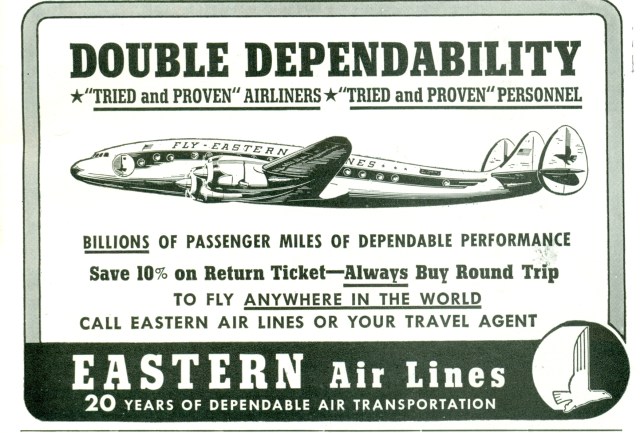
Chum returned to uniform by August 1941. Luckily he had worked for Eastern Air Lines exactly one year, vesting his employment, ensuring a job when he returned from the war. But that raises an interesting question, what war? There was no American war. Six more months transpired until the Japanese attack on Pearl Harbor. The answer to this intriguing question reads something like this; President Roosevelt instituted the preparations he could–Cash and Carry,The Destroyer Deal, quickly followed by the Lend Lease Act in 1941. America’s first peacetime draft had already been activated the year before, in 1940. Everybody knew what was coming, except for the bulk of the American population. They found out the hard way, later, across the Pacific, on a mild Hawaiian Sabbath.
Gail Chumbley is the author of the memoir, River of January, and the forthcoming sequel, River of January: The Figure Eight.
River of January is also available on Kindle.


A Christmas card from a weary GI to the students of Garfield School.
From France to Spokane Washington, 1944
Gail Chumbley is the author of River of January, a memoir. Available on Kindle.

River of January‘s Free Kindle Weekend!
Enjoy a read on the house compliments of Kindle. Available from Saturday morning through Monday night.
When you’re done tell a friend, and say something nice on Amazon Reviews!
Gail Chumbley is the author of the memoir, River of January. Also available on Kindle.


Preaching in 1630, Massachusetts Bay Governor John Winthrop, declared the new Puritan settlement a godly utopia, “A City on a Hill.” Since that time Winthrop’s assurance of purpose and perfection has shaped the narrative that is American history. For over two centuries the United States pushed forward striving to make real those founding aspirations. Many Americans, either in groups or as individuals have fought the good fight to extend liberty for all: the most notable example being the abolition of slavery. Yet the path toward realizing the dream of heaven on earth has been many times interrupted with progress’s nemesis—armed warfare.
As Revolutionary War zeal subsided in the late 1700’s, a series of remote camp meetings sparked a movement called the Second Great Awakening. (Yes there was a First) The popularity of these rousing evangelical revivals lit an impassioned fire that called Americans, mostly Northerners to eradicate sin in the shiny new republic. Determined reformers such as Charles Grandison Finney, Frederick Douglass, and Elizabeth Cady Stanton labored tirelessly to rid America of her shortcomings; drunkenness, degrading of women, punitive treatment of the mentally ill, racial inequality . . . in order for the country live up to its charge as a “called nation.”
Despite the diversity of causes and legions of faithful supporters, slavery alone came to dwarf all other movements and to ultimately divide the country. Early instances of violence in the effort to end slavery offered a taste of the violence to come in the Civil War; Abolitionist-editor, Elijah Lovejoy was shot dead in the doorway of his newspaper office, while another anti-slavery editor, William Lloyd Garrison found himself tarred and feathered repeatedly by those who hated his militancy. Zealot John Brown hacked to death five pro-slavers in an episode known as “Bleeding Kansas.” In these instances, “the writing on the wall” had truly been composed in blood.
When hostilities began in April, 1861 the energy of a nation fixated on the course of each battle, fear and resolve ebbing and flowing with each outcome. The shape of America’s future waited in the balance. Finally, after four ghastly years of bloody fighting, Southern hopes of an agrarian, slave-ocracy died, and as President Lincoln so eloquently phrased it, America found “a new birth of freedom.”
Left unaddressed were those other reforms, forgotten in the war. The mentally ill remained behind bars, incarcerated alongside dangerous criminals. Women were legally considered wards of their husbands, with no more standing than dependent children. Countless young children toiled endlessly in textile mills and coal mines, exploited by owners, deprived of any chance for an education. And the legions of former slaves faced a new form of slavery, Jim Crow and sharecropping.
Reform again gathered momentum in the late 19th Century. Aiming once more for that ‘city’ aspiration, the Progressive movement took shape, carried on by a new generation of the faithful, imbued with a sense of social justice to confront the many wrongs left unaddressed from an earlier time, and new issues related to urban growth. Notables from this post bellum movement include; Jane Addams, one of the founders of American Social Work, writer Upton Sinclair and his shocking expose’ The Jungle a condemnation of the meat industry, and John Dewey who normalized public education with coherent curriculum’s and compulsory school attendance. Dewey believed, as had the founders of America, that the nation relied upon and deserved an educated electorate to safeguard the promise of America into the future.
This movement found a great deal of success in improving the country and the lives of its citizens. Building safety reform came on the heels of the Triangle Shirtwaist Fire in 1911. The Jungle brought about the establishment of the Food and Drug Administration, while political reforms included the secret ballot, limiting “Bossism,” and other forms of political corruption.
Then, in 1914 Europe went to war. By 1916 Progressive President, Woodrow Wilson committed America to join in, asking for a declaration against Germany, sending American soldiers into the trenches. And once again, when the guns silenced progressive reforms disappeared as if they had not existed. On the imaginary road to “Normalcy,” the wealthy and powerful misused the country as a personal piggy bank, plundering and cheating with no legal check.
After a decade long litany of economic abuses tanked the Stock Market in 1929, the nation once again turned toward progress, this time on an unparalleled scale. The advent of Franklin Roosevelt and his wife, Eleanor, to the White House marked a revitalization of reshaping America to benefit all Americans. The New Deal remembered for its alphabet agencies, aimed to recover the devastated economy and ward off future abuses that had nearly destroyed the well being of the Republic.
America’s entrance into World War Two bucked the pattern of a reactionary pushback. FDR remained at the helm, until Harry Truman took the reins of government, continuing the tradition of affirming change. GOP President Dwight David Eisenhower kept a moderate hand on the tiller, particularly in the realm of Civil Rights, enforcing the Brown V. Board of Education decision to desegregate public schools.
But with JFK’s murder, the wheels once again came off social progress. As much as LBJ tried to give America all he could; The Civil Rights Act of 1964, The Voting Rights Act of 1965, the Highways Beautification Act, Head Start, Medicaid, and many more pieces of his Great Society legislation, Vietnam eroded all the good.
That endless nightmare of a stalemate in Southeast Asia worked at cross purposes for bettering society. The daily body count, student protests, war atrocities, such as the My Lai massacre, or the shock of the TET Offensive in 1968 sapped America’s desire to do anything but find a way out of the jungle.
Promoting the general welfare came nearly to a complete halt by 1980. The advent of the Reagan Revolution, and subsequent downsizing of the federal government left the vulnerable largely on their own. School lunch programs were cut, the mentally ill let out on the streets of America, while the armament industry threw the nation into deep deficits.
On this Memorial weekend it might be good to consider the potential of America when at peace. Trapped today in an endless cycle of war, this nation struggles to find her soul, to embrace together the light of our national promise. Two military presidents, our first, General George Washington and our thirty fourth, General Dwight D. Eisenhower pleaded with America in their farewell remarks to avoid war as the worst use of our best abilities. Both men, forged in the adversity of difficult wars, recognized the wasteful distraction and deadly allure of war. Washington cautioned against “entangling alliances, and Eisenhower “the military-industrial complex.”
Ultimately, those who know war grasps what is truly lost. Every weapon produced in a munitions factory most certainly casts a wrench into the wheels of human progress. Winthrop meant his reference from the book of Matthew to inspire an example to the world. Forcing Americanism by the barrel of a gun is born to failure, achieving nothing lasting but resentment abroad, and stagnating injustice at home.
Gail Chumbley is the author of the memoir, River of January, also available on Kindle.
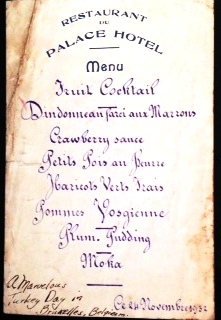
Hand lettered menu from The Palace Hotel in Brussels, Belgium, celebrating an American Thanksgiving, 1932

The dance company all autographed the occasion on the back side.
Note Mistinguett’s signature in the lower left quadrant. Many of these figures appear in River of January
Gail Chumbley is the author of the memoir, River of January, also available on Kindle
 Gail Chumbley